The Legal Line: What Arizona Building Code Actually Allows
Arizona follows the National Electrical Code (NEC)[5] with state-specific amendments, and the law is blunt: most electrical work requires a permit, and most permitted work requires a licensed contractor. The Arizona Registrar of Contractors (ROC) doesn't issue homeowner exemptions the way some states do.
If the job involves anything beyond replacing a fixture on an existing box or swapping a switch, you're in permit territory. And permits trigger inspections that check for code compliance you probably don't know by heart.
Permit Requirements and the ROC Threshold
Any electrical work valued over $1,000 must be performed by an ROC-licensed contractor in Arizona (verify at roc.az.gov). That threshold is lower than you think.
Running a new circuit for a hot tub? Upgrading a subpanel? Installing a dedicated circuit for a kitchen appliance? You're past $1,000 in labor and materials before you've opened the panel. Even if you do the work yourself, the county building department can refuse to issue a permit to a non-licensed homeowner for anything involving panel modifications, new circuits, or service upgrades.
Phoenix, Scottsdale, Mesa, and Tempe all require permits for new outlets, circuit additions, panel work, and whole house rewiring. They'll ask for the contractor's ROC license number on the application.
If you pull a homeowner permit and botch the job, the inspector will red-tag it, and you'll pay an electrician to fix it anyway. Now at a premium because they're correcting someone else's mess. Homeowners report exactly this scenario: attempting a simple subpanel install, failing inspection on grounding details, then hiring a pro to redo the bonding and conduit runs at double the original quote.
What You Can Legally Do Yourself
You can replace a light fixture on an existing junction box. You can swap a receptacle or switch one-for-one if you're confident matching wire colors and understanding ground connections. You can install a dimmer switch on an existing circuit.
That's about it.
The moment you're cutting drywall to add a new box, splicing wires, extending circuits, or touching anything inside the main panel, you need a permit. And in Arizona, that means a licensed electrician.
Quick Reference: DIY vs. Licensed Electrician in Arizona
- Legal DIY work: Replace existing fixtures, swap switches/outlets one-for-one, install dimmers on existing circuits
- Always requires licensed pro: Panel work, new circuits, anything over $1,000 value, work requiring permits
- Permit trigger: Cutting drywall for new boxes, splicing wires, extending circuits, touching main panel
- ROC threshold: $1,000+ in labor and materials mandates licensed contractor
- Cities requiring permits: Phoenix, Scottsdale, Mesa, Tempe (for outlets, circuits, panels, rewiring)
- Failed DIY outcome: Red-tagged inspections, premium electrician rates to fix mistakes, double original costs
The Safety Gap: Where DIY Becomes Dangerous
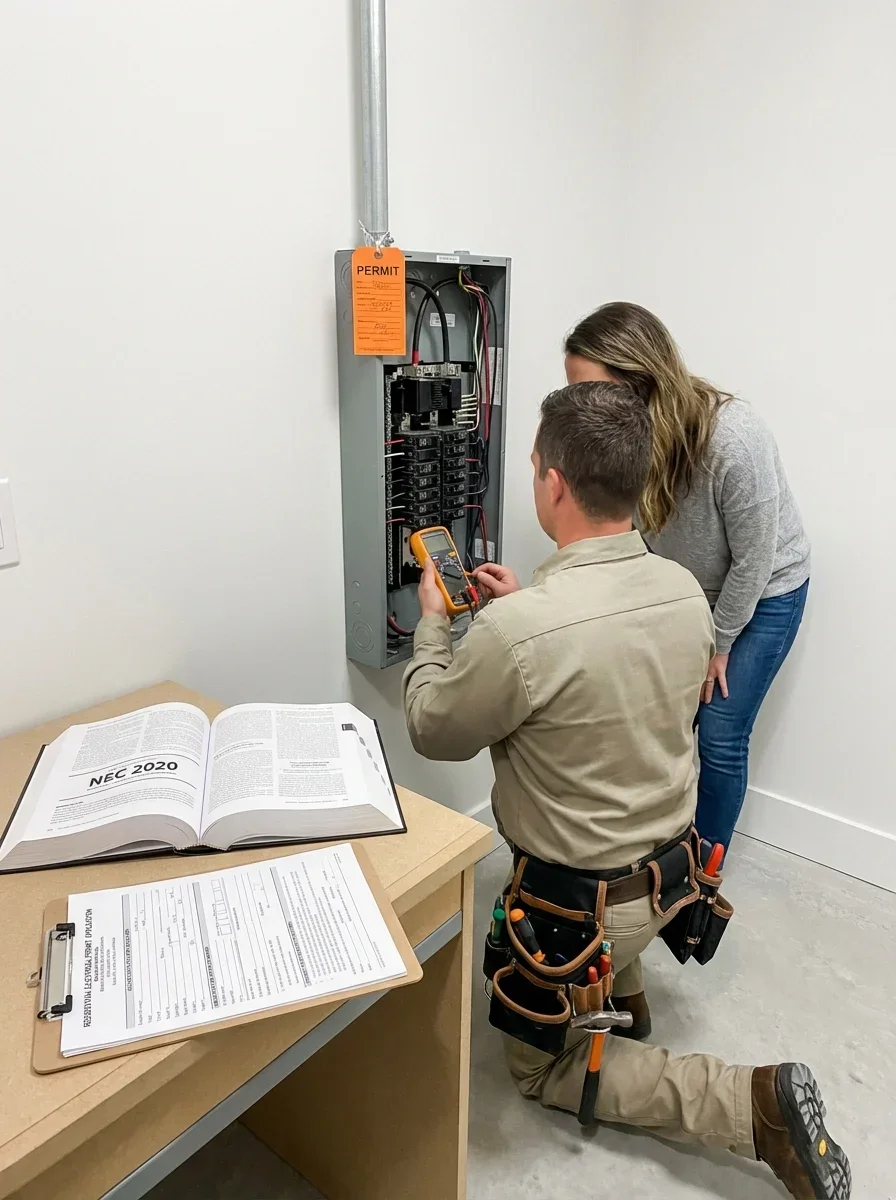
The Electrical Safety Foundation International (ESFI) urges homeowners to hire qualified, licensed electricians for all electrical work and to understand basic safety guidelines if attempting any DIY — turning off the main breaker and not exceeding skill level to prevent fires, injuries, and deaths.[1] That language isn't alarmist.
According to OSHA, unqualified persons should not work on or near exposed energized electrical parts due to the serious risk of electrocution.[2] Electricity kills instantly and without warning. You don't get a practice round.
Hidden Hazards You Won't See on YouTube
Homeowners consistently report discovering that electrical issues are far more complex than anticipated. You pull a switch to replace it and find three-way wiring you don't understand, aluminum branch circuits from the 1970s, or no ground wire in the box.
Arizona homes built before 1985 (the median home age in Phoenix is 1985) often have outdated wiring practices that modern code forbids. Tutorials assume standard configurations. Your house has junction boxes buried in walls, backstabbed connections failing under load, and incorrectly sized breakers.
One Tempe homeowner replaced a bathroom fan and discovered the existing circuit had bootleg grounds (neutral bonded to ground at the device, not the panel) that created a shock hazard every time someone touched the metal housing. A licensed electrician spotted it in thirty seconds.
The DIYer had no idea the setup was illegal and dangerous until their home inspector flagged it during a sale two years later.
The Arizona Heat Factor
Arizona's extreme summer heat accelerates electrical failures. When ambient attic temps hit 160°F in July, wire insulation degrades faster, connections loosen from thermal expansion, and breakers trip under AC loads that wouldn't phase a system in Minnesota.
Desert UV exposure through windows and outdoor fixtures cracks insulation on wiring faster than in humid climates. Pool equipment, landscape lighting, and exterior outlets all face UV and heat stress that shorten component life.
If you're adding a circuit in an Arizona attic during summer, you're working in life-threatening heat with live electrical hazards. Professionals schedule attic work for early morning or winter.
DIYers underestimate how fast heat exhaustion compounds electrical danger. You get dizzy, make a mistake, touch a live wire. It's over.
Code Compliance: The Details You'll Miss
The NEC sets minimum requirements for safe electrical installations, emphasizing that work must meet code standards typically verified by licensed electricians and inspectors to reduce fire and shock risks.[5] OSHA standards require that electrical installations comply with the NEC and be performed by qualified persons to prevent hazards like shocks, burns, and fires.[3]
"Qualified" has a legal definition: someone trained to recognize and avoid electrical hazards. That's not you after watching a video.
What Inspectors Actually Check
Inspectors verify box fill calculations (how many wires can legally fit in a junction box), proper conductor sizing for load, correct breaker ratings, AFCI/GFCI protection where required, bonding and grounding continuity, and clearance distances around panels. Arizona amendments to the NEC add specific requirements for outdoor circuits in desert climates, pool and spa bonding, and tamper-resistant receptacles in all new installations.
A Gilbert homeowner installed recessed lighting in a kitchen remodel and used standard housings instead of IC-rated (insulation contact) cans required in Arizona attics with blown insulation. The inspector failed it.
The homeowner had to pull every fixture, order new IC-rated housings, reinstall, and reschedule inspection. A licensed electrician would have spec'd IC-rated fixtures from the start and likely completed the job in half the time.
AFCI and GFCI Requirements You Didn't Know About
Current NEC code requires AFCI (arc-fault circuit interrupter) protection on nearly all 15A and 20A branch circuits in living areas. GFCI (ground-fault circuit interrupter) protection is mandatory for bathrooms, kitchens, garages, outdoors, and anywhere within six feet of a sink.
If you add an outlet in a bedroom, that circuit needs AFCI protection. Either a combination AFCI/GFCI breaker or an AFCI receptacle at the first device. Miss that, fail inspection.
One Phoenix homeowner added a garage outlet for power tools, wired it to an existing circuit, and skipped the GFCI because "it's not near water." Inspector red-tagged it. Garages require GFCI protection by code.
The fix required a trip back to the hardware store, cutting power again, installing a GFCI receptacle, and another inspection fee.
Pro Tip: GFCI protection isn't just about proximity to water — it's about location type. Arizona code mandates GFCIs for all garage outlets, all outdoor receptacles, and anywhere within 6 feet of a sink, regardless of whether water is "actively present." Miss this and you'll fail inspection every time.
The Real Cost Comparison
Upfront, DIY looks cheaper. You pay for materials and maybe a few tools. No $150/hour labor rate.
But homeowners consistently report that DIY takes excessively longer than expected and becomes stressful, especially for urgent fixes, compared to pros who finish in hours. And when DIY goes wrong, it goes expensive.
When DIY Costs More Than Hiring Up Front
You attempt a subpanel installation to add capacity for a home office. You spend $400 on the panel, breakers, wire, conduit, and tools. Eight hours later, you've wired it, but the main panel's bonding setup confuses you. You guess. You flip it on.
The inspector fails it for improper neutral-ground bonding and missing wire staples within 12 inches of the panel. Now you call an electrician to fix it. They charge a diagnostic fee, quote you $600 to correct the work and bring it to code, and you've spent $1,000 total plus two days of your time.
A licensed electrician would have installed the subpanel correctly the first time for $800-$1,200, completed in four hours, with a warranty.
Homeowners report this pattern again and again: DIY escalates into calling a pro after causing extra damage or failing inspection, making the total cost higher than hiring upfront. One Chandler homeowner tried to replace a 100A panel with a 200A upgrade themselves, got confused on the service entrance conductors, and called an electrician when the meter base wouldn't seat correctly.
The electrician had to undo the homeowner's work, re-pull wire, and re-terminate everything. The final bill was $3,500 instead of the $2,200 the original quote would have been. Labor tripled to undo mistakes.
The Hidden Costs: Insurance, Resale, and Liability
Unpermitted electrical work can void your homeowner's insurance. If a fire starts from faulty wiring you installed, your insurer can deny the claim if they discover unpermitted modifications.
Arizona title companies and real estate agents now routinely ask sellers about unpermitted work. If your DIY wiring is discovered during a sale inspection, the buyer will demand it be brought to code or discount the sale price to cover professional correction.
You have no warranty on your own work. Licensed electricians in Arizona carry liability insurance (verify independently: ROC doesn't require it for all license types, and the ROC bond caps at $4,000-$15,000 depending on classification, which won't cover a house fire).
If a pro's work causes damage, their insurance covers it. If your work causes damage, you eat the cost.
| Cost Factor | DIY Electrical | Licensed Electrician |
|---|---|---|
| Upfront Materials | $200-$600 (subpanel example) | Included in quote ($800-$1,200) |
| Labor Time | 8-16+ hours (learning curve) | 3-4 hours (experienced) |
| Permit Costs | $50-$150 (if approved) | Included in service |
| Failed Inspection | $600-$1,000 to fix + re-inspection fees | Rare; handled before final inspection |
| Insurance Coverage | None; may void homeowner's policy | Liability insurance + warranty (1 year minimum) |
| Total Cost After Mistakes | $1,000-$3,500+ | $800-$1,200 (done right first time) |
The Complexity You Can't See: Real Scenarios Where DIY Failed
Homeowners frequently discover electrical issues are far more complex than anticipated, like persistent power problems when swapping light fixtures that DIY can't resolve. DIY attempts often uncover hidden wiring problems or code violations that pros spot immediately, turning a simple fix into a major hazard.
Case Study: The Rewire That Wasn't
A Mesa homeowner decided to replace old cloth-insulated wiring in a 1960s ranch themselves. They rented a fish tape, bought new Romex, and started pulling circuits.
Three circuits in, they realized the house had a mix of two-wire (no ground) and three-wire circuits they couldn't easily identify behind drywall. They hit a junction box buried in the wall they didn't know existed. They couldn't figure out which breaker controlled which circuit because the panel labeling was wrong.
After two weekends and dozens of YouTube videos, they called a licensed electrician. The pro explained that whole house rewiring in an older Arizona home requires load calculations, new panel schedules, arc-fault protection, and coordination with the utility for temporary disconnects if upgrading service.
The homeowner abandoned the DIY attempt and paid $8,500 for a professional rewire. Work they'd budgeted at $2,000 doing it themselves but couldn't complete.
The Grounding Problem Nobody Talks About
Multiple homeowners report underlying issues like improper grounding or earth connections that amateurs miss, leading to repeated failures. Arizona's caliche soil (calcium carbonate hardpan) complicates grounding electrode installations.
Grounding rods must penetrate below the caliche layer or you won't achieve the required resistance to ground. DIYers drive an 8-foot ground rod, hit caliche at 18 inches, bend the rod, and assume "close enough." An inspector will measure resistance and fail it.
One Scottsdale homeowner installed an outdoor outlet for landscape lighting, drove a supplemental ground rod, and wired the circuit. The breaker kept tripping. Turns out the ground rod wasn't making contact through the caliche, creating a ground fault loop the homeowner didn't understand.
A licensed electrician re-drove the rod with a hammer drill, hit actual soil at five feet, bonded it correctly, and solved the problem in an hour.
What Licensed Electricians Actually Do Differently
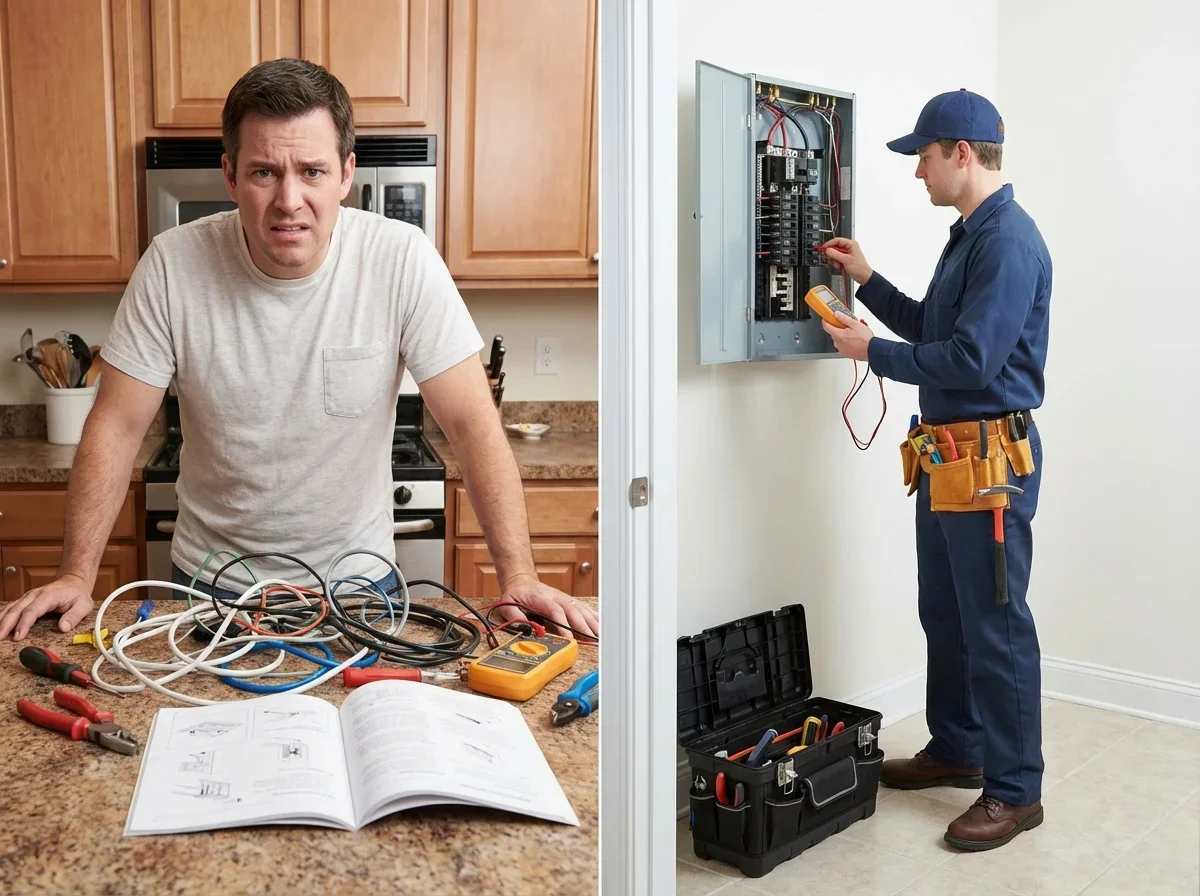
It's not about having the right tools. Licensed electricians in Arizona complete a minimum four-year apprenticeship (8,000 hours on-the-job training) and pass the ROC C-11 residential or A-11 commercial electrical exam. They know the NEC by heart. They carry code books on their trucks.
They've wired thousands of circuits and diagnosed every failure mode you can imagine.
Diagnostic Skills and Load Calculations
A Tempe homeowner called an electrician because their kitchen outlets kept tripping the breaker. The electrician tested voltage drop, measured current draw on the circuit, and discovered the refrigerator, microwave, and toaster oven were all on one 15A circuit. A violation of current code that requires dedicated 20A circuits for kitchen countertop receptacles.
The homeowner had lived with the problem for years, resetting the breaker weekly, assuming it was normal. The electrician ran two new dedicated circuits and eliminated the issue permanently.
You can swap a receptacle. You can't perform load calculations, test for voltage drop, or diagnose whether a tripping breaker is a loose connection, an overloaded circuit, or a failing breaker.
Licensed electricians carry multimeters, clamp ammeters, insulation resistance testers, and circuit tracers. They know what normal looks like and spot anomalies instantly.
Code Knowledge and Permitting Speed
The U.S. Department of Energy advises consulting local building codes and often hiring licensed professionals for significant electrical wiring projects to ensure safety and compliance, as DIY errors can lead to fire hazards.[4]
Licensed contractors know which projects require permits, what the inspector will check, and how to schedule inspections efficiently. They pull permits under their license, coordinate with the building department, and schedule inspections for the same day or next morning in most Arizona cities.
A DIY permit application for panel work might sit for a week waiting for plan review. The inspector might kick it back asking for load calculations or panel schedules you don't know how to create.
An ROC-licensed contractor submits clean applications that sail through. They've done it a thousand times.
When DIY Makes Sense (The Very Short List)
There are exactly three scenarios where DIY electrical work is reasonable in Arizona: replacing a light fixture on an existing box, swapping a switch or receptacle one-for-one, and installing a dimmer switch on an existing circuit.
That's it.
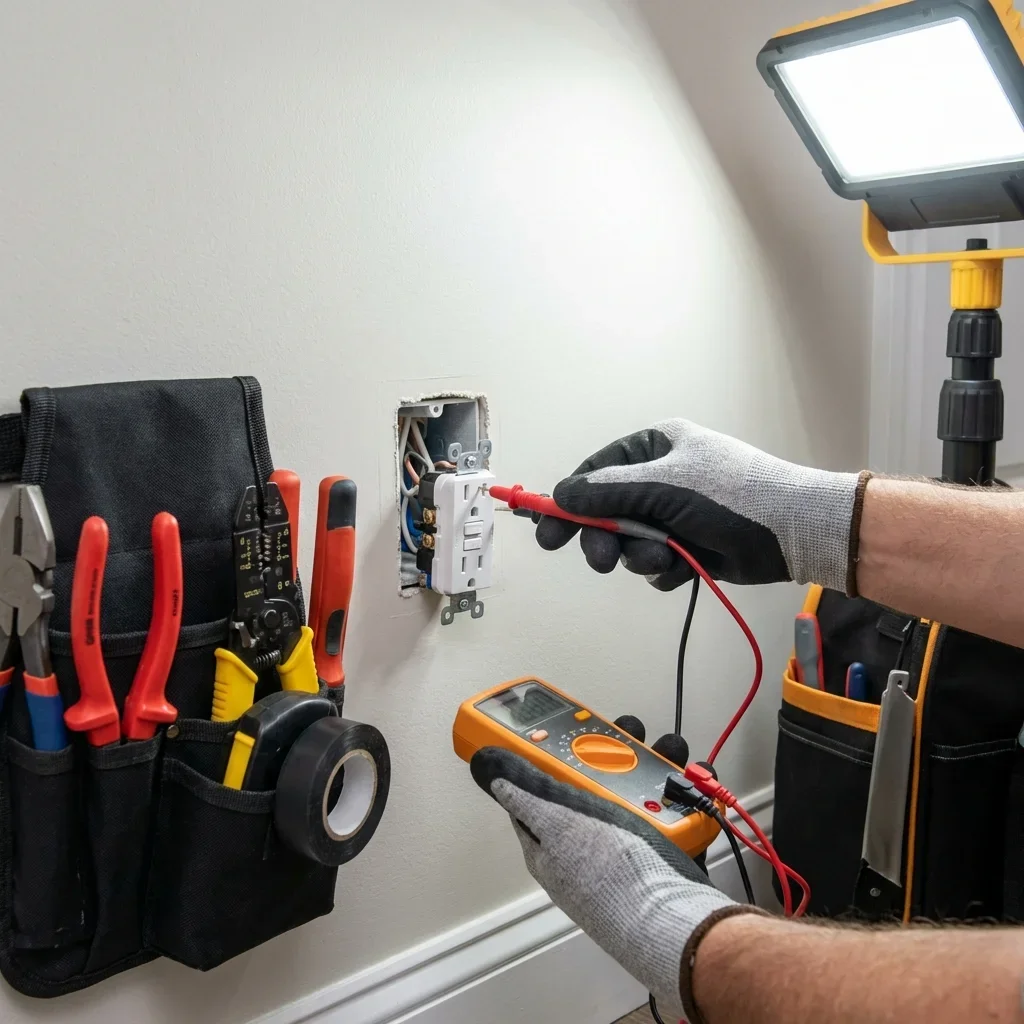
Even then, you should turn off the breaker, test with a non-contact voltage tester to confirm power is off, and understand polarity and grounding.
If you open a box and see anything you don't recognize (loose wire nuts, charred insulation, aluminum wiring, no ground wire, or multiple circuits spliced together) stop and call a professional. Those are diagnostic flags indicating problems beyond your skill set.
Aluminum wiring in particular, common in Arizona homes built 1965-1975, requires special connectors and techniques to prevent fire hazards. You can't just wire-nut it like copper.
Safety Baseline for Any DIY Attempt
Turn off the main breaker if you're uncertain which circuit you're working on. Use a non-contact voltage tester on every wire before you touch it. Wear rubber-soled shoes. Work in dry conditions.
Never assume a wire is dead because the switch is off. Three-way switches, miswired circuits, and backfed panels can all leave wires hot when you expect them dead. If you feel any tingle or shock, stop immediately.
That's not a warning. It's a near-miss.
Homeowners who've been shocked universally say it was faster and more violent than they expected. One Glendale DIYer thought he'd turned off the right breaker, touched a wire, and got thrown back into drywall. He was lucky. 120V across the heart can kill, and 240V (dryer and range circuits) almost certainly will.
The Professional Advantage: Speed, Warranty, and Liability Protection
Licensed electricians work faster, safer, and with accountability that DIY can't match. Most service calls for outlet installation or ceiling fan installation take professionals one to two hours.
You'll spend a weekend on the same job, plus multiple trips to the hardware store for parts you forgot.
Warranties and Insurance Coverage
ROC-licensed contractors provide warranties on labor and materials (typically one year minimum). If a connection fails or a device stops working within the warranty period, they return and fix it at no charge.
Your DIY work has no warranty. If it fails, you troubleshoot it again or finally hire a pro.
Arizona contractors must carry a surety bond (amount varies by license classification), and many carry general liability and workers comp insurance (though Arizona doesn't mandate workers comp for contractors, which is controversial; always verify coverage independently). If a licensed electrician damages your drywall or creates a safety hazard, their insurance covers it.
If you damage something or create a hazard during DIY, you're liable.
Permit and Inspection Coordination
For major work like panel upgrades, kitchen remodels, or EV charger installations, professionals handle permitting and inspections as part of the service. They know what documentation the city requires, when to call for rough-in versus final inspection, and how to address inspector comments without delay.
DIYers lose days waiting for permit approvals and rescheduling failed inspections.
A Buckeye homeowner hired an electrician for a Level 2 EV charger install after attempting DIY and realizing the 50A circuit required a dedicated breaker, #6 AWG wire, and a permit they didn't know how to pull. The electrician completed the install in four hours, passed inspection the next day, and provided documentation for the federal tax credit.
The homeowner saved weeks of frustration.
How to Decide: A Framework for the Specific Job
Ask yourself four questions.
First: does this job require a permit? If yes, hire a professional. Arizona building departments rarely issue homeowner permits for electrical work beyond fixture swaps.
Second: does this job involve the main panel, adding circuits, or splicing wires inside walls? If yes, hire a professional.
Third: if something goes wrong, could it start a fire, injure someone, or void my insurance? If yes, hire a professional.
Fourth: do I know what all the wires in this box do, and am I 100% confident the power is off? If no, hire a professional.
If you answered "no, no, no, yes" to all four questions, and the job is replacing a basic fixture or switch, you can attempt it yourself.
Anything else, call a licensed ROC electrician. Verify their license at roc.az.gov, ask for proof of insurance, and get a written estimate before work begins.
Getting Quotes and Choosing the Right Electrician
Get at least three quotes for any job over $500. Arizona electricians typically charge $100-$200 per hour for service calls, with minimums ranging $150-$300 for the first hour. Complex jobs like whole house rewiring or generator installation are bid as fixed-price projects after a site visit.
Ask candidates if they're ROC-licensed (C-11 residential or A-11 commercial), how long they've been in business, whether they pull permits and coordinate inspections, and what warranty they provide.
Check online reviews, but verify the license independently. Unlicensed "handymen" advertise electrical services and operate illegally in Arizona all the time. If someone quotes significantly lower than competitors and doesn't mention a license or permits, walk away.
For specialized work like smart home wiring, pool electrical, or surge protection, ask whether the electrician has experience with that specific system. Not all electricians install whole house generators or have the certifications for fire alarm wiring.
You want someone who's done the exact job dozens of times, not someone figuring it out on your dime.
The Bottom Line: Where the Real Line Is Drawn
DIY electrical work in Arizona is legally restricted, physically dangerous, and more expensive than it looks once you factor in mistakes, permit hassles, and the time cost of learning on the job. The narrow slice where it makes sense (swapping fixtures and switches on existing circuits) is so small that most homeowners are better off hiring a professional from the start.
You can replace a light fixture safely if you're careful. You cannot rewire a room, upgrade a panel, add circuits, or troubleshoot complex problems without training and tools you don't have.
Electricity is unforgiving. The ROC licensing requirement exists because the consequences of amateur work are severe: fires, electrocution, code violations that tank home sales, and insurance claims that get denied.
One Phoenix homeowner's DIY panel upgrade started a fire that burned through a garage wall before the smoke alarm woke the family. The insurance adjuster found unpermitted work and denied the claim. The family paid $45,000 out of pocket for repairs.
A licensed electrician would have charged $2,500 for the panel upgrade and finished it in a day.
The math is brutal and simple. Hire the professional.
- Electrical Safety Foundation International (ESFI). "Electrical Safety “At Home”." https://www.esfi.org/resource/safety-at-home-2006/. Accessed April 07, 2026.
- U.S. Occupational Safety and Health Administration (OSHA). "Working Safely with Electricity." https://www.osha.gov/etools/construction/electrical-incidents/work-safely. Accessed April 07, 2026.
- U.S. Occupational Safety and Health Administration (OSHA). "Electrical - Construction." https://www.osha.gov/electrical. Accessed April 07, 2026.
- U.S. Department of Energy. "Electrical Home Wiring." https://www.energy.gov/energysaver/electrical-home-wiring. Accessed April 07, 2026.
- National Fire Protection Association (NFPA). "National Electrical Code (NEC) Overview." https://www.nfpa.org/codes-and-standards/all-codes-and-standards/list-of-codes-and-standards/detail?code=70. Accessed April 07, 2026.