What Does Whole House Generator Installation Include?
Installing a standby generator isn't a plug-and-play project. You're adding a permanent fixture that ties into your electrical panel, fuel supply, and in some cases your home automation system. The core work involves electrical panel modifications, transfer switch installation, fuel line connections, site preparation, and permitting.[1]
Most installations take 1-3 days once permits clear, though site-specific complications can extend timelines. Caliche excavation in Arizona, for example, can add days to the schedule.
Contractors coordinate multiple trades. Electricians handle panel work and transfer switches, gas fitters run fuel lines, and concrete contractors pour the equipment pad. A licensed electrical contractor typically acts as the general for the project.
Electrical Panel Integration and Transfer Switches
The transfer switch is the brains of your backup power system. It monitors utility power and automatically disconnects your home from the grid when power fails, then connects to generator power within 10-30 seconds.[2]
This prevents backfeeding. Sending generator power back into utility lines can electrocute line workers and damage your generator.
You'll choose between two transfer switch types. Automatic transfer switches (ATS) handle the entire process without human intervention, making them the standard for whole-home systems. Manual transfer switches require you to physically throw a switch, which defeats the purpose of standby power during a 3 a.m. outage or when you're away from home.
Service panel upgrades sometimes accompany generator installations. If your existing panel is undersized (100-amp service in an older home) or lacks physical space for the transfer switch interlock, electricians may recommend a panel upgrade before generator installation. That adds $1,500-$3,500 to the project but solves a code compliance issue you'd eventually face anyway.
| Transfer Switch Feature | Automatic (ATS) | Manual |
|---|---|---|
| Activation | Fully automatic within 10-30 seconds | Requires manual switch operation |
| Power Restoration Time | 10-30 seconds | 5-15 minutes (depending on your response) |
| Cost Range | $500-$1,500 (equipment only) | $200-$500 (equipment only) |
| Best For | Whole-home systems, unattended operation | Budget installations, supplemental power |
| Installation Complexity | Higher - requires more wiring | Lower - simpler connections |
Gas Line and Fuel System Connection
Natural gas-powered generators tie into your home's existing gas line, assuming you have natural gas service. The gas fitter sizes the line based on generator fuel demand, typically 1/2-inch to 1-inch black iron pipe from the meter or an existing branch line.
In Phoenix metro areas without natural gas infrastructure, propane is the alternative.
Propane systems require a dedicated tank. Either a 250-gallon or 500-gallon cylinder installed on your property. Rental tanks cost $50-$75/year plus fuel; owned tanks eliminate rental fees but you're responsible for maintenance. A 20kW generator running at full load consumes roughly 3-4 gallons per hour, so a 500-gallon tank provides 125+ hours of runtime at 50% load.
Arizona building codes require specific clearances between fuel tanks and property lines, structures, and ignition sources. Propane tanks must sit at least 10 feet from any building opening and 5 feet from property lines. Your contractor pulls both gas and electrical permits, the gas permit covers fuel line installation and tank placement.
Permitting and Code Compliance
Generator installations require permits from your local building department covering electrical work, gas connections, and zoning compliance. The electrical permit covers transfer switch installation, panel modifications, and wiring per NEC Article 702 (Optional Standby Systems).[3] Gas permits cover fuel line sizing and connections.
Inspectors verify clearances from your home's structure. NFPA 70 typically requires 5 feet from windows, doors, and fresh air intakes to prevent exhaust fumes from entering living spaces. In Arizona's Registrar of Contractors (ROC) jurisdiction, only ROC-licensed electricians with an appropriate classification can pull permits for this work. Verify your contractor's license at roc.az.gov before signing a contract.
Zoning setbacks vary by municipality. Some Phoenix-area cities require generators to sit 5 feet from side property lines, while others allow 3 feet. HOA covenants sometimes impose additional restrictions on generator placement or enclosures.
Your contractor should verify all setback requirements during the site assessment.
How Do Electricians Size Your Generator?
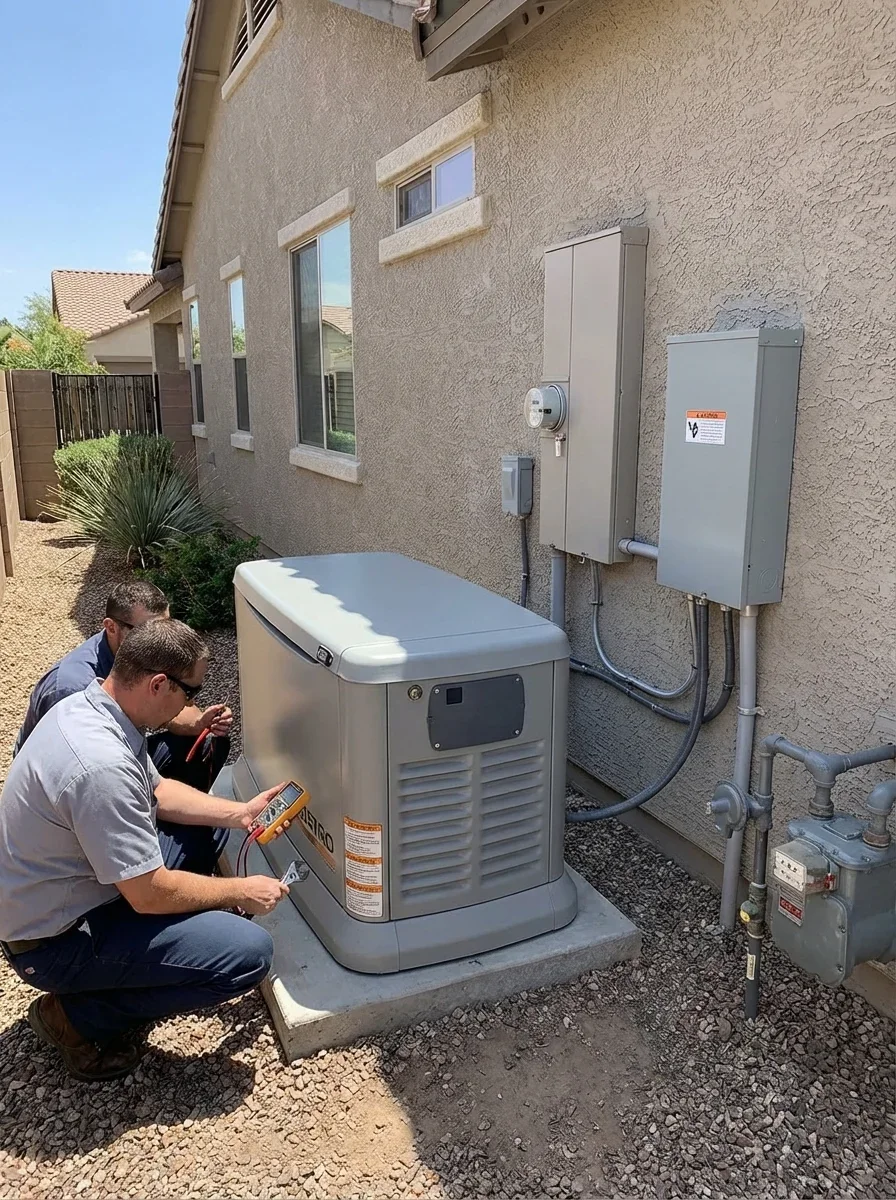
Generator sizing isn't guesswork. Licensed electricians perform load calculations to match generator capacity to your home's electrical demand, accounting for both running watts and the surge watts required when motors start.
Undersizing leaves you without critical circuits during an outage. Oversizing wastes $3,000-$8,000 on capacity you'll never use.
The sizing process involves two steps: calculating your total electrical load and prioritizing which circuits you want backed up. Most homeowners choose between whole-home backup (powering everything) and partial backup (essential circuits only). The difference between those approaches can swing costs by $5,000-$10,000.
Load Calculation and Circuit Priority
Electricians start by inventorying your electrical panel and recording the amperage draw of major appliances and systems. Central air conditioning is the biggest load. A 3-ton AC unit draws 15-20 amps running, but requires 45-60 amps momentarily during compressor startup.
That startup surge drives generator sizing more than steady-state consumption.
Your electrician will ask which circuits you consider essential. Most homeowners prioritize:
- HVAC (air conditioning in Arizona is non-negotiable during summer outages)
- Refrigerator and freezer
- Well pump (for homes on well water)
- Lighting circuits
- Garage door openers
- Medical equipment or home office circuits
Partial-home systems use load-shedding transfer switches that prioritize circuits. If your generator is sized for 16kW but you're drawing 20kW, the switch temporarily disconnects lower-priority circuits (like the second AC zone or pool pump) until demand drops. This lets you install a smaller, less expensive generator while still powering essentials.
Whole-home systems power every circuit without prioritization. You'll need a larger generator, but you won't notice the outage beyond the 10-second transfer delay. For homes with multiple AC zones, tankless water heaters, and pool equipment, whole-home backup often requires 22kW-48kW generators.
Generator Capacity by Home Size
Square footage provides a rough sizing guideline, but electrical load determines capacity. A 1,500-square-foot home with electric heat and two AC zones may need more capacity than a 3,000-square-foot home with gas heat and a single AC unit.[4]
Here's the typical sizing range for Arizona homes:
- 8-12kW: Partial backup for 1,200-2,000 sq ft homes. Powers one AC zone, refrigerator, lighting, and select appliances.
- 14-18kW: Whole-home backup for 1,500-2,500 sq ft homes or partial backup for larger homes. Handles most single-AC-zone configurations.
- 20-24kW: Whole-home backup for 2,500-3,500 sq ft homes with dual AC zones. Common choice for Phoenix metro new construction.
- 26-48kW: Large homes (3,500+ sq ft) with multiple AC zones, pool equipment, and high electrical demand.
Load calculations account for Arizona-specific factors. Desert homes rely heavily on air conditioning year-round. Your AC isn't optional equipment like it might be in milder climates. Pool pumps add 1-2kW of continuous load during summer operation. Whole-house fans common in older Arizona homes draw 400-600 watts.
Your electrician factors these regional patterns into sizing recommendations.
What Does Whole House Generator Installation Cost?
Total installed cost breaks into three buckets: the generator unit itself, installation labor and materials, and permitting/inspection fees. Most homeowners spend $7,000-$18,000 for a complete turnkey installation, with natural gas systems running 10-15% less than propane systems (which include tank costs).
Material costs have stabilized after supply chain disruptions in 2023-2024, but labor rates continue rising. In the Phoenix metro area, licensed electrical contractors charge $95-$150 per hour for generator installation work.
The specialized nature of the installation justifies the premium. You're coordinating electrical, gas, and concrete trades, not just running a few circuits.
Cost by Generator Size and Fuel Type
Generator pricing follows a predictable curve based on capacity. Entry-level air-cooled units (8-12kW) cost $2,500-$4,500 for the unit alone. Mid-range systems (14-24kW) run $4,000-$8,500. Large liquid-cooled generators (26kW+) start at $8,000 and exceed $15,000 for 48kW units.
Whole House Generator Cost Breakdown (Natural Gas):
- 8-10kW systems: $6,500-$9,500 installed
- 12-14kW systems: $8,000-$11,500 installed
- 16-18kW systems: $9,500-$13,500 installed
- 20-22kW systems: $11,000-$15,500 installed (most popular for whole-home backup)
- 24kW systems: $13,000-$17,000 installed
- 26-48kW systems: $15,000-$28,000+ installed
- Propane tank addition: +$800-$2,000 if needed
- Permits and inspections: $300-$600 across Phoenix metro municipalities
Propane systems add $800-$2,000 for tank installation if you don't already have a suitable propane tank on-site. That includes the tank itself (if purchased), pad/stand, and gas line runs from tank to generator. Rental tanks reduce upfront cost but create an ongoing monthly expense.
Diesel generators cost 20-30% more than natural gas equivalents and are rarely installed in residential applications. Diesel makes sense for remote properties without natural gas access where propane delivery is impractical, but fuel storage and maintenance requirements make it a niche choice.
What Affects Installation Pricing?
Distance from your electrical panel to the generator pad drives installation cost more than any other factor. If your ideal generator location sits 80 feet from your main panel on the opposite side of your home, you're trenching for electrical conduit, running longer gas lines, and potentially dealing with caliche excavation in Arizona soil.
Every 20 feet beyond the first 20 feet adds $400-$800 in labor and materials.
Site preparation costs vary by location. A generator requires a level concrete pad, typically 4 inches thick, 4x5 feet for smaller units, 5x6 feet for larger systems. Concrete work runs $400-$900 depending on access and site conditions. If your yard has caliche hardpan (common in Phoenix metro areas), excavation costs jump 2-3x compared to soft soil. Some contractors encounter caliche at 18 inches depth; others hit it at 6 feet.
It's unpredictable.
Electrical panel modifications affect pricing when your existing panel lacks capacity for the transfer switch or requires an upgrade to accommodate generator interlock devices. Panel upgrades add $1,500-$3,500 but solve code compliance issues that would eventually require attention during home sales or renovations.
Gas line runs beyond 30 feet increase costs. Black iron pipe installation runs $12-$18 per linear foot for 3/4-inch pipe, the typical size for residential generators. If your gas meter sits on the opposite side of your home from the generator pad, expect gas line costs to exceed electrical conduit runs.
Permitting and inspection fees vary by municipality. Phoenix charges $200-$400 for combined electrical and gas permits. Scottsdale's fees run slightly higher at $250-$500. HOA architectural review fees (where applicable) add $50-$150.
Plan for $300-$600 in total permitting costs.
How to Choose a Generator Installation Contractor
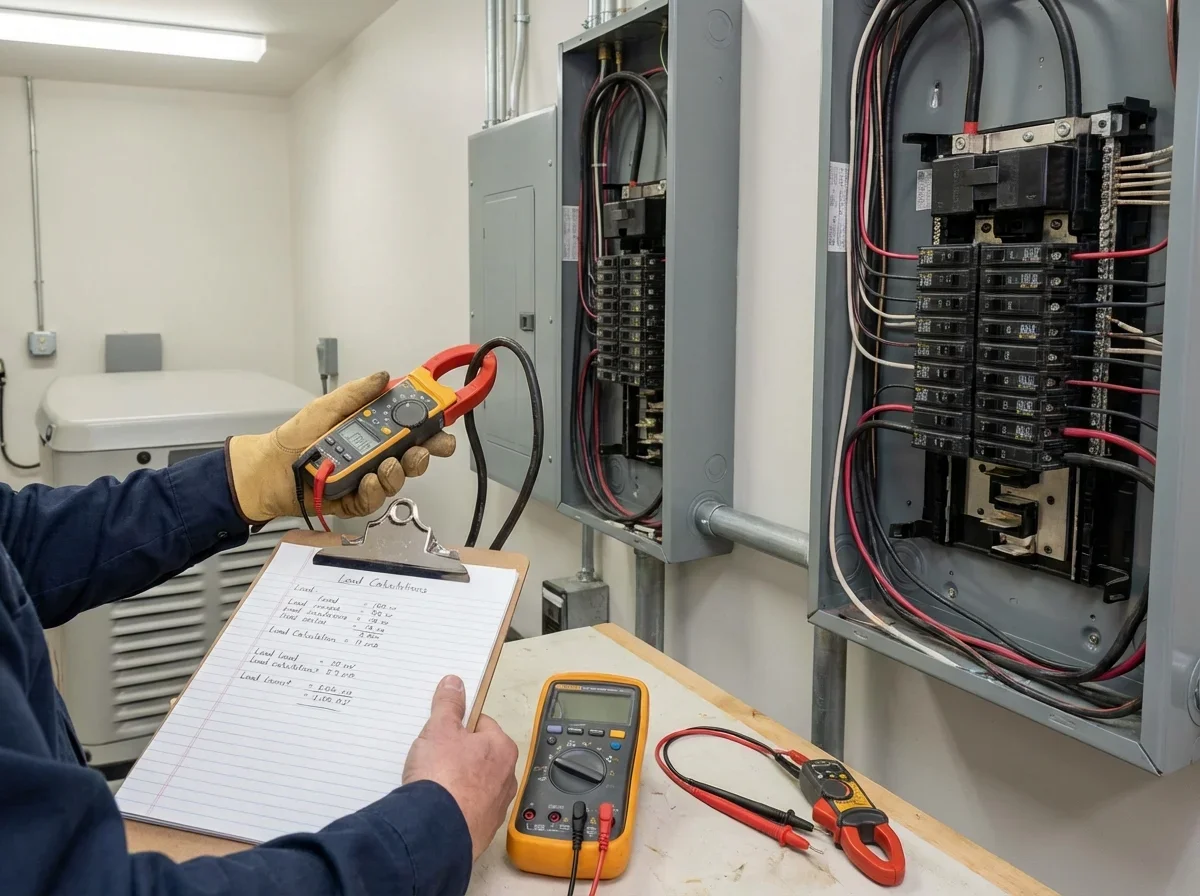
Generator installation requires coordination between electrical, gas, and concrete trades. You're not just hiring an electrician. You're hiring a licensed contractor who manages the entire installation process, pulls appropriate permits, and coordinates inspections.[5]
In Arizona, the Registrar of Contractors requires separate licensing for electrical and gas work. Some contractors hold dual classifications (CR-6 for electrical, K-13 for gas piping), allowing them to handle both aspects in-house. Others subcontract gas line work to licensed plumbers or gas fitters.
Either approach works if all trades carry proper ROC licenses.
Required Licenses and Certifications
Arizona ROC licensing is non-negotiable for generator installation work. Electrical contractors need either a CR-6 (residential electrical) or CR-11 (combination electrical) license classification. Gas line installation requires K-13 (gas piping) or appropriate plumbing classifications. Concrete work for equipment pads requires either a licensed contractor or can be performed as incidental work under the electrical contractor's license if under $1,000.
Generator manufacturers offer installer certifications for their product lines. Generac, Kohler, and Briggs & Stratton all run training programs certifying contractors on installation procedures, warranty requirements, and troubleshooting. Manufacturer-certified installers typically provide better warranty coverage and have direct lines to technical support when issues arise.
Verify licenses at roc.az.gov before signing any contract. The ROC database shows license status, classifications, and complaint history. Pay attention to complaint resolution. A contractor with two resolved complaints from 15 years ago is different from one with five unresolved complaints from last year.
Insurance verification matters more in Arizona than many states. Arizona doesn't require contractors to carry workers compensation insurance unless they have employees, creating a gap in coverage if a solo contractor or subcontractor gets injured on your property. Ask for certificates of general liability ($1M+ coverage) and workers comp if they have employees.
The ROC bond ($4,000-$15,000 depending on license type) may not cover large claims, so independent insurance verification protects you.
Questions to Ask Before Hiring
Start with load calculation methodology. Ask how the contractor sizes generators. If they quote a system based solely on square footage without reviewing your electrical panel or discussing circuit priorities, they're guessing.
Qualified contractors will request to see your electrical panel and discuss which circuits you consider essential before recommending a specific generator size.
Pro Tip: Before your contractor visit, photograph your electrical panel's main breaker label and any major appliance nameplates (AC unit, water heater, pool equipment). This speeds up load calculations and ensures accurate generator sizing. Contractors who receive this information upfront can often provide preliminary sizing recommendations during your initial phone consultation.
Warranty coverage varies by manufacturer and installation quality. Most generator units carry 5-year manufacturer warranties covering defects, but installation workmanship typically carries a 1-2 year contractor warranty. Ask specifically: "What does your installation warranty cover, and for how long?" Transfer switches, electrical connections, gas line work, and concrete pads should all carry workmanship warranties separate from the generator unit warranty.
Maintenance contracts are common in generator installations. Generators require annual service: oil changes, air filter replacement, battery checks, and test runs under load. Some contractors include the first year of maintenance in installation pricing; others offer optional maintenance contracts at $200-$400/year.
Clarify what's included upfront and whether you're locked into service contracts.
Permit and inspection handling should be contractor responsibility. Ask: "Who pulls permits and schedules inspections?" The answer should be "we do." If a contractor suggests you can skip permits or offers a discount for unpermitted work, walk away.
Unpermitted generator installations create liability issues, violate insurance requirements, and complicate home sales.
Site-specific questions matter in Arizona. Ask about caliche excavation experience and how they handle unexpected soil conditions. If they've worked in your neighborhood or similar areas, they'll have realistic expectations about excavation costs. Contractors unfamiliar with caliche may lowball estimates, then hit you with change orders when they encounter hardpan.
Transfer switch location affects both cost and noise levels. Some installations place the transfer switch near the generator (minimizing electrical runs), while others mount it adjacent to the main panel (minimizing panel modifications). Ask where they plan to install the switch and why.
There's no single right answer, but the contractor should explain their reasoning based on your specific site conditions.
Find Licensed Generator Installation Electricians Near You
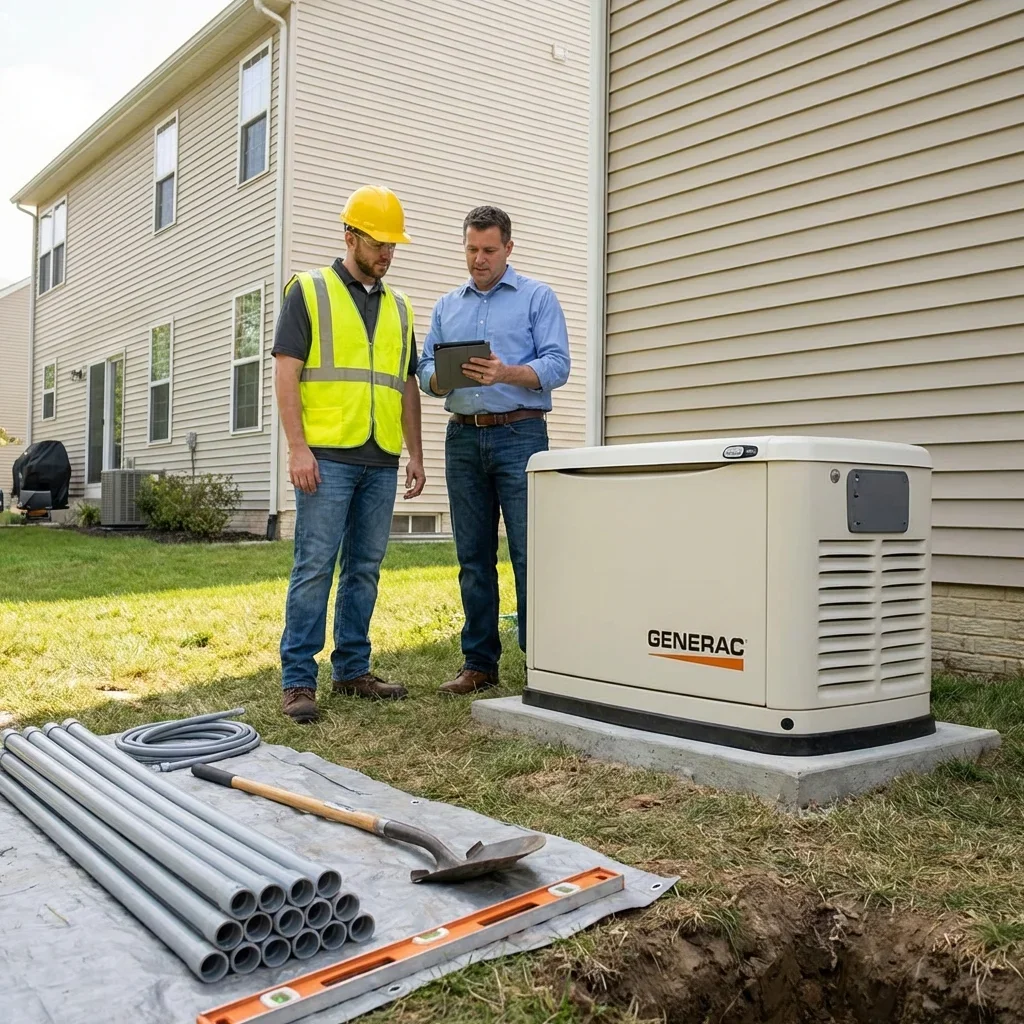
Generator installation requires specialized expertise beyond standard electrical service work. You're looking for ROC-licensed electrical contractors with manufacturer certifications, gas line installation capability, and a track record of permitted installations that pass inspection on the first attempt.
Top-rated electricians in the Phoenix metro area typically schedule site assessments within 3-5 business days. The assessment should include panel review, load calculation discussion, site evaluation for generator placement, and written estimates breaking out equipment, installation labor, permits, and optional maintenance packages.
Expect assessments to take 45-90 minutes for thorough contractors.
Lead times for installation vary seasonally. Spring and fall see higher demand as homeowners prepare for summer heat and monsoon season. Summer installations sometimes face delays when contractors prioritize emergency electrical service calls from storm damage. Winter (December-February) typically offers shorter lead times and occasionally lower pricing as demand drops.
Our directory connects you with ROC-licensed electrical contractors who perform code-compliant generator installations across Arizona. Every listed contractor carries verified licensing, insurance, and demonstrated experience with whole-home generator systems.
Enter your ZIP code to find qualified installers serving your area, compare written estimates, and verify credentials before making your decision.
Frequently Asked Questions
- U.S. Department of Energy. "Standby Electrical Generators." https://www.energy.gov/energysaver/standby-electrical-generators. Accessed April 06, 2026.
- U.S. Occupational Safety and Health Administration (OSHA). "Generators." https://www.osha.gov/emergency-preparedness/guides/generator-safety. Accessed April 06, 2026.
- National Fire Protection Association (NFPA). "Backup Power: Standby Generators." https://www.nfpa.org/education-and-research/home-fire-safety/backup-power. Accessed April 06, 2026.
- Penn State Extension (Pennsylvania State University). "Generator Sizing and Selection." https://extension.psu.edu/generator-sizing-and-selection. Accessed April 06, 2026.
- U.S. Department of Energy. "Installing a Standby Generator." https://www.energy.gov/energysaver/installing-standby-generator. Accessed April 06, 2026.
- National Inspection Testing and Certification Corporation (NITC). "Electrical Contractor Licensing and Permitting." https://www.nicetraining.us/resources/electrical-permitting/. Accessed April 06, 2026.