When Do You Need an Electrical Panel Upgrade?
Not every panel with a few rust spots or breakers that trip occasionally needs replacing tomorrow. The urgency depends on whether you're dealing with a safety hazard or a capacity mismatch.
If your panel is a Federal Pacific Electric Stab-Lok, Zinsco, or Pushmatic model from the 1960s-1980s, replacement is non-negotiable. These brands have documented failure rates where breakers don't trip during overloads. They stay energized while wires overheat, igniting fires inside walls.[2][3] Licensed electricians in Arizona routinely flag these during home inspections, and most buyers won't close on a house until they're replaced.
Beyond fire hazards, you'll need an upgrade if your current panel can't support new electrical loads. Adding central AC to a home with a swamp cooler, installing an EV charger that draws 40-50 amps continuously, or wiring a pool heater and pump together can push a 100-amp panel past its safe limit. Frequent breaker trips signal that you're bumping against capacity, especially when high-draw appliances run simultaneously.
Arizona's desert climate accelerates another factor: UV exposure and extreme heat degrade electrical insulation faster than humid regions. Panels mounted on exterior garage walls in full sun often show cracked covers and corroded bus bars by age 25-30, even if they're not actively failing.
A licensed Arizona electrician inspecting the panel will check for charred connections, aluminum wiring compatibility (common in 1960s-1970s homes), and whether your grounding system meets current National Electrical Code standards.
Home additions and kitchen remodels frequently trigger upgrades too. If you're adding a second-story ADU or converting a garage to living space, the existing panel may not have enough free slots for new circuits or the amperage to support them. Code requires dedicated circuits for kitchen countertop outlets, and older panels with only 8-12 spaces can't accommodate modern loads without a larger panel or sub panel installation.
Signs Your Panel Is Undersized or Unsafe
Physical warning signs tell you when a panel needs attention before it fails completely.
Burn marks around breaker terminals or a burning smell from the panel box indicate overheating connections. Immediate shutdown and electrician call required. Breakers that trip and won't reset, or reset temporarily then trip again under normal load, have usually failed internally and need replacement.
Rust or corrosion inside the panel is common in Arizona garages where humidity spikes during monsoon season. Light surface rust isn't an emergency, but heavy corrosion that flakes off bus bars or corrodes breaker contacts creates high-resistance connections that overheat. Flickering lights when high-draw appliances kick on—your AC compressor dims the kitchen lights for a second—suggest voltage drop from undersized service or loose connections.[4]
If your panel is warm to the touch during normal use, that's abnormal. Panels generate minimal heat under proper load. Warmth indicates overloading or failing connections.
If you hear buzzing or crackling sounds from inside the panel, you're hearing arcing. Electricity jumping across gaps it shouldn't. Cut power at the meter and call an electrician immediately.
Emergency Panel Warning Signs Requiring Immediate Action:
- Burn marks or burning smell from the panel
- Buzzing or crackling sounds (indicates arcing)
- Panel warm/hot to touch during normal use
- Breakers that won't reset or trip repeatedly under normal load
- Federal Pacific, Zinsco, or Pushmatic brand panels
Federal Pacific and Zinsco Fire Hazards
Federal Pacific Electric Stab-Lok panels, installed in millions of homes from the 1950s through 1980s, have a documented problem: their breakers fail to trip during overcurrent conditions up to 36% of the time.[2] When a breaker should disconnect power to prevent wire overheating, FPE breakers often stay closed, allowing conductors to reach temperatures that ignite insulation and framing lumber.
The U.S. Consumer Product Safety Commission investigated FPE panels in the 1980s and found the company had falsified Underwriters Laboratories test results. While the panels weren't subject to a mandatory recall, the CPSC issued safety warnings, and testing showed Stab-Lok breakers failed to trip at twice their rated current.[2] A scenario that happens during ground faults or short circuits.
Zinsco panels (also sold as Sylvania and Challenger) have a different but equally dangerous defect. The aluminum bus bars corrode, and breakers weld themselves to the bus under normal current flow. A welded breaker can't physically trip even if the internal mechanism activates.
Homeowners often discover this when they try to shut off a breaker for maintenance and it won't budge. Or when an overload occurs and the breaker glows red-hot but stays energized.
Both panel types appear in Arizona homes built in the 1960s-1980s, particularly in Phoenix, Tempe, and Mesa tracts from that era. If you have either brand, replacement isn't an "eventually" task. It's a current fire risk. Homeowners insurance carriers sometimes refuse coverage or charge higher premiums for homes with FPE or Zinsco panels once they're identified during inspections.
How Much Does an Electrical Panel Upgrade Cost?
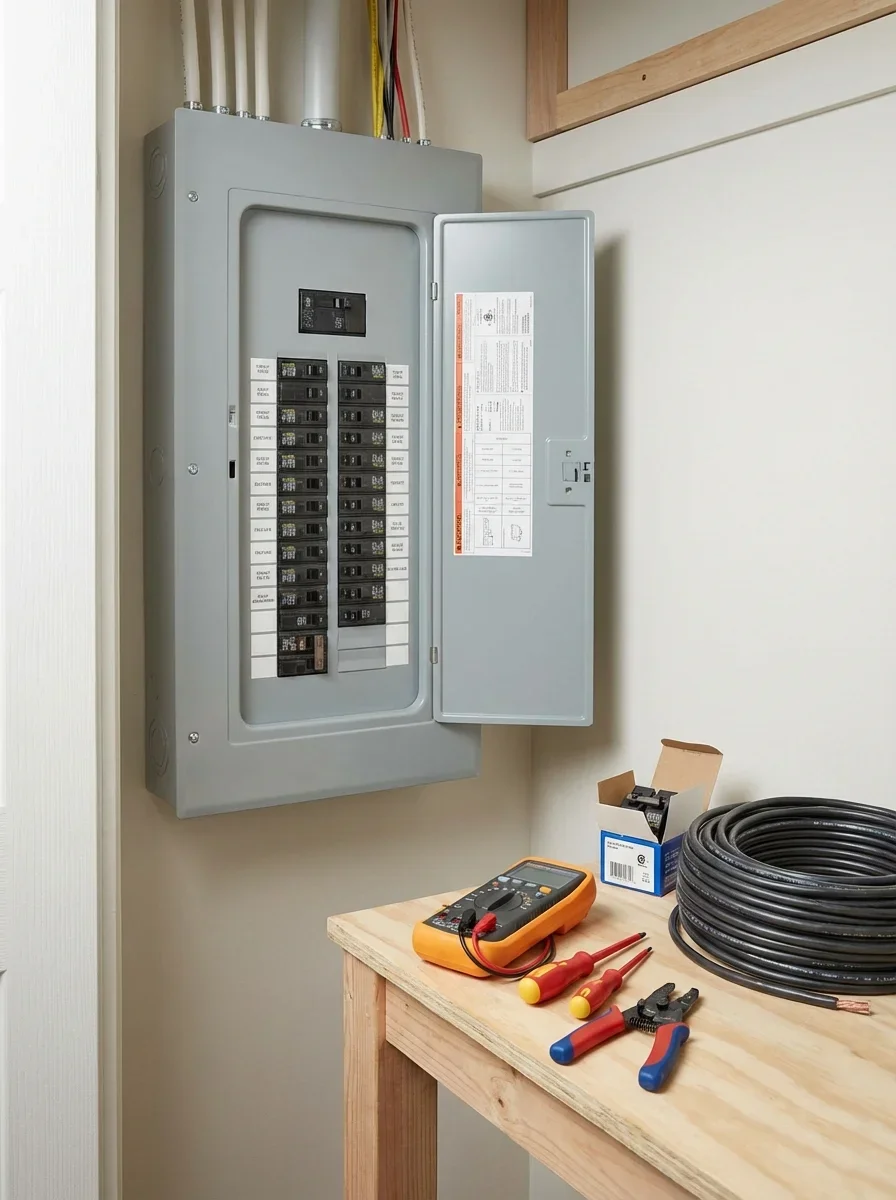
The range you'll see quoted—$1,200 to $4,000 for most residential projects—reflects how much work the electrician does beyond swapping the panel itself.[4] The low end assumes a straightforward like-for-like replacement: 100-amp panel in the same spot, no service entrance changes, no extensive rewiring. The high end includes utility coordination, meter socket replacement, service mast upgrades, and possibly trenching if your service entrance needs relocation.
Labor drives the majority of the cost. Licensed electricians in Arizona charge $75-$150 per hour depending on experience and location, and panel upgrades take 6-20 hours depending on complexity.
A simple 100-amp swap takes 6-8 hours once permits are in hand. A 200-amp upgrade with new service entrance equipment and meter base can stretch to 20+ hours over multiple days, especially if the utility company needs to disconnect and reconnect service.
Permitting and inspection fees add $100-$500 depending on your municipality. Phoenix charges around $200 for electrical permits on service upgrades; Scottsdale and Chandler run slightly higher. The permit process isn't optional. It's how the jurisdiction ensures the work meets National Electrical Code requirements and Arizona amendments. Inspectors verify grounding systems, bonding, overcurrent protection sizing, and clearances around the panel.
Material costs for the panel and breakers range from $300 to $1,200. A basic 100-amp panel with 20 spaces costs $200-$300. A 200-amp panel with 40 spaces runs $500-$800, and specialty panels with smart home integration or generator interlocks push toward $1,200.
Breakers aren't included in panel pricing. Each breaker costs $15-$75 depending on amperage and whether it's GFCI, AFCI, or combination protection.
Arizona's caliche soil can spike costs if your service entrance requires relocating the ground rod or upgrading grounding conductors. Breaking through caliche to drive a new 8-foot ground rod can add 2-4 hours of labor plus equipment rental, easily adding $500 to a project. Older homes with shallow grounding systems sometimes need supplemental electrodes to meet current code.
| Cost Component | Low End | High End | Notes |
|---|---|---|---|
| Labor (6-20 hours) | $450 | $3,000 | More hours for service entrance upgrades |
| Panel & Breakers | $300 | $1,200 | 200-amp panels cost more than 100-amp |
| Permits & Inspections | $100 | $500 | Varies by municipality |
| Service Entrance Work | $0 | $2,000 | Meter socket, conduit, weatherhead replacement |
| Total Project Cost | $1,200 | $4,500+ | High end includes 200-amp upgrade with utility work |
Cost by Amperage: 100, 150, and 200 Amp Services
A 100-amp to 100-amp panel replacement—keeping the same service size—costs $1,200-$2,500 in most Arizona cities. This assumes the existing service entrance (the overhead or underground lines feeding your panel) can stay in place, the meter socket doesn't need replacement, and the grounding system meets code.
Electricians pull permits, disconnect the old panel, install the new one, reconnect circuits, and schedule inspection. Total time: 6-10 hours over 1-2 days.
Upgrading from 100-amp to 200-amp service costs $2,500-$4,500 because you're not just changing the panel.[4] The utility company must approve a service size increase, which often requires replacing the meter socket, service mast, and weatherhead. If your current service uses overhead lines and the utility determines the existing drop can't handle 200 amps, they'll need to install larger conductors. A process that can add 1-2 weeks to the timeline while you wait for utility scheduling.
The service entrance conductors (the thick cables running from the meter to the panel) must be upsized from #1 aluminum or #4 copper (typical for 100-amp) to #2/0 aluminum or #2 copper (minimum for 200-amp). If those conductors run through conduit underground or are embedded in a wall, the electrician may need to run new conduit or open walls to fish larger wire.
That's where costs escalate quickly. What looked like a $3,000 panel swap becomes a $5,000 project once drywall repair and painting are factored in.
150-amp services sit in a middle ground, costing $2,000-$3,500. They're less common in new construction but make sense for homes that need more than 100 amps but won't max out a 200-amp panel. Some municipalities allow 150-amp upgrades without utility service entrance changes if the existing drop is rated for it, saving permitting time and cost.
For homes adding EV charger installation or pool equipment, the 200-amp upgrade usually makes sense even if current load calculations don't strictly require it. You're paying for the service entrance work either way, and the difference between a 150-amp and 200-amp panel is only $200-$300 in materials.
Future-proofing avoids having to upgrade again in 10 years when you add a second EV or tankless water heater.
What Drives Panel Upgrade Costs Higher
Accessibility is the first cost amplifier.
Panels in tight garage corners, mounted behind water heaters, or installed in closets packed with storage require extra labor to work safely. Arizona Building Code requires 30 inches of clearance in front of panels and 36 inches of working width. If your panel doesn't meet that, the electrician may need to relocate it to a compliant location, adding $800-$1,500.
Older homes with outdated wiring often reveal surprises once the electrician opens the existing panel. Aluminum branch circuit wiring, common in 1960s-1970s Arizona homes, requires special twist-on connectors rated for aluminum-to-copper transitions (the new panel will have copper bus bars). If the existing aluminum circuits show corrosion or weren't properly terminated originally, the electrician may recommend partial rewiring. Potentially thousands in additional cost.
Homes with knob-and-tube wiring or ungrounded circuits can't simply have a new panel bolted on. They need whole house rewiring to meet code.
Service entrance upgrades hit hardest when the utility infrastructure can't support the new load. If you're upgrading to 200 amps and the transformer on the utility pole serves multiple homes at capacity, the utility may require a transformer upgrade before approving your service increase. You don't pay for the transformer, but you wait 4-8 weeks for utility crews to schedule it, and your project stalls.
Meter socket replacement adds $400-$800 when required. Arizona Public Service and Salt River Project have specific requirements for meter bases on upgraded services, and older sockets often don't meet current standards. If the meter is mounted on an exterior wall with severe sun exposure, the electrician may recommend relocating it to a shaded side of the house. This requires trenching or routing new conduit, easily $1,500-$2,000 extra.
Main disconnect location can be another variable.
Current code in some Arizona jurisdictions requires the main disconnect to be accessible from outside the home, separate from the interior panel. If your home doesn't have this and the jurisdiction enforces it during permitting, you'll need a separate exterior disconnect switch installed near the meter, adding $600-$1,000 to the project.
What Does a Professional Panel Upgrade Include?
A licensed electrician handles the entire process, starting with a load calculation to determine the right service size for your home. They measure existing circuits, account for future additions you're planning, and size the panel so you're not maxing out capacity on day one. This calculation follows NEC Article 220 and determines whether 100, 150, or 200 amps is appropriate.
After load calculation, the electrician pulls permits through your municipality. This involves submitting wiring diagrams, service size documentation, and proof of ROC licensing. Permit fees are typically included in the quoted price, but confirm that upfront.
Once permits are approved, the electrician schedules a utility disconnect if required. APS or SRP sends a crew to pull the meter, killing power to your home for 4-8 hours during the swap.
The physical installation includes mounting the new panel, landing service entrance conductors on the main lugs, installing the appropriate main breaker, and reconnecting all branch circuits. Each circuit is labeled (required by code), and the electrician verifies proper torque on terminal screws. Loose connections are a leading cause of panel failures years later.
The grounding and bonding system is inspected and upgraded if necessary, including bonding the neutral bus, installing ground rods, and connecting grounding electrode conductors.
After installation, the electrician calls for inspection. The inspector checks workmanship, code compliance, panel clearances, and proper grounding. If the installation passes, the utility reconnects the meter and restores power. If corrections are needed, the electrician makes them and schedules a re-inspection. This is rare with experienced contractors but can happen if inspectors enforce newly adopted code amendments.
Professional installations include a warranty on labor (typically 1-2 years) and manufacturer warranties on the panel and breakers (10-20 years). The electrician provides documentation of the permit, inspection sign-off, and load calculation. You'll need these for homeowner insurance updates and future home sales.
Pro Tip: Keep all panel upgrade documentation—permits, inspection reports, load calculations, and warranties—in a dedicated home maintenance file. Future buyers will request these during sale, and insurance companies may need them if you file a claim. Photos of the completed installation with the panel cover removed (showing clean wiring) add value during resale.
Permits, Inspections, and Code Compliance
Every panel upgrade in Arizona requires a permit. No exceptions.
Homeowners sometimes ask if they can skip permits to save money, but that creates serious problems. Unpermitted electrical work voids homeowner insurance coverage for electrical fires, makes your home difficult to sell (title companies often require permits for major work), and exposes you to fines if discovered during later permitted work.
The permit process starts with the electrician submitting plans to your city or county building department. They'll include a one-line diagram showing the service entrance configuration, panel schedule listing all circuits, and load calculation proving the new service size is appropriate. The building department reviews for code compliance, issues the permit (usually within 3-5 business days), and schedules inspection once work is complete.
Inspections verify several critical safety elements. The inspector checks that the service entrance conductors are sized correctly for the amperage, the grounding electrode system meets NEC requirements (typically two ground rods driven 8 feet deep, spaced at least 6 feet apart), and all bonding jumpers are installed. They verify the panel has proper working clearances, is labeled clearly, and all breakers are correctly sized for the wire gauge they protect.
Arizona-specific code amendments sometimes catch homeowners off guard.
Some jurisdictions require arc-fault circuit interrupter (AFCI) protection on all 120-volt circuits, not just bedrooms as federal code requires. AFCI breakers cost $50-$75 each versus $15 for standard breakers, adding $400-$800 to a 20-circuit panel upgrade. The electrician should identify these requirements during quoting, but verify they're included.
Homes built before 1980 often need grounding system upgrades to pass inspection. Older Arizona homes sometimes have only one ground rod or rely on grounding to metal water lines—both insufficient under current code. The electrician will drive new ground rods and install a grounding electrode conductor, usually #4 copper, connecting panel to rods. In caliche soil, this can require rented rotary hammers or pre-drilling, adding labor time.
Utility Coordination and Service Entrance Work
Your local utility company—Arizona Public Service, Salt River Project, Tucson Electric Power, or a municipal provider—controls when your meter can be disconnected and reconnected. The electrician coordinates these appointments, but you'll be without power for at least 4-6 hours on installation day. Some upgrades requiring extensive service entrance work can stretch to 8-10 hours without power.
If you're upgrading service size (100-amp to 200-amp), the utility needs advance notice—typically 2-4 weeks. They'll inspect their infrastructure to confirm the existing transformer and service drop can handle the increased load.
In older neighborhoods with heavily loaded transformers, the utility may require a transformer upgrade before approving your service increase. You don't pay for this, but it delays your project by weeks or months depending on utility crew availability.
The meter socket and weatherhead (the assembly where overhead service lines enter the conduit) often need replacement during service upgrades. Arizona utilities have specific requirements: APS requires a separate disconnect within sight of the meter for services over 200 amps, and SRP mandates specific meter socket heights and clearances. If your existing installation doesn't meet current standards, the electrician must bring it up to spec before the utility will reconnect.
Underground services face different challenges. If your service runs underground from a transformer pad to your meter, the electrician may need to pull new larger conductors through existing conduit, or install entirely new conduit if the existing run is too small. Trenching through caliche soil to install new underground conduit costs $15-$30 per linear foot, and runs from transformer to meter can span 50-150 feet in Arizona subdivisions with rear-loaded utilities.
During the utility disconnect, the electrician verifies the weatherhead and service drop are in good condition.
Overhead lines exposed to Arizona's UV radiation and 110°F+ summer heat develop cracked insulation after 30-40 years. If the utility crew identifies deteriorated service drop cables during reconnection, they'll refuse to reconnect until the homeowner pays for new drop installation—typically $800-$1,500. A good electrician inspects this beforehand to avoid surprises.
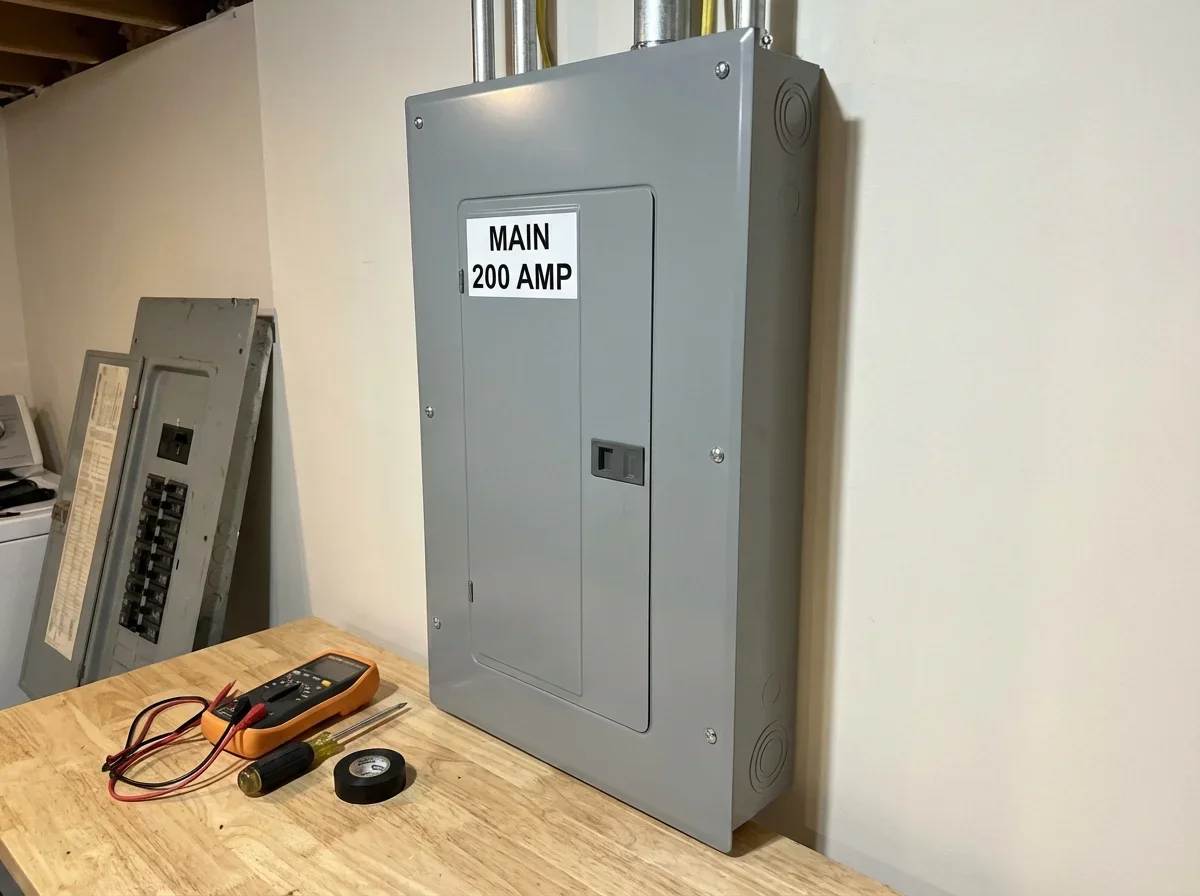
How to Choose a Qualified Electrician for Panel Upgrades
Panel upgrades require an Arizona Registrar of Contractors (ROC) license, not just a journeyman electrician card. Specifically, you need a contractor with a residential electrical license (classification code C-11) or a dual residential/commercial license. Verify the license is active and in good standing at roc.az.gov before hiring.
The contractor's license number should appear on estimates, permits, and invoices.
Master electrician certification adds another layer of qualification. While Arizona doesn't require a master's license to pull permits, electricians with master certification from the state or professional organizations have passed additional testing on code interpretation and complex installation. For panel upgrades involving service entrance modifications or aluminum wiring compatibility, a master electrician's experience reduces the risk of failed inspections or code violations.
Insurance verification matters more than most homeowners realize. Arizona doesn't require contractors to carry workers' compensation insurance (highly unusual among states), so you must verify general liability coverage independently. Request a certificate of insurance naming you as additional insured, and confirm the policy is current.
The ROC bond—only $4,000-$15,000 depending on license type—won't cover a panel fire that causes $200,000 in home damage. You need confirmation of $1,000,000+ general liability coverage.
Get detailed written estimates from at least two licensed contractors. The estimate should itemize labor hours, materials (panel, breakers, conduit, wire), permit fees, inspection costs, and any anticipated service entrance modifications. If one estimate is significantly lower than others, ask what's excluded. Some contractors quote panel-only pricing and add service entrance costs as change orders mid-project.
References and recent panel upgrade photos help verify experience. Ask for photos of completed panel installations, focusing on workmanship details: neat wire routing, properly torqued connections, clear labeling, and clean conduit entries. Contact references who had similar scope work (especially service entrance upgrades) and ask about timeline accuracy, communication during utility coordination, and whether the final cost matched the estimate.
Arizona electricians familiar with local conditions understand challenges you won't find in other states.
They know caliche soil requires specialized ground rod installation techniques, that panels in direct sun fail faster and should be relocated during upgrades, and which municipalities enforce strict AFCI requirements. An electrician who's pulled 200 permits in Maricopa County will navigate the process faster than someone doing their first Arizona panel upgrade.
For complex projects—aluminum wiring replacement, integration with whole house generator installation, or coordinating smart home wiring during a panel upgrade—prioritize electricians with specific experience in those areas. Panel replacement is the foundation, but proper integration with specialty systems requires additional expertise.
Find Licensed Electricians for Panel Upgrades Near You
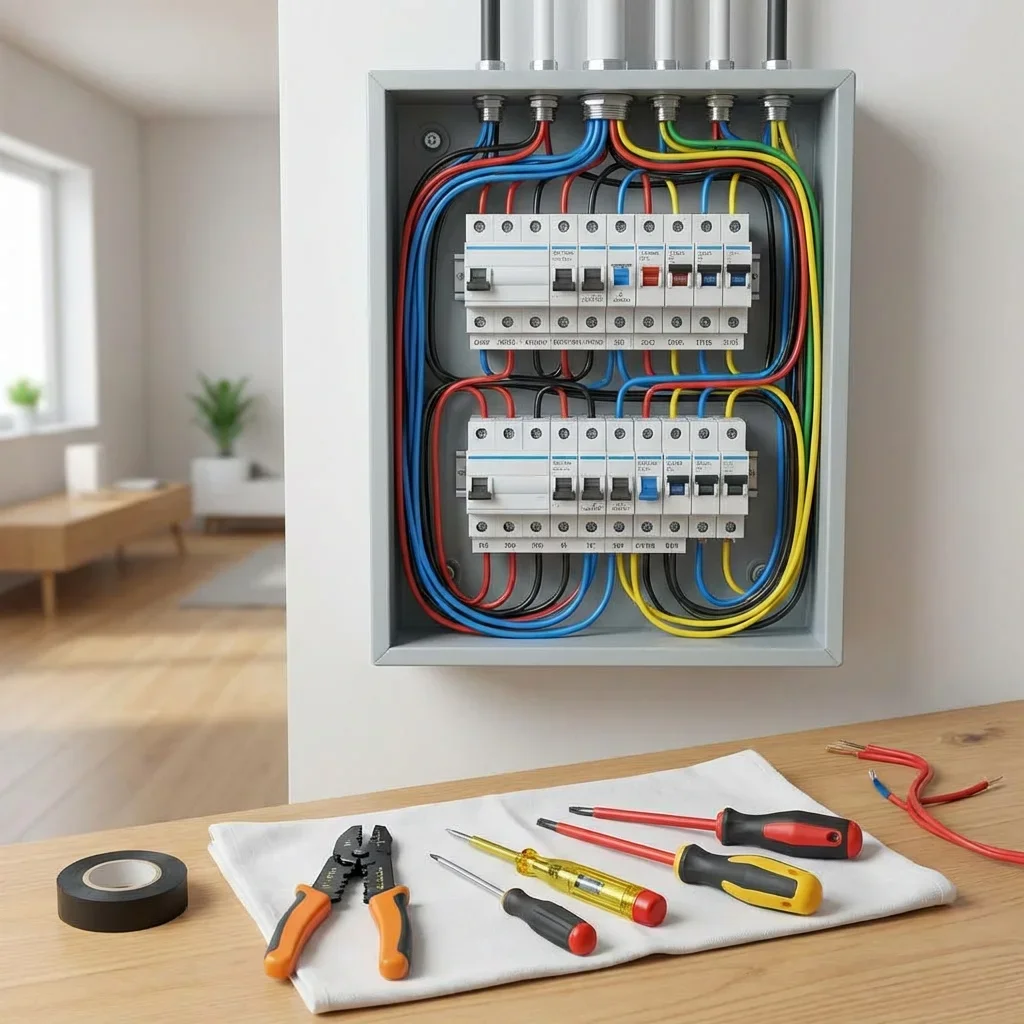
Finding qualified electricians who specialize in panel upgrades and service entrance work—and who carry proper licensing and insurance—starts with verifying credentials before you request quotes. Arizona's unique licensing structure means not every "electrician" can legally pull permits for your upgrade, and the ROC database at roc.az.gov lets you confirm license status, complaint history, and bond coverage in under two minutes.
Top-rated contractors in Phoenix, Scottsdale, and Tempe typically book panel upgrades 2-4 weeks out during peak summer months when electrical load failures spike with AC usage. If your panel is a fire hazard (Federal Pacific or Zinsco), many electricians prioritize these as urgent safety work and can schedule within days.
For capacity upgrades tied to home remodels or EV charger additions, expect more flexible scheduling.
When requesting quotes, provide specific details: current panel amperage and brand, planned additions (EV charger, pool equipment, AC upgrade), and whether you've already confirmed your utility can support a service increase. Electricians can give accurate estimates faster when they know if your project includes service entrance modifications, meter relocation, or grounding system upgrades.
Photos of your existing panel—with the cover removed if safe to do so—help electricians identify complications before the site visit.
Licensed Arizona electricians handling panel upgrades understand local permit requirements, utility coordination timelines, and jurisdiction-specific code amendments that add cost. They'll factor in caliche soil conditions if ground rod work is needed, recommend panel relocation if clearances don't meet code, and explain why a 200-amp upgrade makes sense even if your current load calculation shows 150 amps would suffice.
You'll find experienced, ROC-licensed electrical contractors ready to provide detailed estimates and walk you through the permit, utility coordination, and inspection process from start to finish. Verifying their license, confirming insurance independently, and comparing itemized estimates from multiple contractors ensures you get quality work at a fair price.
And a panel upgrade that keeps your home safe for the next 30-40 years.
Frequently Asked Questions
- U.S. Department of Energy. "Electrical Panels and Distribution Systems." https://www.energy.gov/energysaver/electrical-panels-and-distribution-systems. Accessed April 06, 2026.
- U.S. Consumer Product Safety Commission. "Federal Pacific Electric Panels." https://www.cpsc.gov/safety-education/safety-guides/home/federal-pacific-electric-panels. Accessed April 06, 2026.
- National Fire Protection Association. "Unsafe Electrical Panels." https://www.nfpa.org/education-and-research/home-fire-safety/electrical/electrical-panels. Accessed April 06, 2026.
- This Old House (industry publication). "Upgrading Electrical Service Panels." https://www.thisoldhouse.com/electrical/21015204/upgrading-electrical-service-panels. Accessed April 06, 2026.
- U.S. Department of Energy. "Electrical Panel Replacement." https://www.energy.gov/energysaver/electrical-panel-replacement. Accessed April 06, 2026.