What Does Professional EV Charger Installation Include?
Professional installation isn't plug-and-play. Your electrician starts by evaluating whether your home's electrical system can handle the additional load, then sizes and installs a dedicated circuit that meets National Electrical Code (NEC) Article 625 requirements.
The charger itself is just the visible part. Most of the work happens inside your panel and behind your walls.
Electrical Assessment and Load Calculation
Before touching any wiring, a qualified electrician performs a load calculation to determine if your existing electrical service can support the charger's demand. Most Level 2 chargers draw 30-50 amps continuously.
If your panel is already near capacity — common in Arizona homes built before 2000, especially those with pools and two AC units — you'll need a panel upgrade before installing the charger.
The electrician also measures the distance from your panel to the planned charger location. Longer runs (over 100 feet) require larger wire gauge to prevent voltage drop. In Phoenix-area homes with detached garages or carports on the opposite side of the house from the main panel, this distance can add $500-$1,200 to the project just for wire and conduit.
Circuit Installation and Breaker Sizing
The charger needs a dedicated 240-volt circuit. It doesn't share with any other load. Your electrician installs a new double-pole breaker in your panel (typically 40-60 amps depending on the charger), runs appropriately sized wire (usually 6 AWG or 8 AWG copper) through conduit to the charger location, and installs a junction box or outlet receptacle.
Arizona requires metallic conduit for exposed exterior runs due to UV degradation of PVC and wildlife damage. Yes, pack rats chew through wiring.
That conduit must be properly secured and grounded. Cutting corners here — like burying direct-burial cable without conduit in areas subject to landscape maintenance — leads to damage and code violations that show up during home sales inspections.
Mounting, Wiring, and Code Compliance
The charger gets mounted to a solid surface. Garage wall studs, exterior block wall, or a freestanding post — at a height that keeps the cable off the ground but allows comfortable plug access. Outdoor installations require a weatherproof enclosure rated NEMA 3R or higher.
The electrician terminates the wiring, verifies proper grounding, tests the circuit, and ensures everything meets NEC 625 requirements before the final inspection.
You'll also need GFCI protection, either at the breaker or within the charger itself. Modern EVSE (Electric Vehicle Supply Equipment) units include internal GFCI, but older homes with existing circuits often need breaker replacement.
Electrical Requirements for Home EV Charging
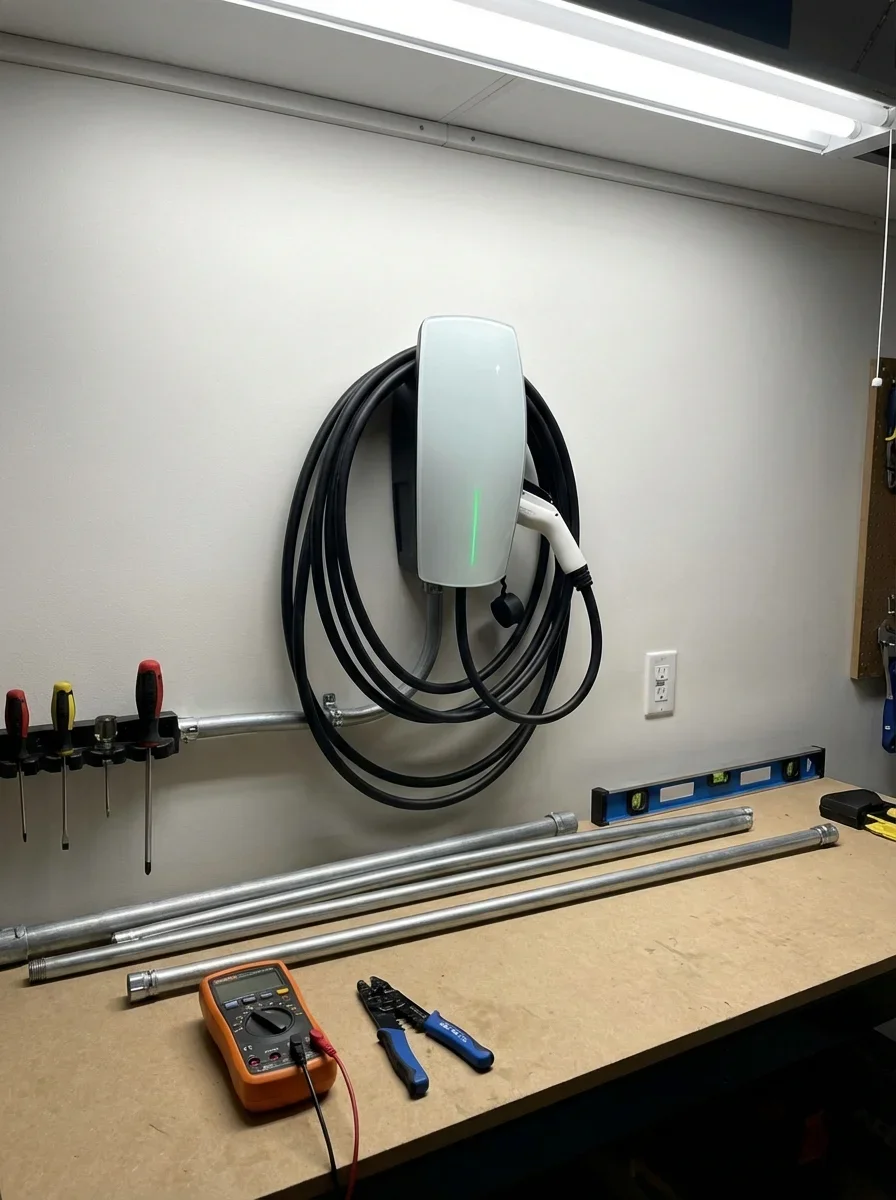
Not all chargers demand the same electrical infrastructure. What you need depends on the charger type, your vehicle's onboard charging capacity, and your existing electrical service.
Level 2 Charger Power Needs
Level 2 chargers operate on 240 volts and typically draw 16-80 amps, though most residential installations fall in the 30-50 amp range. A 40-amp charger on a 50-amp circuit delivers about 9.6 kW, charging most EVs from empty to full overnight (6-8 hours).
Your vehicle's onboard charger determines actual charging speed. Even with an 80-amp EVSE, a vehicle with a 7.2 kW onboard charger won't charge faster.
Philadelphia requires permits for all Level 2 installations, and the circuit must be sized at 125% of the charger's continuous load per NEC requirements.[2] That means a 40-amp charger needs a 50-amp circuit. Arizona follows the same NEC standard, and ROC-licensed electricians know these sizing rules. Unlicensed handymen often don't, leading to failed inspections.
Some homeowners try using existing 240-volt dryer or range outlets. This works temporarily for portable chargers but violates code for permanent installations. Those circuits are sized for intermittent loads (dryers cycle), not continuous loads (EV chargers run for hours). Your dryer circuit is likely 30 amps — too small for most modern EVs.
Quick Reference: Common EV Charger Circuit Requirements
- 32-amp charger = 40-amp circuit (7.7 kW output)
- 40-amp charger = 50-amp circuit (9.6 kW output)
- 48-amp charger = 60-amp circuit (11.5 kW output)
- Wire gauge: 6 AWG copper for 50-amp circuits, 8 AWG for 40-amp
- Typical installation time: 4-8 hours for standard garage setup
- Always size circuit at 125% of charger's continuous amp draw
When You Need a Panel Upgrade
Most homes need 200-amp service to add an EV charger without other electrical compromises. If your home has 100-amp or 150-amp service — common in Arizona homes built before 1990 — you're looking at a panel upgrade before the charger installation.
Even with 200-amp service, the existing load matters. A Scottsdale home with two central AC units (each pulling 30-40 amps during summer peaks), a pool pump, electric water heater, and now an EV charger can exceed the panel's safe capacity. Your electrician calculates total load using NEC Article 220 rules.
If the math doesn't work, you'll need either a panel upgrade to 400-amp service (rare and expensive, $3,000-$6,000) or a load management system that prevents the charger from operating when AC units are running.
Smart load management devices like Span panels or Wallbox Pulsar Plus with power sharing can coordinate loads dynamically, allowing EV charging during off-peak hours without exceeding panel capacity. These add $500-$1,500 to the project but avoid a full panel upgrade.
Permit Requirements and Electrical Inspections
Arizona requires permits for electrical work exceeding $1,000, and EV charger installations almost always cross that threshold. The permit costs $50-$150 depending on your city, but the real value is the inspection.
It's your verification that the work meets code and won't burn your house down.
Unpermitted electrical work creates three problems: it voids your homeowner's insurance if a fire occurs, it surfaces during home sales when buyers request electrical inspections, and it can trigger expensive retrofits if discovered later. Some homeowners skip permits thinking they'll save money. They don't — they just defer the cost to the worst possible moment.
The inspection covers circuit sizing, grounding, GFCI protection, conduit installation, and NEC Article 625 compliance. Inspectors in Phoenix and Scottsdale specifically check for proper wire gauge on long runs (common with detached garages) and adequate clearances around the charger.
If you used an unlicensed installer who didn't pull permits, you're paying a licensed electrician to fix the work and pass inspection anyway.
New construction and major renovations in many jurisdictions now require EV-ready electrical infrastructure — conduit from the panel to the garage with sufficient capacity to add a Level 2 charger later.[1] Arizona hasn't adopted this as a statewide requirement, but some municipalities include it in local amendments. This is one area where the IRC amendments vary by city.
Pro Tip: Always verify your electrician pulled the permit before work begins. Ask for the permit number and check it with your city's building department. If the contractor says "we'll handle permits after installation," walk away — that's a red flag for unlicensed work.
What Should EV Charger Installation Cost?
Basic installation runs $500-$1,200 in most Arizona markets. That's when your charger location is 20 feet from the panel, no panel upgrade needed, straightforward garage wall mount. The price includes the electrician's labor, permit, materials (wire, conduit, breaker), and inspection.
You supply the charger.
Cost Factors That Affect Your Project
Distance drives cost. If your charger location is 100+ feet from the panel, add $600-$1,500 for wire and conduit alone. Six-gauge copper wire costs $3-$4 per foot, and metallic conduit adds another $2-$3 per foot installed.
Panel upgrades add $1,500-$3,000 depending on complexity. Upgrading from 100-amp to 200-amp service requires utility coordination for a new meter base, possibly a new service mast, and a full panel replacement. In older Arizona homes with aluminum service entrance cables, this gets more expensive.
Outdoor installations cost more than garage installations due to weatherproof enclosures, concrete pads (if mounting a pedestal), and additional conduit work. Budget an extra $300-$600 for exterior installations.
Trenching through caliche for underground conduit runs can add $15-$25 per linear foot versus $8-$12 in normal soil. Arizona's calcium carbonate hardpan makes digging expensive.
Load management systems or smart panel upgrades add $500-$2,000 but can eliminate the need for full service upgrades. For homes pushing electrical capacity limits, this is often the most cost-effective path.
| Cost Component | Basic Install | Complex Install | With Panel Upgrade |
|---|---|---|---|
| Distance from panel | 20-50 feet | 100+ feet | Varies |
| Base installation | $500-$800 | $1,200-$2,000 | $2,000-$3,500 |
| Wire & conduit | Included | +$600-$1,500 | +$400-$1,000 |
| Panel work | None | None | +$1,500-$3,000 |
| Total typical cost | $500-$1,200 | $1,800-$3,500 | $3,900-$7,500 |
Hidden Costs to Budget For
Utility fees surprise people. If your panel upgrade requires a new meter or service drop, the utility may charge connection fees ($200-$800) and take 4-8 weeks to schedule the work.
You can't use your new charger until the utility signs off.
Some HOAs require architectural approval for exterior charger installations or pedestal mounts visible from the street. The approval process adds no cost but can delay the project 2-6 weeks. Get HOA approval before hiring an electrician.
Time-of-use electrical rates matter in Arizona. APS and SRP offer EV-specific rate plans with cheaper overnight electricity (7pm-7am rates as low as $0.06/kWh vs $0.27/kWh during peak summer hours). Enrolling in these plans requires a separate meter or time-of-use programming in smart chargers. Your electrician can't change your rate plan, but they should know which chargers support TOU scheduling.
Some electricians charge trip fees ($75-$150) for the initial assessment visit. Others include it in the installation quote. Ask up front.
Getting multiple quotes is smart, but compare apples to apples. A quote that includes permit, inspection, materials, and warranty costs more than one that excludes them.
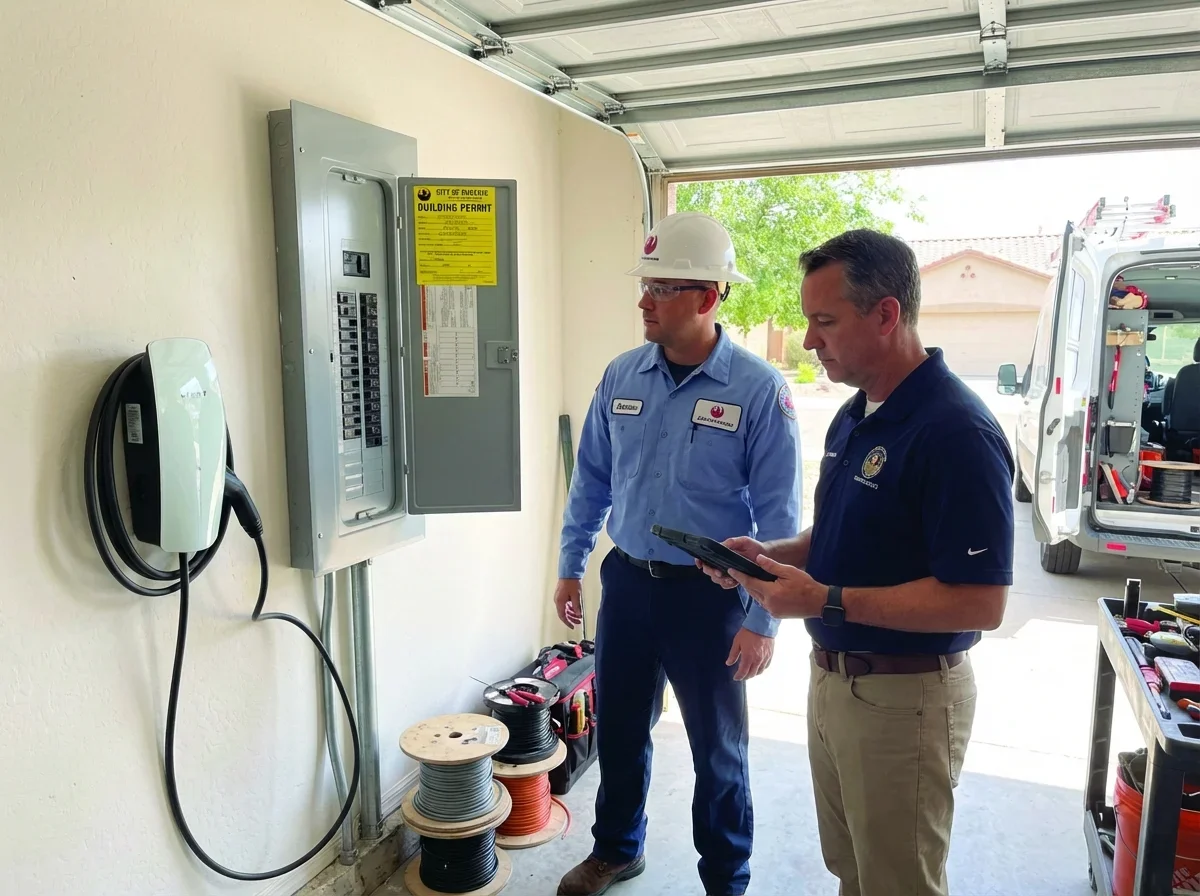
Indoor vs Outdoor Installation: What Works Best?
Garage installations are simpler and cheaper. The charger stays protected from Arizona's UV exposure and monsoon weather, the panel is usually nearby, and you avoid exterior conduit runs.
Most homeowners prefer garage installations when parking inside is routine.
Outdoor installations make sense when the garage is full of storage, when you park in a carport or driveway, or when the garage is too far from the panel. Arizona's desert UV degrades plastic charger housings — look for units with UV-resistant enclosures rated for outdoor use. Manufacturers like ChargePoint, JuiceBox, and Wallbox make outdoor-rated models, but cheaper units designed for garage use fail quickly in direct sun.
Concrete mounting pads are optional but recommended for pedestal installs. A 2x2 foot pad costs $100-$200 and keeps the charger stable and level. Mounting to exterior block walls works if the block is solid, not decorative veneer.
Your electrician should verify the wall can support the charger's weight plus cable tension.
Cable management matters more outdoors. A 25-foot charging cable laying across your driveway becomes a tripping hazard and gets run over. Wall-mounted cable hangers or retractable cable reels ($50-$150) keep things tidy.
Some homeowners regret skipping this. Coiling a heavy cable after every charge gets old fast.
How to Choose a Qualified EV Charger Installer
Not all electricians have EVSE installation experience. Your standard residential electrician can handle the circuit work, but they should understand EV-specific code requirements, load management options, and charger compatibility issues.
Licensing and Insurance Requirements
Arizona requires an ROC license for electrical work exceeding $1,000. Verify the contractor's license at roc.az.gov before hiring — active status, no disciplinary actions, proper residential (R) or residential/commercial (K) classification.
The license number should appear on their quote and business card.
Liability insurance is separate from the ROC bond. The bond ($4,000-$15,000) barely covers material costs on larger projects. Ask for proof of general liability insurance ($1M minimum) and workers' compensation if they have employees. Arizona doesn't require workers' comp, so many small contractors skip it — you're liable if an uninsured worker gets hurt on your property.
Some electricians hold manufacturer certifications from Tesla, ChargePoint, or other EVSE brands. These aren't required, but they indicate experience with brand-specific installation requirements and warranty compliance.
Tesla Wall Connectors, for example, have specific torque requirements for wire terminations that void the warranty if ignored.
Questions to Ask Before Hiring
How many EV chargers have you installed in the past year? You want double-digit experience, not "I've done a couple." Ask for references from recent EV installations, not general electrical work.
What does your quote include? Confirm it covers permit, materials, labor, inspection, and cleanup. Separate line items for each help you compare quotes accurately.
A $600 quote that excludes the $200 permit and $150 breaker isn't cheaper than an $850 all-inclusive quote.
Do you warranty the installation? Most reputable electricians warranty labor for 1-2 years. The charger itself has a manufacturer warranty (typically 3 years), but installation defects — loose connections, improper grounding — fall on the electrician. Get the warranty terms in writing.
Will you handle the utility coordination for panel upgrades? If your project requires utility involvement for meter or service changes, the electrician should manage that communication.
You don't want to be the middleman between your electrician and APS.
Can you install a load management system if needed? If your panel is near capacity, you need an electrician who understands smart panels, load sharing, and alternatives to full service upgrades. Not all electricians stay current on these technologies.
Available Rebates and Tax Incentives
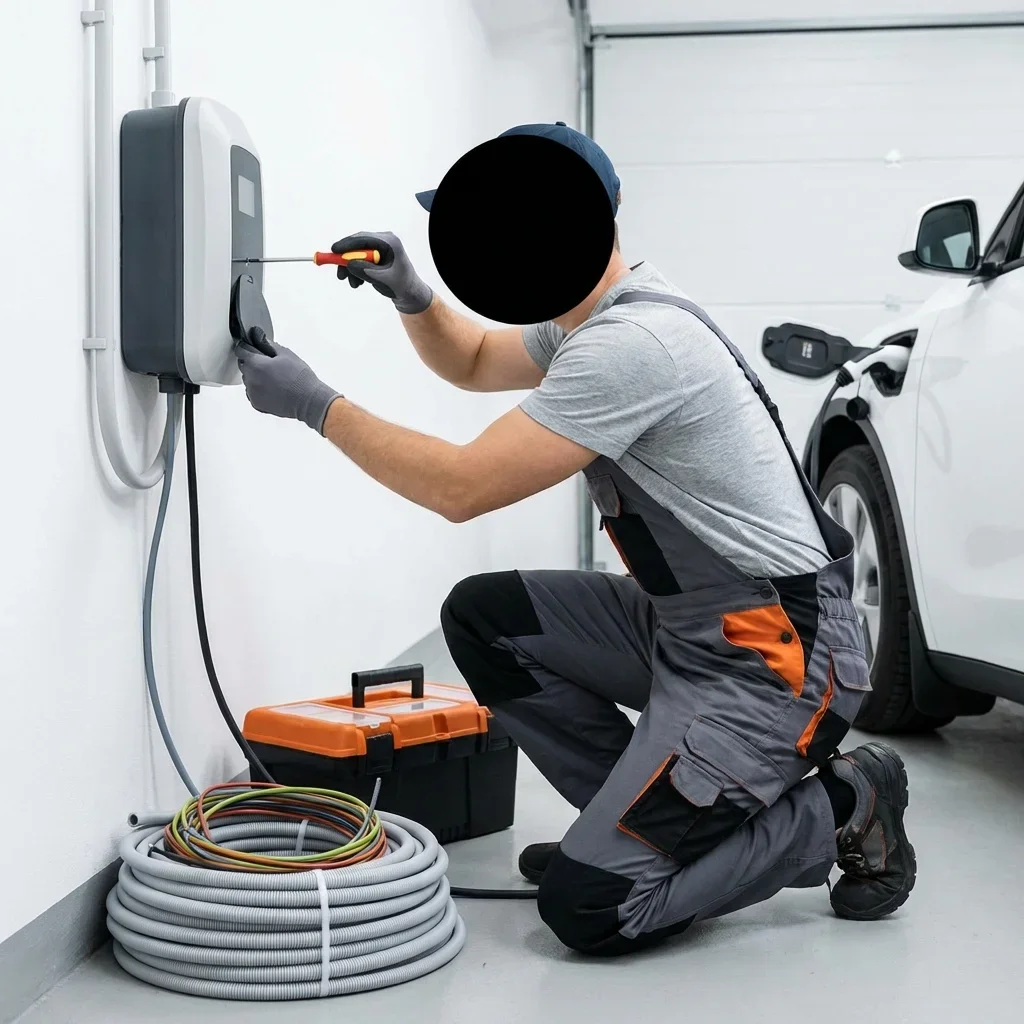
The federal tax credit for EV charger installation covers 30% of hardware and installation costs, up to $1,000 for residential installations (as of 2024-2025 under the Inflation Reduction Act). You claim it on IRS Form 8911 when filing taxes.
The credit applies to both the charger and the electrician's labor. Keep all receipts.
Arizona doesn't offer a state-level EV charger rebate, but some utilities do. APS offers rebates up to $200 for time-of-use rate plan enrollment combined with Level 2 charger installation. SRP periodically runs similar programs. Check with your utility before installation — some rebates require pre-approval or specific charger models.
Some cities offer additional incentives. Tempe and Phoenix have run pilot programs for EV infrastructure rebates, though availability varies by year and budget.
These stack with federal credits but usually require submitting applications before starting work.
Workplace charging incentives exist for commercial properties. If you're installing chargers for employee use, the federal credit increases to 6% of costs up to $100,000 for commercial installations. That's a different program than residential — see our commercial electrical guide for details.
Find Licensed Electricians for EV Charger Installation
Look for ROC-licensed electricians with documented EVSE installation experience. Most electrical contractors in Phoenix, Scottsdale, Tempe, Gilbert, and Chandler now offer EV charger installation as a standard service.
The question is whether they've done enough of them to spot potential issues during the assessment visit.
Ask about panel capacity evaluation up front. A good electrician should offer to calculate your existing load before quoting the project. If they quote a flat rate without seeing your panel or asking about your home's electrical loads, they're guessing.
That guess often turns into change orders when they discover you need a panel upgrade.
Expect the project to take 1-3 days from permit application to final inspection. The actual installation work is 4-8 hours for straightforward jobs, longer if trenching or panel upgrades are involved. Permit approval and inspection scheduling drive the timeline — most Arizona cities approve electrical permits within 2-5 business days.
Your electrician should test the completed installation with your vehicle before calling for inspection. This catches any compatibility issues with your specific EV model. Some older Tesla vehicles require specific settings on third-party chargers, and certain Nissan Leafs have quirks with GFCI-protected circuits.
Testing before inspection avoids failed inspections and return trips.
If your home needs broader electrical work — replacing aluminum wiring, upgrading an outdated sub panel, or adding surge protection — coordinate those projects with the EV charger installation. You'll save on permit fees and electrician mobilization costs by bundling the work.
- U.S. Department of Energy Alternative Fuels Data Center. "Electric Vehicle (EV) Charger Building Standards." https://afdc.energy.gov/laws/11068. Accessed April 06, 2026.
- Philadelphia Department of Licenses and Inspections. "ELECTRICAL VEHICLE (EV) CHARGER REQUIREMENTS." https://www.phillca.gov/DocumentCenter/View/20502/ELECTRIC-VEHICLE-CHARGER-HANDOUT. Accessed April 06, 2026.