What Does Kitchen Electrical Remodeling Include?
Kitchen electrical work isn't just adding outlets where the old ones were. You're rebuilding the electrical infrastructure for a space that now consumes 3-4x the power it did in 1990.
Most Arizona homes built before 2000 have one 20-amp circuit serving all kitchen countertop outlets. Code now requires at least two, plus dedicated circuits for every major appliance.
The scope breaks into three phases: rough-in (before drywall), trim-out (after cabinets), and final connection (appliances and fixtures). Rough-in includes running cables, installing boxes, setting up circuits at the panel, and coordinating with your GC on drywall timing. Trim-out covers outlet and switch installation once cabinets reveal final placement. Final connection involves hardwiring appliances, hooking up pendants, and testing GFCI protection.
Required Circuits and Code Compliance
National Electrical Code (NEC) mandates two 20-amp small appliance circuits for countertop outlets, independent of lighting circuits.[1] In Arizona, ROC-licensed electricians must also follow IRC amendments that specify GFCI protection for all kitchen receptacles — countertop, island, and within 6 feet of the sink.
That's stricter than what was code in 2010.
You'll also need dedicated circuits for garbage disposals (typically 15 amps), dishwashers (15-20 amps), refrigerators (15-20 amps depending on model), and microwaves if hardwired. Electric ranges require 40-50 amp circuits. Gas ranges still need a 15-amp circuit for igniters and convection fans. If you're installing a pot filler over the stove or a wine fridge in the island, those are additional circuits.
Islands and peninsulas over 12 inches by 24 inches must have at least one outlet, and it has to be accessible — not under the countertop overhang where you can't reach it. Electricians in older Arizona homes often run into caliche soil under slab foundations, which makes trenching for island circuits unexpectedly expensive.
Routing overhead through the attic adds labor but avoids the jackhammer.
Required Kitchen Circuits at a Glance:
- Two 20-amp small appliance circuits (countertop outlets)
- Garbage disposal: dedicated 15-amp circuit
- Dishwasher: dedicated 15-20 amp circuit
- Refrigerator: dedicated 15-20 amp circuit
- Electric range: 40-50 amp circuit (6-gauge wire)
- Gas range: 15-amp circuit for igniters/fans
- Microwave (if hardwired): dedicated 15-20 amp circuit
- Specialty appliances: wine fridge, pot filler, warming drawer each need dedicated circuits
Outlet and Switch Placement Planning
Code requires countertop outlets every 48 inches, measured along the wall. That sounds generous until you lay out a U-shaped kitchen with a 10-foot run — you're installing five outlets minimum, and they have to be positioned so no point along the counter is more than 24 inches from a receptacle.
Your electrician can't finalize placement until cabinets are templated.
Homeowners consistently underestimate outlet needs for small appliances. Coffee makers, toasters, stand mixers, electric kettles, blenders, Instant Pots — you're plugging in 4-6 devices daily, and you don't want half of them on the same circuit. Electricians experienced in kitchen remodels will ask about your appliance inventory during planning and spread loads across circuits to avoid nuisance tripping.
Switch placement for under-cabinet lighting, pendants, and recessed cans has to make sense with traffic flow. If you're entering from the garage, you want a three-way switch at that door and another at the main entry. Undercabinet lights often go on a dimmer switch, separate from overhead lighting.
This requires coordination with your cabinet installer. If the switch box goes in before cabinets, you might block a cabinet door.
Appliance Wiring Requirements
Electric ranges and cooktops need 40-50 amps depending on wattage. A 48-inch dual-fuel range with a 7.3 kW oven pulls more power than your 1995 panel was designed to handle. Electricians run 6-gauge wire (sometimes 8-gauge for 40-amp circuits) from a new breaker directly to a junction box behind the range.
You can't tap into an existing circuit.
Dishwashers are typically hardwired to a 15-20 amp circuit, though some municipalities allow plug connections if accessible. In Arizona, most electricians hardwire to avoid the "plug hidden behind the dishwasher" service call five years later. Disposals follow the same pattern: dedicated 15-amp circuit, hardwired connection, with a switch mounted above the counter (not under the sink where you'll fumble in the dark).
Microwaves over 1,000 watts should be on dedicated circuits. If you're installing an over-range microwave, it usually requires both a power circuit and ventilation coordination. Range hoods with 600+ CFM fans need their own circuits. Lower-wattage hoods can sometimes share with lighting. Your electrician will verify the spec sheet — a 1,200-watt hood on a 15-amp lighting circuit will trip the breaker every time you run the fan on high.
How Much Does Kitchen Electrical Remodeling Cost?
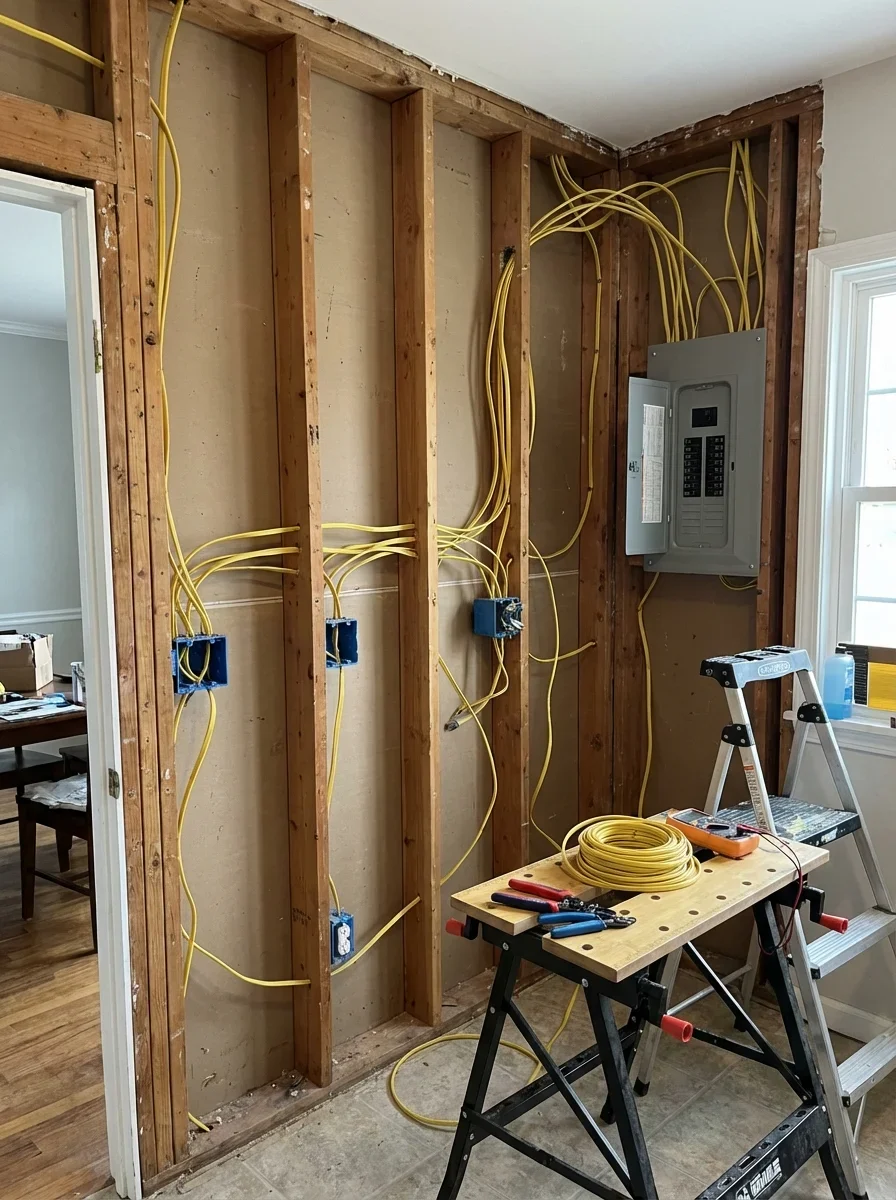
You'll pay $2,000-$8,000 for kitchen electrical work in Arizona, with most homeowners landing around $4,200 for a 150-square-foot kitchen with standard appliances. That assumes your existing 200-amp panel has 6-8 open slots for new circuits and you're not moving walls.
If you need a panel upgrade or you're adding structural changes that require rerouting circuits, add $2,000-$4,500.
Labor accounts for 60-70% of the cost. Arizona electricians charge $75-$150 per hour depending on metro area and license specialization. ROC-licensed contractors in Scottsdale and North Phoenix trend higher. Contractors in Mesa and Apache Junction run 15-20% below metro averages. Material costs are relatively stable: 12/2 Romex is $0.50-$0.70 per foot, 6-gauge for range circuits runs $1.20-$1.80 per foot, and GFCI outlets are $12-$18 each.
Cost by Kitchen Size and Scope
A galley kitchen under 100 square feet with basic appliances (refrigerator, gas range, dishwasher, disposal) typically costs $2,000-$3,500 if you're reusing existing circuit paths. You're adding 2-3 new circuits, upgrading outlets to GFCI, installing undercabinet lighting, and possibly one pendant.
An electrician spends 16-24 hours on rough-in, trim, and final.
Mid-size kitchens (120-180 square feet) with islands and upgraded appliances run $4,000-$6,500. This includes 5-7 new circuits, island outlet installation (often requiring attic routing in slab homes), recessed lighting over work zones, and undercabinet LED strips with dimming. If you're installing a wine fridge, built-in coffee maker, or pot filler, add $300-$600 per specialty appliance circuit.
Large kitchens over 200 square feet with commercial-grade appliances hit $6,500-$9,000 before panel upgrades. You're running 8-12 new circuits, possibly installing a sub panel if the main panel is on the opposite side of the house, and coordinating multiple lighting zones. A 60-inch range with dual ovens might need a 60-amp circuit. Under-counter ice makers, warming drawers, and trash compactors each add dedicated circuits.
Electricians in Gilbert and Chandler report these projects averaging 45-60 labor hours.
| Kitchen Size | Typical Cost | Circuits Added | Labor Hours | Best For |
|---|---|---|---|---|
| Galley (<100 sq ft) | $2,000-$3,500 | 2-3 circuits | 16-24 hours | Basic appliances, no island, gas range |
| Mid-Size (120-180 sq ft) | $4,000-$6,500 | 5-7 circuits | 30-40 hours | Island, upgraded appliances, recessed lighting |
| Large (200+ sq ft) | $6,500-$9,000 | 8-12 circuits | 45-60 hours | Commercial appliances, multiple zones, sub-panel |
When You Need a Panel Upgrade
Most Arizona homes built before 1995 have 100-amp or 150-amp panels. You'll max out capacity adding 5+ kitchen circuits if you already have central AC, a pool pump, and an electric water heater.
Signs you need an upgrade: the main breaker is 100 amps or less, you have fewer than 6 open slots, or you're seeing flickering lights when the AC kicks on.
Panel upgrades to 200 amps cost $2,000-$3,500 in Arizona, not including permit fees (typically $150-$300 depending on municipality). The work takes 6-12 hours. Your electrician coordinates a utility disconnect, swaps the panel, redistributes circuits, and schedules inspection. This is a separate line item from kitchen electrical. Some contractors bundle it, others quote separately.
Homes built in the 1970s-80s in Phoenix and Tempe sometimes have aluminum wiring in branch circuits. If your electrician finds aluminum when opening walls, you're looking at aluminum wiring remediation on top of kitchen work — $1,200-$2,800 depending on scope.
This isn't optional. Connecting copper wiring to aluminum without approved connectors creates fire hazards that fail inspection.
Certain electrical upgrades — including panel upgrades to 200 amps or more — may qualify for federal tax credits if they support energy-efficient improvements like heat pump installation or EV charging infrastructure.[2] Verify eligibility with your electrician and tax advisor before starting work.
Kitchen Electrical Code Requirements: What Your Electrician Must Follow
Arizona electricians must pull permits for any work that adds circuits or modifies panel load. Inspectors check for proper GFCI protection, correct wire gauge for circuit load, outlet spacing per NEC standards, and bonding/grounding compliance.
Unpermitted work voids insurance coverage and complicates home sales. Buyers' inspectors flag it, and you're paying to tear out drywall and redo everything to pass delayed inspection.
GFCI protection is required within 6 feet of sinks, on all countertop circuits, and on island/peninsula outlets. That's a change from pre-2014 code, which only required GFCI for outlets within 6 feet of water sources. Homeowners often balk at the cost ($12-$18 per GFCI outlet vs. $2-$4 for standard), but inspectors won't sign off without it. Your electrician should be wiring GFCI at the first outlet on each circuit, which protects downstream outlets without requiring GFCI devices at every box.
Arc-fault circuit interrupters (AFCIs) are required on kitchen lighting circuits in new construction. Remodel code is less clear. Inspectors in Maricopa County enforce AFCI for new circuits in kitchens if the project triggers "substantial remodel" classification (typically defined as work affecting more than 50% of the kitchen's electrical system).
Ask your electrician how your jurisdiction interprets this. Some inspectors waive AFCI if you're only adding 2-3 circuits to an existing panel.
Tamper-resistant outlets are mandatory in kitchens as of the 2020 NEC adoption cycle. These have spring-loaded shutters that prevent kids from inserting objects into slots. Standard outlets won't pass inspection in remodel work, even if you're replacing an existing outlet.
Electricians factor this into material costs, but homeowners upgrading older kitchens are sometimes surprised when quoted $8-$10 per outlet instead of $3.
Planning Your Kitchen Electrical Layout
The electrical layout should be mapped during the design phase, before cabinets are ordered. Your electrician needs to know where the range goes, how deep the cabinets are, whether you're doing a full-height backsplash (which affects outlet height), and if you're installing glass upper cabinets that would expose visible wiring.
Changes after rough-in mean cutting open drywall, rerouting circuits, and patching. Easily $800-$1,500 in additional cost.
Undercabinet lighting is easier to rough in before cabinets are installed. Electricians run 14/2 wire from a switch box to junction boxes mounted 1-2 inches below where the cabinet bottom will sit. After cabinets go in, your electrician or cabinet installer hardwires LED strips to the junction boxes. If you decide on plug-in undercabinet lights instead, you still need outlets under the cabinets — which means drilling holes in cabinet backs if you didn't plan ahead.
Why Electricians Need Your Cabinet Plans First
Cabinet depth determines outlet height. Standard wall cabinets are 12 inches deep. If you're installing 15-inch-deep Euro cabinets, outlets have to move up or they'll be blocked.
Countertop outlets are typically mounted 4 inches above the counter surface. If you have 6-inch backsplash tile or a full-height backsplash, that outlet lands in tile. Either plan the tile layout around it or recess the outlet box.
Island outlets are the biggest coordination issue. Code requires at least one outlet on islands over 24 inches by 12 inches, and it must be accessible. Homeowners want outlets on the ends or sides of islands to avoid interrupting the countertop surface. That requires routing circuits up through the slab or down from the attic (if there's attic access above the kitchen). In single-story Arizona homes with low-slope roofs, attic access may not exist directly over the island. Your electrician is fishing wire horizontally through trusses, which adds labor.
Pendants over islands need junction boxes installed during rough-in, positioned exactly where the cabinet installer will center the island. If the island shifts 6 inches during installation, your pendant boxes are off-center.
Electricians experienced in remodels confirm island placement with the cabinet installer before setting boxes. This sounds basic, but misaligned pendant boxes are one of the most common complaints homeowners mention after kitchen remodels.
Pro Tip: Schedule a three-way meeting with your electrician, cabinet installer, and GC before rough-in begins. Confirm island dimensions, appliance placement, and backsplash height. This 30-minute conversation prevents 90% of coordination issues that add $500-$1,500 in change orders later.
Coordinating With Your General Contractor
Electrical rough-in happens after framing and before drywall. Your GC schedules the electrician once walls are open and plumbing is roughed in. If you're moving a sink location, the electrician needs to know — GFCI outlet placement depends on where the sink lands.
If HVAC ducts are running through the ceiling where you planned recessed lights, the electrician adjusts the lighting plan or coordinates with the HVAC contractor to reroute ductwork.
Trim-out happens after drywall, paint, and cabinets. Electricians can't install outlets until cabinets are in place — the cabinet depth and outlet height are interdependent. If cabinets are delayed, your electrician moves to another job. When cabinets finally arrive, your electrician might be booked out two weeks.
Build buffer time into the schedule. Kitchen remodels in Arizona average 8-12 weeks, and electrical delays are usually coordination issues, not the electrician's availability.
Final walkthrough should include testing every outlet with a plug tester, verifying GFCI function, checking dimmer operation, and confirming all appliances are wired correctly. Your electrician will flip breakers to verify each circuit is labeled accurately. This takes 30-60 minutes and catches issues before the inspector arrives.
If an outlet doesn't work, your electrician troubleshoots before drywall repair costs escalate.
Smart Kitchen Wiring: What to Consider During Your Remodel
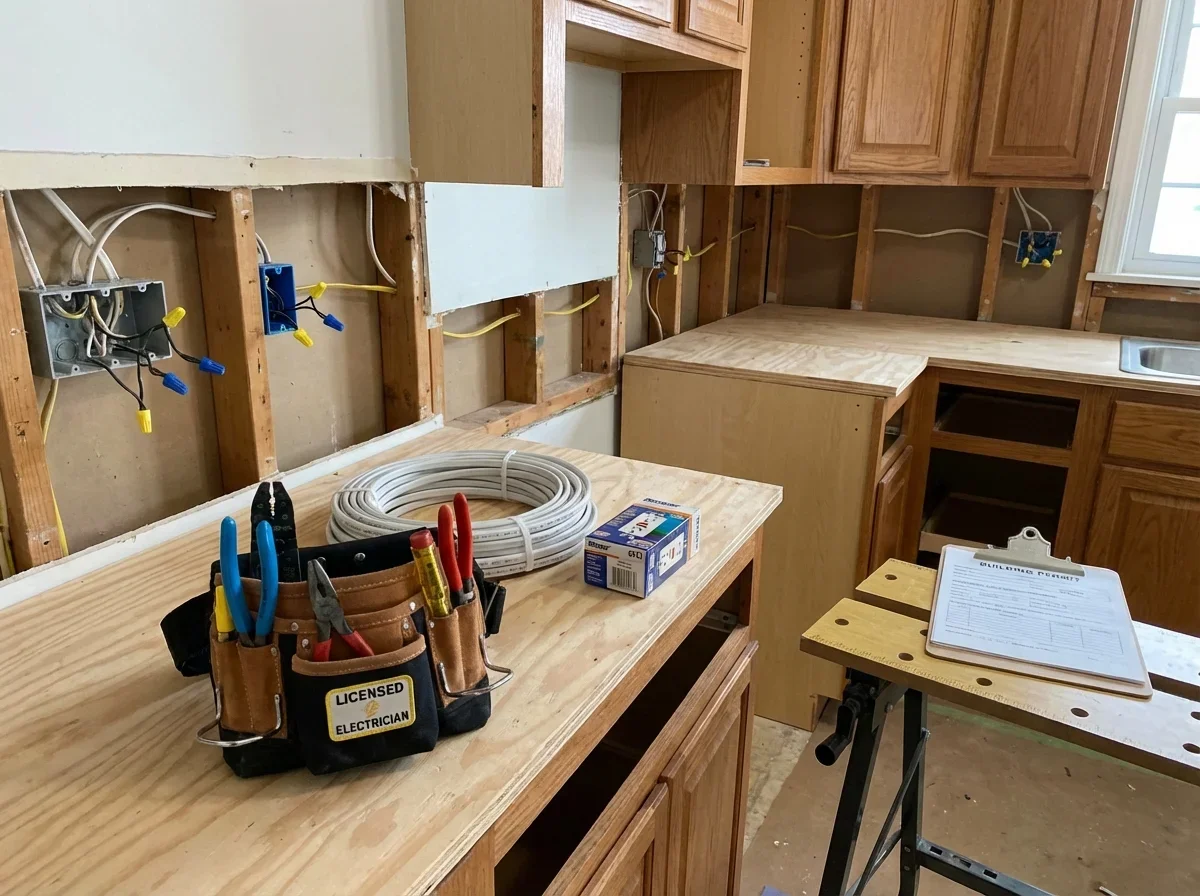
Smart home integration is easiest during the remodel, when walls are open and you're already running new circuits. Voice-controlled lighting, automated shades, smart switches, and appliance control all require smart home wiring decisions before drywall closes.
You don't have to buy the smart devices now. You're roughing in the infrastructure so you can add devices later without tearing open walls.
Neutral wires at every switch box are required for most smart switches (Lutron Caseta, Leviton Decora Smart, TP-Link Kasa). Older Arizona homes often have switch loops without neutrals — just a hot and switched leg. If your electrician is running new circuits anyway, specify neutral wires at all switch locations.
This adds minimal cost during rough-in but saves $400-$800 per switch if you're retrofitting later.
Smart lighting scenes (e.g., "dinner mode" dims pendants and undercabinet lights to 40%) require compatible dimmers and a hub or bridge. Your electrician roughs in standard switch boxes. You'll install the smart switches after the remodel. If you're planning whole-home automation, consider running data cabling for hardwired hubs. Wi-Fi-only systems work fine, but hardwired connections to a central rack avoid interference from microwaves and cordless phones.
Appliance control is limited unless you're buying smart-ready appliances. Most refrigerators, dishwashers, and ranges don't support remote control via electrical wiring — they need Wi-Fi or Bluetooth built into the appliance.
What you can control: outlets for countertop appliances (smart plugs), undercabinet lighting (smart dimmers), and ventilation fans (smart switches with timers). Talk to your electrician about which circuits benefit from smart control before locking the layout.
Smart thermostats for kitchen zones (if you have multi-zone HVAC) and smart exhaust fans with humidity sensors are worth considering during the remodel. Arizona homes with evaporative coolers sometimes run kitchen exhaust fans to manage cooking heat in summer. A smart switch with temperature sensing can automate this: fan kicks on when the kitchen hits 82°F, shuts off when it cools to 76°F.
Your electrician roughs in the switch box and wiring. You add the smart switch later.
How to Choose an Electrician for Kitchen Remodeling
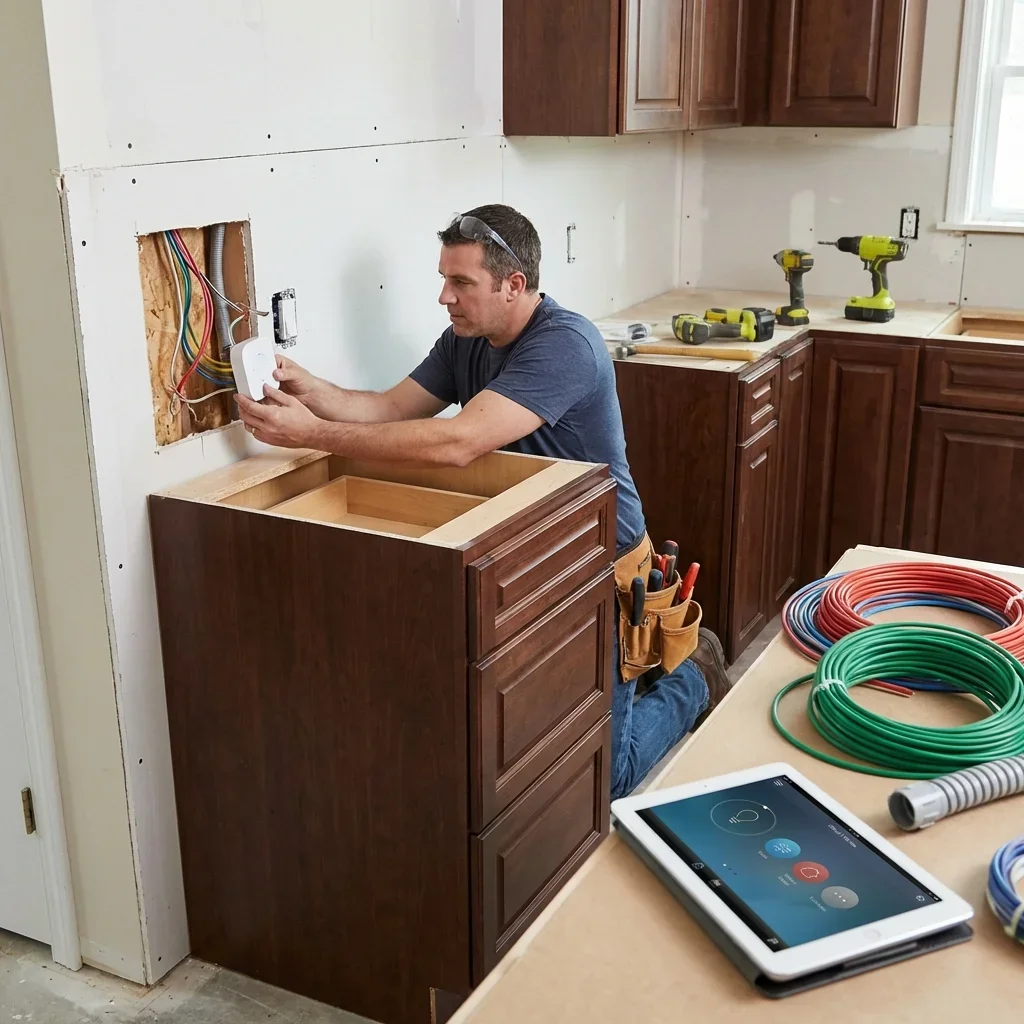
You want an ROC-licensed electrician (CR-11 residential electrical license minimum) with verifiable kitchen remodel experience. Verify the license at roc.az.gov — check for active status, no suspensions, and bond coverage.
Arizona doesn't require contractors to carry workers comp, which is controversial. Ask for proof of general liability insurance ($1M minimum) and workers comp if they have employees. The ROC bond is only $4,000-$15,000 depending on license class — not enough to cover a major project failure.
Ask how many kitchen remodels the electrician completed in the last 12 months. General electricians can handle kitchen work, but specialists familiar with NEC kitchen requirements, appliance circuit planning, and GC coordination will anticipate issues your general electrician might miss.
Request references from recent kitchen projects. Not service calls or panel upgrades, but full remodels with multiple circuits and appliance installations.
Get itemized bids that separate rough-in labor, trim-out labor, materials, permit fees, and panel upgrade costs (if needed). A lump-sum bid makes it hard to evaluate whether you're paying $4,000 because the electrician quoted high labor rates or because your project genuinely needs $1,800 in materials. Itemized bids also help you compare quotes — if one electrician's material cost is double another's, ask why.
Coordination skills matter as much as electrical expertise. Your electrician will interact with your GC, cabinet installer, tile setter, and inspector. If the electrician doesn't return calls or misses scheduled rough-in dates, your entire remodel timeline slips.
Ask your GC who they prefer to work with. GCs know which electricians show up on time, communicate proactively, and don't leave messes for the drywall crew.
Find Electricians Experienced in Kitchen Remodels
Kitchen electrical remodeling isn't DIY-friendly or code-compliant without a licensed electrician. You're working in a permitted space with strict NEC requirements, and inspectors will fail work that doesn't meet GFCI, AFCI, circuit load, and outlet spacing standards.
Even if you have electrical experience, most Arizona municipalities prohibit homeowner electrical work in kitchens. Only ROC-licensed contractors can pull permits.
Licensed electricians in Arizona carry liability coverage, pull permits, coordinate inspections, and warranty their work. The cost difference between a handyman wiring your kitchen and a licensed electrician is $500-$1,200 — cheap until the work fails inspection and you're paying someone else to redo it.
Insurance companies also deny claims if unpermitted electrical work contributed to a fire or damage.
Start your search with electricians who list kitchen remodeling as a primary service, not just "residential electrical." Look for contractors who discuss code compliance, appliance circuit planning, and GC coordination in their service descriptions.
Avoid electricians who quote over the phone without seeing the space. Accurate bids require a site visit to assess panel capacity, circuit routing options, and existing wiring condition.
Frequently Asked Questions
- Internal Revenue Service (U.S. Department of Treasury). "Energy Efficient Home Improvement Credit." https://www.irs.gov/credits-deductions/energy-efficient-home-improvement-credit. Accessed April 06, 2026.
- U.S. Department of Energy. "Home Upgrades." https://www.energy.gov/save/home-upgrades. Accessed April 06, 2026.