Common Electrical Needs in Gilbert Homes
Gilbert's housing stock sits in a specific era. Subdivisions like Val Vista Lakes, Higley Groves, and the Islands went up fast in the late 1990s and early 2000s, built to meet demand from young families moving out from Phoenix and Tempe. Those homes have copper wiring and adequate circuits for their time, but "adequate for 2002" doesn't mean much when you're running three laptops, an EV, a pool, and central AC that's pulling harder in 110°F summers.
The most common call local electricians get? Panel capacity upgrades.
Builder-grade 150-amp panels maxed out their headroom years ago, and adding any new major load — EV charger, sub-panel for a casita, second AC unit — pushes you over the edge. You'll see lights dim when the AC kicks on, breakers that trip under normal use, or that warm smell near the panel that means connections are working too hard.
EV Charger Installation
Arizona has the seventh-highest EV adoption rate in the country, and Gilbert's demographics skew exactly toward the buyers who want them: dual-income households, tech workers, families with garages. Installing a Level 2 EV charger means running a 240-volt, 40- to 50-amp dedicated circuit from your panel to the garage. Most Gilbert garages have the space, but the panel often doesn't have the capacity.
If your home has a 150-amp main panel and you're already running AC, pool equipment, water heater, and kitchen appliances, adding an EV charger might require a service upgrade to 200 amps. That's a full panel replacement, plus coordination with SRP or Salt River Project for a new meter base and utility disconnect.
The Town of Gilbert requires a permit for any EV charger installation[1], and inspectors check whether your main service can handle the added load under the 2017 National Electrical Code (NEC) that Gilbert adopted in 2020[2]. Budget for the charger circuit itself to run $1,200–$1,800, but factor in an additional $2,500–$4,500 if you need a panel upgrade at the same time.
| Service Level | Typical Homes | Signs You Need Upgrade | Upgrade Cost |
|---|---|---|---|
| 125-amp | Pre-1995 Gilbert homes | Frequent breaker trips, can't add major appliances | $3,500–$5,800 |
| 150-amp | 1995–2005 subdivisions | Lights dim with AC, no capacity for EV charger | $3,200–$5,500 |
| 200-amp | Modern standard | Handles EV, pool, dual AC, future additions | Standard for new construction |
Panel Upgrades for Modern Demand
Gilbert homes from the 1990s and early 2000s typically have 150-amp or occasionally 125-amp service. That worked when the biggest loads were a 3-ton AC unit, an electric dryer, and a few kitchen appliances.
Add a home office pulling 1,500 watts of equipment, an EV charger at 9,600 watts, pool equipment at 2,400 watts, and a second refrigerator in the garage, and you're exceeding safe continuous load limits even before considering future additions.
Upgrading to 200-amp service involves replacing the main panel, often relocating it if the original install doesn't meet current clearance requirements, installing a new meter base, and having your utility provider (SRP or Salt River Project, depending on which territory you're in) swap the meter and verify the connection. Gilbert inspectors check wire gauge, panel labeling, GFCI and AFCI circuit requirements, and box fill calculations during the final inspection[1]. The whole process takes 7–14 days assuming no delays on the utility side.
Electricians in Gilbert quote $3,200–$5,800 for a full 200-amp upgrade, with costs rising if your service entrance needs trenching through caliche soil or if outdated grounding needs correcting.
What Does Electrical Work Cost in Gilbert?
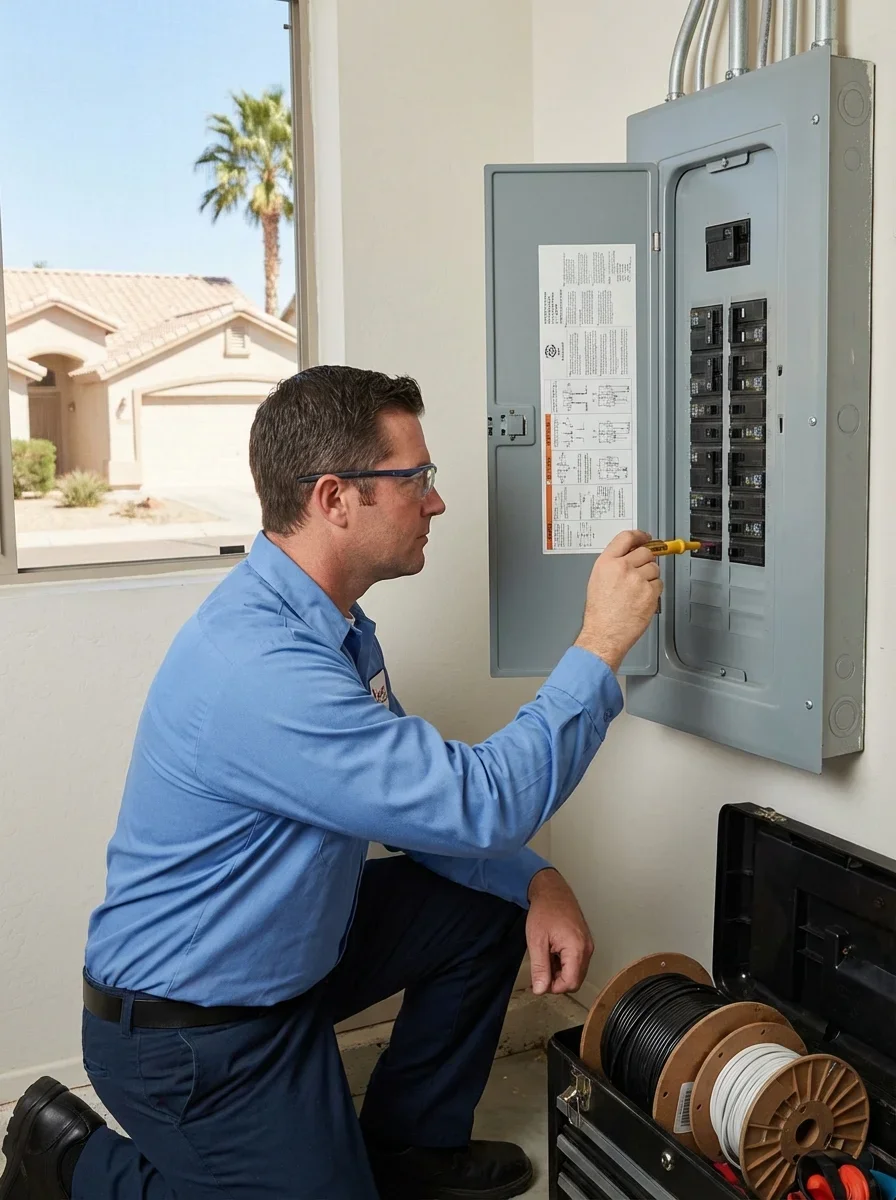
Pricing in Gilbert runs slightly higher than neighboring cities like Mesa or Chandler, mostly because permit costs and inspection schedules add time. Electricians here typically charge $115–$145 per hour for service calls, with most projects bid as flat-rate quotes rather than hourly.
Standard jobs break down like this: ceiling fan installation runs $250–$450 depending on whether you already have a ceiling box rated for fan weight. Adding a new 240-volt circuit for a dryer or pool equipment costs $600–$950. Recessed lighting installation for a typical living room (six cans on a single circuit) runs $1,400–$2,200 including the fixtures.
Full whole house rewiring for older homes runs $8,000–$14,000 depending on square footage and whether walls need to be opened. Less common in Gilbert since most housing is relatively new.
Permit fees through the Town of Gilbert add $75–$150 to most residential electrical projects, plus inspection scheduling can push timelines by a few days. You'll pay more if your project involves work in SRP's electrical service territory that requires coordination with their specifications for clearances and service connections[4]. Solar interconnection projects, increasingly common in Gilbert's sunny climate, require both electrical and building permits, and inspections verify that panels, inverters, and disconnects meet NEC grounding and labeling standards[1].
Common Gilbert Electrical Project Costs:
- Ceiling fan installation: $250–$450
- 240-volt circuit (dryer, pool): $600–$950
- Recessed lighting (6 cans): $1,400–$2,200
- EV charger circuit: $1,200–$1,800
- Panel upgrade to 200-amp: $3,200–$5,800
- Whole house rewiring: $8,000–$14,000
- Permit fees: $75–$150 (added to most projects)
- Electrician hourly rate: $115–$145
Gilbert Permit Requirements for Electrical Projects
Gilbert operates under the 2017 NEC, adopted as of January 1, 2020, along with the 2018 International Residential Code[2]. You need a permit for any new wiring, panel changes, service upgrades, EV charger installations, and solar interconnections[1].
Even seemingly small jobs trigger permit requirements. Adding a sub-panel in a detached workshop, installing a hot tub circuit, replacing an old panel — all of it.
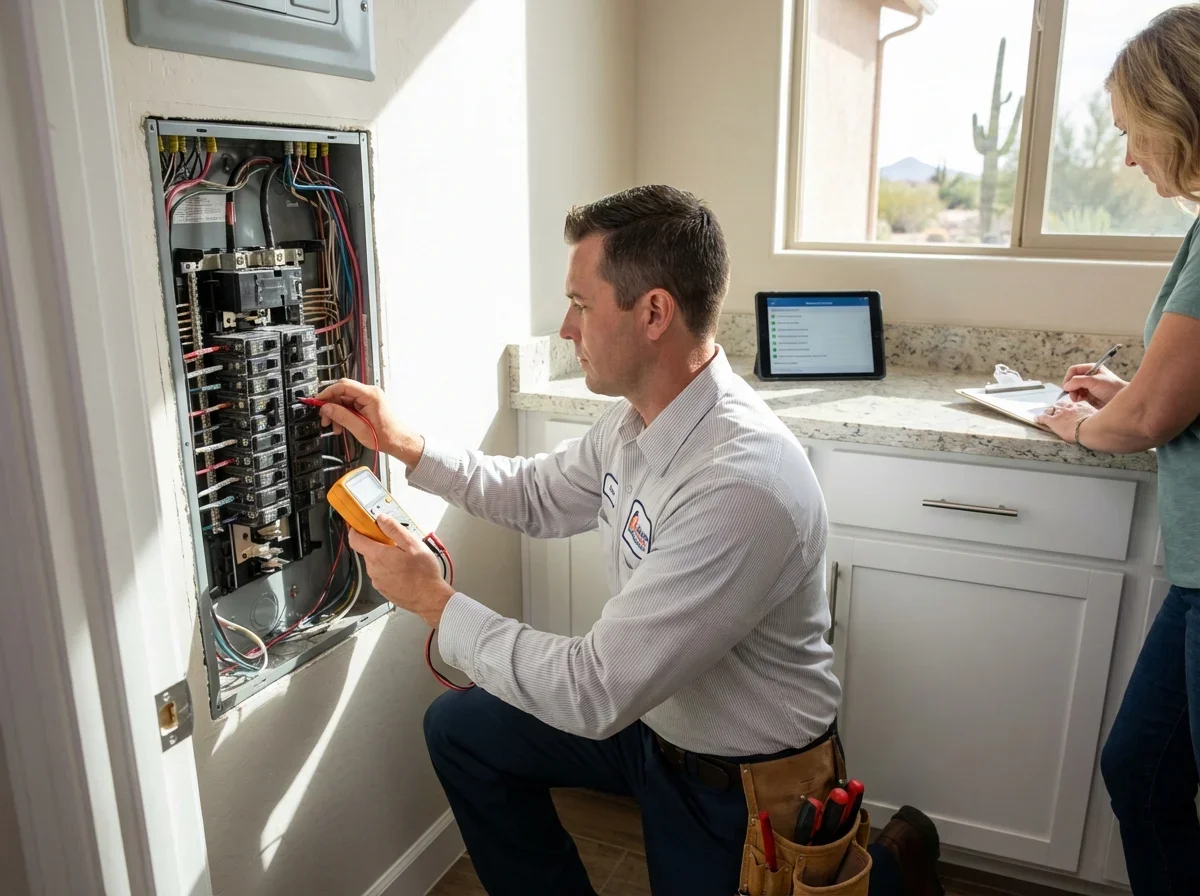
The process runs through the Town of Gilbert's Development Services. Your electrician pulls the permit (they should, and if they're asking you to do it, that's a red flag), submits plans showing circuit layouts and load calculations, and schedules inspections. Most residential electrical work requires one rough-in inspection before drywall goes up and one final inspection after everything's wired and terminated. Inspectors verify GFCI protection in kitchens, bathrooms, garages, and outdoor areas, AFCI protection on bedroom circuits, proper wire gauge for the load, correct box fill, and clear panel labeling[1].
If you're in SRP territory (roughly the eastern parts of Gilbert), your electrician also needs to coordinate with SRP for service upgrades or new meter installations, following their clearance and connection specifications[4]. Salt River Project serves the western areas, and each utility has slightly different requirements for service drops and disconnect locations.
Skipping the permit might save $150 upfront, but it voids your homeowner's insurance for that work and creates problems when you sell. Title companies and inspectors flag unpermitted electrical work immediately.
How to Choose a Gilbert Electrician
You want someone who knows Gilbert's code adoption timeline, permit process, and which inspectors care about specific details. Start by asking how recently they've done work in your neighborhood. An electrician who regularly works Val Vista Lakes or the Bridges knows the typical panel configurations, utility service territories, and how long inspections take.
Ask for a detailed written estimate that breaks out labor, materials, permit fees, and any utility coordination costs. Good electricians include a timeline that accounts for inspection scheduling.
If someone quotes you half what others are charging, they're either skipping the permit (illegal), underestimating the scope, or planning to upsell you once they're halfway through. Gilbert's market rate for licensed, insured electricians who pull permits is $115–$145/hour, and most service calls have a minimum charge of $150–$200 even for quick fixes.
Check their familiarity with specific modern upgrades. If you mention adding an EV charger and they don't immediately ask about your current panel capacity and whether you're in SRP or Salt River Project territory, they're not thinking ahead. Same goes for smart home wiring. Low-voltage work might not need a permit, but the electrician should still understand how it integrates with your main electrical system and whether you need dedicated circuits for hubs and automation panels.
Pro Tip: If an electrician offers to "save you money" by skipping the permit, walk away. Gilbert title companies and home inspectors routinely flag unpermitted electrical work, which can derail a sale and void your insurance coverage for that work. The $75–$150 permit fee is cheap insurance compared to the liability.
License Verification in Arizona
Arizona requires all electricians performing work over $1,000 to hold an active license through the Arizona Registrar of Contractors (ROC). Residential electrical work requires an R-license; commercial work requires a B-license. You can verify any contractor's license status, check for complaints, and see bonding amounts at roc.az.gov.
Gilbert is in Maricopa County, where unlicensed electrical work is common enough that ROC runs periodic stings.
If someone offers to "save you money" by doing work without a license, you're risking not just code violations but also losing any recourse if something goes wrong. ROC bonds only cover $7,500 for residential contractors, not enough to fix a serious electrical fire or injury. Verify that your electrician carries general liability insurance (at least $500,000) and ask for a certificate of insurance. Arizona doesn't require contractors to carry workers comp (a controversial policy gap), so if they have employees, confirm that coverage exists or understand you could be liable if someone gets hurt on your property.
Find Licensed Electricians in Gilbert Neighborhoods
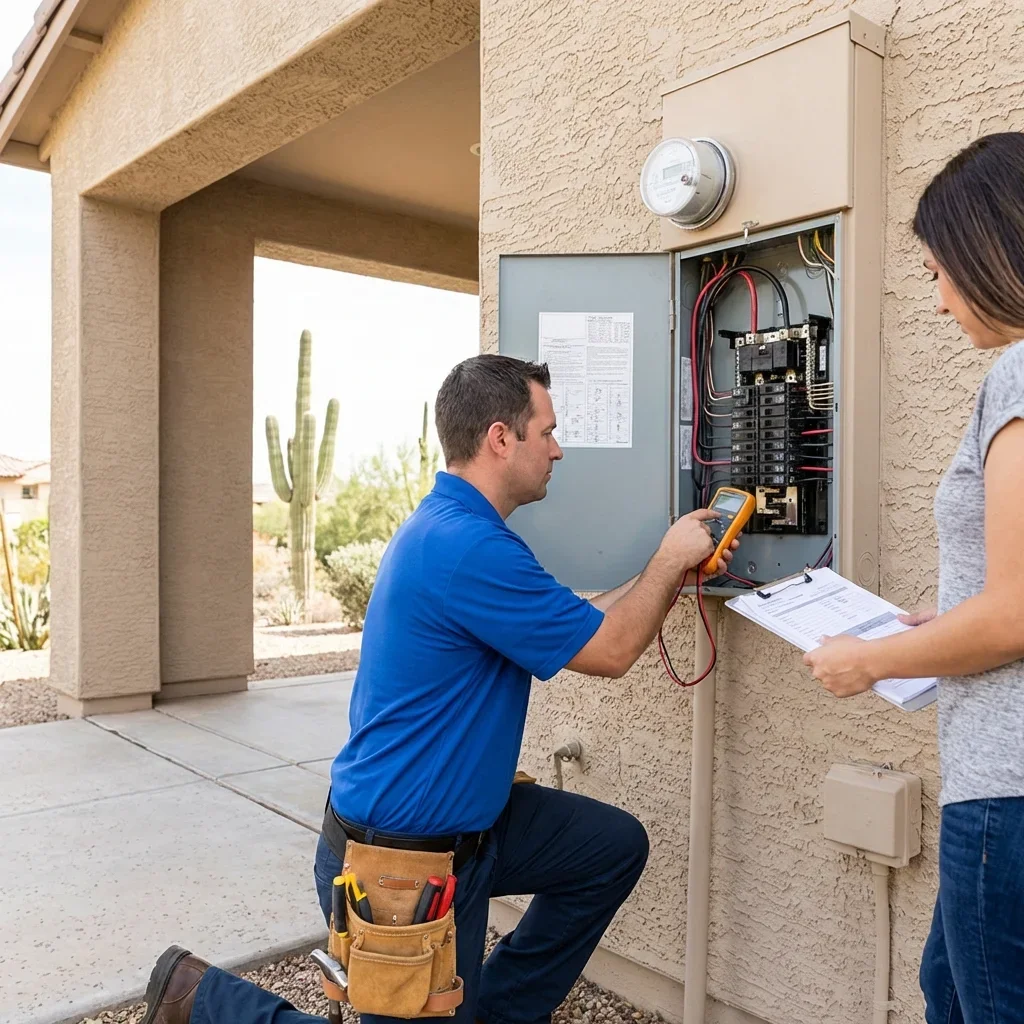
Gilbert's sprawl means service areas matter. An electrician based in Queen Creek might charge extra to drive to Val Vista Lakes. Contractors familiar with Gilbert's subdivisions know which communities tend to have older panels, which areas are in SRP versus Salt River Project territory, and where caliche makes trenching for new service lines expensive.
Coverage across neighborhoods like Higley Groves, the Islands, Morrison Ranch, and Cooley Station is standard for most Gilbert electricians, but confirm service area and any trip charges upfront. If you're in the far southeast near Higley and Pecos, some contractors consider that outside their normal zone.
For specialized work, you'll want an electrician who's done similar projects in Gilbert and understands the permitting nuances. Whole house generator installation, commercial electrical contracting for home-based businesses, or electrical troubleshooting on older custom homes all have their quirks. Solar installations require coordination with SRP or Salt River Project for interconnection agreements, and not every electrician handles that part of the process. Ask specifically if they manage the utility coordination or if you need to hire a separate solar contractor.
Gilbert's growth isn't slowing, and electrical systems that were fine five years ago are hitting their limits. Whether you need an EV charger, a panel upgrade, or just someone to figure out why your garage circuits keep tripping, start with a licensed contractor who knows the local code, pulls permits without being asked, and can explain what's actually required versus what's optional.
Verify their ROC license, confirm insurance coverage, and get at least two detailed written quotes that include permit fees and inspection timelines. That approach won't find you the cheapest price, but it will find you an electrician who won't leave you with failed inspections, code violations, or a panel that still can't handle your home's actual load.
- Town of Gilbert, AZ (via permit reference site). "Do I Need a Permit for Electrical Work in Gilbert, AZ?." https://www.doineedapermit.org/permits/electrical-work/gilbert-az. Accessed April 06, 2026.
- Town of Gilbert, Arizona. "Plan Review & Inspection." https://www.gilbertaz.gov/departments/development-services/plan-review-inspection. Accessed April 06, 2026.
- Town of Gilbert, Arizona. "Standards | Gilbert, Arizona." https://www.gilbertaz.gov/departments/public-works/engineering-services/standards. Accessed April 06, 2026.
- Salt River Project (SRP). "Electric Service Specifications - SRP." https://www.srpnet.com/assets/srpnet/pdf/doing-business/builders-developers-contractors/commercial-specifications-guidelines-and-handbooks/electrical-service-specifications.pdf. Accessed April 06, 2026.