Electrical Challenges in Mesa's Housing Mix
Mesa's 139 square miles contain housing stock spanning seven decades. That geographic and chronological spread creates electrical headaches you won't find in newer suburbs like Queen Creek or established areas like Arcadia. A central Mesa ranch built in 1972 shares almost nothing electrically with an Eastmark home built in 2018, yet both need licensed contractors who can navigate Mesa's permitting requirements.
Older Home Electrical Issues
West Mesa and Central neighborhoods—particularly the corridors around Main Street, Dobson, and Country Club—contain thousands of homes built between 1960 and 1985. Most were constructed with 100-amp electrical panels designed for a world without central air conditioning, electric vehicle chargers, home offices, or smart home devices.
You'll frequently encounter aluminum branch circuit wiring in homes from this period. Aluminum wiring isn't inherently dangerous, but connections degrade over time and create fire hazards if not maintained with specialized CO/ALR-rated devices.[2] Aluminum wiring replacement or proper remediation requires an electrician familiar with Arizona ROC standards for modification work, not just a handyman willing to swap outlets.
Knob-and-tube wiring remnants occasionally surface in the oldest Mesa homes, though most were replaced during air conditioning retrofits in the 1980s. What you'll find more commonly: undersized panels feeding modern loads, missing GFCI protection in bathrooms and kitchens, ungrounded outlets in rooms that never had three-prong receptacles, and DIY additions that bypassed permit requirements.
Mesa Building Safety mandates permits for panel replacements, new circuits, and service upgrades—work that often becomes necessary when selling a pre-1980 home in today's market.[4]
Slab-on-grade construction complicates rewiring efforts. You can't simply run new circuits through a basement. Adding capacity often means surface-mounted conduit, attic fishing, or cutting into drywall and patching. Budget accordingly.
Common Electrical Problems in Pre-1980 Mesa Homes:
- 100-amp panels insufficient for modern electrical loads
- Aluminum wiring requiring CO/ALR-rated device upgrades
- Missing GFCI protection in wet locations (kitchens, bathrooms)
- Ungrounded two-prong outlets throughout living spaces
- Unpermitted DIY additions violating current code standards
- Slab construction limiting rewiring options without wall modifications
New Construction and Modern Demands
Eastmark, Cadence at Gateway, and newer Red Mountain subdivisions present different problems. These homes arrive with 200-amp panels, whole-house surge protection, and code-compliant installations. But builders minimize electrical outlets to cut costs, group circuits in ways that trip breakers under normal use, and sometimes skip permit inspections on late-stage change orders.
Homeowners in these areas frequently need dedicated circuits for workshop equipment, sub-panel installations for casitas or detached garages, and fixes for undersized wire runs that can't support the loads builders promised. You might also encounter conflicts between subdivision CC&Rs and Arizona solar installation rights—particularly around visible conduit routing for rooftop arrays in SRP service territory.
New homes also carry higher electrical loads from the start. A family in Eastmark might run dual HVAC systems, an electric vehicle charger, a pool pump with variable-speed controls, outdoor misting systems, and networked smart home devices simultaneously.
That's a 150-amp continuous draw on a system rated for 200 amps total.
Load calculations matter, especially if you're planning expansions.
What Electrical Services Cost in Mesa
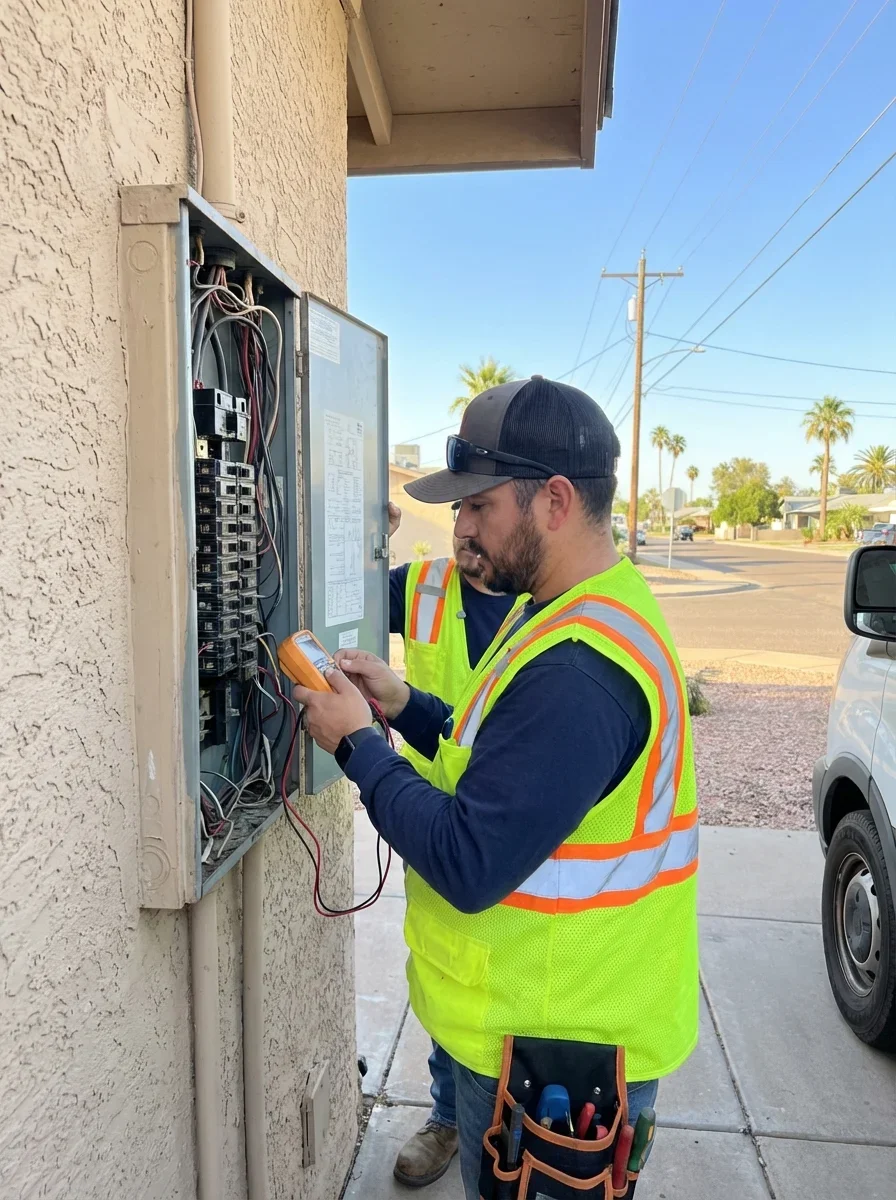
Mesa's electrician rates cluster between $85 and $135 per hour depending on the contractor's credentials, your neighborhood, and the complexity of work. Simple service calls—replacing a broken outlet, installing a ceiling fan, troubleshooting a tripped breaker—typically hit the lower end of that range. Panel upgrades, rewiring projects, and pool electrical installations land at the higher end.
Panel upgrades from 100 to 200 amps run $2,200 to $3,800 in central Mesa, including permit fees and two inspections from Mesa Building Safety. East Mesa rates can run $400-600 higher due to longer drive times and newer subdivision requirements for matching aesthetic covers.
Permit fees currently sit at $150-250 depending on project scope. Inspections typically occur within 2-5 business days of request in most Mesa districts.[3]
Pool and spa electrical work represents a significant category in Mesa, where backyard pools appear in roughly 40% of single-family homes. GFCI protection and equipotential bonding requirements mandate careful compliance with NEC standards Mesa adopted by reference.[5] Expect to pay $1,800-3,200 for a complete pool electrical setup including pump circuits, lighting, GFCI breakers, and bonding grid installation.
Retrofitting GFCI protection on an older pool setup costs $600-1,100 depending on panel location and wire runs.
EV charger installations range from $800 for a basic 240V outlet in a garage with nearby panel access to $2,500+ for installations requiring panel upgrades or long conduit runs to carports. Permitting adds 3-5 days to the timeline but costs less than risking an unpermitted installation that voids your homeowner's insurance.
Solar electrical work—the disconnect, combiner box, and grid-tie connections—typically gets bundled into solar installer pricing. Verify that your solar contractor holds the appropriate Arizona electrical license classification, not just a general contractor ticket.[6] If they're subcontracting the electrical work, ask for the sub's ROC number and verify it independently.
| Service Type | Price Range | Timeline | Permit Required |
|---|---|---|---|
| Panel Upgrade (100→200 amp) | $2,200-$3,800 | 2-5 days | Yes |
| Pool Electrical (complete) | $1,800-$3,200 | 3-7 days | Yes |
| EV Charger Installation | $800-$2,500 | 1-5 days | Yes |
| GFCI Retrofit (pool) | $600-$1,100 | 1-2 days | Yes |
| Basic Service Call | $85-$135/hr | Same day | No |
Mesa Permit Requirements and Timeline
Mesa requires electrical permits for any work beyond like-for-like replacements. Swapping a broken outlet with an identical model in the same location doesn't need a permit.
Adding a circuit, upgrading a panel, installing a subpanel, or running new wire to a detached structure does.[4]
Permit applications go through Mesa's Development Services Department online or in person at the Municipal Building. Most residential electrical permits get approved within 1-3 business days if the application is complete. Inspections typically happen within 2-5 business days of your request, though timelines stretch during peak construction months (March-May and September-October).
You need two inspections for most significant electrical work: a rough-in inspection before drywall goes up or conduit gets buried, and a final inspection once everything is connected and energized. Mesa inspectors verify grounding, GFCI placement, wire sizing, panel labeling, and compliance with Mesa's adopted electrical code under Title 4, Chapter 4 of the city ordinances.[1]
Skipping permits creates problems when you sell. Title companies increasingly require disclosure of all unpermitted work, and buyers can demand remediation or walk from deals. Homeowner's insurance may deny claims if a fire or injury stems from unpermitted electrical work.
The $200 permit fee looks cheap compared to a $15,000 rewiring project discovered during sale inspection.
Your contractor should pull permits, not you. Arizona ROC-licensed electricians carry authority to obtain permits under their credentials. If a contractor suggests skipping permits to save money or time, that's a signal to find a different contractor.
Warning: Unpermitted electrical work can void your homeowner's insurance coverage and derail real estate transactions. Title companies now routinely require disclosure of all modifications, and buyers can demand full remediation or cancel the sale. The $150-250 permit fee is trivial compared to the potential $15,000+ cost of discovered violations during closing.
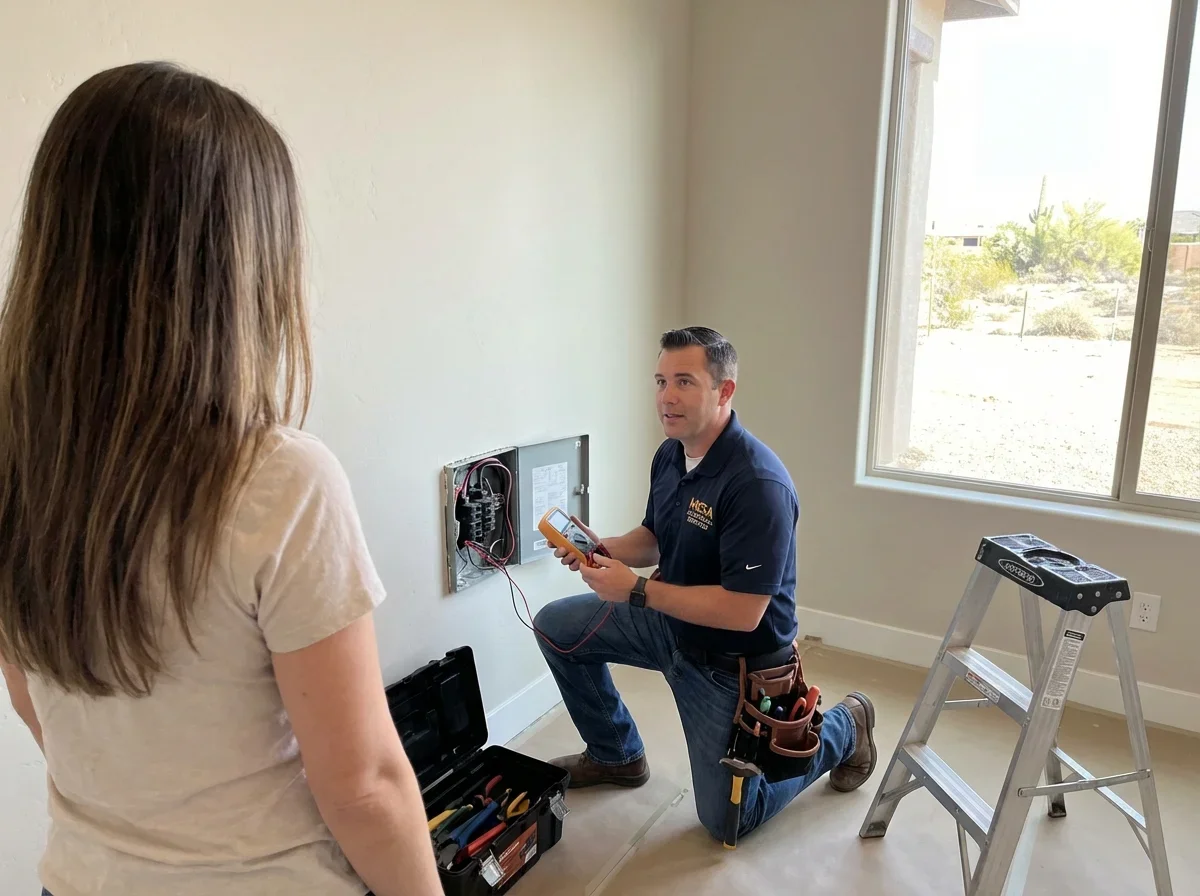
How to Choose a Licensed Mesa Electrician
Start with Arizona ROC license verification. Every electrician performing work over $1,000 in Mesa must hold an active Registrar of Contractors license—typically CR-11 (Residential Electrical) or CR-12 classifications for residential work.[2]
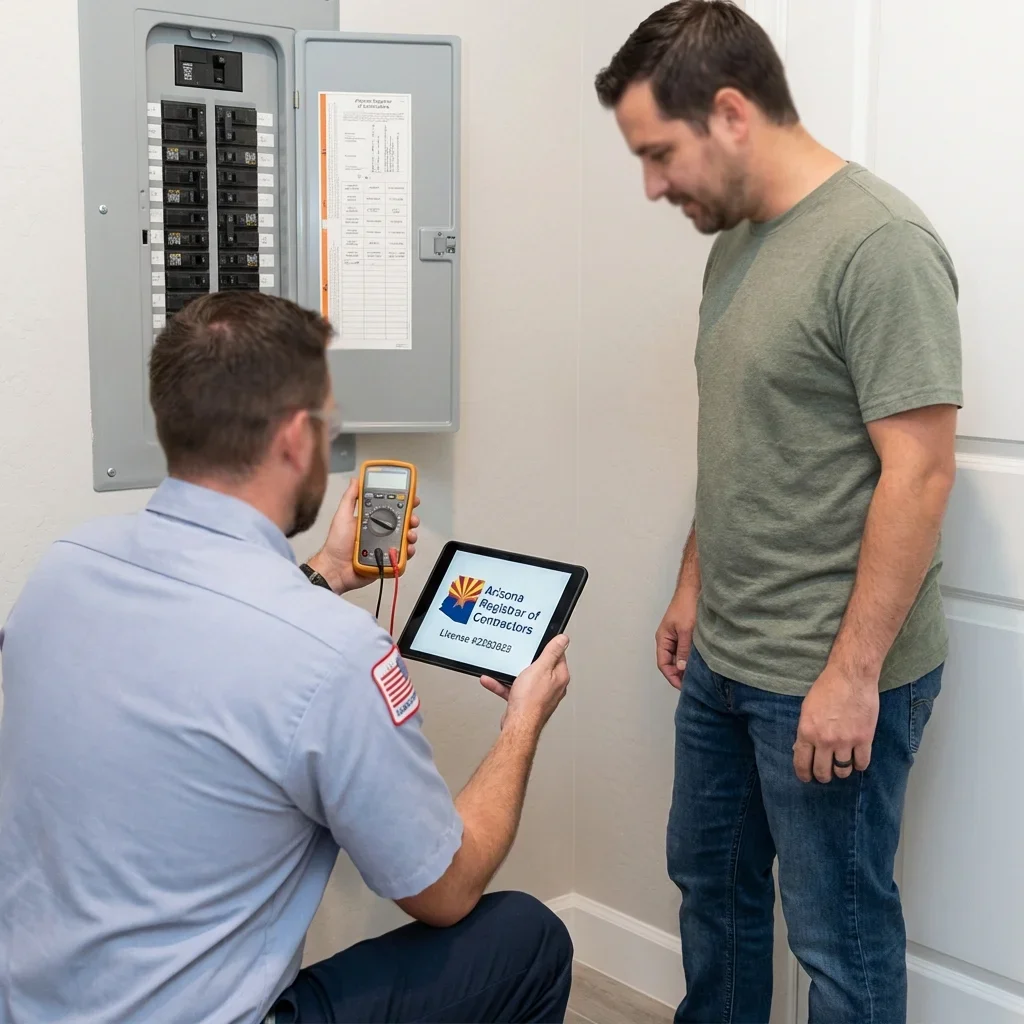
Don't take the contractor's word for it. Verify at roc.az.gov using their business name or license number.
Check for complaints, disciplinary actions, and bond status while you're on the ROC site. Arizona doesn't require contractors to carry workers' compensation insurance, which creates liability exposure if a worker gets injured on your property. Ask explicitly about workers' comp coverage and general liability insurance. The ROC bond ranges from $4,000 to $15,000 depending on license type—barely enough to cover a botched panel upgrade, much less structural damage from electrical fire.
Get three written estimates for any project over $2,000. Detailed quotes should include labor, materials, permit fees, inspection scheduling, and timeline.
Vague estimates ("around $3,000") or quotes that lump everything under "labor" make it impossible to evaluate value or hold contractors accountable for scope changes.
Ask about experience with Mesa's permitting process specifically. An electrician who mainly works in Scottsdale or Chandler might not know Mesa Building Safety's preferred inspection scheduling method or the quirks of older neighborhoods where inspectors pay extra attention to grounding and panel clearances.
Verifying Arizona ROC Credentials
The Arizona Registrar of Contractors licenses electrical contractors under A.R.S. § 32-1121 with classifications that define legal scope of work.[2] CR-11 and CR-12 licenses authorize residential electrical work. Commercial projects require different classifications.
A handyman with a general contracting license cannot legally perform electrical work requiring specialized knowledge and testing.
License verification takes three minutes:
- Visit roc.az.gov
- Click "Find a Licensed Contractor"
- Enter the business name or ROC number
- Review complaint history, bond status, and disciplinary actions
Active licenses show current bond and insurance information. Expired licenses, suspended licenses, or licenses with multiple substantiated complaints warrant immediate disqualification. The ROC publishes enforcement actions monthly—contractors who've violated licensing requirements, performed unpermitted work, or abandoned projects.
Also verify that the person quoting your job holds the license they're claiming. Arizona allows licensed contractors to hire unlicensed workers, but the license holder must supervise the work. If the owner quotes your job but you never see them again, that's a problem.
Find Qualified Electricians in Your Mesa Neighborhood
Mesa's size means service areas matter. An electrician based in Apache Junction might charge extra to cover West Mesa calls. Contractors working primarily in East Valley new construction might lack experience with aluminum wiring remediation common in older central Mesa homes.
Look for contractors who list Mesa explicitly in their service area and show familiarity with neighborhood-specific challenges. A contractor who's worked extensively in Red Mountain understands HOA requirements for external conduit placement. One who regularly services homes near Mesa Community College knows the electrical quirks of 1970s tract construction in that corridor.
Request references from projects similar to yours—panel upgrades in older homes if you need a panel upgrade, pool electrical if you're adding a spa, whole house rewiring if you're gutting a renovation. Call those references. Ask about permit handling, inspection pass rates, cleanup, timeline accuracy, and whether the contractor responded to warranty callbacks.
For emergency electrical issues—burning smells from outlets, panels hot to the touch, repeated breaker trips with no identified cause—you need emergency electrical service available nights and weekends.
Verify response times and emergency surcharges before you're standing in the dark with a tripped main breaker at 9 PM on a Sunday.
Licensed electricians serving Mesa neighborhoods from West Mesa through Eastmark provide the expertise to handle everything from knob-and-tube remediation in 1960s homes to smart home wiring in new construction. The key is matching contractor experience to your specific property age, electrical system condition, and project requirements—then verifying credentials before anyone touches a wire.
- City of Mesa, Arizona. "Code of Ordinances | Mesa, AZ." https://library.municode.com/az/mesa/codes/code_of_ordinances. Accessed April 06, 2026.
- Arizona Registrar of Contractors (ROC). "Electrical Contractor Classifications." https://roc.az.gov/electrical-contractor-classifications. Accessed April 06, 2026.
- City of Mesa Building Safety. "Building Safety Division." https://www.mesaaz.gov/residents/building-safety. Accessed April 06, 2026.
- City of Mesa Development Services Department. "Residential Electrical Code Requirements." https://dsd.mesaaz.gov/residential/electrical.aspx. Accessed April 06, 2026.
- City of Mesa Building Safety. "Pool and Spa Bonding and GFCI Requirements." https://www.mesaaz.gov/businesses/building-safety/building-codes. Accessed April 06, 2026.
- Arizona Secretary of State. "Arizona Administrative Code Electrical Licensing." https://apps.azsos.gov/public_services/Title_04/4-09.pdf. Accessed April 06, 2026.