Electrical Services Across Peoria's Communities
Peoria spans nearly 178 square miles, and electrical needs shift dramatically depending on which part of the city you call home.
The older neighborhoods south of Bell Road and west of 83rd Avenue feature primarily single-story block homes built between 1985 and 1998, many originally marketed to retirees. These homes came with 100-amp or 125-amp service — adequate when the heaviest loads were a refrigerator, a swamp cooler, and a few window AC units. That same panel now struggles when you add central AC, a two-car garage with EV charger, a modern kitchen with induction range, and pool equipment that runs 8 hours a day in summer.
North Peoria tells a different story.
Developments like Vistancia, Blackstone, and the Pioneer Park area have grown rapidly since 2010, attracting younger families with kids and commuters who work in northwest Phoenix or even Scottsdale[6]. These homes typically have 200-amp service from the start, but they also come with higher electrical demands: landscape lighting on oversized lots, outdoor kitchens with dedicated circuits, smart home systems, and often a pool built within two years of closing. Even newer construction needs service — irrigation timers fail, GFCI outlets trip constantly in outdoor kitchens, and builder-grade ceiling fans get replaced during the first summer.
| Feature | South Peoria (Pre-2000 Homes) | North Peoria (Post-2010 Homes) |
|---|---|---|
| Typical Panel Size | 100-125 amp service | 200 amp service |
| Common Issues | Outdated panels, aluminum wiring, undersized capacity | Smart home integration, EV charger needs, builder shortcuts |
| Primary Upgrades | Panel replacement, rewiring, pool electrical retrofits | Low-voltage cabling, generator installs, outdoor circuits |
| Construction Era | 1985-1998 | 2010-present |
Older Home Electrical Upgrades
If your Peoria home was built before 2000, your electrical system likely wasn't designed for the loads you're putting on it now.
The most common upgrade is a panel replacement from 100-amp to 200-amp service. This isn't just about adding capacity. It's about safety. Older panels, especially Federal Pacific and Zinsco brands common in 1980s Arizona construction, have documented failure rates and often don't trip breakers when they should. A modern panel with AFCI and GFCI breakers protects against arc faults and ground faults that older panels ignore.
Rewiring is less common but sometimes necessary. Homes built before 1985 may have aluminum branch wiring (not just the service entrance cables, which are normal). Aluminum wiring has a higher thermal expansion rate than copper and can loosen connections over decades, creating fire hazards at outlets and junction boxes. If you're seeing warm outlets, flickering lights, or a burning smell near switches, get an inspection. Aluminum wiring replacement involves pigtailing copper connections or full rewiring depending on the severity.
Pool and spa electrical work is nearly universal in Peoria's single-family neighborhoods.
You need bonding for all metal components within five feet of the water, GFCI protection on pool pumps and lights, and dedicated circuits rated for the load[4]. Older pool installations sometimes lack proper bonding or have subpanels fed with undersized wire. These issues surface during home inspections or when upgrading to variable-speed pumps. For detailed pool electrical requirements, see our pool & spa electrical guide.
New Development and Modern Needs
Newer Peoria homes come with better bones, but they still need work.
Smart home systems require low-voltage wiring and network infrastructure that builders often skimp on. You'll see one ethernet jack in a study and nothing else. Whole-home automation, security cameras, and distributed audio mean running data & low voltage cabling through attics and walls, which gets complicated in two-story homes with vaulted ceilings.
EV charger installation is becoming standard in north Peoria garages. A Level 2 charger needs a dedicated 240-volt circuit, typically 40-60 amps depending on the charger model. If your panel is in the garage, the install is straightforward. If the panel is on the opposite side of the house (common in Vistancia homes where the panel sits near the street for utility access), you're looking at a longer conduit run and higher material costs.
Most electricians price EV charger installs between $800 and $1,800 depending on distance and whether you need a panel upgrade first. More details in our EV charger installation guide.
Backup power is gaining traction, especially after summer monsoons knocked out power to parts of Peoria for 12+ hours in 2023. Whole-home generators require transfer switches, dedicated gas or propane lines, and city permits. Portable generator interlock kits are a cheaper alternative if you just want to keep the fridge, a few lights, and one AC unit running during outages. For comprehensive coverage, see our whole house generator installation guide.
What Does Electrical Work Cost in Peoria?
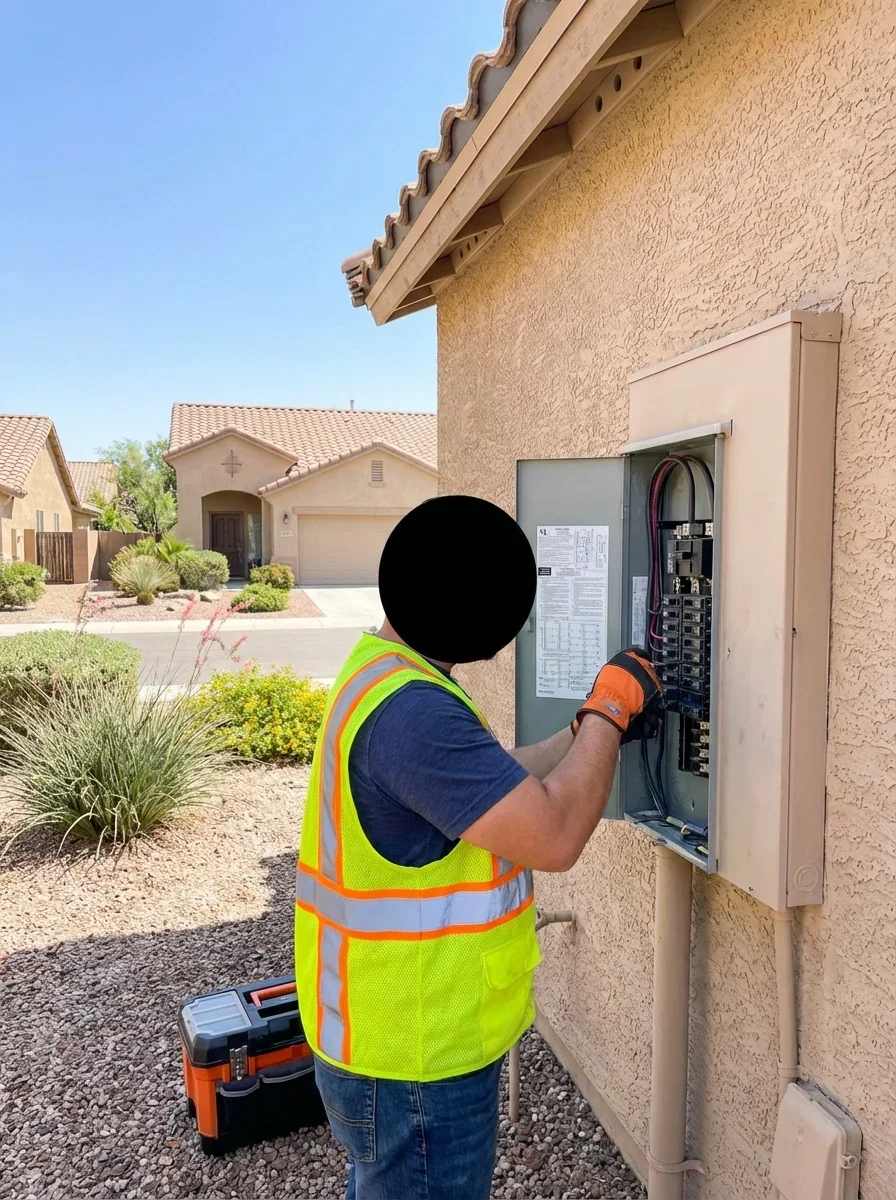
Peoria's electrical pricing sits slightly below Scottsdale and Paradise Valley but above more distant suburbs like Goodyear or Buckeye. You're paying for proximity to the northwest valley's established contractor base and higher average home values.
A service call with diagnostics typically runs $125-$175. Once the electrician identifies the problem, labor rates range from $85 to $140 per hour depending on complexity and the contractor's licensing tier.
Panel upgrades from 100-amp to 200-amp service cost $2,200 to $3,800 in Peoria, including permits, materials, and the meter disconnect/reconnect coordinated with APS or SRP. The range depends on whether your existing panel location works (same spot is cheaper) or if you're relocating the panel to the garage or exterior wall. If your existing service entrance cable from the weatherhead to the panel is also undersized or damaged, you'll need that replaced simultaneously. Add $600-$1,200 depending on distance.
Outlet and switch work is straightforward: replacing a standard outlet runs $75-$150 per location, GFCI outlets $120-$200. Adding new circuits for kitchen remodels or laundry rooms costs $300-$600 per circuit depending on wire length and whether you're fishing through finished walls or working in open framing.
Ceiling fan installation averages $200-$350 if you have an existing ceiling box rated for fan support. If not, the electrician needs to install a fan-rated box anchored to framing, which adds time and cost.
Recessed lighting installation is popular in Peoria kitchen and living room remodels. Expect $150-$250 per can if you're retrofitting into existing ceilings (cutting holes, fishing wire, patching drywall). New construction or open ceilings drop that to $80-$120 per fixture. LED retrofit kits can modernize old recessed cans for $40-$80 per fixture if the existing housings are still sound.
Pool and spa electrical work ranges widely. Simple GFCI outlet additions for above-ground hot tubs cost $200-$400. Full inground pool electrical packages (subpanel, bonding grid, pump circuit, light circuits, and timer) run $1,800 to $4,500 depending on distance from the main panel and equipment complexity.
If you're adding a pool heater (gas or electric), a saltwater chlorinator, or waterfall pumps, each additional load requires its own circuit and breaker.
Common Peoria Electrical Project Costs:
- Service call with diagnostics: $125-$175
- Panel upgrade (100-amp to 200-amp): $2,200-$3,800
- Standard outlet replacement: $75-$150
- GFCI outlet installation: $120-$200
- New circuit installation: $300-$600
- Ceiling fan installation: $200-$350
- Recessed lighting (retrofit): $150-$250 per fixture
- EV charger installation: $800-$1,800
- Pool electrical package: $1,800-$4,500
Peoria Electrical Permit Requirements
The City of Peoria Development Services Department requires permits for nearly all electrical work beyond simple repairs[2].
You need a permit for panel upgrades, new circuits, service changes, pool/spa electrical, generator installations, and any work that modifies your home's electrical system. Simple like-for-like replacements (swapping a broken outlet, replacing a ceiling fan on an existing box) typically don't require permits, but most contractors pull permits for anything involving new wire or breakers to protect themselves and ensure code compliance.
Applications go through the Peoria Development Services office at 8401 W. Monroe Street or online through the city's permitting portal[3]. The permit application requires the contractor's ROC license number, a scope of work description, and a project valuation. The city calculates permit fees as a percentage of declared project cost. For a $3,000 panel upgrade, expect permit fees around $150-$250.
Processing times run 3-7 business days for standard residential electrical permits if the application is complete.
Inspections are mandatory. After rough-in work (wire run but not terminated), you schedule a rough inspection. After final connections and energizing the circuits, you schedule a final inspection. The inspector verifies wire sizing, breaker ratings, bonding, grounding, AFCI/GFCI protection where required, and clearances around panels. For pool electrical, bonding grid inspection happens before decking and a final inspection after everything is energized[4].
You cannot legally energize new circuits until you pass final inspection and receive approval.
Unpermitted electrical work creates real problems. If you sell your home and the buyer's inspector spots a new subpanel or generator transfer switch with no permit record, underwriters may require verification or complete reinstallation before closing. Insurance companies have denied claims for electrical fires originating from unpermitted work.
If you're buying a Peoria home with obvious electrical modifications (new panel, added circuits, pool equipment), verify permits were pulled. The city maintains permit records searchable by address.
Warning: Unpermitted electrical work can derail home sales and void insurance claims. Always verify that your contractor pulls proper permits for panel upgrades, new circuits, and pool electrical installations. Peoria maintains searchable permit records by address — use them when buying a home with obvious electrical modifications.
How to Choose a Peoria Electrician
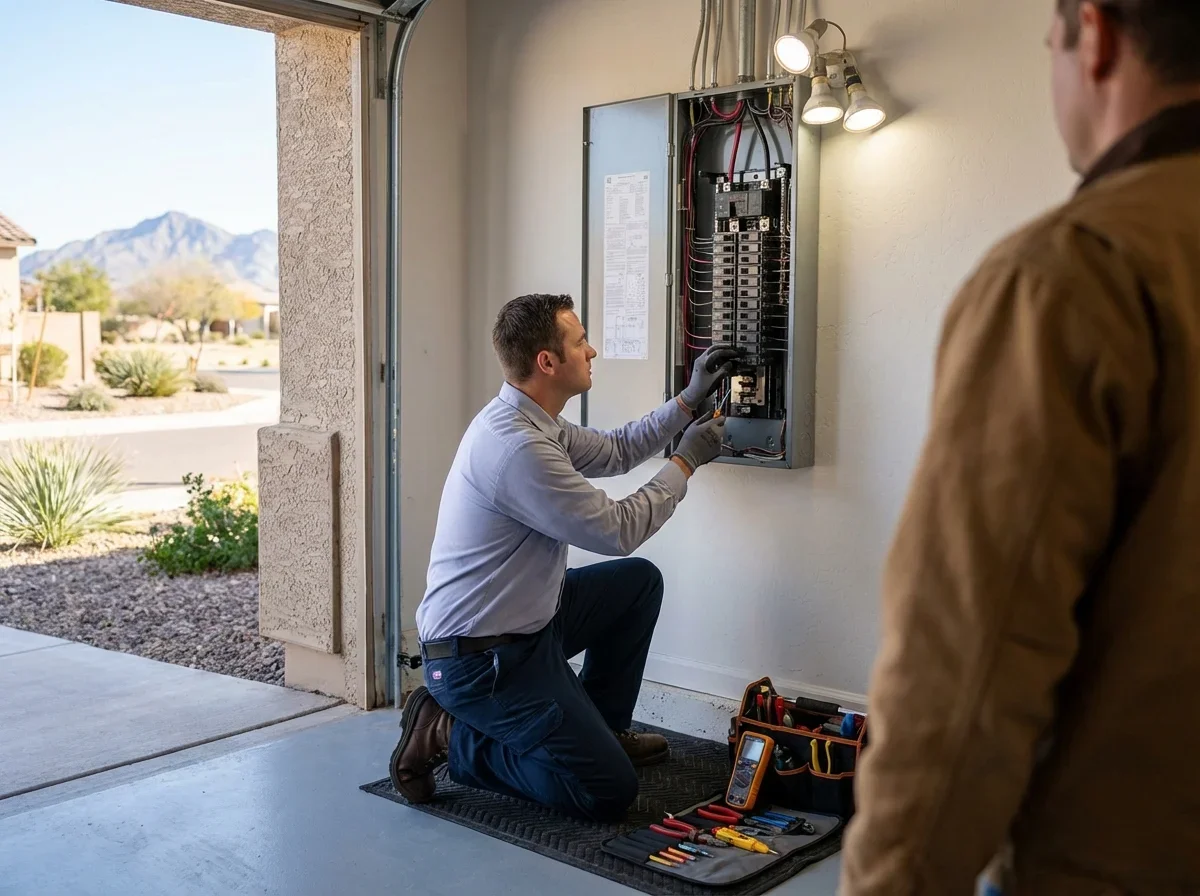
Start with ROC license verification[1].
Arizona requires electrical contractors to hold an active Residential Electrical Contractor (CR-11) license or General Residential Contractor license with an electrical qualifier on file. You can verify any contractor at https://roc.az.gov/ by entering the company name or license number. The search tool shows license status, bond coverage, complaints, and disciplinary actions.
If a contractor can't provide an ROC number or tells you they "work under someone else's license," walk away.
Insurance matters, but Arizona doesn't require contractors to carry workers compensation insurance unless they have employees, which creates gaps. Ask for proof of general liability insurance and workers comp if the contractor has a crew. The ROC bond is only $7,000 for electrical contractors. It won't cover a house fire caused by faulty wiring. You want a contractor with at least $1 million in general liability coverage.
Get three quotes for any project over $1,000. Peoria has dozens of licensed electricians, and pricing varies by 20-30% for identical work.
The lowest bid isn't always the best choice. If one quote is dramatically lower than the others, ask why. Are they skipping permits? Using cheaper materials? Planning to finish next week but actually scheduling you three months out? A detailed written estimate should list labor, materials, permit fees, and a timeline with start and completion dates.
References and reviews help, but verify them. Check Google reviews for patterns. One bad review might be a personality clash, but multiple complaints about shoddy work, no-shows, or surprise charges mean steer clear. Ask the contractor for recent Peoria projects similar to yours and contact those homeowners directly.
Most people are willing to share their experience if you call and ask specific questions: Did they show up on time? Did the final cost match the estimate? Did they handle permits and inspections?
Find Licensed Electricians in Peoria
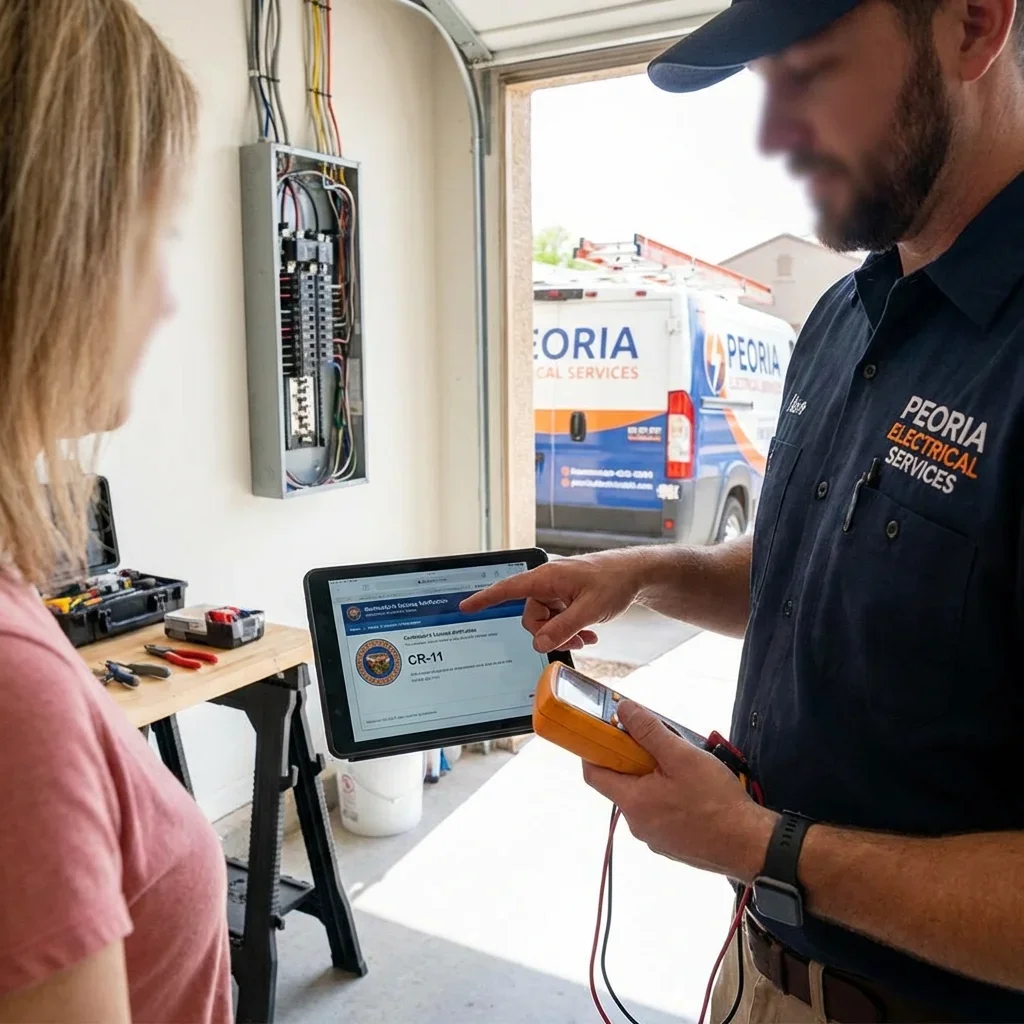
You need a contractor who knows Peoria's mix of older homes and new developments, understands city permit procedures, and carries proper licensing.
Whether you're upgrading a 1987 panel in the Arrowhead Ranch area, wiring a new pool in Vistancia, or troubleshooting GFCI issues in a Westbrook Village condo, working with a qualified electrician protects your home and your investment.
Browse our directory of ROC-licensed electricians serving Peoria and the northwest valley[5]. Each listing includes license verification, service areas, and homeowner reviews. You can request quotes directly and compare pricing before you commit. For broader coverage across the Phoenix metro, see our main Phoenix electrician directory.
- Arizona Registrar of Contractors. "Electrical Contractor License Requirements." https://roc.az.gov/license-types/electrical-contractor. Accessed April 06, 2026.
- City of Peoria. "Building Permits." https://www.peoriaaz.gov/government/departments/planning-development/building-safety/building-permits. Accessed April 06, 2026.
- City of Peoria. "Electrical Codes and Permits." https://www.peoriaaz.gov/government/departments/planning-development/building-safety/residential-permits. Accessed April 06, 2026.
- City of Peoria. "Pool and Spa Permits." https://www.peoriaaz.gov/government/departments/planning-development/building-safety/swimming-pools-spas. Accessed April 06, 2026.
- Arizona Registrar of Contractors. "Contractor Search." https://azroc.my.site.com/AZRoc/s/contractor-search. Accessed April 06, 2026.
- City of Peoria. "Demographics and Housing." https://www.peoriaaz.gov/government/departments/community-development/demographics. Accessed April 06, 2026.