Why Phoenix Homes Have Unique Electrical Needs
Your home's electrical system operates under conditions most of the country never experiences. Phoenix's climate doesn't just make you uncomfortable — it fundamentally changes how electrical components age, how much power your home draws, and what kinds of failures you're likely to face.
Extreme Heat and Electrical System Stress
When the National Weather Service issues excessive heat warnings for days at a stretch, your electrical panel isn't just powering your home — it's managing sustained loads that would be considered peak-emergency levels in other regions. Central AC units cycle constantly from May through October. Pool pumps run longer filtration schedules. Attic temperatures routinely exceed 150°F, baking wire insulation and connection points that were never tested for six months of triple-digit heat.
UV exposure in the desert degrades electrical insulation 30-40% faster than in humid climates. Exterior wiring, meter bases, and conduit age in years what takes decades elsewhere.
Thermal expansion and contraction cycles create another problem. Daily swings from 70°F at dawn to 110°F by afternoon stress connection points at panels, outlets, and junction boxes. Loose connections create resistance, resistance creates heat, and heat accelerates failure. It's a cycle that doesn't exist in Cleveland or Portland.
Electrical panels installed in garages face particularly brutal conditions. This is common in Phoenix tract homes. A 140°F garage in July means breakers operate well above their rated temperature range, shortening their lifespan and increasing the risk of nuisance tripping or failure to trip when they should.
If your panel is in the garage and it's more than 20 years old, you're on borrowed time.
Pro Tip: Phoenix's extreme daily temperature swings (40°F+ difference from dawn to afternoon) create thermal stress cycles that don't exist in most climates. This constant expansion and contraction is why connection points fail faster here than anywhere else in the country — it's not just the heat, it's the repetition.
Common Issues in Phoenix's Aging Housing Stock
Phoenix grew fast between 1950 and 1980. That building boom left a legacy of electrical systems that weren't designed for modern power demands. Homes from that era typically have 100-amp panels — adequate when central AC was a luxury and the biggest appliances were a dryer and an electric range.
Today, those panels are maxed out. Dual AC units, EV chargers, pool equipment, and whole-home electronics demand far more capacity.
Aluminum wiring shows up frequently in homes built between 1965 and 1975, when copper prices spiked and builders switched to cheaper alternatives. Aluminum expands and contracts more than copper, causing connections to loosen over time. Those loose connections oxidize, create heat, and become fire hazards. If you have aluminum branch circuits in your home, aluminum wiring replacement isn't about aesthetics — it's about safety. Modern copper pigtail retrofits or complete rewiring are the only permanent solutions.
Newer homes face different challenges. Solar panel integration is widespread in Phoenix, where SRP and APS net metering programs make rooftop solar financially attractive. But adding solar to an existing home means verifying your panel can handle backfeed, upgrading to a 200-amp service if needed, and ensuring interconnection agreements meet current code. Grid-tied systems must pass inspection, and not every electrician understands the nuances of anti-islanding protection or rapid shutdown requirements introduced in recent NEC updates.
Pool and spa electrical systems create another layer of complexity.
Phoenix has one of the highest pool ownership rates in the country. Every pool pump, heater, and control system must meet NEC Article 680 requirements for wet locations. Older pools often have outdated bonding and GFCI protection, and monsoon season exposes weaknesses in poorly sealed junction boxes and conduit runs.
| Housing Era | Typical Panel Size | Common Issues | Upgrade Priority |
|---|---|---|---|
| 1950-1965 | 60-100 amp | Outdated wiring, insufficient capacity, no GFCI | High — inadequate for modern loads |
| 1965-1975 | 100 amp | Aluminum wiring, undersized for AC + modern appliances | High — aluminum wiring safety risk |
| 1975-1990 | 100-150 amp | Maxed capacity, garage panel heat stress | Medium — depends on load additions |
| 1990-present | 200 amp | Solar integration needs, EV charging capacity | Low — usually adequate with proper planning |
What Does Electrical Work Cost in Phoenix?
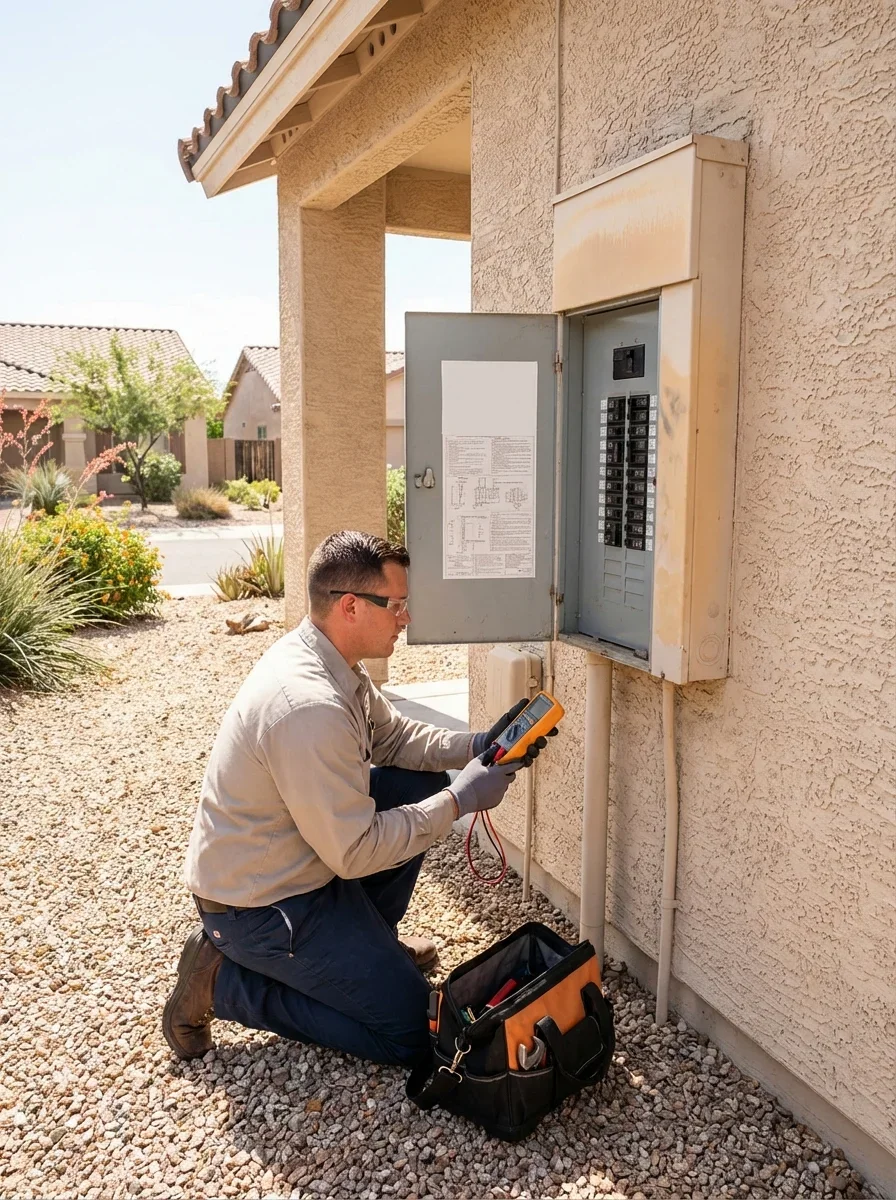
Electrical service pricing in Phoenix reflects both the typical hourly trade rates you'd find in any major metro and the added complexity of heat-stressed infrastructure. Most licensed electricians charge $100-$150 per hour for residential service calls, with a minimum trip charge of $75-$150 depending on the company and time of day.
Emergency service runs 1.5x to 2x standard rates. Anything after hours, weekends, or holidays costs more. When your AC trips the breaker at 9 PM on a Saturday in July and indoor temps are climbing toward 90°F, you'll pay $200-$300 just to get someone to your door, plus hourly labor and parts.
It's expensive, but it's also the reality of a market where summer electrical failures are life-safety emergencies.
Typical Service Pricing by Project Type
Panel upgrades from 100-amp to 200-amp service run $2,000-$4,500 in Phoenix. The price depends on whether the main disconnect is at the meter or inside the home, how far the service run is from the utility transformer, and whether trenching through caliche is required to upsize the underground feed. If your home still has an overhead service drop, the utility (SRP or APS) will need to coordinate the disconnect and reconnect, which can add scheduling delays even if the cost is absorbed by the provider.
Whole-house rewiring for a typical 1,500-square-foot home ranges from $8,000 to $15,000. Costs climb if you have slab-on-grade construction (nearly universal in Phoenix) and need to run new circuits through attics instead of crawlspaces.
Homes built on slabs require more creative routing. Fishing wires through walls, running surface conduit in garages, or routing through attic spaces where summer heat makes installation brutally uncomfortable for the crew. That discomfort shows up in your quote.
EV charger installation costs vary widely based on the charger level and distance from your panel. A Level 2 charger (240V, 40-50 amps) installed within 25 feet of an existing panel with available capacity runs $800-$1,500 for labor and materials, not including the charger itself. If you need a panel upgrade first, or the garage is 75 feet from the panel and requires a new sub-panel, expect $2,500-$4,000 total. The electrician will also need to pull a permit and pass inspection, which adds time but ensures your charger won't void your home insurance if something goes wrong.
Solar panel electrical work typically costs $1,500-$3,500 as part of a larger solar installation. This covers the inverter, interconnection, rapid shutdown systems, and any panel upgrades required. It's separate from the solar panels themselves and is usually bundled into the solar contractor's quote, but it's worth breaking out because the electrical work must be performed or supervised by someone with an ROC CR-11 or R-11 license[3].
Not all solar installers have electricians on staff. Some subcontract it out, which can create coordination headaches.
Smaller jobs are more straightforward but still require permits for most work. Replacing a breaker costs $150-$300. Installing a dedicated 240V circuit for a new dryer or range runs $300-$600. Adding GFCI outlets in a kitchen costs $200-$400 for two outlets. The City of Phoenix requires permits for any electrical work beyond simple device replacement[1], and only licensed contractors can pull those permits — not handymen, not unlicensed "electricians," not you[2].
Phoenix Electrical Project Cost Quick Reference:
- Minimum service call: $75-$150 (standard hours)
- Emergency after-hours rate: $200-$300 trip charge + 1.5-2x hourly
- Panel upgrade (100A to 200A): $2,000-$4,500
- Whole-house rewire (1,500 sq ft): $8,000-$15,000
- EV charger installation: $800-$1,500 (simple) / $2,500-$4,000 (with panel upgrade)
- Solar electrical work: $1,500-$3,500
- Single breaker replacement: $150-$300
- Dedicated 240V circuit: $300-$600
- GFCI outlet installation: $200-$400 for two outlets
How to Verify an Electrician's Arizona License
Arizona requires all contractors performing electrical work over $1,000 to hold an active license through the Arizona Registrar of Contractors (ROC). The state doesn't issue city-by-city or county licenses — it's a statewide system.
The license is what matters, not whether someone advertises as "Phoenix's #1 electrician."
Electrical contractors hold either a CR-11 dual license (allowing both residential and commercial work), an R-11 residential-only license, or a C-11 commercial-only license[3]. For most homeowners, an R-11 or CR-11 is what you need. R-11 covers single-family homes, duplexes, and townhouses[4]. If you're hiring for a small commercial property or a large multi-family building, you need C-11.
Every ROC license requires four years of practical experience, passing both a trade exam and a business management exam, and maintaining a surety bond[5]. The bond is only $4,000-$15,000 depending on license type. That's not much coverage if a contractor walks off a $20,000 panel upgrade job. The ROC bond protects you, but it's not a substitute for verifying the contractor also carries general liability insurance and, ideally, workers comp.
Arizona doesn't require workers comp. This controversial gap leaves you liable if an uninsured worker is injured on your property.
Verify any license at roc.az.gov before you sign a contract. The lookup is free, public, and shows you whether the license is active, if there are complaints on file, and whether the bond is current.
A contractor who hesitates when you ask for their ROC number is a contractor you don't hire. Licensed electricians expect the question and have the number ready.
The City of Phoenix does not issue electrical licenses for journeyman or apprentice electricians[2]. If someone tells you they're "city-licensed" but can't show you an ROC number, they're either confused about how Arizona licensing works or they're unlicensed.
Either way, walk away.
Questions to Ask Phoenix Electrical Contractors
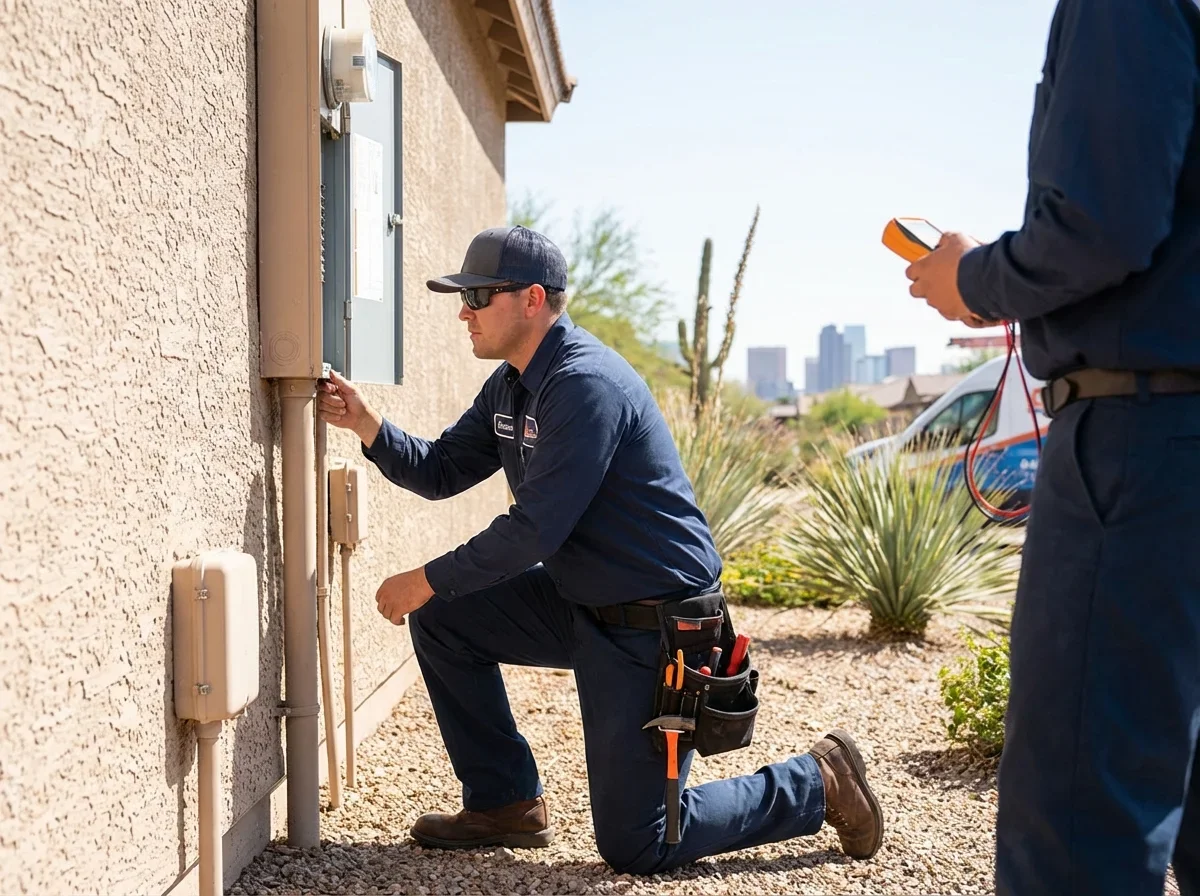
You want someone who understands local electrical challenges, not just national code minimums. Start with the basics: How long have you worked in Phoenix? Do you have experience with aluminum wiring retrofits? Have you installed EV chargers or solar interconnections in homes similar to mine?
If your home was built before 1980, ask whether they've handled whole house rewiring in slab-on-grade homes and how they route new circuits without tearing up your finished interior. If you're adding solar, ask how they handle SRP or APS interconnection agreements and whether they've worked with your specific inverter brand before.
If your panel is in a 140°F garage, ask whether they recommend relocating it or upgrading to a heat-rated panel designed for extreme environments.
Get specific about permits and inspections. Who pulls the permit — you or them? (It should be them.) Who schedules the inspection? How long does it typically take to get inspected in your area of Phoenix?
Permit timelines vary by workload at the city, but a contractor who's worked in Phoenix recently will know whether you're looking at three days or three weeks.
Ask about warranties. Labor warranties should be at least one year, and many reputable contractors offer two or three. Product warranties vary — breakers and panels typically carry manufacturer warranties of 10-25 years, but installation defects are on the contractor.
Clarify what's covered before you sign.
Ask about their approach to heat. Do they schedule attic work early morning in summer? Do they carry infrared cameras to check for hot spots at connections? Do they recommend whole house surge protection to guard against the voltage spikes common during monsoon season when lightning strikes nearby transformers?
These aren't standard questions everywhere. In Phoenix, they separate contractors who understand the local environment from those who are just working off a national checklist.
Find Licensed Electricians Across Phoenix
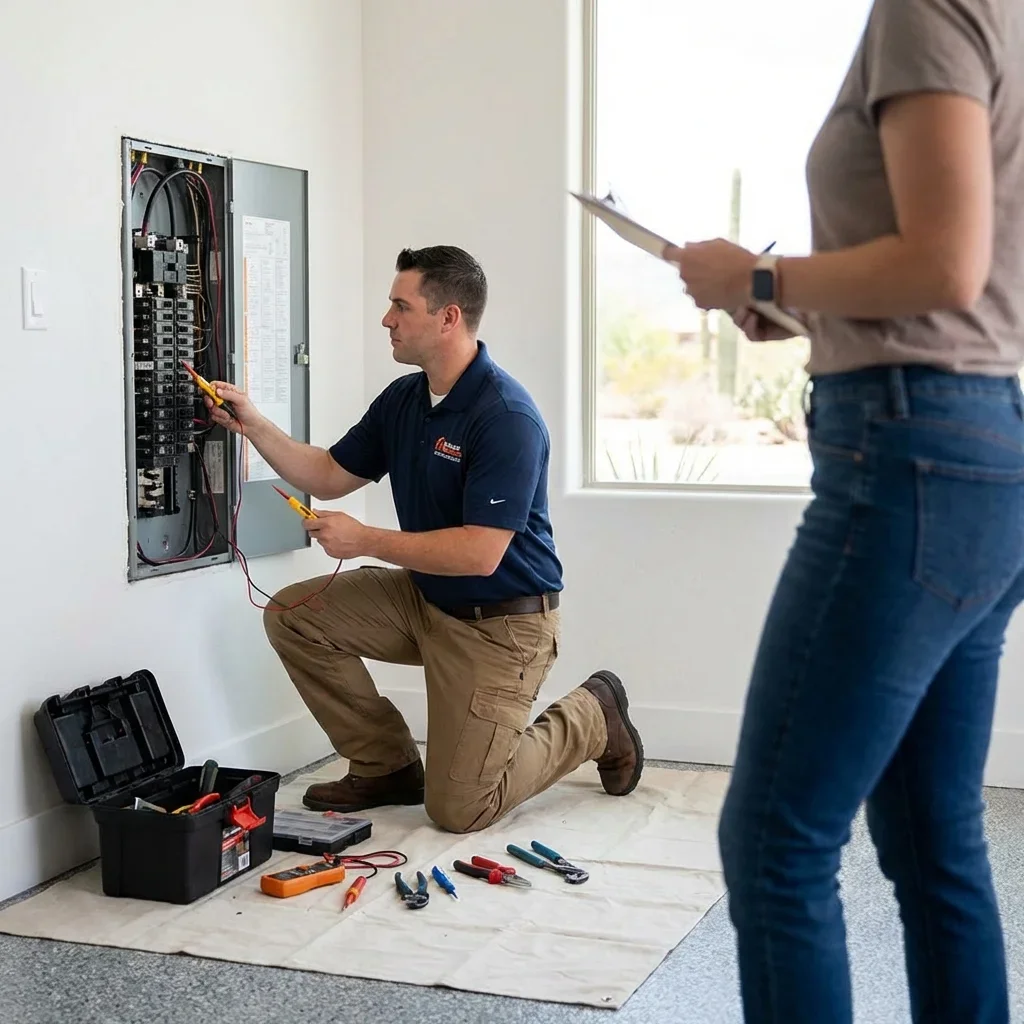
Phoenix sprawls across 500+ square miles, and not every contractor services the entire metro. Some focus on Central Phoenix and the older neighborhoods near downtown. Others specialize in North Phoenix suburbs, Ahwatukee, or Desert Ridge.
When you're calling for quotes, confirm the contractor regularly works in your ZIP code. Driving an extra 30 miles each way adds time to the job and potentially to your bill.
For homeowners in nearby suburbs, you'll find dedicated resources for electricians in Scottsdale, electricians in Tempe, electricians in Chandler, and electricians in Gilbert. Each city has slightly different permitting processes and inspection requirements, and contractors who work regularly in your city will navigate those faster.
Electrical emergencies don't wait for business hours.
If your main breaker trips and won't reset, if you smell burning plastic near an outlet, or if you see sparks at a switch, you need someone now. Many Phoenix electricians offer true 24/7 emergency electrical service, but confirm response times before you're in a crisis. "Emergency service" can mean anything from 30 minutes to "next available slot," and you want clarity on what you're paying for.
If you're tackling a larger project — a kitchen remodel, adding a pool, installing a whole-house generator — consider working with a contractor who offers design consultation upfront, not just installation. Lighting design for outdoor spaces in Phoenix isn't the same as temperate climates where you're not fighting 115°F surface temps and blinding sun. Kitchen electrical in a remodel should account for modern appliance loads, dedicated circuits for microwaves and refrigerators, and GFCI protection that meets current NEC standards adopted by Phoenix[6].
The best electricians in Phoenix don't just fix problems. They help you avoid the next one.
That means honest assessments of whether your 1970s panel is a disaster waiting to happen, whether your pool bonding meets modern safety standards, and whether your home's electrical capacity can handle the loads you're planning to add in the next five years. You want someone who tells you the truth, even when it's not the cheapest option, because in a city where heat accelerates every kind of electrical failure, cutting corners today means paying double later.
- City of Phoenix. "Journeyman and Apprentice Licensing." https://www.phoenix.gov/administration/departments/pdd/registration-licensing/journeyman-apprentice.html. Accessed April 06, 2026.
- City of Phoenix. "Journeyman License Renewals Brochure." https://www.phoenix.gov/content/dam/phoenix/pddsite/documents/inspections/journeyman-brochure.pdf. Accessed April 06, 2026.
- Arizona Registrar of Contractors. "Electrical Contractors." https://roc.az.gov/licenses/electrical-contractors. Accessed April 06, 2026.
- Arizona Registrar of Contractors. "License Classifications: Electrical." https://roc.az.gov/license-classifications-electrical. Accessed April 06, 2026.
- Arizona Registrar of Contractors. "Electrical Board." https://roc.az.gov/board/electrical-board. Accessed April 06, 2026.
- City of Phoenix (via UpCodes integration of official codes). "Adopted Codes." https://up.codes/codes/phoenix. Accessed April 06, 2026.