What Qualifies as an Electrical Emergency?
A true electrical emergency poses immediate risk of fire, electrocution, or total power loss to essential systems. Sparking outlets, exposed wires, burning smells from equipment, and faulty wiring all qualify as hazards requiring immediate attention.[1]
You're not overreacting when you see visible arcing inside an outlet or smell hot insulation. These are active fire risks.
Power loss that affects only your property (not the neighborhood) signals a service panel or meter issue, especially if you see scorching or melted components. Outlets hot to the touch, breakers that won't reset, or any electrical component producing smoke all require an emergency call. The National Electrical Code requires emergency systems to restore power within 10 seconds for vital circuits, but your home doesn't have that redundancy.[2] When the main panel fails, everything goes dark until a licensed electrician diagnoses the fault.
In Phoenix, monsoon season (July through September) drives a spike in electrical emergencies: lightning-damaged panels, flooded outdoor outlets, downed service lines hitting roofs. Older homes built before 1980 also experience sudden failures when copper bus bars corrode through or aluminum wiring connections loosen and overheat.
If you're unsure whether your situation is urgent, ask yourself: Is there visible fire, smoke, or sparks? A burning smell? Total power loss with no utility outage? If yes to any, call immediately.
Non-emergencies include a single outlet not working (with no burning smell), a light switch that stopped functioning, or a GFCI outlet that tripped but resets normally. These warrant same-day or next-day service, not premium after-hours rates.
Quick Reference: Emergency vs Non-Emergency Electrical Issues
- CALL IMMEDIATELY: Visible sparks or flames, burning smell from outlets/panel, outlets hot to touch, total power loss (property-only), smoking electrical components, exposed live wires
- SAME-DAY SERVICE: Single non-working outlet (no burning smell), failed light switch, breaker trips once then resets normally, GFCI outlet requires reset
- SCHEDULED SERVICE: Dimming lights, outlets with loose connections, non-functional doorbell, landscape lighting issues
Immediate Safety Steps Before the Electrician Arrives
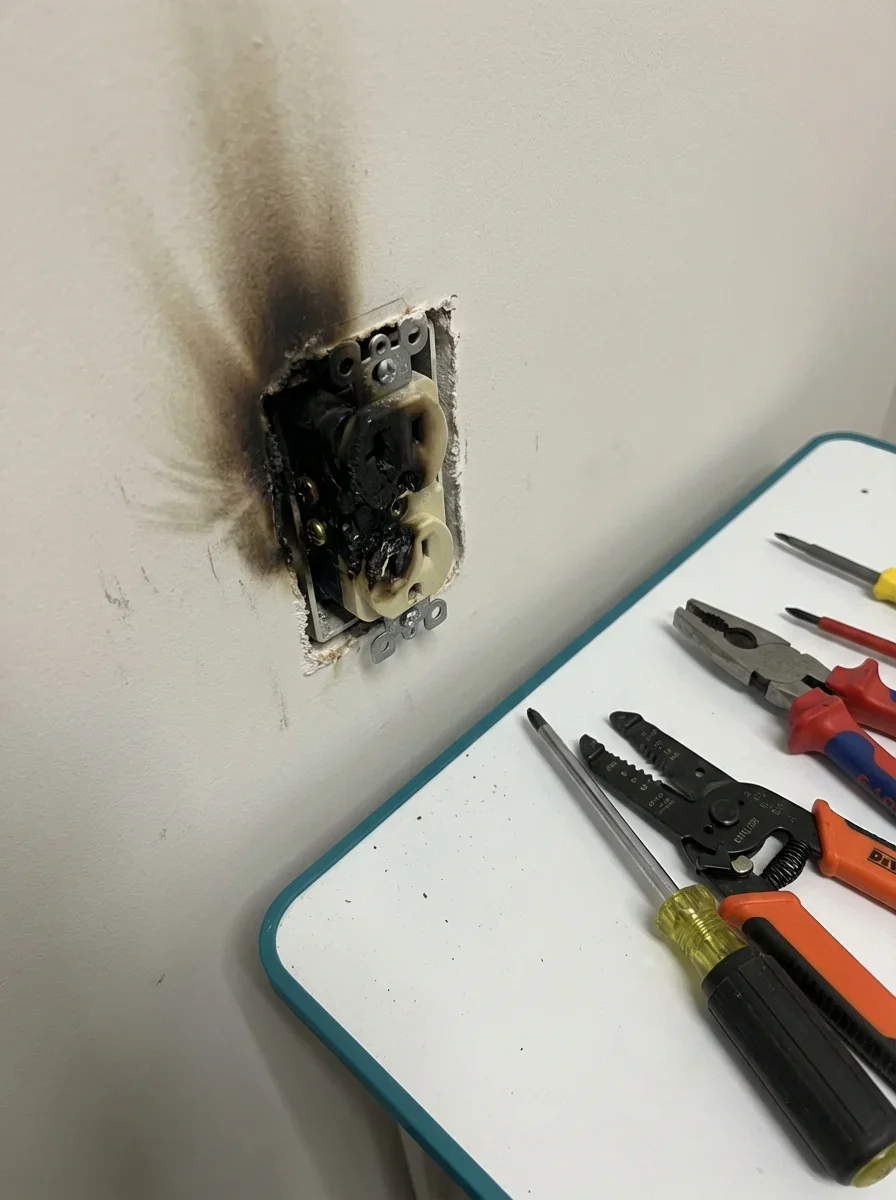
Cut power at the source before you investigate any electrical problem. Most electrical injuries happen when homeowners poke at sparking outlets or open panels while circuits are energized.
Your first move: locate your main electrical panel and identify the main breaker (usually at the top, larger than branch breakers, labeled 100A, 150A, or 200A).
When to Shut Off Power at the Main Panel
Flip the main breaker to OFF if you see sparking, smell burning plastic or rubber, notice scorch marks around outlets or the panel itself, or experience repeated trips on the same breaker with no clear overload. The NEC now mandates emergency disconnects on all new residential services specifically so you can kill power fast without opening the panel box.[4]
Older Phoenix homes may not have this external disconnect. Your main breaker inside the panel is your kill switch.
After shutting off power, don't attempt repairs yourself. Leave the panel closed. If the emergency is isolated to one circuit (like a sparking bedroom outlet), you can flip off just that breaker and leave the rest of the house energized. But if you're uncertain which breaker controls the problem area, or if the issue is at the panel itself, shut down the whole system.
Unplug everything on affected circuits to reduce load when the electrician restores power for testing. In monsoon situations where water has contacted electrical equipment (flooded landscape lighting boxes, soaked outdoor outlets), leave that circuit off until a licensed pro confirms it's dry and safe.
When to Evacuate and Call 911
If you see flames, heavy smoke, or continuous arcing that doesn't stop when you flip breakers, evacuate immediately and call 911 from outside the home. Electrical fires can spread through walls where you can't see them. Drywall and insulation ignite faster than most homeowners expect.
Don't try to extinguish an electrical fire with water.
Also evacuate if you smell natural gas alongside electrical problems. Some homes have gas appliances with electronic ignition, and a shorted circuit near a gas line creates compounding risks. Once you're outside and emergency services are notified, then call an emergency electrician. Fire departments will secure the scene, but they won't repair your electrical system. You'll still need a licensed contractor to restore power safely.
How Much Do Emergency Electrical Services Cost?
Emergency electrical work costs 1.5x to 3x standard rates, depending on when you call and how extensive the repair. Expect upfront trip charges, after-hours premiums, and minimum service fees before the electrician even diagnoses your problem.
After-Hours Rates and Trip Charges
Most Phoenix-area emergency electricians charge $150–$250 trip fees just to dispatch a truck, regardless of the repair needed. After-hours rates (nights, weekends, holidays) run $125–$200 per hour compared to $80–$120 for standard daytime service.
A midnight service call for a tripped main breaker might cost $400–$600 if the fix is simple (reset and test). But if the electrician finds a failed breaker or burnt bus bar requiring replacement, you're looking at $800–$1,500 including parts and labor.
Two-hour minimums are common for emergency calls. Even if the electrician fixes your problem in 30 minutes, you pay for two hours of labor. This isn't price gouging. It covers the cost of pulling a licensed tech off-call, stocking a truck with parts, and driving across Phoenix metro at 2 AM. Top-rated 24/7 contractors in Scottsdale and Chandler often charge at the higher end of this range but arrive faster and carry more inventory on their trucks.
Get pricing confirmed on the phone before dispatch: "What's your trip charge, hourly rate, and minimum service fee for a 10 PM Sunday call?" If they won't quote those three numbers, call someone else.
Emergency vs Standard Service Pricing
Standard service calls during business hours typically include free estimates and lower labor rates. Emergency calls prioritize speed over cost.
You're paying for immediate availability, not just the repair itself.
A panel replacement that costs $2,200 during the week might run $3,400 on a holiday weekend if the main breaker fails and you need power restored before your refrigerator spoils $400 of food.
Temporary repairs cost less than permanent solutions. If your main disconnect burns out at midnight, the electrician might install a temporary bypass to restore partial power, then schedule a code-compliant panel upgrade during business hours. Expect $600–$900 for the emergency patch, plus $1,800–$3,000 for the follow-up permanent repair.
Emergency service should always include a full diagnosis and written plan for any necessary follow-up work. If the electrician just resets your breaker and leaves without explaining why it tripped, you haven't solved anything.[3]
Phoenix's extreme heat accelerates electrical component failure. AC units pulling maximum load for 120+ days straight stress panels designed for intermittent use. Budget an extra 10–15% on emergency electrical work compared to cooler climates, because parts fail harder here and require more robust replacements.
| Service Type | Trip Charge | Hourly Rate | Typical Total Cost | Response Time |
|---|---|---|---|---|
| Emergency (After-Hours) | $150–$250 | $125–$200 | $400–$1,500+ | 30–90 minutes |
| Standard (Business Hours) | $0–$75 | $80–$120 | $200–$800 | Same/next day |
| Temporary Emergency Fix | $150–$250 | $125–$200 | $600–$900 | 30–90 minutes |
| Permanent Follow-Up | $0–$75 | $80–$120 | $1,800–$3,000 | Scheduled appointment |
What to Expect When You Call an Emergency Electrician
Legitimate 24/7 electrical services answer within three rings, ask specific diagnostic questions, and provide response time estimates before you hang up. The dispatcher should ask: What exactly happened? Do you smell smoke or see sparks right now? Did you shut off any breakers? Is your whole house dark or just part of it?
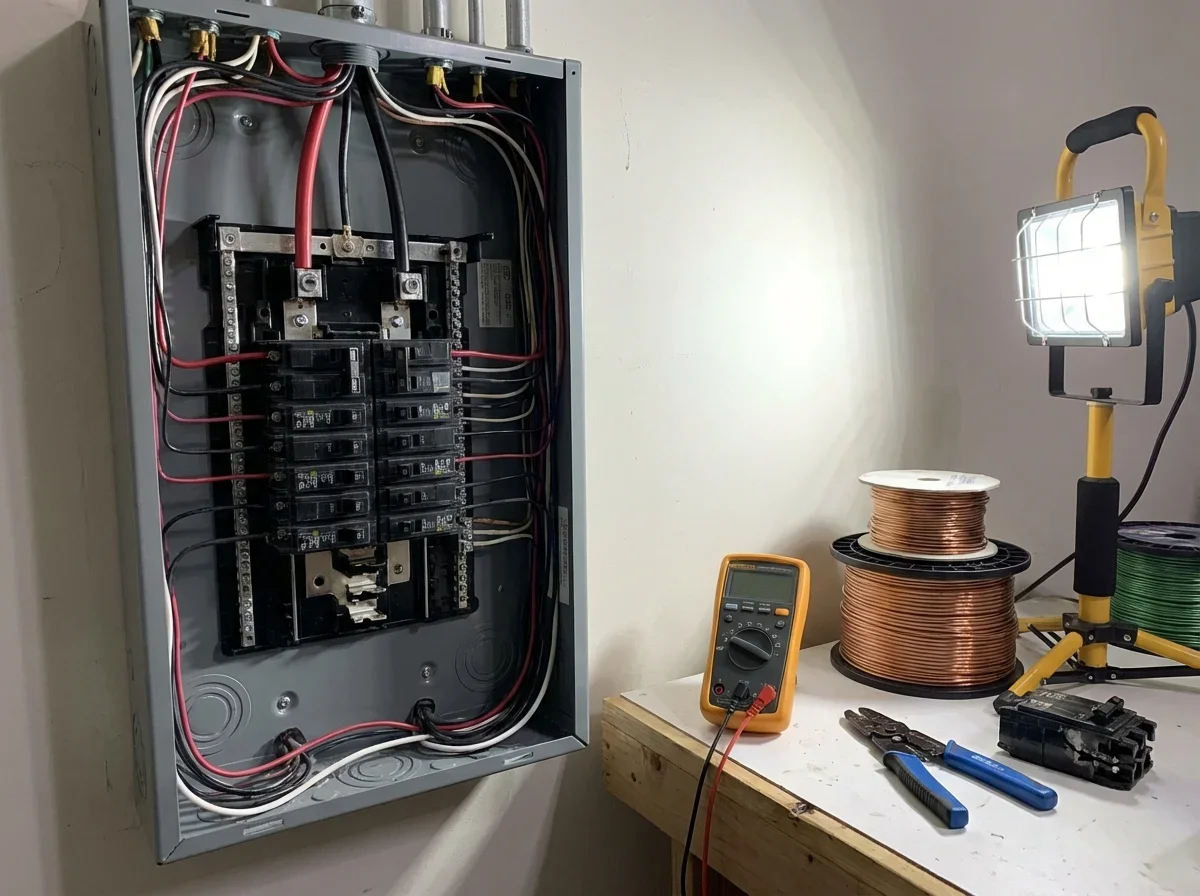
A qualified emergency electrician arrives in a marked vehicle with ROC license number visible, carrying a fully stocked service truck. They'll ask to see your electrical panel immediately, test voltage with calibrated equipment, and explain findings in plain language.
If they recommend an immediate repair, they should provide an itemized quote covering parts, labor, trip charge, and any applicable after-hours premium. All before starting work.
Red flags: Electricians who can't produce an active Arizona ROC license on request, quote prices only after completing work, or pressure you to authorize repairs without explanation. No ethical contractor tells you "I can't explain what's wrong, you just need a $2,000 panel upgrade right now." Walk through the diagnosis with them. Ask what failed, why it failed, and what happens if you delay the repair.
Most emergency calls resolve in 1–3 hours for issues like tripped breakers, failed outlets, or single-circuit problems. Whole-panel emergencies requiring parts procurement might take 4–6 hours if the electrician needs to source a replacement breaker or bus bar from a supplier.
When an emergency electrician says "I need to come back tomorrow with parts," confirm they're making the site safe tonight and get a firm appointment time for the follow-up.
PRO TIP: Before the electrician arrives, take photos of your electrical panel with the door closed, any visible damage, and the main breaker position. This documentation helps with insurance claims and provides a reference point if the contractor's diagnosis doesn't match what you observed. Never open the panel yourself to photograph internal components.
How to Find a Qualified 24/7 Electrician in Phoenix
Start at roc.az.gov. Arizona's Registrar of Contractors maintains real-time license lookup. Enter the company name or license number before authorizing any work.
An active ROC license in the electrical classification (K-11) is non-negotiable. The database shows complaint history, bonding status, and whether the license is current or suspended.
Verify the individual electrician's credentials, too. Arizona requires journeyman or master electrician certification for anyone performing electrical work unsupervised. Ask for the lead electrician's name and license number when you call. Legitimate contractors provide this information immediately. Hesitation is a warning sign.
For urgent issues like panel failures requiring immediate attention or post-storm electrical damage, prioritize contractors with 24/7 dispatch, not just answering services that "take messages after hours." The difference: 24/7 dispatch means a licensed electrician is on call and can roll a truck within 30–90 minutes. Answering services return your call Monday morning. Useless when your panel is arcing at 11 PM Saturday.
Check response areas carefully. Many Phoenix-based emergency electricians don't service outlying areas like Rio Verde or Queen Creek after hours. Confirm your address falls within their emergency zone before describing your problem.
Phoenix, Tempe, Scottsdale, Chandler, and Gilbert typically have the densest emergency coverage.
Common Electrical Emergencies in Arizona Homes
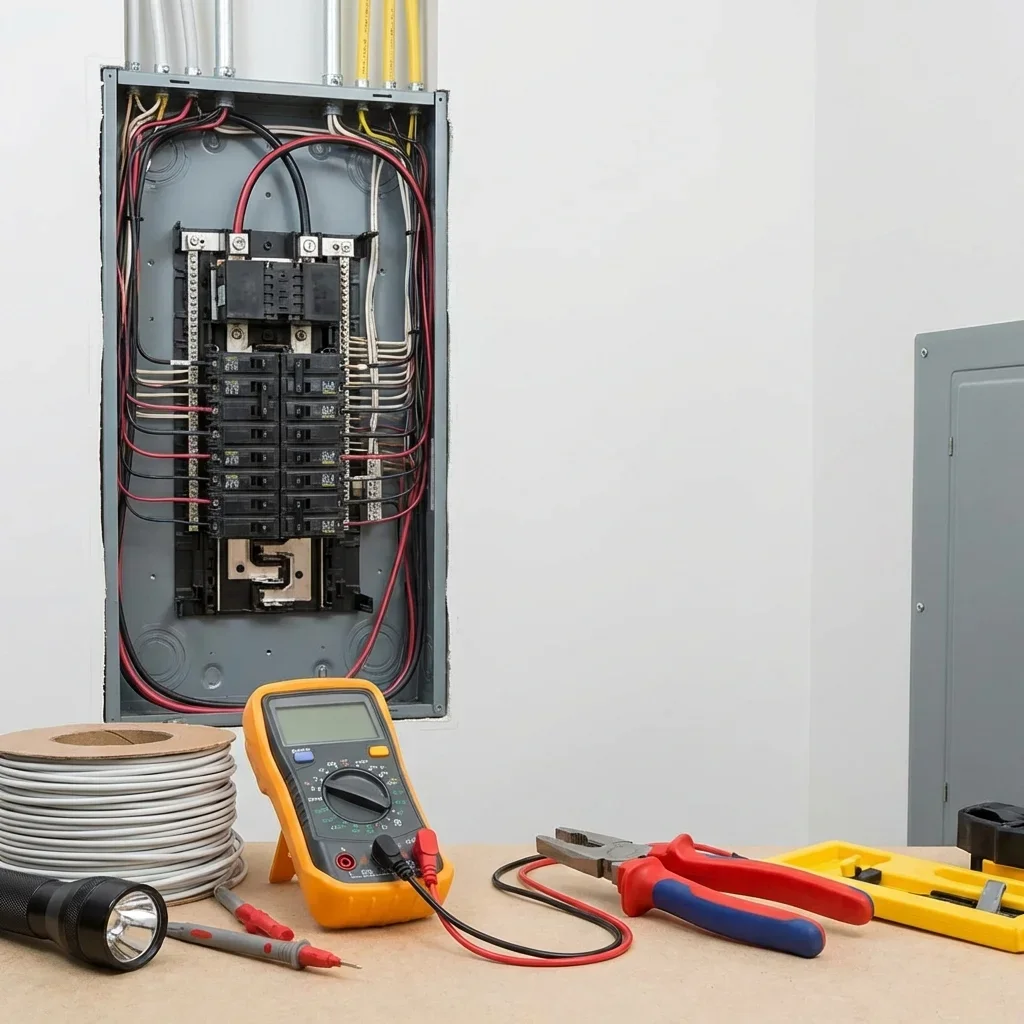
Monsoon season delivers the highest volume of emergency calls: lightning strikes that blow transformers and send surges through panels, flooded outdoor circuits from torrential rain, and wind-damaged service lines. If your power flickers during a storm then dies completely, check whether neighbors also lost power (utility issue) or just your home (service panel or meter issue).
Lightning damage often shows as a burnt smell inside the panel or scorched breaker switches.
AC electrical overload ranks second. Phoenix homes with undersized 100-amp panels running modern AC units, pool pumps, and EV chargers routinely trip main breakers on 110°F days when everything runs simultaneously. You'll know it's an overload issue if the main breaker trips repeatedly when the AC cycles on.
This isn't a true emergency unless the breaker itself is damaged and won't reset. But it signals you need a panel upgrade before you damage the equipment or start a fire.
Older homes (pre-1985) experience sudden wiring failures from thermal expansion and hard water corrosion. Copper wiring in slab-on-grade construction expands and contracts with Phoenix's 50°F day-night temperature swings, loosening connections over decades. Aluminum wiring in 1960s–1970s homes oxidizes at connection points, creating high-resistance hotspots that eventually arc and fail.
If your home still has original aluminum wiring, consider aluminum wiring replacement before you face a midnight emergency.
Pool and spa electrical failures spike in summer when pumps and heaters run extended hours. GFCI trips on pool circuits are usually nuisances (moisture intrusion, aging GFCI receptacles), but if the pool subpanel shows scorch marks or the pump won't run even with breakers on, that's an immediate fire risk. Desert UV exposure degrades electrical insulation on outdoor equipment faster than humid climates. Expect 15-year lifespan on pool wiring versus 25+ years in moderate climates.
Scorpions and rodents create electrical hazards uniquely common in Arizona. Scorpions enter homes through wire penetrations in exterior walls. Rodents chew through wiring in attics and crawl spaces. If you experience random shorts or breaker trips with no clear cause, pest-damaged wiring might be the culprit.
Emergency electricians can identify chewed insulation with thermal cameras and multimeters, but permanent fixes require sealing penetrations and possibly whole house rewiring in extreme cases.
- California Division of Occupational Safety and Health (Cal/OSHA). "Cal/OSHA Guide to Electrical Safety." http://www.dir.ca.gov/dosh/dosh_publications/electrical_safety.pdf. Accessed April 06, 2026.
- Electrical Engineering Portal (referencing NFPA 70 National Electrical Code). "NEC Requirements for Emergency Systems." https://electrical-engineering-portal.com/nec-requirements-for-emergency-systems. Accessed April 06, 2026.
- NFPA 70 National Electrical Code (via Emergi-Lite). "National Electrical Code - Emergi-Lite." https://www.emergi-lite.com/usa/modules/Files/el_216c_national_electrical_code_25-6-2018.pdf. Accessed April 06, 2026.
- National Fire Protection Association (NFPA). "Single Family Residential Electrical Services | NFPA." https://www.nfpa.org/news-blogs-and-articles/blogs/2022/01/06/considerations-for-single-family-residential-electrical-services-based-on-the-2020-nec. Accessed April 06, 2026.
- Los Angeles County Department of Public Works. "CALIFORNIA ELECTRICAL CODE - LA County Public Works." https://dpw.lacounty.gov/bsd/lib/fp/Electrical/Electrical%20Code%20Amendments/2023%20LA%20County%20Amendments.pdf. Accessed April 06, 2026.