What Are Interior Electrical Services?
Interior electrical services cover everything from swapping a single light switch to rewiring an entire room. You're looking at outlet and switch installations, lighting upgrades, circuit additions, panel work, and troubleshooting when something stops working or trips repeatedly. Licensed electricians handle projects that require pulling permits, opening walls, running new wire, or touching your electrical panel — all of which fall under Arizona's ROC jurisdiction and NEC code compliance.[1]
This is different from appliance hookups or cosmetic fixture changes. Interior electrical work means changing how power moves through your home. Adding capacity where there wasn't enough, fixing dangerous wiring in older homes, or bringing circuits up to current code. The scope includes GFCI and AFCI protection (required in wet areas and bedrooms), dedicated circuits for high-draw appliances, and sub-panel installations when your main panel runs out of slots.
Phoenix-area homes built before 2000 often need the most interior work.
You've got copper supply lines stressed by hard water, aluminum wiring in some 1970s builds, and panels that were sized for half the electrical load you're using today. Desert heat accelerates insulation breakdown on exposed wiring, and caliche soil makes any work requiring trenching (like adding exterior outlets) more expensive than you'd expect.
Common Interior Electrical Projects and What They Cost
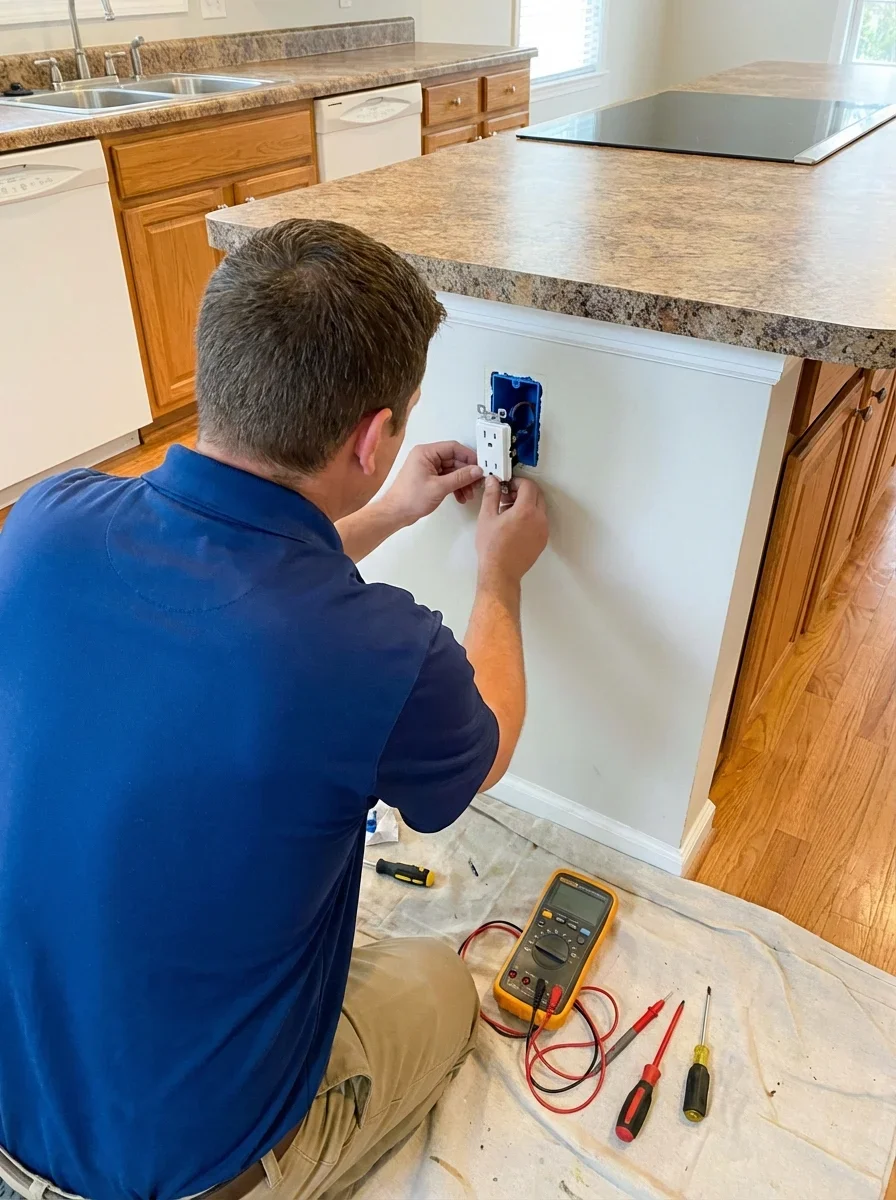
Most homeowners call electricians for a handful of recurring jobs: adding outlets where there aren't enough, replacing old switches with dimmers or smart controls, upgrading lighting, and fixing circuits that trip. Pricing varies based on whether you're working with existing infrastructure or adding entirely new circuits and boxes.
Outlet and Switch Installation
Replacing an existing outlet — same location, same box, just swapping the device — typically costs $125-$175 including the electrician's service call. You're paying for 30-45 minutes of labor to shut off the breaker, swap the outlet, test for proper grounding, and confirm it's wired correctly.[4]
GFCI outlets in kitchens, bathrooms, and garages add $25-$50 to that total because they take longer to wire and test.
Adding a brand-new outlet where there wasn't one? That jumps to $200-$400 if the electrician can tap an existing circuit nearby without opening more than a small section of drywall. If you need a dedicated circuit run from the panel (common for microwaves, garage workshops, or rooms that didn't have enough outlets originally) expect $300-$700 once you factor in wire, breaker, box, drywall patching, and labor. Homes with finished walls and no attic or crawl access cost more because running wire gets complicated fast.
Arizona's NEC amendments require GFCI protection within 6 feet of any water source (sinks, tubs, laundry areas).[2] Older homes often lack this, so a kitchen remodel or bathroom update will trigger GFCI upgrades even if you're just changing countertops.
Some electricians offer a "per-outlet discount" if you're adding multiple outlets in one visit. Figure $100-$150 for the first, $50-$75 for each additional outlet on the same circuit.
| Outlet Installation Type | Cost Range | Timeline | Best For |
|---|---|---|---|
| Simple outlet replacement (existing location) | $125-$175 | 30-45 min | Worn outlets, cosmetic upgrades |
| New outlet on existing circuit | $200-$400 | 1-2 hours | Rooms with insufficient outlets |
| New outlet with dedicated circuit | $300-$700 | 2-4 hours | High-draw appliances, workshops |
| GFCI outlet installation | $150-$225 | 45-60 min | Kitchens, bathrooms, wet areas |
Lighting Installation and Upgrades
Swapping one light fixture for another in the same location costs $100-$200 depending on fixture weight and complexity (chandeliers take longer than a simple ceiling mount). Adding recessed lighting where there was none runs $200-$350 per fixture when you account for cutting ceiling holes, running wire, installing housings, and patching drywall.
Six-can layouts in living rooms or kitchens typically land around $1,200-$2,100 total.
Dimmer switch installations cost $75-$150 per switch if you're replacing a standard toggle. Smart dimmer switches (Lutron, Leviton) that sync with Alexa or Google add another $30-$80 in hardware on top of labor. Under-cabinet lighting in kitchens, popular in Phoenix metro remodels, runs $300-$600 for a typical setup with hardwired LED strips and a wall switch.
Track lighting and pendant installations over islands require junction box work and often need reinforced mounting for heavier fixtures. Budget $250-$500 per pendant depending on electrical box accessibility. Outdoor patio lighting tied to interior circuits falls under exterior outlet installation but shares similar permit and GFCI requirements.
Circuit Additions and Upgrades
Adding a new circuit from your panel to a specific area costs $300-$900 depending on distance, wire gauge, and whether walls are open or finished. A 20-amp circuit for a home office with multiple monitors, printers, and chargers runs about $400-$600 in most Arizona homes.
Kitchens often need multiple dedicated circuits for code compliance. Microwaves, dishwashers, and disposals each pull enough load to warrant their own circuit.
240-volt circuits for electric dryers, ovens, or EV chargers jump to $500-$1,200 because they require heavier 10-gauge or 8-gauge wire, double-pole breakers, and specialized outlets. If your panel doesn't have open slots, you'll need a sub-panel installation adding $800-$1,500 to the project. Older panels in pre-2000 Arizona homes sometimes max out at 100-amp service, which means a full panel upgrade to 200-amp before you can add circuits. That's a $2,000-$4,500 job including permit and inspection.
The NEC allows one 15-amp circuit to supply up to 600 square feet of living space, or 800 square feet for a 20-amp circuit, with no single device exceeding 80% of the breaker rating.[3] Phoenix electricians often recommend 20-amp circuits for office spaces and media rooms since modern electronics pull more continuous load than older homes were designed to handle.
Electrical Troubleshooting and Repairs
Troubleshooting starts at a service call fee ($75-$150) and climbs based on complexity. If an outlet stopped working because a wire came loose in the box, you're looking at $150-$250 total.
If half your house lost power because a main feed corroded in a junction box buried in the attic, you're into $400-$800 once the electrician traces the fault, opens drywall, replaces wire, and tests the circuit.
Repeated breaker trips signal overloaded circuits, failing breakers, or short circuits somewhere in the line. Electricians typically charge $100-$200 to replace a standard breaker, but diagnosing which circuit is overloaded or shorted can take 2-4 hours at $75-$125/hour. Older Arizona homes with aluminum branch wiring (common in 1970s builds) often need aluminum wiring replacement because connections loosen over time and create fire hazards. That's a multi-thousand-dollar project if you're rewiring entire rooms.
Flickering lights point to loose connections, undersized wire, or failing breakers. If you're seeing flickers across multiple rooms when the AC kicks on, your panel may be undersized for the load. A full electrical inspection runs $200-$400 and tells you whether you need a panel upgrade or just a few dedicated circuits to offload the AC and water heater.
When Do You Need a Licensed Electrician?
Arizona law requires an ROC-licensed electrical contractor for any work exceeding $1,000, and most interior electrical projects cross that line the moment you're adding circuits or opening panels. Verify contractor licenses at roc.az.gov before hiring. The ROC database shows active status, license classifications (C-11 for electrical), and any complaint history.
You need a licensed electrician (not a handyman) for anything involving your electrical panel, adding circuits, installing 240-volt outlets, running new wire through walls, or working on systems that require permits.
Handymen legally can't pull electrical permits in Arizona, and unpermitted work voids home insurance if a fire starts from faulty wiring. More importantly, it complicates home sales when inspection reports flag unpermitted electrical modifications.
GFCI outlet installations near water sources trigger code compliance checks under the NEC.[2] If you're updating a kitchen or bathroom, the electrician will often recommend bringing all wet-area outlets up to current GFCI standards even if you're only replacing one. Older homes on two-wire systems (no ground) can legally use three-prong GFCI outlets without full rewiring, saving you from tearing open walls.[5]
Permit requirements kick in for circuit additions, panel work, and most lighting installations beyond simple fixture swaps. Phoenix, Scottsdale, Tempe, and Chandler all require permits for new circuits even if you're staying within your existing panel capacity.
Inspections confirm wire gauge matches breaker size, boxes are properly secured, and everything's grounded correctly. The kind of detail that prevents fires and insurance claims.
Master electricians can supervise larger jobs and sign off on permit inspections. Journeyman electricians work under a master's license but handle most residential service calls and installations. Arizona doesn't require workers comp insurance for contractors (controversial and risky), so verify general liability independently. The ROC bond only covers $4,000-$15,000 depending on license type, which won't cover serious property damage or injury.
Arizona Electrical Work Permit Requirements:
- Circuit additions or new branch circuits from the panel
- Electrical panel upgrades or sub-panel installations
- 240-volt outlet installations (dryers, ovens, EV chargers)
- Recessed lighting installations requiring new wiring
- Any work opening walls to run new electrical wire
- GFCI upgrades in wet areas during kitchen/bath remodels
- Work exceeding $1,000 in total project cost
- All work must be performed by ROC-licensed C-11 contractor
How to Choose an Interior Electrical Contractor
Start with ROC license verification at roc.az.gov. You're looking for an active C-11 electrical license with no unresolved complaints or license suspensions. The database shows how long they've held the license (longer is generally better) and whether they're classified for residential (R-class) or commercial (B-class) work. Most residential electricians hold dual classifications.
Licensing and Insurance Verification
Check that the contractor carries general liability insurance separate from the ROC bond. Ask for a certificate of insurance and verify it directly with the insurer. Don't just take a printout at face value.
If they employ helpers or apprentices, confirm they have workers comp even though Arizona doesn't mandate it. You don't want liability if someone gets hurt on your property.
Look for electricians who belong to trade associations like the Independent Electrical Contractors (IEC) or the National Electrical Contractors Association (NECA). Membership signals they're staying current on code changes and continuing education. The NEC updates every three years (latest 2023 edition), and Arizona typically adopts new codes within a year or two of national release.[1]
Questions to Ask Before Hiring
Ask how they price jobs. Hourly rates ($75-$150/hour typical in Phoenix metro), flat-rate service calls, or project quotes. Get itemized estimates that break out labor, materials, permit fees, and any drywall or painting repair. If they quote one flat number with no detail, push back and ask for the breakdown.
Find out who's doing the work. Will the licensed contractor be on-site, or are they sending an apprentice under supervision? Both are legal, but you should know upfront.
Ask how long the job will take. A single outlet replacement shouldn't take four hours, and if they're blocking off your whole day for a simple switch swap, they're either overbooked or padding hours.
Confirm they pull permits for work that requires it (circuit additions, panel upgrades, extensive rewiring). If they say "permits aren't necessary for this," verify independently with your city's building department. Unpermitted work becomes your problem when you sell the house or file an insurance claim.
Ask about warranty. Reputable electricians warranty their work for at least a year (materials and labor). If an outlet they installed fails in three months because of a loose connection, they should fix it at no charge.
Get that in writing.
Pro Tip: Get three written estimates for projects over $500, and don't automatically choose the lowest bid. The cheapest quote often means corner-cutting on materials, unlicensed helpers doing the work, or surprise upcharges once the job starts. Compare itemized breakdowns and verify each contractor's ROC license status before signing anything.
Browse Interior Electrical Services
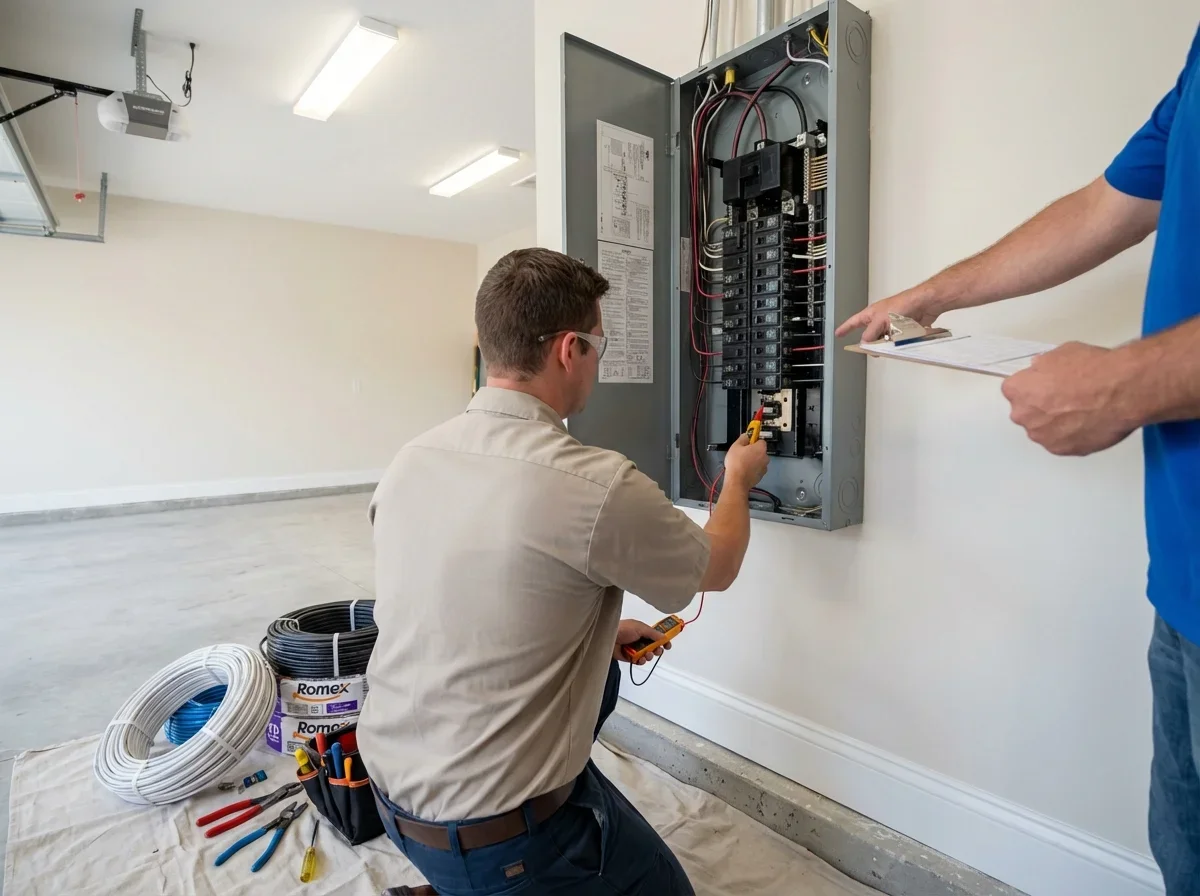
Interior electrical work breaks into specialized categories depending on project scope. Outlet installation and repair covers everything from basic receptacle replacement to adding new circuits for home offices or entertainment centers. GFCI installations handle wet-area outlets in kitchens, bathrooms, garages, and outdoor locations where water contact creates shock risk.
Lighting projects range from simple light fixture installation and ceiling fan installation to more involved recessed lighting installation that requires cutting ceiling holes and running new wire. Dimmer switch installation adds control over lighting levels and integrates with smart home systems for whole-home automation.
Circuit work includes dedicated circuit installation for high-draw appliances and sub-panel installation when your main panel runs out of capacity.
Phoenix-area homes often need kitchen remodel electrical to bring older kitchens up to current code with GFCI protection, dedicated appliance circuits, and additional countertop outlets. Smart home wiring ties lighting, thermostats, and security into unified control systems.
Diagnostic and repair services include electrical troubleshooting for circuits that trip, outlets that stopped working, or lights that flicker. Emergency scenarios (burning smells, sparking outlets, total power loss) fall under emergency electrical service with 24-hour response times. Older homes sometimes need whole house rewiring if you're dealing with knob-and-tube wiring, failing aluminum branch circuits, or insulation breakdown from decades of desert heat.
Code compliance and safety upgrades include smoke detector installation hardwired to meet current fire safety requirements and surge protection installation to prevent voltage spikes from monsoon lightning strikes. Arizona's summer storms make whole-house surge protection a common upgrade in the Phoenix metro area.
Electrical wiring inspection and certification confirms your home's electrical system meets NEC and local code before you buy, sell, or refinance.
Find Qualified Electricians in Your Area
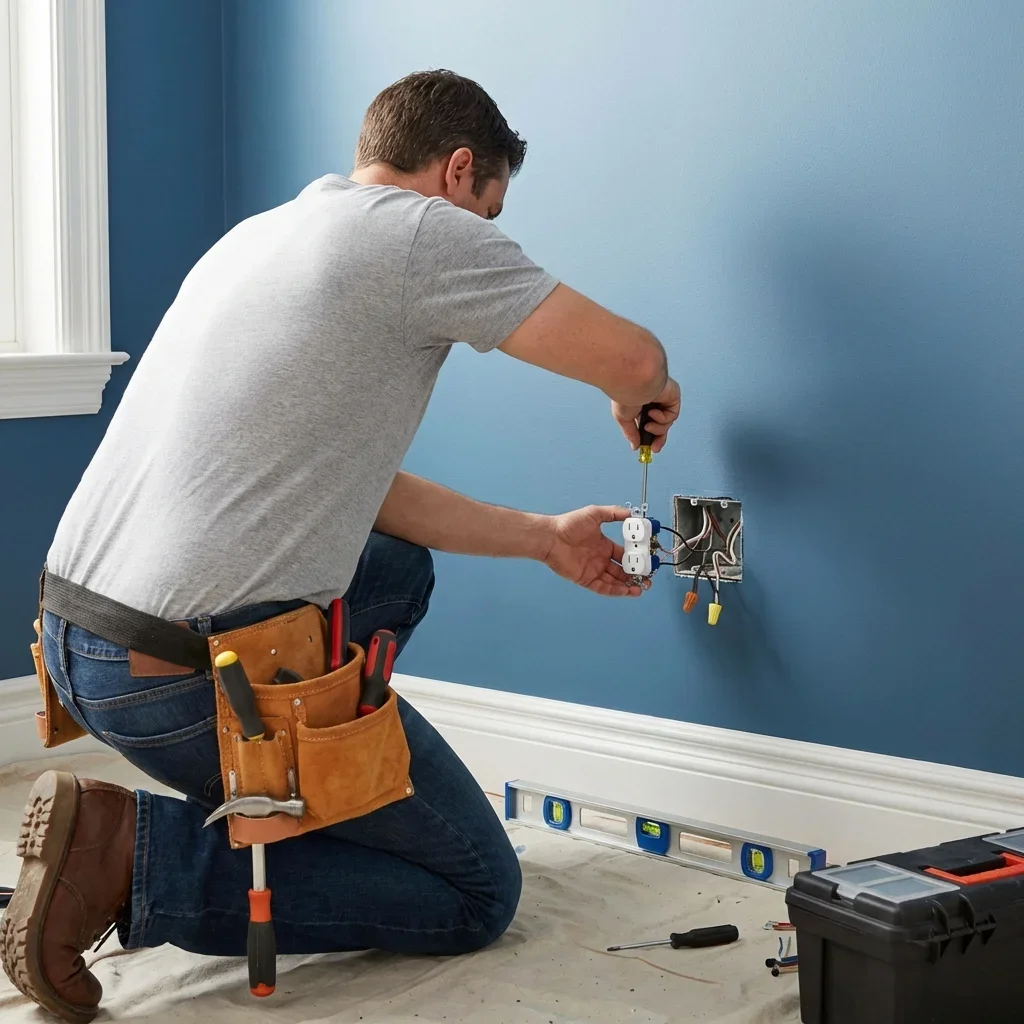
Licensed electricians across the Phoenix metro area handle interior electrical work from single-outlet additions to full-home rewiring. Use our directory to compare contractors by service area, specialty, and homeowner reviews. Filter by city to find electricians operating in your specific area: Phoenix, Scottsdale, Tempe, Chandler, and Gilbert all have active ROC-licensed contractors with verified insurance and complaint-free histories.
Request quotes from at least three electricians for projects over $500. Compare not just price but also how they communicate, whether they provide itemized estimates, and how they handle permit and inspection scheduling.
Good electricians show up on time, explain what they're doing in plain language, and don't pressure you into add-on work you didn't ask for.
Check recent reviews for mentions of clean work sites, accurate quotes, and follow-through on warranties. Red flags include contractors who demand full payment upfront (standard practice is a deposit with balance due on completion), refuse to provide written estimates, or can't produce proof of ROC license and insurance when asked.
Arizona law requires contractors to include their ROC license number on all contracts and advertising. If you don't see it, walk away.
- National Fire Protection Association (NFPA) via The Home Depot Guide. "Residential Electrical Code Requirements." https://www.homedepot.com/c/ab/residential-electric-code-requirements/9ba683603be9fa5395fab90175791f71. Accessed April 06, 2026.
- National Fire Protection Association (NFPA) via The Home Depot Guide. "Residential Electrical Code Requirements." https://www.homedepot.com/c/ab/residential-electric-code-requirements/9ba683603be9fa5395fab90175791f71. Accessed April 06, 2026.
- National Fire Protection Association (NFPA) via The Home Depot Guide. "Residential Electrical Code Requirements." https://www.homedepot.com/c/ab/residential-electric-code-requirements/9ba683603be9fa5395fab90175791f71. Accessed April 06, 2026.
- Electrical Contractor Video (NEC Reference). "How Much To Charge For Outlets - YouTube Transcript." https://www.youtube.com/watch?v=-WlaG5iZb_I. Accessed April 06, 2026.
- Fixr (NEC Reference). "Cost to Install Electrical Outlet - Fixr." https://www.fixr.com/costs/install-electrical-outlet. Accessed April 06, 2026.