What Are Residential Electrical Services?
Residential electrical services cover every aspect of your home's electrical system — from the service entrance where power enters your property to the last outlet in your garage. Licensed electricians handle repairs, installations, upgrades, and troubleshooting across lighting, outlets, switches, panels, wiring, and specialty systems like pools, hot tubs, and EV chargers.
The National Electrical Code (NEC) mandates that licensed electricians perform installations and upgrades because this work requires load calculations, circuit testing, and safety certifications that handymen aren't trained or insured to provide.[2] In Arizona, the Registrar of Contractors (ROC) requires anyone performing electrical work over $1,000 to hold an active license. Verify credentials at roc.az.gov before hiring.
What separates licensed work from DIY or handyman fixes isn't just skill. It's liability, code compliance, and warranty protection.
Homeowners who attempt neat-looking electrical installations sometimes discover their work trips breakers or creates hidden fire hazards, requiring a licensed electrician to diagnose and redo the entire job. One Phoenix homeowner avoided a full rewire by hiring an electrician who installed a smart panel instead — a $9,000 savings that a handyman wouldn't have known to offer.
Pro Tip: Before hiring any electrical contractor in Arizona, verify their ROC license status at roc.az.gov. Active licenses mean the contractor carries required insurance and has passed trade exams. Expired or suspended licenses are red flags that can leave you liable for injuries or code violations.
Common Home Electrical Repairs and Installations
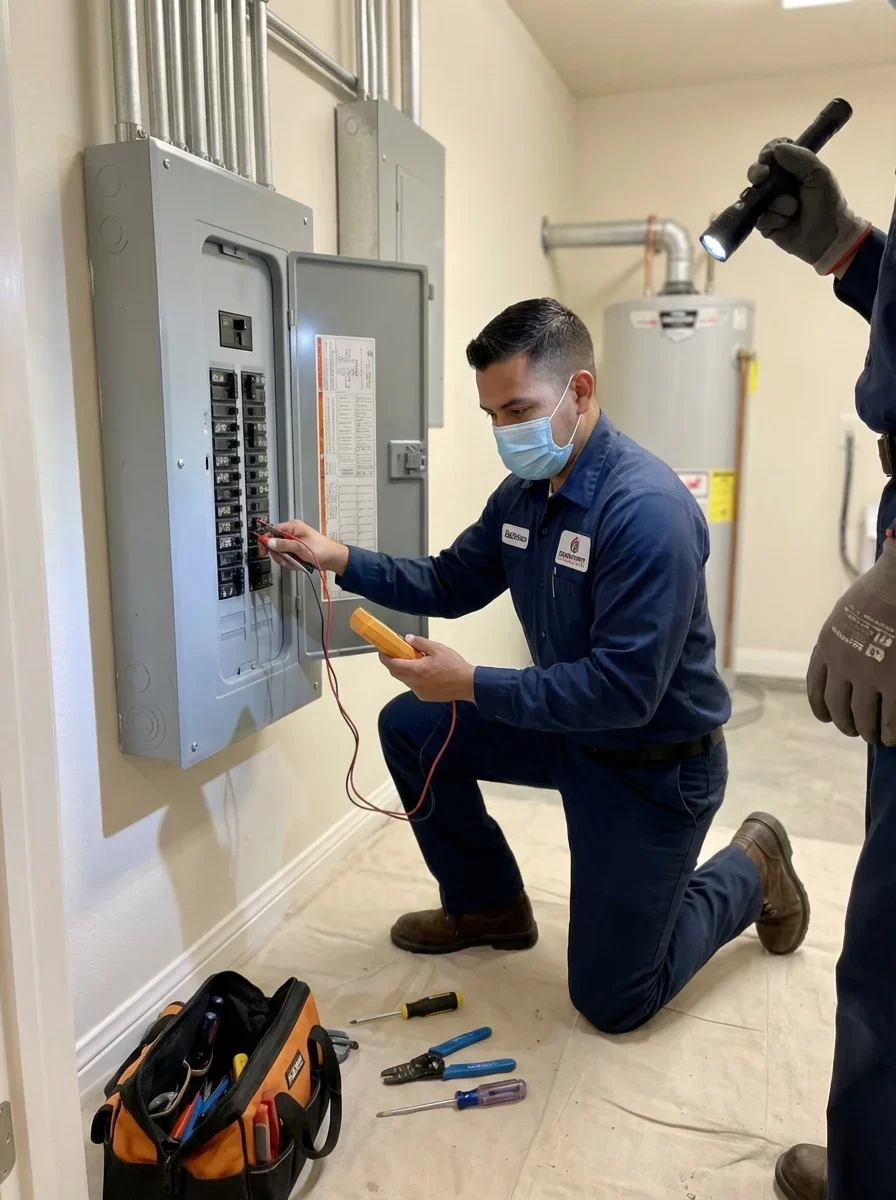
Most residential electrical work falls into a few broad categories. Understanding what each service involves helps you communicate clearly with electricians and budget appropriately.
Outlet and Switch Repairs
Dead outlets, sparking receptacles, and switches that feel hot to the touch signal wiring problems that range from loose connections to backstabbed wires that have failed over time. Electricians test voltage, check for proper grounding, and replace faulty devices with code-compliant components.
Arizona's 2026 NEC amendments require tamper-resistant receptacles in all new installations and GFCI protection in kitchens, bathrooms, garages, and outdoor areas.
A single outlet replacement typically runs $75-$150 including the trip charge. If the issue stems from damaged wiring inside the wall, costs climb to $200-$400 depending on access. Pre-1980s Arizona homes often have outlets wired with aluminum conductors. Replacing these isn't a simple swap and requires specialized connectors to prevent arcing.
Circuit Breaker and Panel Services
Your electrical panel distributes power throughout your home and protects circuits from overloads. Breakers that trip repeatedly indicate overloaded circuits, faulty breakers, or wiring issues. Electricians use load calculations to determine if your panel can handle current demand or if you need an upgrade.
Homes built before 1980 often have 100-amp panels that struggle with modern electrical loads. Central AC, pool pumps, electric vehicle chargers, and whole-home automation systems draw far more power than panels installed decades ago were designed to supply.[3]
A panel upgrade to 200 amps costs $1,500-$3,500 in Phoenix metro, depending on whether your utility service entrance also needs upgrading.
The ROC requires permits for panel work. Unpermitted upgrades can void homeowner's insurance and complicate future home sales.
If you're adding a dedicated circuit for a high-draw appliance or installing a sub panel in a detached garage or workshop, electricians calculate total load to ensure your main panel has adequate capacity.
Lighting Installation and Upgrades
Lighting work ranges from replacing a single fixture to designing and installing a whole-home system with dimmers, smart controls, and accent lighting. Electricians handle everything from recessed lighting installation in cathedral ceilings to ceiling fan installation that requires reinforced ceiling boxes rated for dynamic loads.
Arizona's intense UV exposure degrades outdoor lighting fixtures faster than humid climates. Fixtures rated for wet locations and UV-resistant finishes last longer in Phoenix's desert environment. Electricians who work regularly in the region know which products hold up and which fail within two summers.
Installing new fixtures where none existed requires running new circuits, cutting into walls or ceilings, and sometimes upgrading circuits if existing wiring can't handle the load.
A straightforward fixture swap costs $100-$200. Adding recessed lights in a kitchen remodel runs $150-$250 per fixture including wiring and drywall patching.
Wiring Repairs and Replacements
Faulty wiring causes half of all residential electrical fires.
Common wiring problems include deteriorated insulation, rodent damage, overloaded circuits, and outdated wiring methods that don't meet current code. Penn State Extension identifies knob-and-tube wiring in pre-1950s homes and aluminum branch circuit wiring in 1970s homes as hazards requiring professional replacement, not handyman patches.[5]
Arizona's older neighborhoods have thousands of homes with these systems, particularly in central Phoenix, Tempe, and Scottsdale. If you're buying a home built between 1965-1975, request an electrical wiring inspection before closing. Many insurers won't cover homes with active aluminum wiring unless it's been remediated.
Whole house rewiring costs $8,000-$15,000 for a 1,500-square-foot Arizona home, depending on access and whether you're upgrading the panel simultaneously. Partial rewiring targeting problem circuits or sections of the home runs $1,500-$4,000.
Rewiring doesn't always require tearing out drywall. Skilled electricians use attics, crawl spaces, and fishing techniques to minimize damage, though Arizona's slab-on-grade construction limits access compared to homes with basements.
Signs Your Home Needs Electrical Wiring Attention:
- Outlets or switches feel warm to the touch
- Frequent breaker trips on the same circuit
- Flickering lights when appliances turn on
- Burning smell near outlets or panel
- Two-prong outlets throughout the home (no ground)
- Visible aluminum wiring (silver-colored, not copper)
- Home built before 1980 with original wiring
How Electricians Diagnose Residential Electrical Problems
Diagnostic work separates guesswork from solutions.
Most electricians charge a service call fee ($75-$150) that covers the first hour and includes diagnostics. If you proceed with repairs, many contractors credit the service fee toward the total.
Electricians use multimeters to test voltage, continuity, and grounding at outlets, switches, and fixtures. Circuit analyzers detect reversed polarity, open grounds, and bootleg grounds that create shock hazards. Thermal imaging cameras identify hot spots behind walls where connections are failing and wires are overheating. Clamp meters measure current draw on individual circuits to identify overloads.
Load calculations determine whether your electrical system can safely handle existing and planned demand. This involves totaling the wattage of all appliances, lighting, and equipment, applying NEC demand factors, and comparing the result to your panel's rated capacity.
If you're adding a pool with pumps and heaters, installing an EV charger, or finishing a basement, load calculations reveal whether your current service is adequate or if an upgrade is mandatory. The National Renewable Energy Laboratory notes that electricians performing load calculations often discover that repairs can solve immediate problems without full panel replacement, but only if current demand stays below 80% of panel capacity.[3] Exceeding that threshold means you're operating without the safety margin required by code.
Standard diagnostics also include checking for proper grounding and bonding, verifying GFCI and AFCI protection where required, and inspecting panels for double-tapped breakers, corrosion, and scorching that indicates past failures.
In Arizona, electricians frequently find corroded connections in attic junction boxes where summer temperatures exceed 140°F and moisture from swamp coolers accelerates oxidation.
What Do Residential Electrical Services Cost?
Pricing varies by service type, project scope, and regional labor rates. Arizona electricians typically charge $75-$150 per hour for service calls, though many jobs use flat-rate pricing for predictable work.
Common flat-rate services include outlet installation ($75-$150), switch replacement ($80-$120), ceiling fan installation ($150-$300 not including the fan), and GFCI outlet installation ($100-$175). Circuit breaker replacement runs $150-$300 depending on breaker type.
Adding a new circuit costs $300-$800 depending on distance from the panel and whether the run requires conduit.
Larger projects use hourly billing plus materials. Panel upgrades range from $1,500 for a simple 100-to-200-amp swap to $3,500+ if utility service upgrades or meter base replacement are required. Whole-house rewiring costs $4-$10 per square foot, heavily influenced by access and whether drywall repair is included.
Material markups typically run 20-40% over wholesale cost. Electricians earn part of their profit on materials, particularly for specialty items like smart panels, generator transfer switches, and outdoor-rated fixtures. Some contractors offer itemized quotes separating labor and materials. Others provide all-in pricing.
The National Electrical Manufacturers Association notes that warranties typically cover labor for one year and parts per manufacturer terms, often 2-5 years depending on the component.[6]
Always get warranty terms in writing. Arizona's ROC requires contractors to provide written contracts for jobs over $1,000 specifying scope, cost, payment schedule, and start/completion dates.
Diagnostic fees are separate from repair costs. If an electrician spends two hours tracing an intermittent problem, you'll pay for that time whether they find a $50 fix or recommend a $3,000 panel upgrade. Reputable contractors explain diagnostic findings before proceeding with repairs, giving you a chance to approve costs.
Permit fees add $50-$200 to projects requiring permits. Panel upgrades, rewiring, new circuits, and service entrance work all require permits in Arizona. Contractors typically pull permits and include the cost in their quote.
Skipping permits to save money creates problems when you sell. Title companies and home inspectors flag unpermitted electrical work, and buyers either demand remediation or walk away.
| Service Type | Typical Cost Range | Timeline | Permit Required |
|---|---|---|---|
| Outlet/Switch Replacement | $75-$150 | 1-2 hours | No |
| Circuit Breaker Replacement | $150-$300 | 2-3 hours | Sometimes |
| New Circuit Installation | $300-$800 | 3-6 hours | Yes |
| Panel Upgrade (100A to 200A) | $1,500-$3,500 | 1-2 days | Yes |
| Whole House Rewiring | $8,000-$15,000 | 3-7 days | Yes |
Choosing Between Repair and Replacement
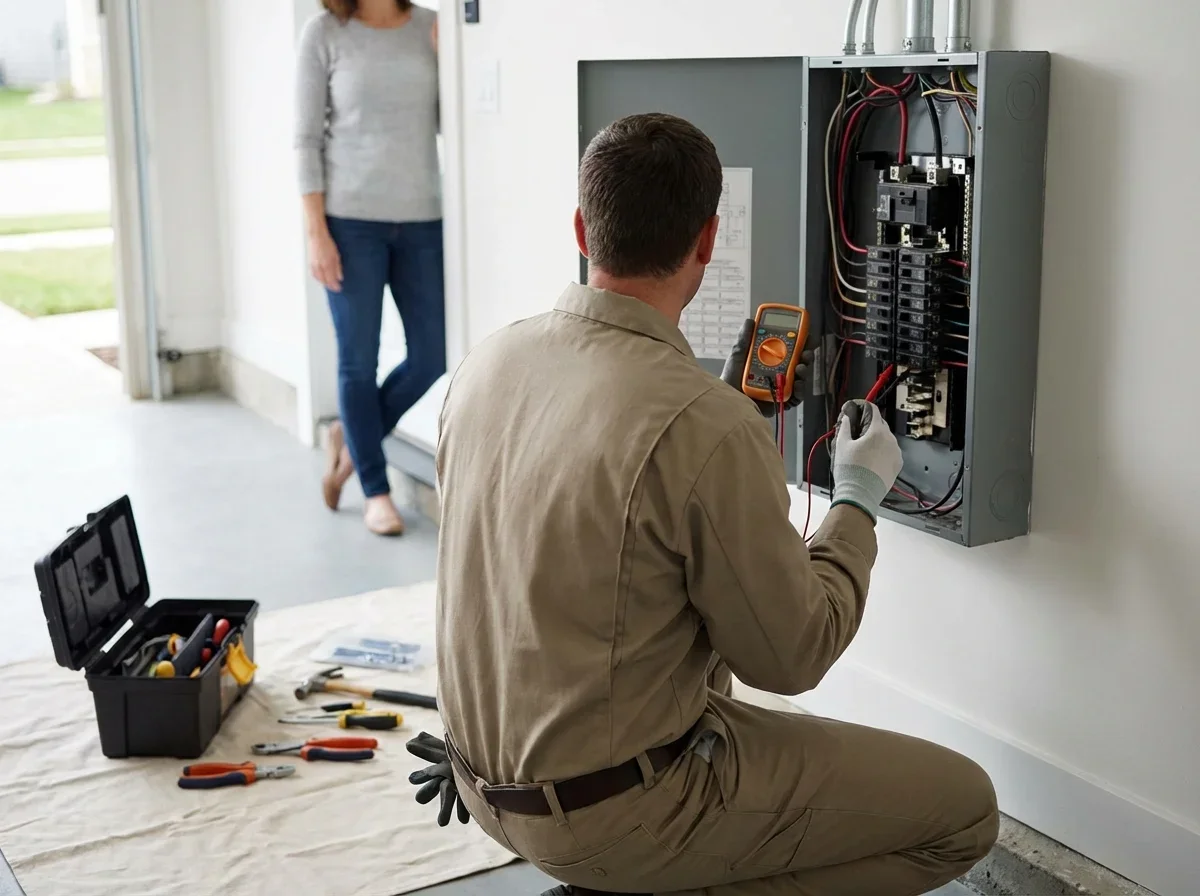
Not every electrical problem requires ripping out and replacing. Electricians evaluate whether a repair solves the root cause or just delays an inevitable failure.
A tripped breaker might need a $150 replacement, or it might signal an overloaded circuit that requires a $600 circuit addition.
Flickering lights could stem from a $75 loose connection or indicate voltage drop from undersized wiring that costs $1,200 to replace. The U.S. Occupational Safety and Health Administration emphasizes that repairs must address root causes, not just symptoms. Masking a problem with a quick fix often leads to fires or equipment damage.[4]
Homeowners consistently report wishing they'd called electricians earlier rather than attempting DIY fixes. Small repairs that cost a few hundred dollars when caught early balloon into multi-thousand-dollar projects after amateur troubleshooting damages wiring or creates new hazards.
Arizona's heat makes this worse. Summer attic temperatures above 150°F accelerate insulation breakdown, and DIY wire splices that might hold in cooler climates fail within months in Phoenix.
Safety considerations override cost calculations.
If your home has aluminum wiring, cloth-insulated wiring, or an electrical panel known for failures (Federal Pacific, Zinsco), replacement is the only responsible option. Insurers increasingly refuse coverage for homes with these hazards, and no repair will satisfy underwriters.
Age plays a role. Panels over 25 years old with frequent breaker trips, scorching, or corrosion typically need replacement, not patchwork repairs.
Wiring that's been spliced multiple times loses reliability. Each connection is a potential failure point. Electricians assess whether the system has years of safe service remaining or if you're paying for repairs on equipment that's fundamentally obsolete.
If you're planning a kitchen remodel or adding a pool, tackle electrical upgrades during construction. Adding circuits and upgrading panels while walls are already open costs half as much as doing it later as a standalone project.
Find Residential Electricians by Service Type
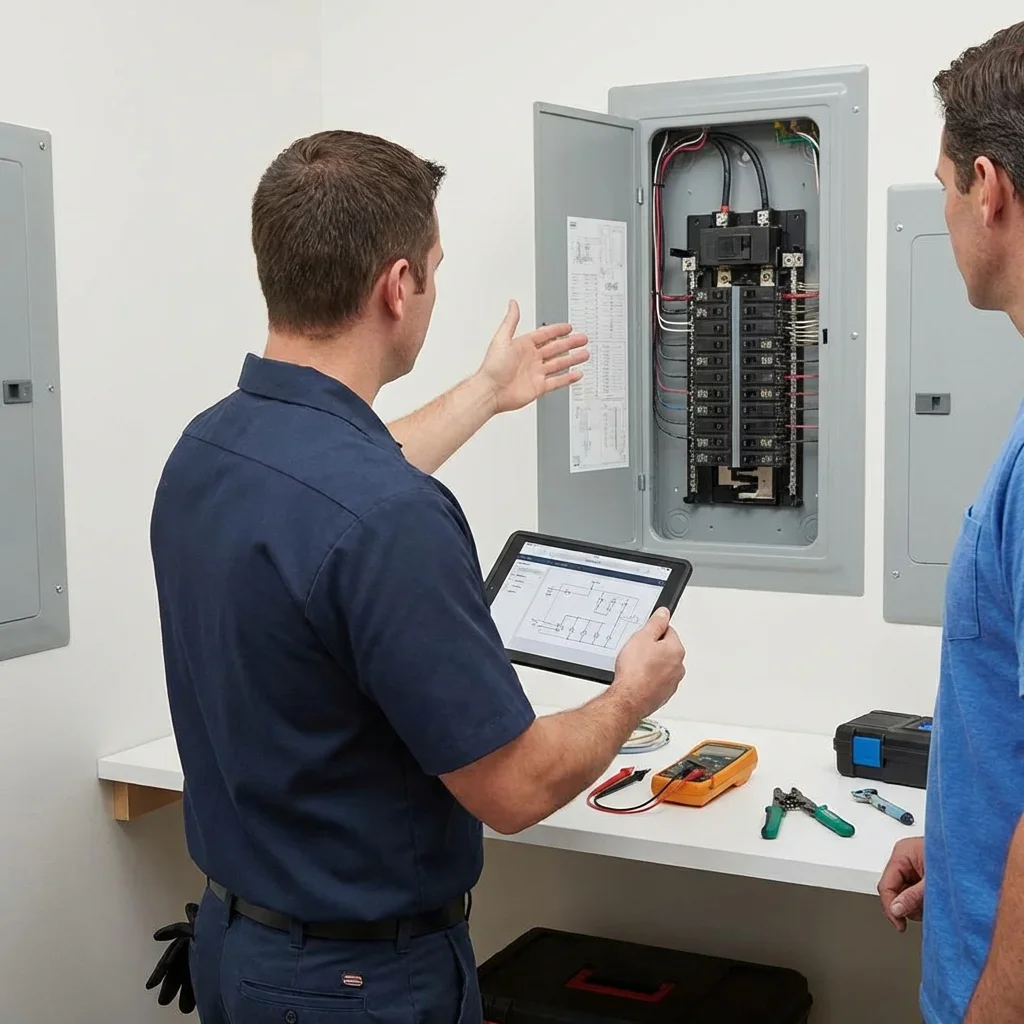
Residential electrical work covers dozens of specialized services. Finding the right contractor means matching your project to an electrician's expertise.
For routine repairs (outlets, switches, fixture replacements), any licensed residential electrician handles the work.
For specialty installations like whole house generators, pool electrical systems, or smart home wiring, look for contractors with documented experience in those specific areas. Arizona's pool electrical work requires understanding bonding requirements and local code amendments that differ from standard residential work.
Emergency services command premium pricing but solve urgent problems. If your panel is sparking, outlets are smoking, or you smell burning plastic, call an emergency electrical service immediately. Rates run $150-$250 per hour for after-hours calls, but the alternative (waiting until morning while a failing connection starts a fire) isn't worth the savings.
Electrical troubleshooting specialists excel at diagnosing intermittent problems that other contractors can't solve.
If you've had multiple electricians look at flickering lights or random breaker trips without finding the cause, a troubleshooting specialist brings advanced diagnostic tools and systematic testing procedures that general contractors might skip.
For major projects (panel upgrades, whole-house rewiring, service entrance upgrades), verify the contractor holds an ROC R-11 (Electrical) license and carries general liability insurance of at least $1 million. Arizona doesn't require contractors to carry workers comp, so ask if they have it. If they don't and a worker is injured on your property, you could be liable.
Get three quotes for projects over $2,000.
Quotes should specify scope, materials (by brand and model where applicable), timeline, payment schedule, and warranty terms. Be wary of quotes significantly below market. They often signal unlicensed contractors, substandard materials, or planned change orders that inflate the final cost.
References matter more than online reviews. Ask contractors for three recent clients with similar projects and call them. Ask whether the electrician showed up on time, cleaned up thoroughly, communicated clearly about unexpected issues, and stood behind their work if problems emerged later.
Arizona homeowners consistently value contractors who call ahead, work efficiently, and leave job sites cleaner than they found them.
For projects requiring permits, confirm the contractor pulls permits in their name, not yours. If you pull permits as an owner-builder and the work fails inspection, you're responsible for corrections. Licensed contractors who pull permits in their name guarantee code-compliant work and take responsibility for passing inspections.
Matching the right electrician to your specific need (whether it's surge protection installation, smoke detector installation, or electrical code compliance services) ensures you get expertise where it matters most, not just a general contractor learning on your dime.
- U.S. Consumer Product Safety Commission. "Electrical Safety for Homeowners." https://www.cpsc.gov/safety-education/safety-guides/home-electrical-safety. Accessed April 06, 2026.
- U.S. Department of Energy. "Residential Electrical Code Requirements." https://www.energy.gov/energysaver/residential-electrical-code-requirements. Accessed April 06, 2026.
- National Renewable Energy Laboratory (NREL), U.S. Department of Energy. "Understanding Home Electrical Panels and Upgrades." https://www.nrel.gov/docs/fy15osti/64222.pdf. Accessed April 06, 2026.
- U.S. Occupational Safety and Health Administration (OSHA). "Electrical Safety at Home." https://www.osha.gov/etools/residential-electricians/safety-homeowner. Accessed April 06, 2026.
- Penn State University Extension. "Guide to Home Electrical Wiring." https://extension.psu.edu/home-electrical-wiring. Accessed April 06, 2026.
- National Electrical Manufacturers Association (NEMA). "Electrical Service and Repair Guidelines." https://www.nema.org/standards/view/electrical-safety-for-homeowners. Accessed April 06, 2026.