Why Do Circuit Breakers Trip?
Your circuit breaker isn't malfunctioning when it trips. It's doing exactly what it's designed to do.
Breakers act as automatic shut-off switches that cut power when they detect conditions that could damage wiring or start a fire.[1] The trip mechanism isn't the problem. It's the symptom pointing you toward the actual issue.
Modern breakers protect against three distinct electrical faults, and each one produces different warning signs. Knowing which fault you're dealing with determines whether resetting is safe or dangerous.
Circuit Overload: Too Much Draw on One Circuit
Circuit overload is the most common reason breakers trip. It happens when the combined electrical demand on a single circuit exceeds what the wiring can safely handle.[2]
A 15-amp circuit can deliver 1,800 watts before the breaker trips. A 20-amp circuit maxes out at 2,400 watts.
Space heaters are frequent culprits. A single 1,500-watt heater running on the same circuit as a television, laptop, and lamp will push most 15-amp circuits over the edge. In Arizona homes, multiple fans or portable AC units running during 106°F summer days create similar overloads. Power tools in the garage often trip breakers when you're running a table saw and shop vacuum simultaneously on the same circuit.
You'll know it's an overload if the breaker trips when you turn on or plug in a high-draw appliance. The breaker doesn't trip immediately. It takes a few seconds or minutes as the internal trip mechanism heats up from excessive current flow.
Unplug some devices, redistribute the load, and the circuit typically stays live after reset.
Short Circuits: Damaged Wiring or Faulty Devices
Short circuits happen when hot and neutral wires touch directly, bypassing the normal electrical load. This creates a sudden surge of current that trips the breaker instantly, usually with a loud pop or visible spark at the outlet or device.[3]
Common causes include frayed lamp cords where insulation has worn through, damaged extension cords pinched by furniture, or internal failures in appliances like microwaves or coffee makers. In Arizona's older block construction homes built before 1980, rodents chewing through wire insulation inside walls create short circuits that trip breakers without any visible sign at the outlet.
Unlike overloads, short circuits trip the breaker the moment you plug in the faulty device or flip the switch.
You'll often see scorch marks on outlets, smell burning plastic, or notice the breaker handle feels hot to the touch. Resetting without identifying and removing the shorted device will cause an immediate re-trip.
Ground Faults: Water Exposure and Moisture Intrusion
Ground faults occur when electricity takes an unintended path to ground, typically through water or a person. GFCI (ground fault circuit interrupter) breakers and outlets are designed to detect tiny current imbalances and trip within milliseconds to prevent electrocution.[4]
Bathrooms, kitchens, garages, and outdoor outlets all require GFCI protection per the National Electrical Code. A hair dryer that falls into a wet sink, a refrigerator with a damaged compressor allowing current leakage, or moisture intrusion into outdoor outlet boxes will all trip GFCI breakers.
You can identify GFCI trips by the "Test" and "Reset" buttons on the outlet itself or the breaker in your panel.
If pressing "Reset" on the GFCI outlet restores power but the breaker didn't trip, the fault is isolated to that outlet's circuit. Persistent GFCI trips after drying out the area signal damaged wiring or a failing appliance that's leaking current to ground.
| Fault Type | Trip Speed | Warning Signs | Safe to Reset? |
|---|---|---|---|
| Circuit Overload | Seconds to minutes | Breaker trips when high-draw appliance starts; no sparks or burning smell | Yes, after unplugging devices |
| Short Circuit | Instant | Loud pop, sparks, scorch marks, burning smell, hot breaker | Only after removing faulty device |
| Ground Fault | Milliseconds | GFCI outlet trips, moisture present, persistent trips after drying | Yes, after eliminating water source |
When Is It Safe to Reset a Tripped Breaker?
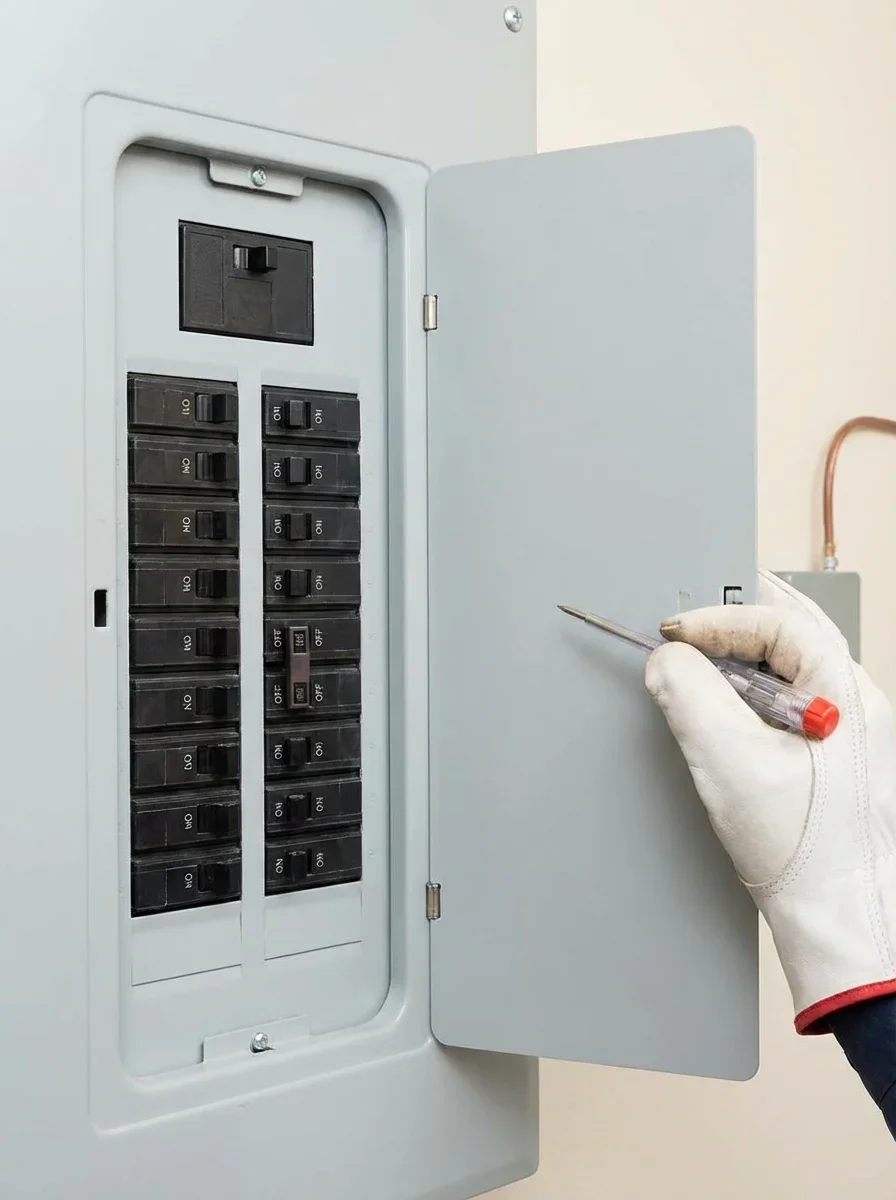
Resetting a breaker once is safe diagnostic practice. Resetting it more than once without finding and fixing the cause is dangerous.[1]
Here's the decision framework electricians use. If the breaker trips under load (when you turn on the air conditioner, plug in a space heater, or start the vacuum) and stays on after you unplug or turn off that device, you've identified an overload. Redistribute the load to a different circuit or stop using the device temporarily.
That's a safe one-time reset.
If the breaker trips and you can't identify what caused it (no device was turned on, nothing was plugged in), reset it once and observe. If it holds for hours or days, it may have been a momentary power surge or voltage spike from the utility. Arizona's monsoon season (July through September) produces lightning strikes that cause brief electrical anomalies without sustained damage.
But if the breaker trips immediately when you reset it, or trips again within minutes without any load change, stop resetting.
Each trip generates heat inside the breaker mechanism. Repeated trips degrade the internal contacts and can weld them shut, which disables the breaker's protective function entirely.[6] You'll end up with a circuit that won't trip when it should.
Why Does My Breaker Trip Repeatedly After Resetting?
Breakers that trip repeatedly after reset signal one of four problems: ongoing overload you haven't removed, a short circuit in the wiring or a connected device, a ground fault you haven't isolated, or a worn-out breaker failing mechanically.
Start by turning off every switch and unplugging every device on that circuit. Reset the breaker.
If it holds with nothing connected, turn on switches and plug in devices one at a time. When the breaker trips, you've identified the faulty device or fixture. Replace or repair it before using that circuit again.
If the breaker trips with everything disconnected, you have a wiring fault inside the walls or a failed breaker. This requires an electrician with testing equipment to trace the circuit, check wire connections at junction boxes, and test for insulation breakdown.[3]
Arizona's extreme heat accelerates insulation degradation on wiring run through attics where summer temperatures exceed 150°F. Brittle insulation cracks, exposing copper that shorts against metal junction boxes or other wires.
Worn breakers trip at lower currents than their rated capacity. A 20-amp breaker that's been cycling on and off for 30 years may trip at 15 amps due to heat damage and contact wear.
If the breaker itself feels hot to the touch, shows discoloration on the plastic housing, or the handle feels loose, the breaker needs replacement even if the wiring is sound.
Warning: Each time you reset a tripped breaker without fixing the underlying problem, you generate heat that degrades the breaker's internal contacts. Repeated trips can weld contacts shut, disabling the protective function entirely and creating a fire hazard.
Power Outage in One Room: What It Means
When power dies in a single room but the rest of your house stays lit, you're dealing with a tripped breaker, a tripped GFCI outlet feeding that room, or a loose connection at an outlet that's interrupting downstream devices.[5]
Check your panel first.
Look for any breaker in the middle position between ON and OFF. That's the tripped position. Some breakers trip without a visible handle position change, so flip each suspect breaker fully OFF, then back ON to reset it properly. Arizona homes built after 2000 often have AFCI (arc fault circuit interrupter) breakers on bedroom circuits, which trip on loose connections that create arcing even without full short circuits.
If every breaker is ON and you still have a dead room, check for GFCI outlets in bathrooms, kitchens, or garages. Older wiring configurations sometimes feed an entire bedroom through a GFCI outlet located in a different room.
Press "Reset" on every GFCI outlet in your home. The one that clicks and restores power to the dead room is the culprit.
When neither breakers nor GFCI outlets explain the outage, you likely have a failed connection inside an outlet box. Outlets are wired in series on most circuits. Power enters the first outlet, jumps to the second, then the third, and so on. If the wire connection loosens at any outlet in the chain, everything downstream goes dead.
This happens in Arizona homes when aluminum wiring (common in 1960s-1970s construction) expands and contracts with temperature swings, working connections loose over time. You can learn more about aluminum wiring replacement if your home predates 1980 and you're experiencing intermittent power loss.
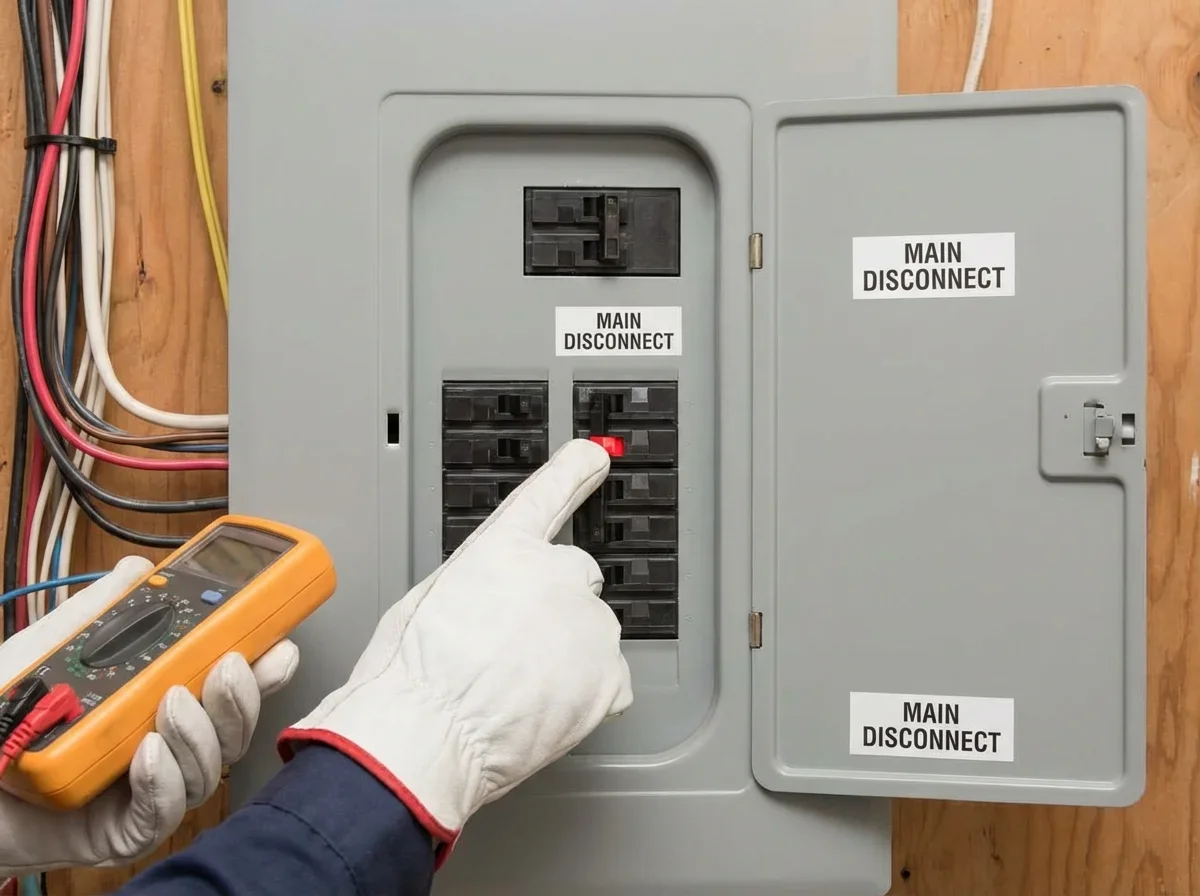
Signs You Need More Circuits or a Panel Upgrade
Frequent breaker trips aren't always wiring faults. Sometimes your electrical system is simply undersized for how you live now.[2]
Homes built before 1990 typically have 100-amp or 150-amp main panels with 15-amp circuits feeding most rooms. Modern households run laptop chargers, televisions, gaming consoles, phone chargers, and smart home devices simultaneously. Loads that didn't exist when those panels were installed.
Add a window AC unit or space heater and you've exceeded circuit capacity.
You need additional circuits or a panel upgrade if you experience any of these patterns:
- Breakers trip when the air conditioner starts, even if nothing else is running
- You can't use the microwave and toaster at the same time without tripping the kitchen circuit
- Lights dim noticeably when the refrigerator compressor kicks on
- You've maxed out every breaker slot in your panel and need more circuits
- Your panel is a Federal Pacific or Zinsco brand (both known for breaker failures and fire risks)
Arizona's extreme summer heat creates additional electrical stress. Air conditioners draw maximum current during 106°F afternoons, the same time pool pumps are running, refrigerators are working overtime, and cooling fans are on in every room.
Panels sized for moderate climate loads fail under sustained Phoenix heat.[3]
Electricians calculate whether you need dedicated circuit installation for individual high-draw appliances or a full panel upgrade by measuring total household load and comparing it to your panel's capacity. If your existing 100-amp service can't support adding a few dedicated 20-amp circuits, you're looking at a service upgrade to 200 amps. This includes new meter base, panel, and main breaker installed by a licensed contractor verified through the Arizona Registrar of Contractors at roc.az.gov.
Common Appliance Wattage (for load calculation):
- Space heater: 1,500 watts
- Window AC unit: 1,200-1,500 watts
- Microwave: 1,000-1,500 watts
- Hair dryer: 1,200-1,800 watts
- Coffee maker: 800-1,200 watts
- Toaster: 800-1,500 watts
- Refrigerator: 150-400 watts (running), 1,200+ watts (startup)
- Television: 100-400 watts
- Laptop: 50-100 watts
How Electricians Diagnose and Fix Breaker Problems
When you call an electrician for persistent breaker trips, they start with load calculation and circuit mapping. They'll measure actual current draw on the circuit using a clamp meter while typical devices are running to see if you're approaching or exceeding the breaker's rated capacity.[6]
If load is within normal range, they'll perform insulation resistance testing on the circuit wiring.
This test applies high voltage between the hot wire and ground to detect insulation breakdown that's allowing current leakage. Wire insulation resistance below 1 megohm indicates damaged wiring that needs replacement.
Electricians also inspect wire gauge against circuit breaker size. A 20-amp breaker requires 12-gauge copper wire minimum. If someone installed a 20-amp breaker on 14-gauge wire (rated for 15 amps maximum), the wire will overheat before the breaker trips. That's a fire hazard that requires either downsizing the breaker or rewiring with heavier gauge wire.
Connection inspection is next.
Electricians open junction boxes, outlets, and switches on the circuit to check for loose terminal screws, oxidized connections, or backstabbed wires (pushed into holes rather than secured under screw terminals). Loose connections create resistance, which generates heat, which degrades the connection further in a cycle that eventually causes arcing and breaker trips.
For ground faults, they'll use a GFCI tester to verify the outlet is tripping at the correct current threshold (4-6 milliamps). They'll also test for voltage leakage to ground on connected appliances. A refrigerator or washing machine with a failing motor can leak enough current to trip GFCI breakers without being obviously damaged.
When the breaker itself is suspect, electricians test it by swapping in a known-good breaker of the same rating.
If trips stop, the original breaker was worn out. If trips continue, the fault is in the wiring or connected devices. Breaker replacement is straightforward for standard single-pole breakers but requires panel compatibility verification for GFCI and AFCI models.
Arizona electricians working on persistent trip issues in pre-2000 homes often find multiple contributing factors: aged breakers with heat damage, undersized circuits loaded beyond original design, and wiring insulation degraded by decades of 120°F+ attic temperatures. Comprehensive fixes may include breaker replacement, circuit additions, and sub panel installation to distribute loads more effectively across your electrical system.
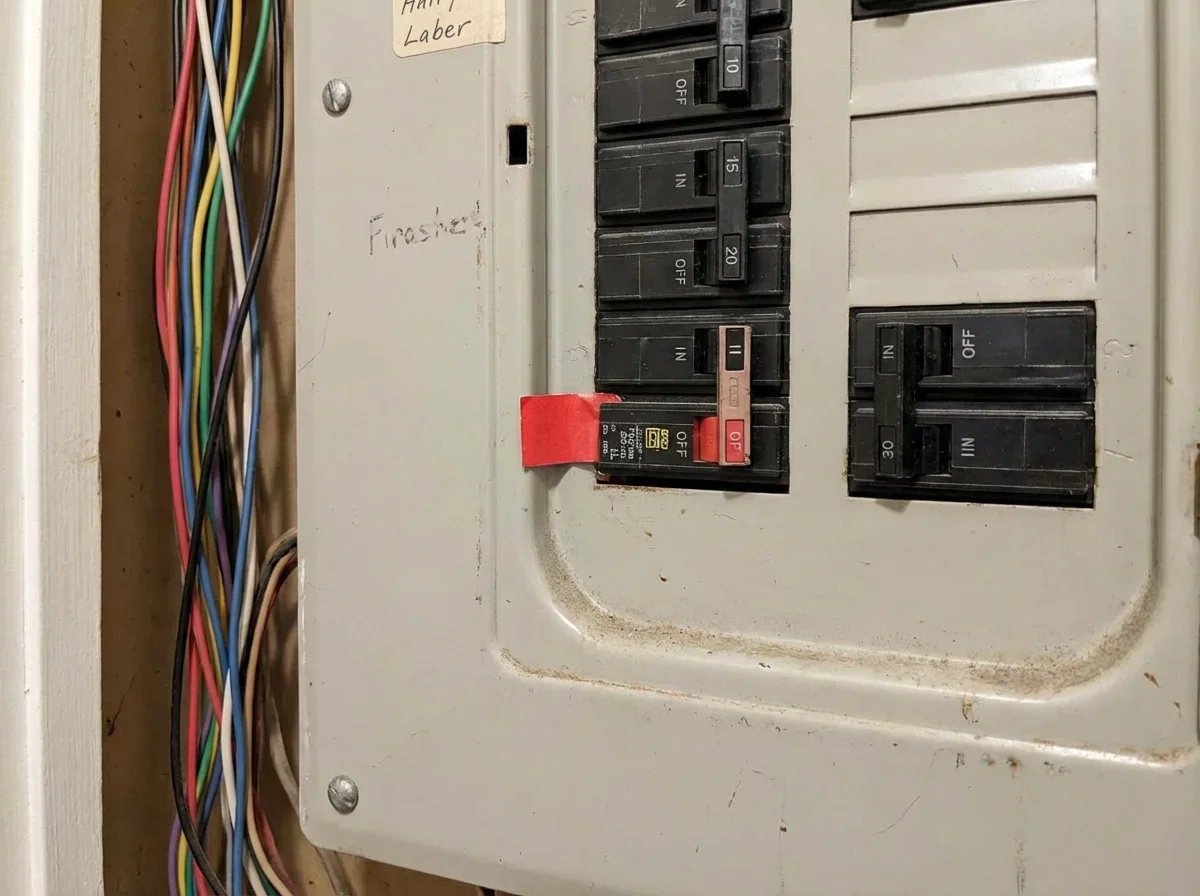
Find Licensed Electricians to Solve Breaker Issues
Circuit breaker problems that go beyond a one-time overload require professional diagnosis and repair. The difference between a safe electrical system and a fire hazard often comes down to whether a licensed electrician tests your system properly and makes repairs that comply with the National Electrical Code as adopted by Arizona with state-specific amendments.
All electricians performing work in Arizona must hold an active ROC license for projects exceeding $1,000.
Verify any electrician's license status, complaint history, and insurance coverage at roc.az.gov before hiring. Arizona doesn't require contractors to carry workers compensation insurance (a controversial gap in state law), so verify general liability coverage independently to protect yourself from injury claims.
Electricians qualified to diagnose and repair breaker issues should offer electrical troubleshooting services that include load testing, insulation resistance testing, and thermal imaging to identify hot spots in panels and connections. If your system needs upgrades rather than repairs, look for electricians experienced with panel replacement, circuit additions, and bringing older homes up to current code.
For emergency situations (breakers that trip and won't reset, burning smells from outlets or panels, or visible sparking), contact electricians offering emergency electrical service with same-day response.
A breaker that won't reset is protecting you from a serious fault. Don't force it or bypass it. Get professional help immediately.
- U.S. Consumer Product Safety Commission. "Circuit Breaker Safety." https://www.cpsc.gov/safety-education/safety-guides/circuit-breaker-safety. Accessed April 06, 2026.
- U.S. Department of Energy. "Electrical Safety for Homeowners." https://www.energy.gov/energysaver/electrical-safety-homeowners. Accessed April 06, 2026.
- National Fire Protection Association. "Understanding Circuit Breakers." https://www.nfpa.org/education-and-research/home-fire-safety/electrical. Accessed April 06, 2026.
- U.S. Occupational Safety and Health Administration. "GFCI and AFCI Protection." https://www.osha.gov/etools/construction/electrical/circuit-protection. Accessed April 06, 2026.
- . "Electrical Wiring Basics." https://extension.umn.edu/electrical-wiring/electrical-service-home. Accessed April 06, 2026.
- Rutgers University New Jersey Agricultural Experiment Station. "Preventing Electrical Overloads." https://njaes.rutgers.edu/fs1209/. Accessed April 06, 2026.