Why Electrical Outlets and Switches Produce Burning Smells
Electrical devices don't smell like anything when they're working correctly. The burning odor means something is overheating enough to degrade insulation, melt wire sheathing, or char internal components. Whether it's acrid plastic, hot metal, or a chemical tang, you're smelling failure in progress.
Heat builds when electrical resistance increases beyond design limits. That resistance comes from loose connections, corroded terminals, overloaded circuits, or damaged wire insulation. As current struggles to pass through these high-resistance points, energy converts to heat instead of powering your devices.
The plastic housings, wire jackets, and internal contacts aren't rated to withstand that heat. They start to break down, releasing the smell you're noticing.
The Role of Connection Points
Outlets and switches are connection-heavy devices. Each one contains multiple screw terminals, spring clamps, or push-in connectors where wire meets metal.
Over time, these connections loosen. Arizona's temperature extremes don't help. Outlets in exterior walls see 120°F+ ambient temps in summer. Thermal expansion and contraction cycles slowly work screws loose or degrade the spring tension in push-in connectors.
A loose connection creates a tiny air gap. Electricity arcs across that gap, generating intense localized heat (sometimes 1000°F+). That arc carbonizes surrounding materials, creating a conductive carbon path that draws even more current and accelerates the failure.
The burning smell often appears before you see visible scorch marks.
Overloaded Circuits in Phoenix Homes
Phoenix's median home age sits at 1985. Most of these homes were wired for 60-100 amp service with 15-amp branch circuits designed for far lower electrical loads than today's households demand.
When you plug modern devices into outlets on circuits already serving a dozen other devices, you exceed the wire's ampacity rating. Gaming PCs, space heaters, hair tools, window AC units all add up fast.
The wire heats up along its entire run, but the heat concentrates at termination points where resistance is naturally higher. The outlet becomes the weakest link. Its internal contacts weren't designed for continuous near-max load, and the plastic housing traps heat that would otherwise dissipate in open air.
Common Causes Behind the Burning Smell
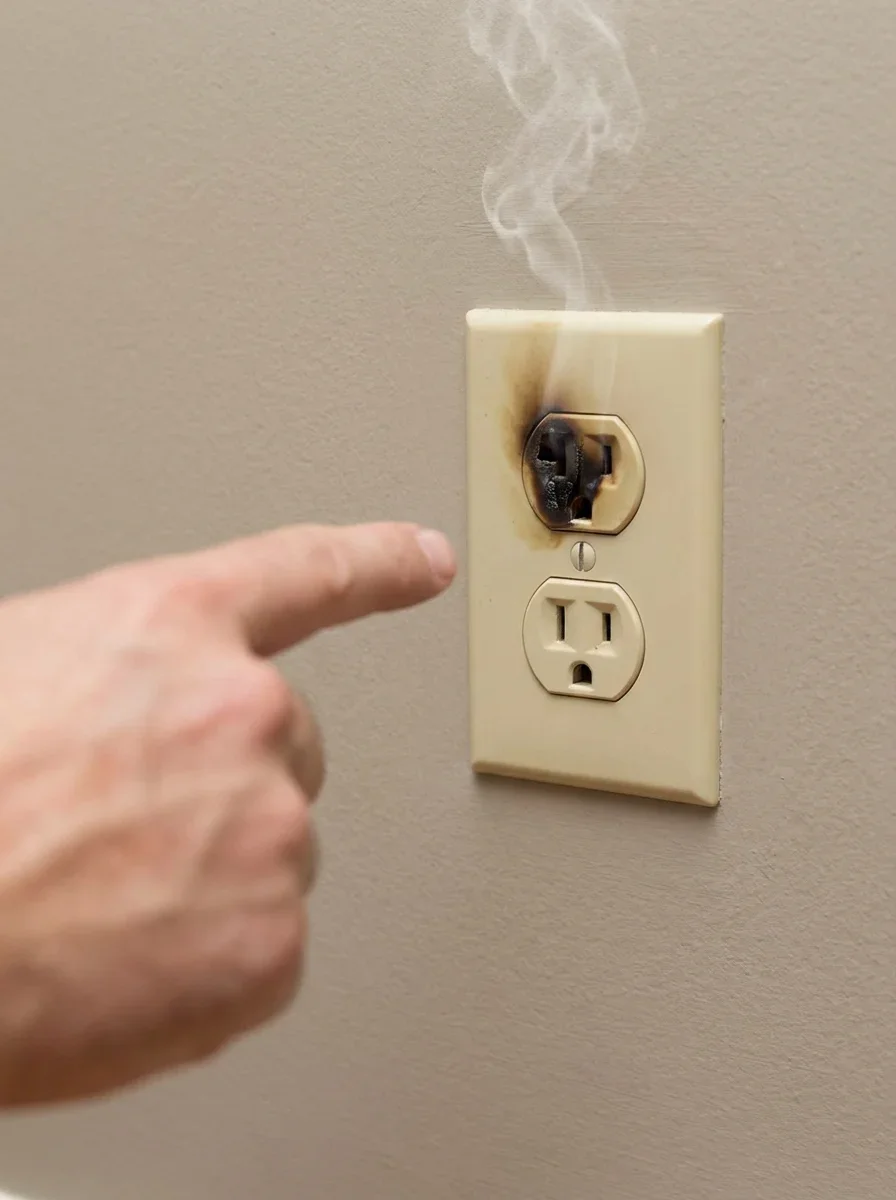
Half a dozen failure modes can produce that smell. Some are isolated to one device. Others indicate systemic problems with your home's wiring.
Loose wire connections top the list. Screws backed out by vibration, wires pulled partially free during past DIY work, or terminals that were never tightened properly in the first place all create high-resistance contact points. Aluminum wiring (common in Arizona homes built 1965-1973) oxidizes at connection points, forming a non-conductive layer that increases resistance over time even when screws stay tight.
Overloaded circuits force more current through wire and devices than they're rated to handle. You might not trip a breaker. Breakers allow temporary overloads and only trip on sustained overcurrent or short circuits. But the sustained near-max load generates heat buildup. Kitchen and bathroom outlets are frequent offenders, especially if multiple high-wattage appliances share one 15-amp circuit.
Damaged wire insulation exposes copper conductors inside the wall or inside the outlet box. If bare wires touch each other or the metal box, you get a short circuit that generates extreme heat before the breaker trips. More often, insulation degrades slowly from heat, age, or rodent damage, creating small fault points that arc intermittently.
Backstabbed outlets are notorious for overheating. These are where wires are pushed into spring-loaded holes on the back rather than wrapped around screw terminals. The spring clamps lose tension over time, especially under load.
This connection method was common in tract-home construction through the 1990s. Top-rated electricians in Phoenix routinely replace backstabbed outlets during electrical wiring inspections because of their failure rate.
Arcing faults occur when electricity jumps across a gap. Between loose wires, through carbonized insulation, or inside a failing outlet. The arc itself produces temperatures hot enough to ignite surrounding materials. AFCI (Arc Fault Circuit Interrupter) breakers are required in most rooms in homes built after 2008, but older Arizona homes don't have them unless the panel has been upgraded.
Faulty devices themselves can fail. An outlet's internal contacts can corrode (especially in homes with moisture intrusion from monsoon-season leaks), springs can break, or the device can crack from overtightening during installation.
A failing outlet will heat up even if the wiring and circuit are perfect.
| Cause | Warning Signs | Typical Location | Risk Level |
|---|---|---|---|
| Loose Connections | Intermittent smell, flickering nearby lights, warm faceplate | Any outlet, especially high-use kitchen/bathroom | High — can arc and ignite |
| Overloaded Circuit | Constant warmth, smell when multiple devices run, breaker trips occasionally | Kitchen, home office, entertainment centers | Medium-High — chronic heat damage |
| Backstabbed Wiring | Outlets installed 1980s-1990s, smell appears under load | Tract homes, contractor-grade construction | High — connection degrades over time |
| Aluminum Wiring | Homes built 1965-1973, smell at multiple outlets on same circuit | Entire home if original wiring | Very High — oxidation creates ongoing failure points |
Immediate Actions When You Smell Burning
Your first move is to kill power to that outlet or switch. Go to your electrical panel and flip off the breaker serving that room.
If you're not certain which breaker controls that circuit (and many Phoenix homes have poorly labeled panels), shut off the main breaker to cut power to the entire house. Fire risk outweighs the inconvenience of losing power for 20 minutes while you investigate.
Once power is off, unplug everything from nearby outlets. Check each plug and cord for damage: melted plastic, exposed wire, scorch marks, or unusual heat. Sometimes the smell originates from a failing device or damaged cord rather than the outlet itself. A frayed lamp cord arcing against its own insulation smells identical to a failing outlet.
Feel the wall around the outlet with the back of your hand. If the wall is hot to the touch, or if you see smoke, evacuate and call 911.
Heat radiating through drywall means active combustion or severe overheating inside the wall cavity. Don't investigate further. Let the fire department clear the scene.
If the wall is cool and there's no smoke, leave the breaker off and call a licensed electrician immediately. Don't attempt a DIY fix unless you're a trained electrician yourself. Even with power off, misdiagnosing the problem or incorrectly repairing it creates a delayed fire risk. ROC-licensed contractors have the tools to test circuits under load, inspect connections inside walls, and verify repairs meet current National Electrical Code requirements.
What an Electrician Will Check
A licensed electrician will start by visually inspecting the outlet or switch. Looking for obvious damage: scorch marks, melted plastic, cracks in the faceplate, or discoloration around screw terminals.
They'll remove the device from the box to inspect wire connections, checking for loose screws, corroded terminals, backstabbed wires, or damaged insulation.
Testing Circuit Load and Voltage
Using a multimeter and clamp meter, they'll test voltage at the outlet under no-load and load conditions. They'll measure current draw when devices are plugged in, and check for voltage drop that indicates high resistance somewhere in the circuit.
If you're experiencing other symptoms (flickering lights, warm outlets elsewhere in the house, or breakers that trip repeatedly), the electrician may test multiple circuits to identify a pattern.
They'll inspect the circuit breaker itself. A breaker can fail partially, allowing excess current without tripping. Thermal imaging cameras identify hot spots at breaker connections that aren't visible to the naked eye.
In Arizona's heat, breakers inside garage panels or exterior load centers see ambient temps above their rated operating range, accelerating wear.
Inside-the-Wall Inspection
If connections at the outlet are tight and the device isn't damaged, the problem likely sits upstream in the circuit. The electrician will trace the wire back to the panel, checking junction boxes along the way.
Older Phoenix homes often have concealed junction boxes above ceilings or behind walls where loose connections accumulate unnoticed for decades. Finding these requires knowledge of local construction practices: where builders typically ran circuits in block walls versus wood-frame sections.
Aluminum Wiring Complications
If your home has aluminum wiring, the electrician will pay special attention to every termination point. Aluminum oxidizes when exposed to air, and the oxide layer is non-conductive. Even properly torqued connections develop high resistance over time.
The fix requires special CO/ALR-rated devices and anti-oxidant paste applied to each wire. Many electricians recommend aluminum wiring replacement for the entire circuit or even whole-house in homes where the wiring is approaching 50+ years old.
Fire Risk and How Fast Problems Escalate
Electrical fires account for roughly 13% of residential structure fires nationwide. Outlets and switches are involved in a disproportionate share.
The burning smell you're noticing is an early warning. Ignore it, and you're giving the problem time to escalate into visible flames.
Once insulation starts degrading from heat, the degradation accelerates. Heat exposure makes plastic brittle. Brittle plastic cracks. Cracks expose wire. Exposed wire arcs. Arcing generates more heat.
This feedback loop can progress from "minor smell" to "active fire inside the wall" within hours under the right conditions. Typically when a high-load device is plugged in and the circuit is maxed out.
Phoenix's construction methods influence fire behavior. Block walls don't provide as much fuel as wood framing, but electrical fires inside block walls are harder to detect early because there's no wood smoke until flames reach ceiling joists or interior partition walls. By the time you smell wood burning, the fire has spread beyond the outlet.
Flat and low-slope roofs common in pre-1980 Phoenix homes have minimal attic ventilation. Fires that start in walls can spread into ceiling cavities undetected, smoldering for hours before breaking through into living spaces.
This is why immediate action matters more than trying to troubleshoot the problem yourself.
Critical Warning: Electrical fires inside walls can smolder for 2-6 hours before visible flames appear. The burning smell is your only early indicator. If you wait for smoke or discoloration, you're seeing a fire that's already established. Act on the smell alone.
Circuit Breakers Don't Prevent Overheating
A common misconception: "If it were dangerous, the breaker would trip."
Breakers protect wire from overcurrent, not from poor connections. A 15-amp breaker will allow 15 amps continuously. If a loose connection at an outlet creates localized heat while drawing 12 amps, the breaker sees normal load and never trips. The outlet melts while the breaker sits cold and happy in the panel.
Standard thermal-magnetic breakers trip on sustained overcurrent (typically 125-135% of rating for 1+ hours) or immediate short circuits. They don't detect arcing, and they don't monitor temperature at individual devices.
That's why modern code requires AFCI protection in bedrooms, living rooms, and most other habitable spaces. AFCIs detect the electrical signature of arcing and shut off power before temperatures reach ignition points.
If your home was built before 2008 and hasn't had a panel upgrade, you likely don't have AFCI protection. That doesn't mean your home is unsafe (millions of pre-AFCI homes operate fine), but it means you have one less layer of protection against the specific failure mode that produces burning smells.
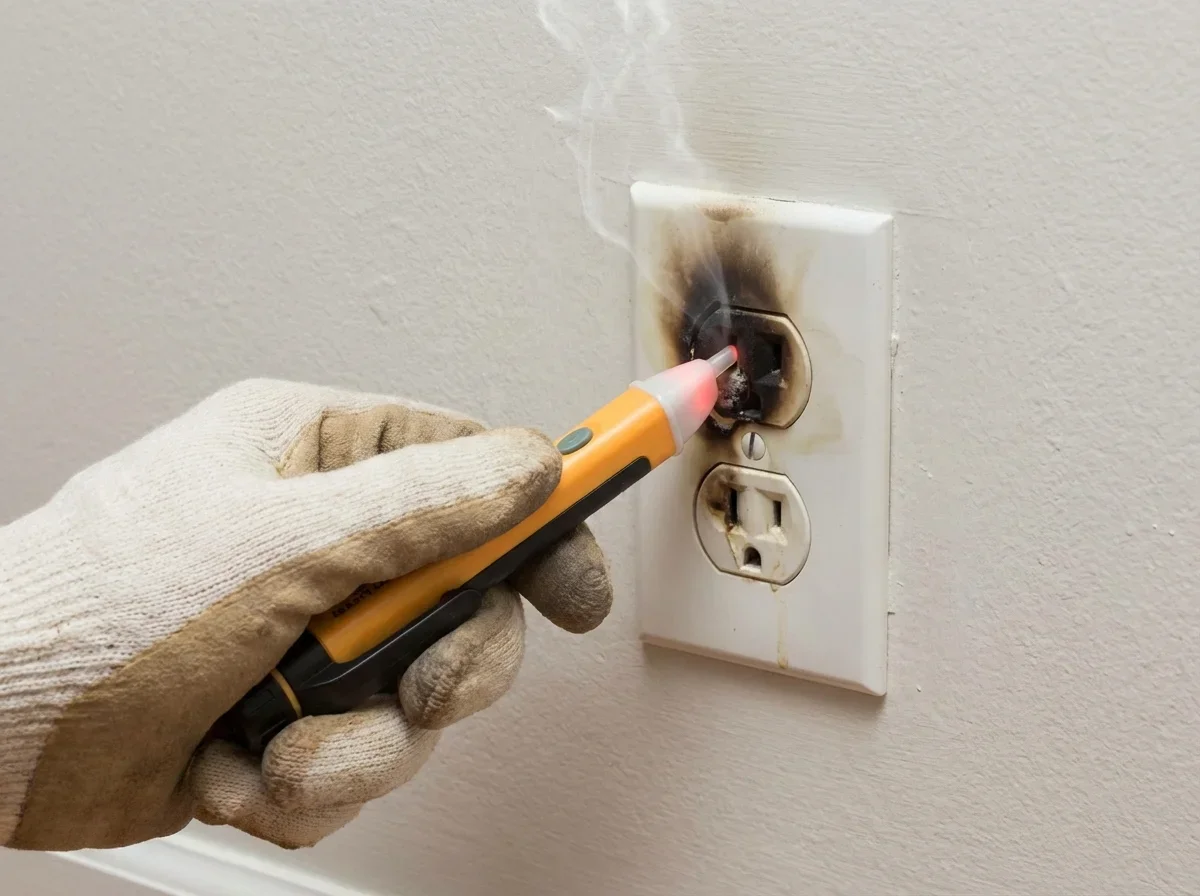
When to Upgrade vs Repair
Sometimes the fix is straightforward: replace the outlet, tighten the connection, and you're done.
Other times, the burning smell reveals systemic issues that require more extensive work.
If the electrician finds multiple loose connections on the same circuit, or if the circuit is clearly overloaded based on current draw measurements, the right fix is adding a new dedicated circuit for high-load devices. Kitchens and home offices are common candidates. Splitting the load across two circuits eliminates chronic overheating and brings your home up to current code (which requires dedicated circuits for microwaves, dishwashers, and countertop appliances in kitchens built or remodeled after 1999).
Homes with aluminum wiring face a choice: retrofit every connection with CO/ALR devices and anti-oxidant compound (labor-intensive and expensive per outlet), or replace branch circuits entirely with copper. If you're already opening walls for other work, replacement makes financial sense. If the house is largely closed up, retrofitting existing wiring is more practical. ROC-licensed electricians who specialize in older homes will walk you through cost-benefit analysis based on your home's specific wiring condition.
Backstabbed outlets throughout the house warrant replacement even if only one is currently showing symptoms. Once you're paying service call and diagnosis fees, the marginal cost to replace 6-8 outlets is minimal compared to having the electrician return separately when the next one fails.
Many contractors offer per-device pricing discounts when replacing multiple outlets in one visit.
Panel upgrades become relevant if your home is still on 60-100 amp service and you're adding modern electrical loads. The outlet smell might be the first symptom of a panel that's simply outmatched by your household's demand. A licensed electrician can perform a load calculation to determine if your panel has capacity for your actual usage. If not, a sub-panel installation or full 200-amp upgrade eliminates chronic overload conditions.
Phoenix-Specific Considerations
Arizona's electrical licensing is administered by the Registrar of Contractors (ROC), which issues separate licenses for residential electrical (C-11) and commercial (A-11) work. Before hiring anyone, verify their license status at roc.az.gov.
An active license confirms the contractor carries the required bond and has passed trade and business exams. You'll want a C-11 license for residential work. General handymen and unlicensed "electricians" can't legally perform outlet replacement, circuit troubleshooting, or any work that involves opening electrical boxes.
Desert UV exposure degrades wire insulation faster than in humid climates, especially for wiring in attics or exterior walls with southern exposure. Homes built in the 1960s-70s with cloth-sheathed wiring or early plastic insulation often show brittleness and cracking by the time they reach 50+ years old.
If your home is in this age range and you're experiencing electrical problems, consider a whole-house rewiring evaluation. The upfront cost is significant ($8,000-$15,000 for a typical 1,500 sq ft home), but it eliminates chronic problems and increases home value.
Monsoon season (July-September) brings moisture intrusion through roof penetrations, wall cracks, and foundation gaps. Water and electricity are a catastrophic combination.
If the burning smell appears after a monsoon storm, or if you have ongoing roof leaks, prioritize both electrical inspection and roof/wall sealing. Moisture accelerates corrosion at outlet terminals and can create ground faults that are difficult to trace without specialized equipment.
Phoenix Home Electrical Risks — Quick Reference:
- 1965-1973 builds: Likely aluminum wiring — oxidation creates high-resistance connections
- Pre-1980 builds: Cloth or early plastic insulation — brittleness from UV/heat exposure
- Flat roofs: Fire spreads undetected in ceiling cavities — minimal ventilation
- Block wall construction: Fires harder to detect early — no wood smoke until advanced stages
- 150°F+ attic temps: Wire insulation degrades 2-3x faster than rated lifespan
- Monsoon moisture: Corrosion accelerates at all connection points — ground fault risk increases
When the Smell Comes From a Specific Appliance
Not every burning smell indicates a wiring problem. Sometimes the device itself is failing.
Unplug the suspect appliance and inspect the cord and plug carefully. Look for:
- Melted or deformed prongs on the plug
- Scorch marks or discoloration on the plug body
- Exposed wire where the cord enters the plug
- Unusual warmth along the cord length
- Cracks or cuts in the cord insulation
If the plug is damaged, the appliance has been drawing current through a degraded connection. Essentially the same failure mode as a loose outlet connection, except the resistance is in the plug rather than the outlet.
Replace the cord or appliance. Continuing to use it risks igniting the cord insulation.
Space heaters, window AC units, and hair dryers are frequent culprits. These devices pull 10-15 amps continuously, which is within an outlet's rating but at the high end of its capacity. If the outlet has any pre-existing connection issues, the high draw from these devices will expose the problem. The fix might be replacing the outlet and adding a dedicated circuit, even if the appliance itself is fine.
Why You Shouldn't Wait
Every hour you delay after smelling burning gives the problem time to worsen. Connections don't heal themselves. Overloaded circuits don't spontaneously lighten their load. Heat-damaged insulation doesn't regenerate.
The progression is one-directional toward failure.
Homeowners often hesitate because the smell is intermittent. Appears for a few seconds when you turn on a light, then disappears. Intermittent symptoms are actually more concerning than constant ones. They indicate arcing or a connection that makes and breaks contact.
Each arc event deposits carbon, which increases conductivity slightly, which draws more current, which creates a bigger arc next time. The cycle ends in sustained arcing and ignition.
Calling an electrician for what turns out to be a $150 outlet replacement feels like overkill until you consider the alternative. A house fire causes an average $50,000-$75,000 in damage when caught early, far more if it spreads undetected overnight. Even if insurance covers the rebuild, you're displaced for months during repairs, and you're dealing with smoke damage to belongings that's impossible to fully remediate.
The burning smell is your early warning system working as designed. Your nose is detecting chemical changes that indicate heat damage.
Trust it, and act immediately.
What to Expect From a Service Call
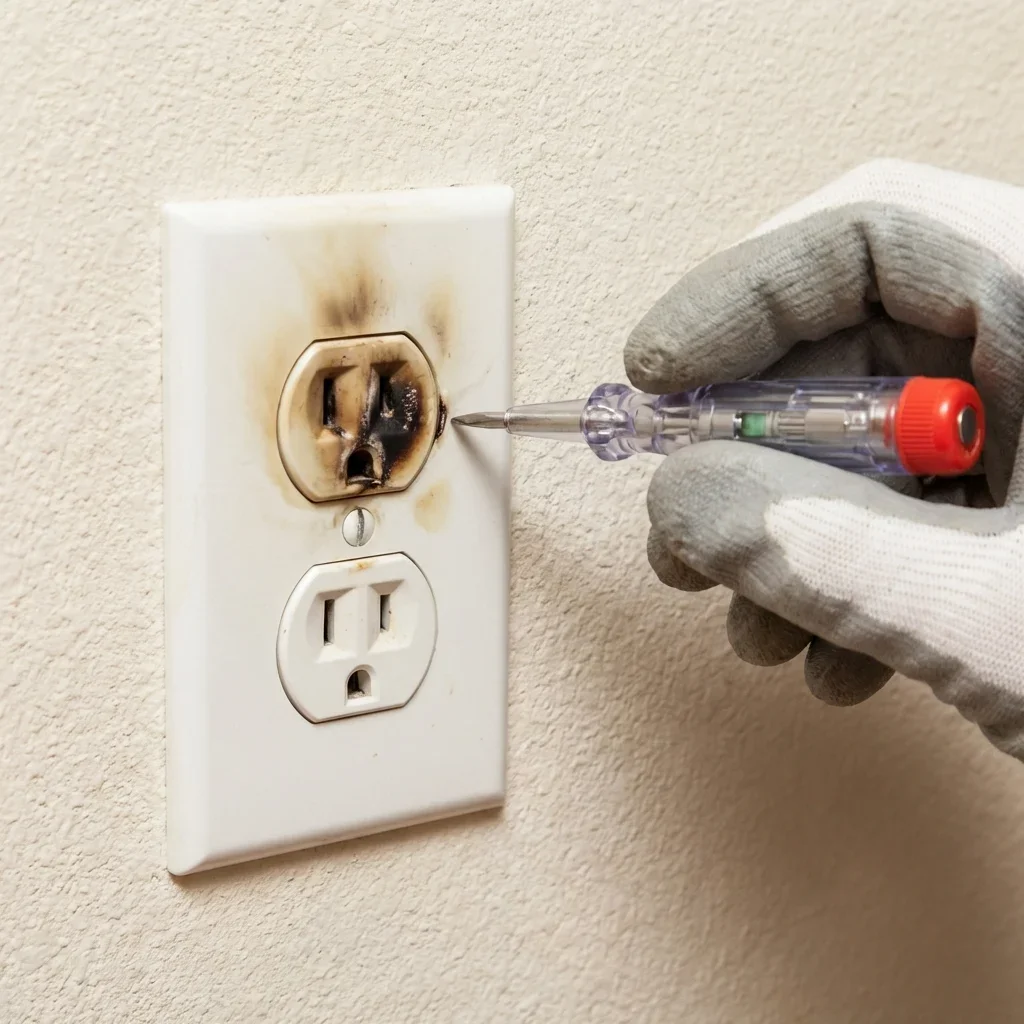
When you call a licensed electrician about a burning smell, most will prioritize the call as same-day or next-day service depending on your description. If you mention active smoke or heat, expect emergency service rates (typically 1.5-2x standard hourly) but immediate response.
The electrician will likely spend 30-60 minutes on initial diagnosis: testing circuits, inspecting the panel, removing suspect outlets and switches, and checking for patterns if you have multiple symptoms.
Diagnostic fees typically run $100-$200 in the Phoenix metro, often credited toward repair work if you proceed.
Basic outlet replacement costs $125-$200 per device including labor and materials. If the electrician needs to repair wire inside the wall, add conduit, or install junction boxes to meet code, expect $300-$600 depending on complexity. Circuit additions for dedicated loads run $500-$900 including new breaker and wire from panel to device location.
These prices assume straightforward access. If wiring runs through block walls or requires significant drywall repair, costs increase.
Before authorizing work beyond simple outlet replacement, ask for a written estimate that specifies what's included. ROC regulations require written contracts for any work over $1,000. For smaller jobs, get at least a verbal breakdown of parts and labor. Reputable contractors will explain exactly what they're fixing and why, not just hand you a bill.
Preventing Future Problems
Once the immediate issue is resolved, a few practices reduce the likelihood of repeat problems.
Run high-wattage devices (space heaters, window AC units, power tools) on dedicated circuits when possible. If you're plugging a 1,500-watt heater into an outlet that also serves six other devices, you're asking for trouble even if the breaker doesn't trip.
Upgrade to AFCI/GFCI combination breakers during your next panel service or upgrade. These devices catch arcing and ground faults that standard breakers miss, shutting off power before temperatures reach ignition points.
The incremental cost over standard breakers is $40-$60 per circuit, worthwhile for high-risk areas like bedrooms and living rooms.
Schedule an electrical safety inspection if your home is 30+ years old and you haven't had the wiring evaluated professionally. Electricians with thermal imaging cameras can identify hot connections behind walls before they produce smells or flames. In Phoenix's aging housing stock, these inspections often pay for themselves by catching problems early.
Replace outlets and switches proactively if they show wear: loose faceplates, plugs that don't grip firmly, switches that feel mushy or require extra force. A $2 outlet is cheap prevention compared to a $150 service call or worse.
If you're comfortable working with electricity (and you shut off the breaker first), this is reasonable DIY work. If not, ask your electrician to swap out suspect devices during routine service visits.
Insurance and Documentation
If the burning smell led to visible damage (melted outlet, scorch marks on the wall, charred wire), document everything with photos before repairs begin. Your homeowner's insurance may cover the electrical repair under dwelling coverage, especially if there's evidence of a sudden failure rather than gradual wear.
File a claim promptly if damage is significant. Most policies cover "sudden and accidental" electrical system failures but exclude gradual deterioration from age or lack of maintenance.
A melted outlet from arcing falls under covered causes. A failed outlet from 40 years of use might not. Your electrician's report documenting the failure mode helps establish whether the damage qualifies.
Keep all receipts and reports from electrical work. If you sell your home within a few years, having documentation of professional electrical repairs adds credibility during buyer inspections. Arizona requires seller disclosure of known material defects. Having proof that you addressed electrical issues professionally demonstrates good faith and often satisfies buyer concerns that might otherwise derail a sale.
Long-Term Wiring Health
Electrical systems don't last forever. Outlets rated for 15-20 years of regular use start to degrade mechanically and electrically past that point.
In a 40-year-old home, you're on generation three of outlets if they've been replaced twice, or dealing with original devices long past their service life.
Circuit wire itself lasts 50-70 years under normal conditions if properly installed. Arizona's heat accelerates insulation degradation, particularly in attics where temperatures exceed 150°F in summer. If your home has wire routed through the attic to serve outlets in interior walls, that wire is aging faster than buried or wall-routed wire.
Consider whole-house rewiring when:
- You're experiencing multiple electrical problems across different circuits
- Your home still uses aluminum wiring or cloth-sheathed cable
- You're doing major renovations that already involve opening walls
- You're adding significant new electrical loads (EV charger, workshop, kitchen remodel) that would strain existing circuits
Rewiring is disruptive and expensive, but it's a one-time fix that eliminates chronic issues and brings your home to current code. Most Phoenix electricians will work room-by-room to minimize disruption, completing the work over several weeks while you continue living in the house.
The alternative? Chasing individual problems as they arise over the next decade. Often costs more in aggregate service calls and carries ongoing fire risk.