What Causes an Outlet to Spark
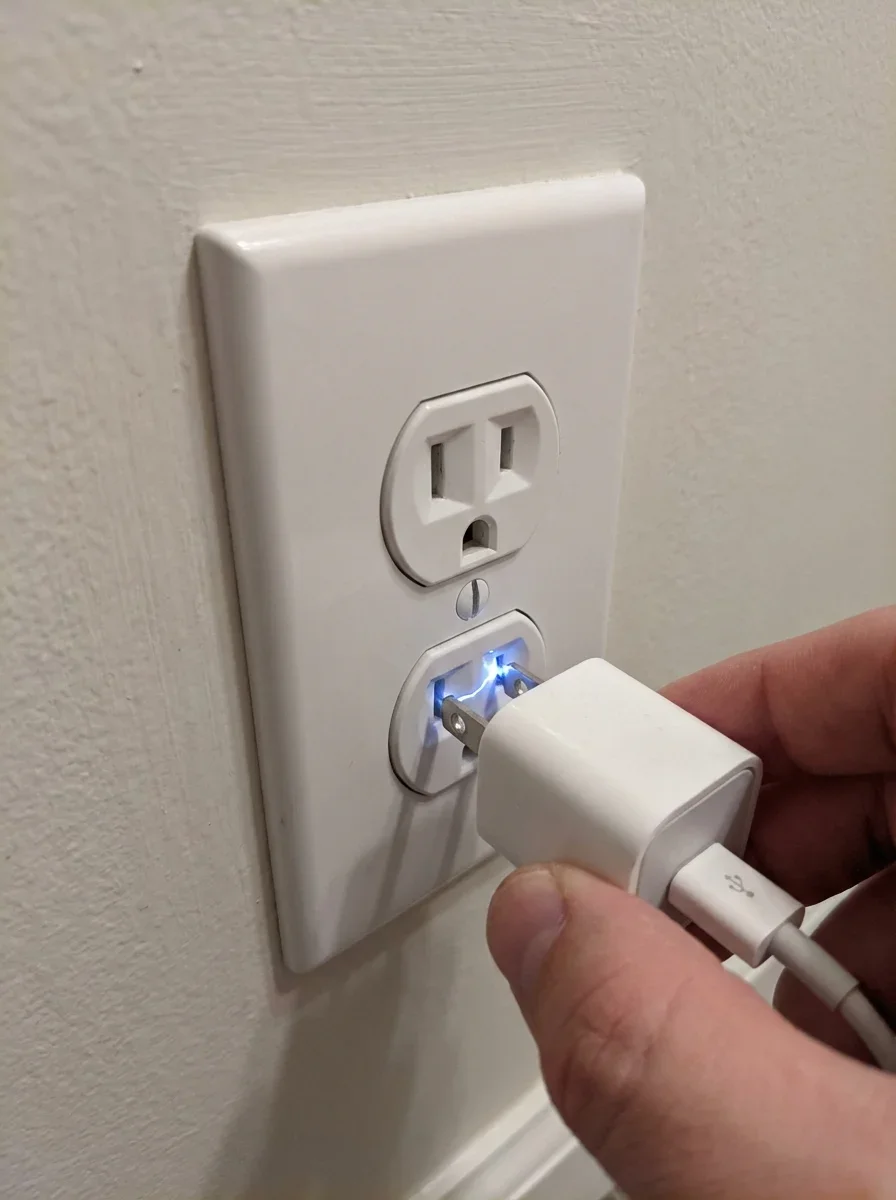
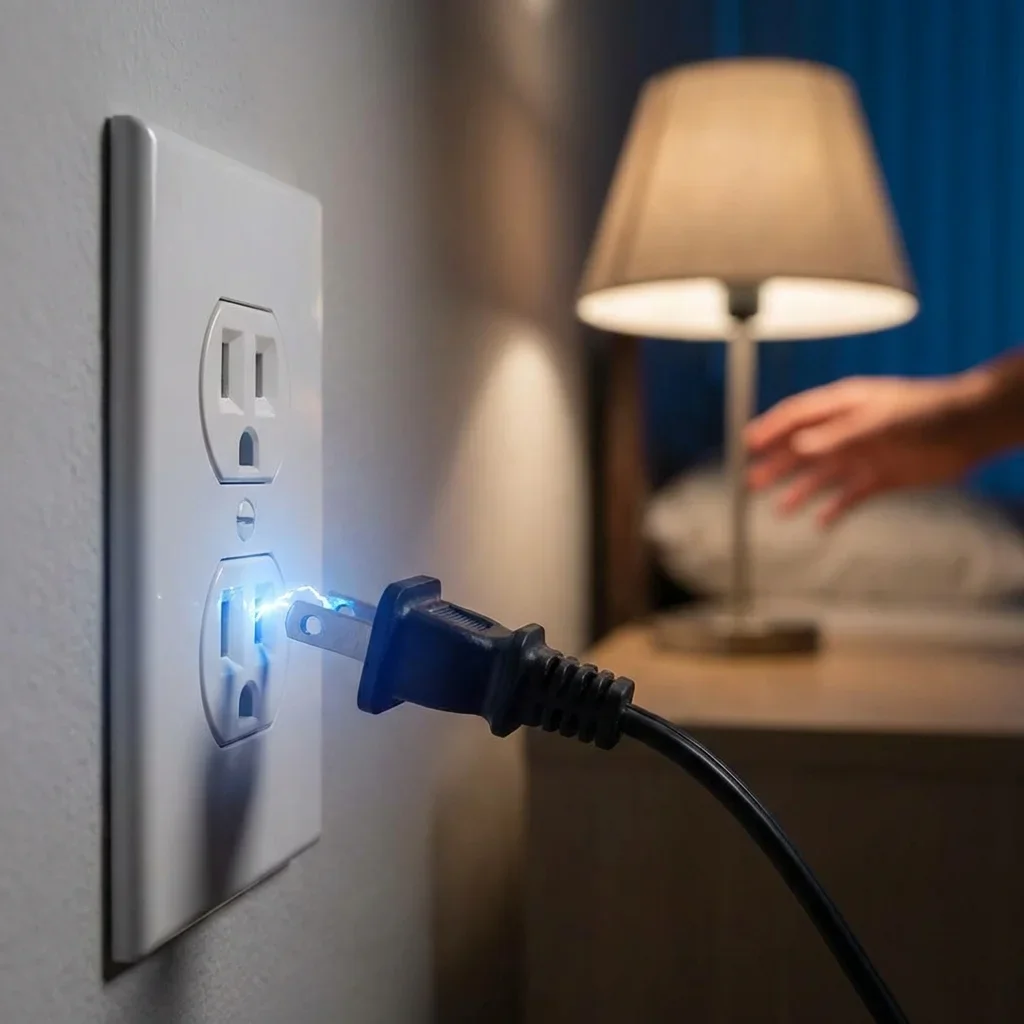
Electricity jumps a tiny gap when you plug in or unplug a device. That brief blue flash you sometimes see is normal load arcing — electrons bridging the millisecond gap between the plug prongs and the outlet contacts.
It happens because the circuit is completing or breaking under load.
But sparks that persist after the plug is seated, sparks that shoot out from the outlet face, or repeated large flashes every time you use a particular outlet indicate something's wrong with the outlet itself, the wiring behind it, or the circuit load.
Worn or Damaged Outlet Contacts
Outlet contacts are spring-loaded brass or copper clips that grip your plug prongs. After thousands of insertions, these contacts lose tension. When they don't grip tightly, electrical resistance increases at the connection point.
That resistance generates heat and allows arcing between the slightly separated surfaces.
You'll notice this as sparks when you wiggle a plug, or a plug that feels loose and pulls out easily. The outlet may also feel warm to the touch. In Phoenix's older block homes built before 1980, original outlets have been in service for 40+ years — well beyond their typical 25-year lifespan.
Loose Wiring Connections Behind the Outlet
The wires feeding your outlet connect either via screw terminals on the sides or push-in connections on the back. Over time, thermal expansion and contraction from Phoenix's temperature extremes cause these connections to loosen.
A loose hot wire creates a high-resistance point that arcs and sparks.
This is especially common in homes built between 1970-1990 that used backstab connections (push-in terminals) for faster installation. These connections fail more frequently than screw terminals, and the failure often announces itself as intermittent sparking or buzzing from the outlet.
Overloaded Circuit
A 15-amp circuit can safely handle about 1,800 watts continuously. Plug a space heater (1,500 watts), a hair dryer (1,875 watts), and a few lights into outlets on the same circuit, and you've exceeded capacity.
The excess current creates heat and stress at every connection point — outlets, wire nuts, breaker terminals.
The CPSC recommends using 15-ampere branch circuits for general lighting and receptacles unless the wiring is specifically rated for 20 amperes to prevent overload hazards.[3] Many Phoenix homes still run kitchen countertop outlets on shared 15-amp circuits, forcing homeowners to choose between the coffee maker and the toaster.
Common Circuit Capacity Limits:
- 15-amp circuit: 1,800 watts safe continuous load (80% of 2,250W maximum)
- 20-amp circuit: 2,400 watts safe continuous load (80% of 3,000W maximum)
- Space heater: 1,500 watts
- Hair dryer: 1,875 watts
- Window AC unit: 1,000-1,500 watts
- Microwave: 1,000-1,200 watts
Short Circuit or Ground Fault
If a hot wire touches a neutral wire or ground wire directly, it creates a short circuit. A sudden, massive current flow that produces large sparks, trips the breaker, and can ignite nearby combustibles.
You'll know a short circuit by the loud pop, flash, and immediate loss of power.
A ground fault occurs when a hot wire touches a grounded surface (like a metal outlet box) instead of the neutral wire. This also causes sparking and should trip a GFPI breaker if one is installed. Without GFCI protection, the fault may persist and spark every time you use the outlet.
Water or Moisture Intrusion
Water conducts electricity. Even small amounts of moisture inside an outlet create paths for current to flow where it shouldn't, causing arcing and sparking.
In Phoenix, this happens less from rain and more from landscape irrigation overspray, pool splashing, monsoon-driven humidity (July-September), or roof leaks that track down through walls.
Outdoor outlets, garage outlets near hose spigots, and kitchen outlets near sinks are the most vulnerable. Desert UV exposure also degrades outdoor outlet covers faster than in humid climates, creating gaps where dust and moisture can enter the box.
Aluminum Wiring Issues
Homes built between 1965-1973 often used aluminum branch circuit wiring instead of copper. Aluminum expands and contracts more than copper with temperature changes, causing connections to loosen over time.
Loose aluminum connections oxidize, creating high-resistance points that spark and overheat.
If your Phoenix home was built during this period and you see sparking from multiple outlets (especially if outlets feel warm or show discoloration), you likely have aluminum wiring requiring specialized repair or replacement.
How to Tell If Outlet Sparking Is Dangerous
Not all sparks mean the same thing. Here's how to assess what you're seeing.
Normal vs. Dangerous Sparking
Normal: A quick blue or white flash when you plug in or unplug a device, lasting a fraction of a second, with no smoke, smell, or sound. This is load arcing and happens because the circuit is energized.
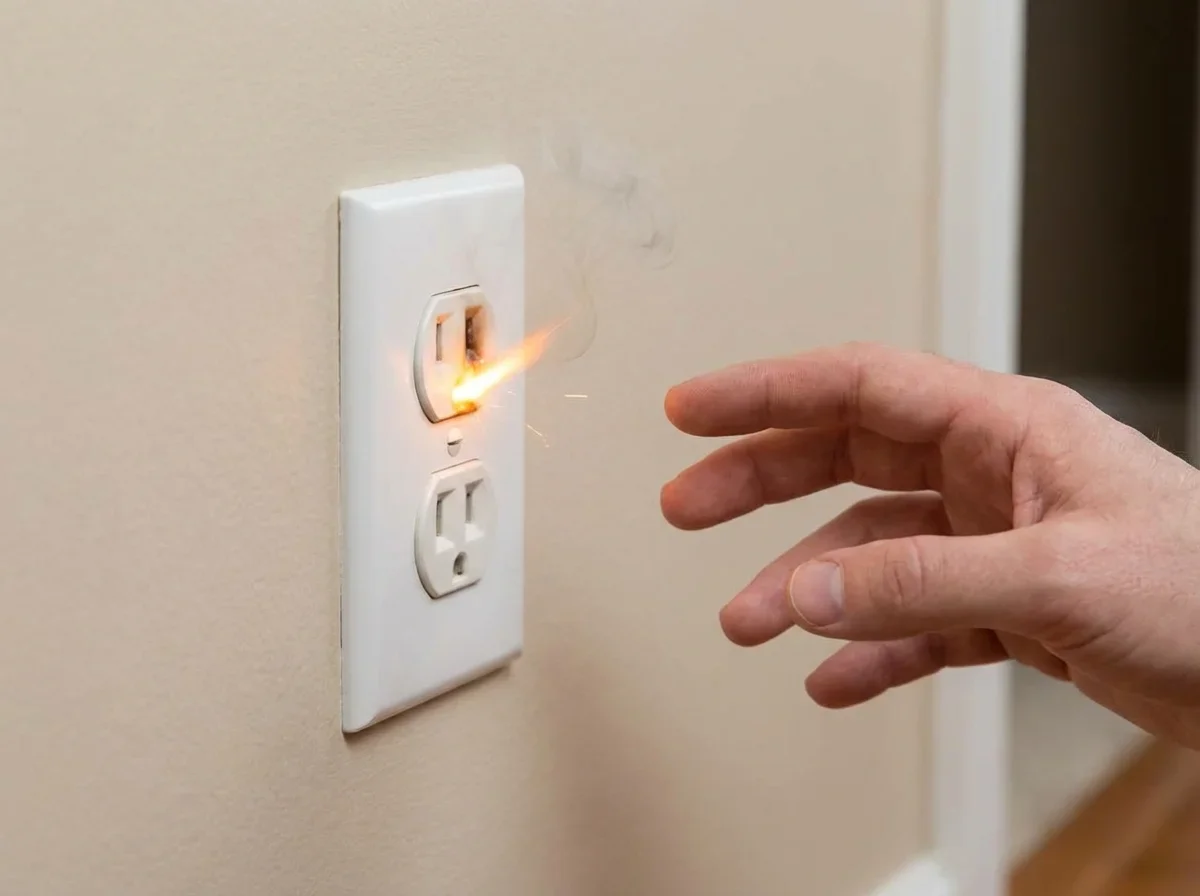
Dangerous: Sparks that continue after the plug is fully inserted. Large yellow or orange sparks. Sparks accompanied by a popping sound, burning smell, smoke, or visible scorch marks on the outlet face.
Repeated sparking from the same outlet every time you use it.
The NFPA lists sparks from an outlet, along with discolored or warm outlets, as warning signs of electrical fire hazards requiring immediate attention.[4] If you see these signs, stop using the outlet and call an electrician.
| Spark Type | Color | Duration | Sound | Action Required |
|---|---|---|---|---|
| Normal Load Arc | Blue/white | <1 second | None | No action needed |
| Worn Contacts | Blue/yellow | 1-2 seconds | Slight crackle | Schedule electrician |
| Loose Wiring | Yellow/orange | Intermittent | Buzzing/popping | Turn off breaker, call electrician |
| Short Circuit | Bright white/yellow | Immediate | Loud pop | Emergency - shut off power immediately |
Warning Signs That Require Immediate Action
Turn off the breaker feeding the outlet and call a licensed electrician immediately if you notice any of these:
- Sparks accompanied by smoke or a burning plastic smell
- Outlet face is blackened, melted, or discolored (brown or yellow marks)
- Outlet or wall plate feels hot to the touch
- Buzzing or sizzling sounds from the outlet when devices are plugged in
- The outlet repeatedly trips a breaker or GFCI
- Sparks occur without plugging anything in (spontaneous arcing)
These symptoms indicate active arcing inside the box, which can ignite nearby wood framing, insulation, or dust.
OSHA requires that electrical equipment like outlets remain free from recognized hazards likely to cause death or serious physical harm, such as sparking from poor maintenance.[2]
Broken or Missing Outlet Covers
Even if the outlet itself isn't sparking, a cracked, displaced, or missing cover plate exposes energized wiring and terminal screws. This creates shock and arc flash hazards, especially in homes with young children or pets.
Both OSHA and NFPA require outlets and switches to remain covered, particularly for wiring energized at 50 volts or higher located below eight feet off the ground.[1]
Replace broken covers immediately. They cost under $2 at any hardware store.
Common Causes of Outlet Sparking in Phoenix Homes
Phoenix's climate and construction patterns create specific outlet failure modes you won't see as often in cooler, more humid regions.
Thermal Cycling and Connection Fatigue
Summer attic temperatures in Phoenix homes regularly hit 150°F. That heat radiates down through the walls, warming the wiring and outlet boxes. At night, exterior temperatures drop 40-50 degrees.
This daily expansion-and-contraction cycle loosens screw terminals and accelerates contact wear.
Homes in Ahwatukee, Chandler, and Gilbert with west-facing exterior walls and afternoon sun exposure see the most pronounced thermal stress on outlets. If your sparking outlets are on west walls in rooms that get hot in the afternoon, thermal cycling is likely contributing.
Outdated Wiring in Pre-2000 Construction
Most Phoenix-area homes built before 2000 used copper Romex wiring with rubber or early PVC insulation. That insulation becomes brittle after 30-40 years of heat exposure, cracking and exposing bare copper inside the outlet box.
Even minor vibration (from plugging in a vacuum, for example) can cause exposed wires to touch and spark.
Block homes built in the 1960s-1980s in central Phoenix, Scottsdale, and Tempe often have original outlets and switches that have never been replaced. If you're seeing sparking in a home from this era, the entire outlet likely needs replacement, not just tightening.
Overloaded Circuits in Older Homes
A 1975 Phoenix home was wired for window AC units, incandescent bulbs, and a TV. Today's households run central AC, computers, phone chargers, smart home devices, pool equipment, and electric vehicle chargers.
The electrical panel and branch circuits haven't changed, but the load has tripled.
Many older homes still have 100-amp main panels with 15-amp branch circuits feeding most outlets. When you exceed the circuit capacity, connections heat up and spark. If multiple outlets on the same circuit are sparking or if breakers trip frequently, you may need a panel upgrade or dedicated circuits for high-draw appliances.
Desert Dust and UV Degradation
Phoenix air carries fine desert dust that infiltrates electrical boxes through gaps in outlet covers and worn gaskets. Dust on terminal screws and contacts creates insulating layers that increase resistance and promote arcing.
Outdoor outlets also face relentless UV exposure that cracks plastic housings and creates entry points for dust and pests.
Homes near open desert (Anthem, North Scottsdale, Buckeye) or near construction sites see higher dust intrusion. Scorpions and bark scorpions enter homes through unsealed electrical penetrations, sometimes bridging contacts inside boxes and causing short circuits. Sealing outlet boxes and installing weather-resistant covers reduces these risks.
What to Do When You See Outlet Sparking
Your immediate response depends on the severity of the sparking and the symptoms that accompany it.
Immediate Steps for Active Sparking
If you see sparking, smoke, or smell burning plastic:
- Don't touch the outlet or attempt to unplug anything if sparking is ongoing
- Turn off the breaker feeding that outlet at your electrical panel (label your panel if you haven't already)
- Unplug all devices from that outlet once power is off
- Inspect the outlet face for scorch marks, melting, cracks, or discoloration
- Keep the breaker off and call a licensed electrician for diagnosis
Do not attempt to remove the outlet cover or inspect the wiring yourself.
The box may contain live wires even with the breaker off if the circuit is miswired or if multiple circuits share the box.
When You Can Safely Investigate Further
If you saw a single small spark when plugging in a device and nothing else unusual, you can do a basic check:
- Unplug everything from the outlet
- Look for visible damage on the outlet face (cracks, discoloration, deformation)
- Test whether plugs fit snugly or slide in and out too easily (loose contacts)
- Feel the outlet cover plate for warmth (should be room temperature)
- Listen for buzzing or crackling sounds
If everything looks and feels normal, the spark may have been ordinary load arcing.
But if you notice any of the warning signs above (warmth, loose fit, discoloration), leave the circuit off and call an electrician.
Pro Tip: Label your electrical panel breakers with the rooms and outlets they control. During an emergency, you'll save critical seconds finding the right breaker to shut off. Use a circuit tracer or have an electrician map your circuits if labels are missing or incorrect.
What Not to Do
Don't cover the problem. Homeowners sometimes think taping over a sparking outlet or plugging in a surge protector will "fix" the issue.
It won't.
A surge protector can't stop arcing inside the outlet box, and covering the outlet with tape creates a fire hazard. Don't assume it will get better on its own. Electrical connections degrade over time. An outlet that sparks once will spark again, and the arcing will worsen until the connection fails completely or ignites nearby materials.
When to Call an Electrician for Outlet Sparking
Some situations require professional diagnosis even if the sparking seems minor.
Signs You Need Professional Diagnosis
Call a ROC-licensed electrician if:
- Sparking happens every time you use the outlet, even for small loads
- Multiple outlets in the home are sparking (suggests a panel or circuit problem)
- The outlet is in a kitchen, bathroom, garage, or outdoor location (higher fire and shock risk)
- The home is more than 30 years old and outlets have never been replaced
- You've recently added high-draw appliances (EV charger, pool equipment, large AC units) and sparking started afterward
Electricians use thermal cameras and circuit analyzers to detect loose connections, overloaded circuits, and insulation failures that aren't visible from the outlet face.
They'll also check for aluminum wiring, backstab connection failures, and panel issues contributing to the problem.
What an Electrician Will Check
A licensed electrician investigating outlet sparking will:
- Remove the outlet from the box and inspect all wire connections for tightness, corrosion, and insulation damage
- Test the circuit for proper voltage and grounding using a multimeter
- Measure the outlet's contact resistance to verify tight prong grip
- Check for circuit overload by reviewing all devices on the same branch circuit
- Inspect the breaker feeding the outlet for signs of overheating or corrosion
- Verify proper box grounding and bonding to prevent ground faults
- Replace the outlet with a code-compliant device if wear or damage is found
In Phoenix homes built before 2000, electricians often find original outlets with 40+ years of service, loose backstab connections, and oxidized aluminum wiring terminations.
Replacement typically costs $75-$150 per outlet, but it eliminates the fire risk immediately.
Arizona Licensing Requirements for Electrical Work
Any electrical work beyond replacing a receptacle requires a licensed contractor in Arizona. The Arizona Registrar of Contractors (ROC) issues C-11 Residential Electrical licenses and A-11 Commercial Electrical licenses for contractors performing work over $1,000.
Verify your electrician's license at roc.az.gov before hiring.
Look for an active license with no disciplinary actions. Arizona does not require contractors to carry workers' compensation insurance, so verify general liability and workers' comp coverage independently.
If the electrician recommends replacing multiple outlets, installing GFCI protection, or upgrading circuits, the work requires a permit from your local jurisdiction (Phoenix, Scottsdale, Tempe, Mesa, etc.). Unpermitted electrical work can void your homeowner's insurance and complicate future home sales.
Preventing Outlet Sparking and Related Hazards
Most outlet sparking is preventable with routine maintenance and awareness of your electrical system's capacity.
Replace Outlets on a Regular Schedule
Outlets wear out. The National Electrical Manufacturers Association (NEMA) estimates a typical outlet lifespan of 25-30 years under normal use.
In Phoenix's heat, that lifespan is closer to 20 years.
If your home was built in the 1980s-1990s and you've never replaced outlets, schedule an electrical inspection to assess their condition. Proactive replacement costs far less than repairing fire damage.
Install GFCI Protection Where Required
GFCI (ground fault circuit interrupter) outlets detect current imbalances and shut off power in milliseconds, preventing shocks and reducing arc flash hazards. Arizona building code requires GFCI protection for outlets in:
- Kitchens (countertop outlets)
- Bathrooms
- Garages
- Outdoor locations
- Crawl spaces and unfinished basements (rare in Phoenix, but applicable in some mountain homes)
- Within six feet of a sink or water source
If your home lacks GFCI protection in these areas, upgrading to GFCI outlets or installing GFCI breakers protects against the most common sparking and shock scenarios.
For comprehensive protection throughout the home, consider whole-house surge protection to guard against voltage spikes from monsoon lightning and utility grid fluctuations.
Avoid Overloading Circuits
Know your circuit capacity. A 15-amp circuit safely handles 1,800 watts continuously (80% of the 2,250-watt maximum). A 20-amp circuit handles 2,400 watts.
Don't plug space heaters, window AC units, or other high-draw devices into circuits that already serve multiple outlets.
If you find yourself frequently unplugging one device to use another, or if you're daisy-chaining power strips, you need more circuits. Talk to an electrician about dedicated circuits for high-draw appliances or a panel upgrade to add capacity.
Upgrade Aluminum Wiring Connections
If your home has aluminum wiring, special care is required at every connection point. Outlets and switches must be rated "CO/ALR" (copper-aluminum revised) to prevent oxidation and overheating.
Standard outlets will fail on aluminum circuits.
The safest long-term solution is aluminum wiring replacement with copper throughout the home, but CO/ALR devices and AlumiConn connectors (special wire nuts for aluminum) can make aluminum wiring serviceable. Never attempt DIY repairs on aluminum circuits. Only licensed electricians should work on these systems.
Keep Outdoor Outlets Sealed and Protected
Outdoor outlets face dust, UV, temperature extremes, and occasional moisture from irrigation or monsoon storms. Install "in-use" weatherproof covers that protect the outlet even when a plug is inserted.
Standard flip-up covers only protect the outlet when nothing is plugged in.
Check outdoor outlet covers annually for cracks, warping, or gaps. Replace damaged covers immediately (they cost $10-$20) and prevent water and dust intrusion that leads to sparking and corrosion. If you're installing new outdoor outlets for pool equipment or landscape lighting, verify they're GFCI-protected and installed in weatherproof boxes.
Related Electrical Problems to Watch For
Outlet sparking rarely occurs in isolation. If you're seeing sparks from one outlet, these related issues often accompany the problem.
Flickering Lights on the Same Circuit
Lights that dim or flicker when you plug in a device suggest a loose connection somewhere on that circuit. The same loose wire causing sparking at an outlet may also serve overhead lights.
Flickering lights across multiple circuits or throughout the home point to a panel or utility connection problem.
Burning Smell from Outlets or Switches
A burning plastic or electrical smell means insulation is melting or wire is overheating. This is an emergency.
Turn off the breaker immediately and call an electrician.
Burning smells from outlets often precede visible sparking by days or weeks. The insulation is failing before you see the arc.
Breakers That Trip Repeatedly
A breaker that trips once may be doing its job (protecting against a temporary overload). A breaker that trips repeatedly, or trips immediately when you reset it, signals a persistent short circuit, ground fault, or overload.
Don't keep resetting a tripping breaker. Call an electrician to diagnose the cause.
Hot or Discolored Panel Breakers
Feel your panel breaker switches (with the back of your hand, not your palm). They should be cool or slightly warm.
A hot breaker indicates overload or a failing breaker that can't safely carry its rated current.
Hot electrical panels require immediate professional attention to prevent panel fires. If the sparking outlet is on a circuit with a hot breaker, the problem is almost certainly a loose connection or overload somewhere on that circuit. The electrician will need to trace the circuit and inspect every junction box and outlet to find the fault.
Cost to Repair or Replace a Sparking Outlet
Repair costs vary based on the root cause, accessibility, and whether related circuit work is needed.
Typical Outlet Replacement Costs
Replacing a single worn or damaged outlet costs $75-$150 including labor and materials. This assumes the outlet box and wiring are in good condition and only the device needs replacement.
Upgrading to a GFCI outlet costs $100-$175 per location.
If the electrician needs to install a new electrical box, repair damaged wiring, or replace multiple outlets on the same circuit, expect $200-$400 for the visit.
When Repairs Extend Beyond the Outlet
If the electrician finds loose connections at the panel, damaged wiring in the wall, or evidence of a short circuit, repairs become more involved. Circuit rewiring costs $6-$10 per linear foot depending on accessibility.
Replacing a panel breaker costs $75-$150 per breaker plus labor.
In worst-case scenarios (extensive wire damage from rodents, widespread aluminum wiring failures, or knob-and-tube wiring in very old homes), you may need whole house rewiring, which costs $6,000-$12,000 for a typical Phoenix home.
Insurance and Permit Considerations
Most outlet replacements don't require a permit if you're swapping one outlet for another of the same type. But if the work involves adding new circuits, upgrading to GFCI/AFCI protection, or replacing wire in the walls, your electrician will pull a permit.
Permit costs are typically $50-$150 and are included in the electrician's quote.
The permit ensures the work is inspected and documented, which protects you if you sell the home or file an insurance claim. Never skip permits to save money. Unpermitted electrical work voids your homeowner's insurance if a fire occurs.
If an outlet sparked and caused fire damage, your homeowner's insurance may cover both the damage and the electrical repairs. Document everything (photos of the damage, the electrician's diagnosis, receipts for repairs) and file a claim promptly.
How to Find a Qualified Electrician in Phoenix
Phoenix has hundreds of licensed electricians. Here's how to find one who will diagnose and repair your sparking outlet safely and correctly.
Start with the ROC database at roc.az.gov. Enter the contractor's name or license number and verify:
- Active license status (not expired or suspended)
- License type (C-11 for residential work, A-11 for commercial)
- No recent disciplinary actions or unresolved complaints
An active ROC license means the contractor has met Arizona's experience, exam, and bonding requirements.
It doesn't guarantee quality, but it's the baseline credential.
Questions to Ask Before Hiring
Before scheduling service, ask:
- "What is your ROC license number?" (Verify it independently)
- "Do you carry general liability and workers' compensation insurance?" (Ask for proof)
- "Will you pull a permit if one is required?" (The answer should be yes)
- "What is your diagnostic fee, and is it credited toward repairs?" (Typical diagnostic fees: $75-$125)
- "Do you guarantee your work, and for how long?" (Look for at least a one-year warranty on labor)
Avoid contractors who offer to skip permits, work without insurance, or quote prices "too good to be true."
Electrical work done incorrectly can kill. Price should not be your only consideration.
Local Electricians vs National Chains
Phoenix has both local independent electricians and national service chains. Local contractors often have lower overhead and more flexibility on scheduling and pricing.
National chains offer brand-name recognition and consistent service standards but may charge more.
For straightforward outlet replacement, either option works. For complex diagnostics (intermittent sparking, multiple circuits involved, aluminum wiring), experienced local electricians often provide more thorough troubleshooting. Ask for references and check reviews on Google, Yelp, and the Better Business Bureau.
If you need broader electrical troubleshooting across multiple symptoms, or if the outlet sparking is part of a larger pattern (flickering lights, tripping breakers, hot panels), hire an electrician who specializes in diagnostics and older home electrical systems rather than one focused on new construction or service upgrades.
- Office of Compliance. "Exposed, Energized Wiring and Electrical Components." https://www.ocwr.gov/wp-content/uploads/2010/03/fastfacts_exposed_wiring.pdf. Accessed April 07, 2026.
- Occupational Safety and Health Administration (OSHA). "1926.403 - General requirements.." http://www.osha.gov/laws-regs/regulations/standardnumber/1926/1926.403. Accessed April 07, 2026.
- U.S. Consumer Product Safety Commission (CPSC). "CPSC Guide to Home Wiring Hazards." https://www.cpsc.gov/s3fs-public/518.pdf. Accessed April 07, 2026.
- National Fire Protection Association (NFPA). "Electrical Home Fire Safety." https://www.nfpa.org/education-and-research/home-fire-safety/electrical-safety-in-the-home. Accessed April 07, 2026.