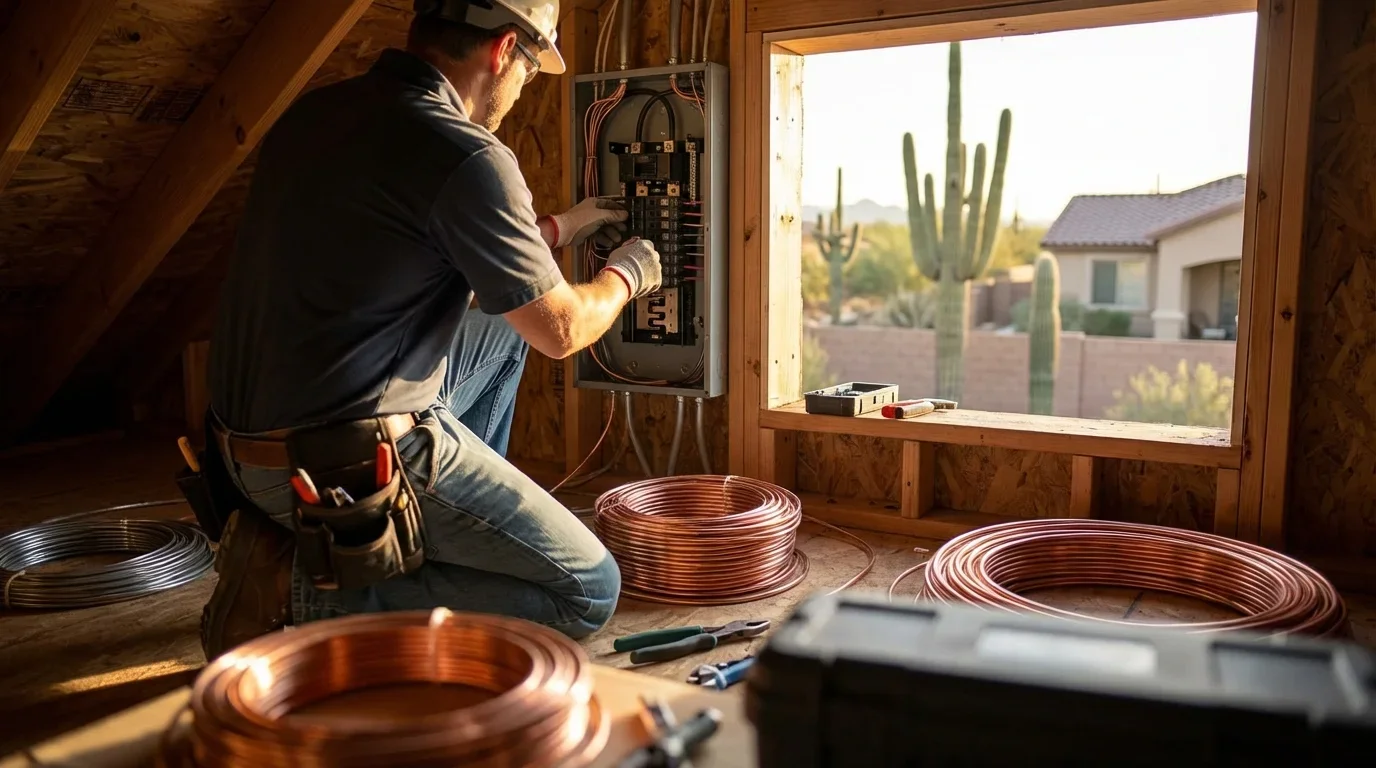
Aluminum Wiring Isn't Just Old—It's a Fire Hazard
Homes built in the '60s and '70s often hide a dangerous secret: aluminum wiring that overheats and sparks. We replace it before disaster strikes.
- Eliminate fire risks from outdated aluminum wiring
- COPALUM connectors for safe, code-compliant repairs
- Protect your family and your Arizona home's value
⚠ Common Issues
What Is Aluminum Wiring and Why Is It a Concern?
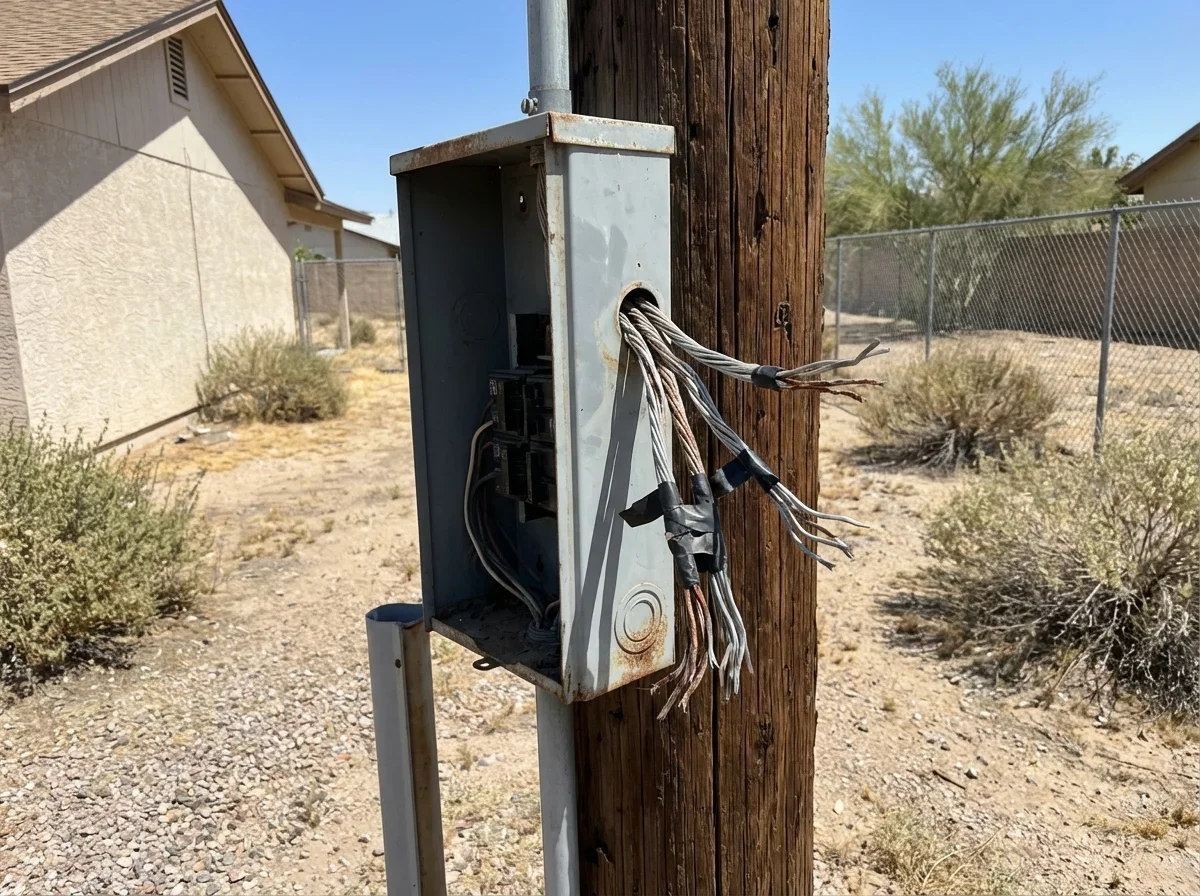
If your Arizona home was built between 1965 and 1973, there's a strong chance it's wired with aluminum instead of copper. During the Vietnam War-era copper shortage, builders across the Sun Belt turned to aluminum as a cheaper alternative. Entire neighborhoods in Phoenix, Scottsdale, Mesa, and Tempe went up with aluminum branch circuits feeding every outlet and switch.
The problem isn't the wire itself — it's what happens over time.
Why Homes in Arizona Have Aluminum Wiring
Arizona's explosive growth during the late 1960s and early 1970s coincided perfectly with the aluminum wiring era. Subdivisions sprouting across the Valley used aluminum to keep construction costs down while meeting demand. Developers in Chandler, Gilbert, and Glendale built thousands of homes with aluminum branch circuits before the industry recognized the fire hazard.
Most homeowners have no idea their wiring is aluminum until a home inspection, insurance underwriting review, or electrical problem forces them to look.
The Fire Safety Risk
Aluminum expands and contracts more than copper when it heats and cools. Over decades of Arizona's extreme temperature swings — attics hitting 150°F in summer — those connections loosen. Loose connections create resistance. Resistance generates heat. Heat causes oxidation. Oxidation increases resistance further.
Homes with aluminum wiring manufactured before 1972 are 55 times more likely to reach fire hazard conditions than copper-wired homes.[1]
The danger concentrates at connection points: outlets, switches, junction boxes, and light fixtures. You'll notice the warning signs first in high-use areas — kitchen outlets that feel warm, bathroom switches that flicker, bedroom receptacles with discolored cover plates.
Sound familiar? Your hallway light flickers when you turn on the microwave. The outlet behind your TV feels warm. Your home inspector in Surprise flagged aluminum wiring and now your buyer wants $8,000 off the price.
The deterioration happens invisibly inside walls and junction boxes. By the time you smell burning plastic or see a scorch mark, you're already in hazard territory.
Arizona's dry climate accelerates oxidation. Without humidity to slow the process, aluminum connections deteriorate faster here than in humid regions. That's why the CPSC stopped recommending "repair" methods in favor of complete remediation decades ago — but thousands of Arizona homes still have original 1960s aluminum wiring carrying modern electrical loads.[2]
Insurance companies know the statistics. Expect higher premiums or outright coverage denials if your carrier discovers aluminum wiring during a policy review. Home sales in Phoenix and Scottsdale routinely stall when inspections reveal aluminum branch circuits and buyers demand either professional retrofitting or price concessions.
$ Cost Guide
What Does Aluminum Wiring Replacement Cost in Arizona?
You have three options: complete copper rewiring, COPALUM crimped connectors, or temporary fixes that won't satisfy inspectors or insurance underwriters. Costs vary dramatically based on which route you choose and your home's size.
Full Home Rewiring Costs
Stripping out aluminum wiring and replacing it with copper is the gold standard. It's also the most expensive and most disruptive option.
| Home Size | Arizona Cost Range | Timeline | Disruption Level |
|---|---|---|---|
| 1,000-1,500 sq ft | $8,000-$12,000 | 3-5 days | High (wall access required) |
| 1,500-2,000 sq ft | $12,000-$16,000 | 5-7 days | High |
| 2,000-2,500 sq ft | $15,000-$20,000 | 7-10 days | High |
| 2,500-3,000 sq ft | $18,000-$25,000 | 10-14 days | Very high |
Full rewiring means cutting drywall, fishing new cable, patching, and repainting. In single-story ranch homes common in Mesa and Tempe, attic access makes the job easier and cheaper. Two-story homes or homes on slabs require more invasive wall work, driving costs up.
For homes you're selling or refinancing, full rewiring may not pencil out. That's where COPALUM comes in.
COPALUM Connector Installation Pricing
COPALUM crimping is the only CPSC-approved permanent repair that doesn't require tearing into walls. A certified technician installs special copper pigtails at every aluminum connection using a hydraulic crimping tool. The crimp creates a gas-tight connection that prevents oxidation.
| Service | Cost per Connection | Typical Whole-Home Cost |
|---|---|---|
| COPALUM crimp (per connection) | $35-$55 | $4,000-$8,000 |
| Inspection and assessment | $200-$400 | — |
| Permit and final inspection | $150-$300 | — |
A typical 1,500 sq ft home has 80-120 connection points (outlets, switches, junction boxes, fixtures). At $40-50 per connection, you're looking at $4,000-$7,000 for materials and labor in the Phoenix metro area. That's half the cost of full rewiring and requires zero drywall repair.
The catch: COPALUM certification is rare. Not every electrician has the training or the $3,000 hydraulic crimping tool. Expect to pay a premium for certified technicians, but the work comes with manufacturer warranty and satisfies insurance requirements.
Copper Pigtailing and AlumiConn Alternatives
You'll find electricians offering cheaper "fixes" using twist-on wire connectors filled with anti-oxidant compound (known as "pigtailing") or AlumiConn connectors. These run $15-$25 per connection versus $40-$55 for COPALUM.
The CPSC does not consider these permanent solutions.[1]
| Method | Cost | CPSC Approved | Insurance Accepted | Warranty |
|---|---|---|---|---|
| COPALUM crimp | $35-$55/connection | Yes | Yes | Manufacturer |
| AlumiConn connector | $15-$25/connection | Listed but not recommended | Sometimes | Limited |
| Twist-on pigtailing | $10-$20/connection | No (emergency only) | Rarely | None |
| Full copper rewiring | $8-$15/sq ft | Yes | Yes | Contractor |
Pigtailing may stop the immediate problem, but it won't pass a buyer's inspection in Scottsdale or satisfy underwriting requirements at most carriers. AlumiConn is UL-listed and some inspectors accept it, but it's not the CPSC's permanent solution.
If you're selling, refinancing, or dealing with insurance issues, budget for COPALUM or full rewiring. Anything less kicks the can down the road.
→ What to Expect
The Aluminum Wiring Retrofit Process
What actually happens when a certified electrician addresses your aluminum wiring? The process depends on which solution you choose — COPALUM retrofitting or complete copper rewiring.
COPALUM Crimping Installation
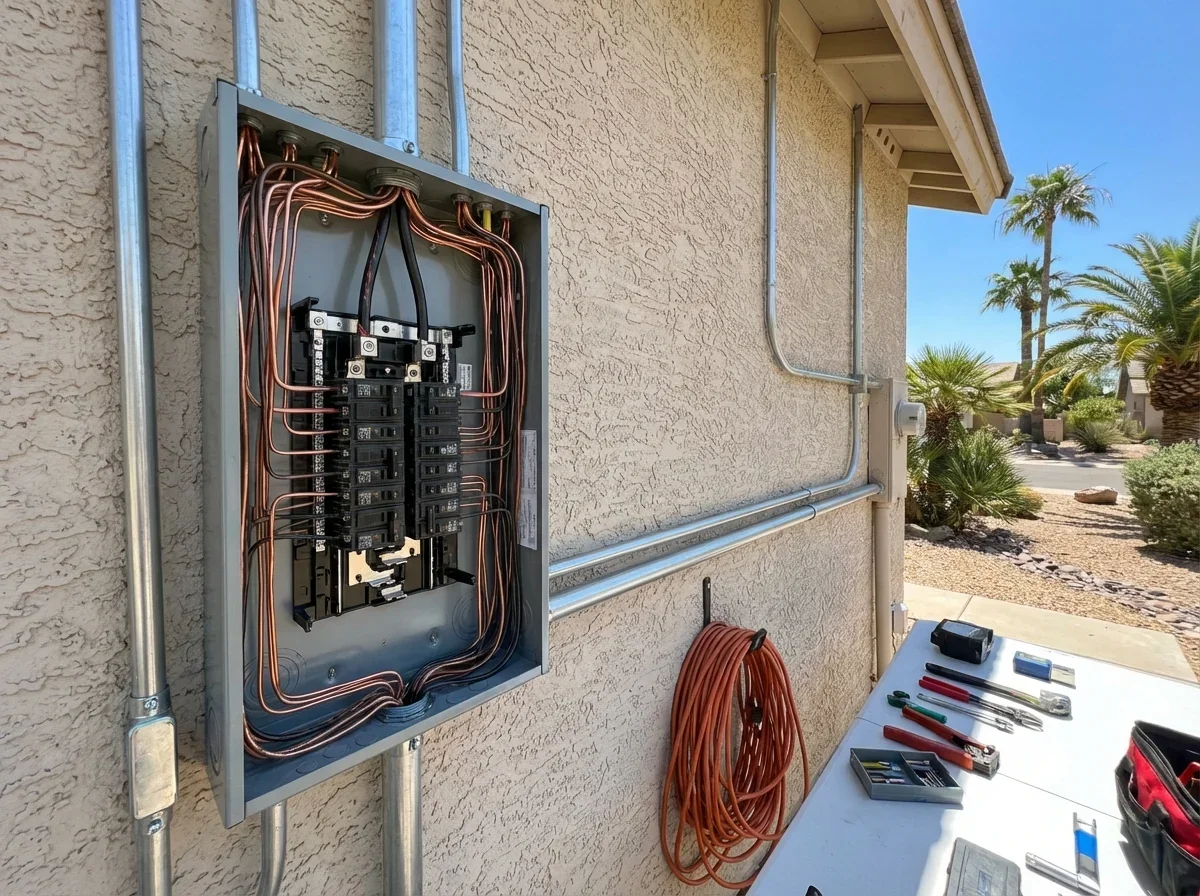
COPALUM work focuses on connections, not the wire itself. The aluminum branch circuits stay in your walls. The technician installs copper pigtails at every termination point using a specialized hydraulic crimper.
Inspection and mapping: The electrician identifies every aluminum connection — outlets, switches, light fixtures, junction boxes, and appliances. Expect this to take 2-4 hours in a typical home. They'll document the number of connections and provide a detailed estimate.
Permit and shutdown: Arizona electrical code requires permits for COPALUM work.[2] The electrician pulls permits with the city (Phoenix, Chandler, Gilbert — each has its own process), then shuts down circuits one at a time to work safely.
Crimped pigtail installation: At each connection, the tech cuts back the aluminum wire, applies anti-oxidant compound, inserts a COPALUM connector with copper pigtail, and crimps with 10,000+ PSI of hydraulic pressure. The crimp is permanent — no moving parts, no oxidation, no loosening over time.
Device replacement: All receptacles and switches get replaced with new units rated for copper connections. Old devices come out, new commercial-grade components go in.
Testing and inspection: After all connections are crimped, the electrician tests voltage, checks for heat at connections under load, and calls for city inspection. The inspector verifies crimp quality and code compliance.
Timeline: 2-4 days for a whole home, depending on size and accessibility. You can stay in the house — power goes out one circuit at a time, not the entire panel. Most COPALUM jobs in Peoria and Glendale wrap up in 3 days with minimal disruption.
Complete Copper Rewiring Timeline
Full rewiring is surgery. The electrician removes aluminum branch circuits and installs new copper cable from the panel to every outlet, switch, and fixture.
Planning and access: The crew determines access routes — attic, crawlspace, or wall cavities. Single-story homes with attic access are fastest. Slab homes require cutting drywall.
Demolition and fishing: Old aluminum cable gets pulled out. New 12-2 or 14-2 copper gets fished through walls and attics. This is the messy part — drywall holes, insulation moved, access panels cut.
Device installation: Every outlet, switch, and fixture gets new copper connections. The panel gets new breakers if needed (aluminum-rated breakers may not be ideal for copper circuits).
Drywall repair and paint: After rough-in inspection, holes get patched and painted. Some homeowners hire their own drywall contractor to save money; others pay the electrician's crew to handle it.
Final inspection and power-up: City inspector checks workmanship, verifies code compliance, signs off. Power gets restored and you're done.
Timeline: 5-14 days depending on home size and whether you're doing concurrent drywall repair. Budget an extra week if you're repainting afterward.
Arizona's heat means attic work happens early morning in summer. Expect longer timelines June-September when crews avoid afternoon attic temperatures above 140°F.
✓ Choosing a Contractor
How to Choose an Aluminum Wiring Specialist in Arizona
Not every licensed electrician handles aluminum wiring properly. You need someone with specific training, the right tools, and knowledge of Arizona code requirements. Cutting corners here means you're still sitting on a fire hazard — you've just paid someone to hide it.
Ask these questions before you hire:
Are you COPALUM certified? If they're proposing COPALUM work, they must have manufacturer certification and the hydraulic crimping tool. Ask to see the cert card. There are only a few certified techs in the Phoenix metro — if they say "we do AlumiConn instead," that's a red flag for insurance and resale purposes.
How many aluminum wiring jobs have you completed in the past year? You want someone who does this regularly, not an electrician learning on your house. Experience with 1960s-70s construction and Arizona's building stock matters.
Will you pull permits and schedule inspections? Any reputable contractor pulls permits for COPALUM work or full rewiring. If they say "we can skip the permit to save money," walk away. No permit means no inspection, no code compliance, and major problems when you sell.
What's your timeline and how will you minimize disruption? COPALUM work can happen while you live in the house. Full rewiring may require you to relocate for a few days. Get specifics on power outages, access needs, and coordination with drywall repair if applicable.
Can you provide references from recent aluminum wiring jobs? Ask for contacts from homeowners in Tempe, Mesa, or Chandler who had similar work done. Good contractors have a trail of satisfied customers who passed inspection and satisfied insurance underwriting.
Red flags to avoid:
- Offering "pigtailing" or AlumiConn as permanent solutions without discussing COPALUM or full rewiring
- Unwilling to provide proof of licensing, bonding, and liability insurance ($1M+ coverage recommended for rewiring jobs)
- Quotes significantly lower than competitors (aluminum wiring work has hard costs — materials, permits, crimping tools — anyone undercutting by 30%+ is cutting corners)
- Pushing you to decide immediately or offering "today only" pricing
The best aluminum wiring specialists in Arizona carry E-2 or better licensing, maintain relationships with local inspectors, and work with title companies and insurance underwriters regularly. They understand that this isn't just an electrical job — it's a transaction blocker that needs to be resolved properly.
Look for contractors who can document COPALUM certification, provide itemized estimates breaking out connection counts and per-connection pricing, and explain the difference between temporary fixes and permanent CPSC-approved solutions. If you're comparing professionals for aluminum wiring work, prioritize experience with older Arizona homes and a track record of passing inspections on the first try.
Your home's safety and your ability to sell or insure the property depend on getting this right. A qualified electrician will walk you through options, provide transparent pricing, and deliver work that satisfies inspectors, underwriters, and buyers without shortcuts.
Top Contractors for Aluminum Wiring Replacement
View all →


Frequently Asked Questions
- U.S. Consumer Product Safety Commission (CPSC). "Repairing Aluminum Wiring." https://www.cpsc.gov/s3fs-public/516.pdf. Accessed April 06, 2026.
- U.S. Consumer Product Safety Commission (CPSC). "REPAIRING ALUMINUM WIRING." https://www.cpsc.gov/s3fs-public/516.pdf. Accessed April 06, 2026.
Estimate Your Aluminum Wiring Replacement Cost
Get an instant price range based on your home and project details.