
Cool Air and Lower Bills Start with the Right Installation
Arizona heat demands ceiling fans that actually work. Poor installation means wobbling, noise, and wasted energy—or worse, a safety hazard.
- Properly balanced fans that run whisper-quiet
- Reinforced electrical boxes that meet code
- Strategic placement for maximum airflow and efficiency
⚠ Common Issues
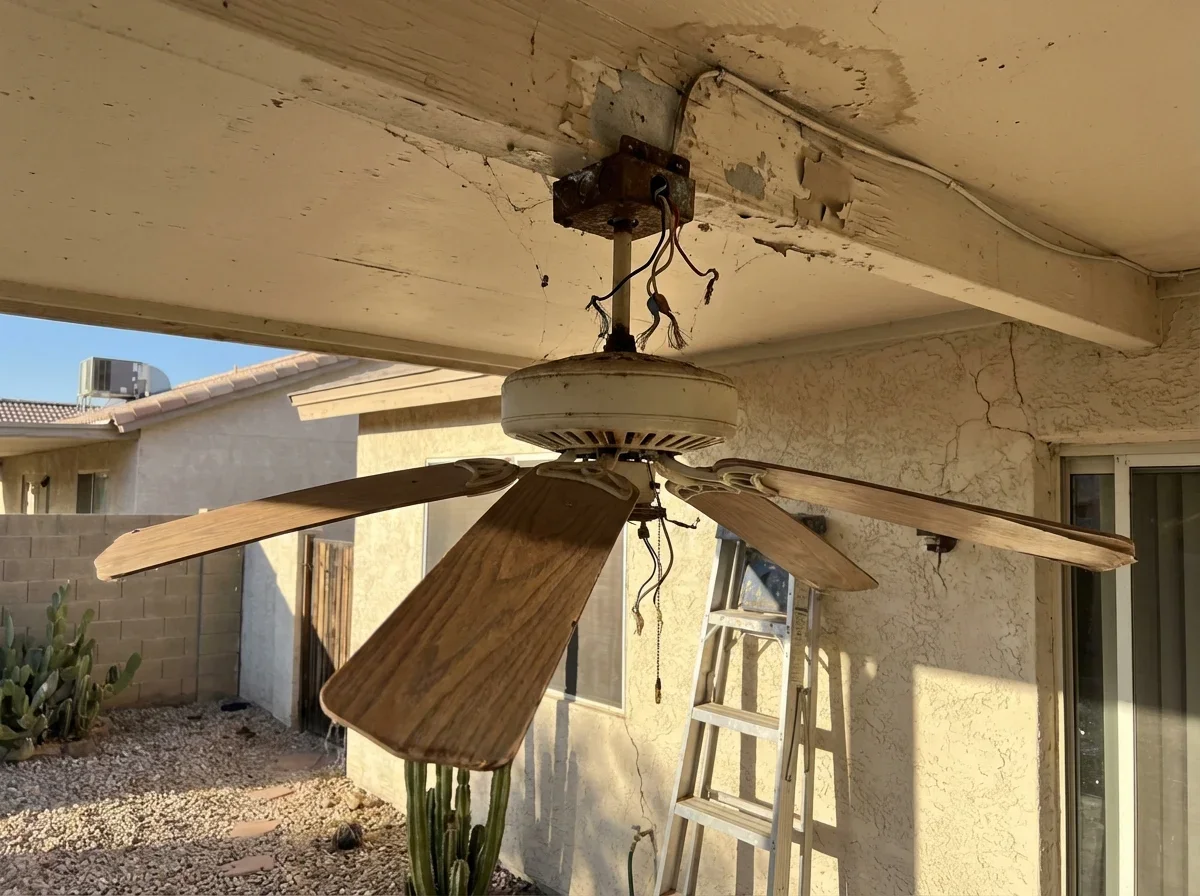
When Do You Need Ceiling Fan Installation?
You're staring at a ceiling light fixture in your Scottsdale living room, wondering if you can just swap it for a fan. Maybe your Phoenix bedroom stays hot all night despite the AC running nonstop. Or you bought a smart fan with WiFi controls and realized the wiring is more complicated than the box suggested.
Here's the issue: most ceiling electrical boxes were never designed to support a spinning 50-pound fan.
The vibration and weight create forces that a standard lighting box can't handle. The National Electrical Code requires fan-rated boxes specifically marked for weight capacity — unmarked boxes support only 35 pounds, marked boxes up to 70 pounds, and heavier fans need independent structural support.[1] In Arizona's older homes (especially pre-1990s builds in Mesa and Tempe), ceiling boxes are often pancake-style units screwed into drywall with zero structural bracing.
Sound familiar? Your existing box moves when you touch it. The inspector flagged it during your last electrical checkup. Or you installed a fan yourself and now it wobbles no matter how many times you re-balance the blades.
What happens if you ignore it? The box pulls loose from the ceiling. The fan becomes a safety hazard — blades hitting the ceiling, electrical connections exposed, or in the worst case, the entire unit crashing down. Repairs start at $300 once you factor in drywall patching and proper box reinforcement.
Arizona presents a second issue: energy savings matter here more than anywhere else. A properly installed ceiling fan reduces cooling costs by 30-40% in the Phoenix area by improving air circulation.[1] But only if it's installed correctly — counterclockwise in summer to push air down, mounted at the right height (7-9 feet from floor), and balanced so it actually runs. DIY installations often skip the balancing step, leaving you with a noisy fan you never use.
Replacing an Existing Light Fixture
This is the most common scenario. You have a light fixture and want a fan. In Phoenix, this requires a permit when you're adding load to the circuit or upgrading the junction box.[2] The electrician verifies the existing box can handle the weight (usually it can't), installs a retrofit fan-rated brace between ceiling joists, and wires the fan to existing switch controls. If you want separate fan and light switches, they'll need to add wiring or install a remote module.
Adding a New Fan Location
No existing ceiling fixture? The electrician runs new wiring from the nearest junction box or breaker panel, cuts the ceiling opening, installs blocking between joists for support, mounts a fan-rated box, and connects everything to a new wall switch. This typically requires a dedicated circuit if you're adding multiple fans or high-wattage models. Chandler and Gilbert homes built after 2010 often have attic access that makes this easier.
Upgrading to Smart/Remote Fans
WiFi-enabled fans (compatible with Alexa, Google Home, or smartphone apps) require different wiring than traditional fans. The electrician assesses whether your existing switch setup works with the smart module or if you need a bypass at the switch box. Wall control vs. handheld remotes change the installation approach — wall controls require running control wiring, while RF remotes just need power at the canopy. If you're already upgrading your home's electrical system for smart home wiring, coordinate fan installations at the same time.
$ Cost Guide
Standard Install
$150 – $350
- ✓ Replace existing light fixture
- ✓ Fan-rated box already in place
- ✓ Single fan, labor only
New Wiring Install
$350 – $700
- ✓ New fan-rated junction box
- ✓ Run new wiring from panel
- ✓ Wall switch or remote included
- ✓ Attic or crawl access needed
Multi-Fan Package
$800 – $1,800
- ✓ 3–5 fans in one visit
- ✓ Volume discount on labor
- ✓ Mix of new wiring & replacements
- ✓ Ideal for new construction
Labor-only pricing. Fan unit cost ($50–$500+) is separate. High ceilings (10ft+) may add $50–$150.
→ What to Expect

The Ceiling Fan Installation Process
A licensed Arizona electrician turns a ceiling fan project into a 2-4 hour job (depending on complexity) that passes inspection and runs smoothly for 15+ years. Here's what actually happens.
1. Inspection and Electrical Box Assessment
The electrician shuts off power at the breaker and removes the existing fixture. They inspect the electrical box type (pancake, old work, fan-rated), check how it's mounted (screwed to drywall vs. structurally supported), and verify the box weight rating. This step catches 90% of problems before they become safety issues.
If the box isn't fan-rated, they access the ceiling cavity (through the attic in Scottsdale and Gilbert homes, or by cutting access holes in multi-story builds). They install a retrofit fan brace — a metal bar that telescopes between joists and provides a mounting point for a code-compliant fan box rated for 70+ pounds.[1]
They also verify the circuit can handle the added load. Most bedroom circuits in Arizona homes run 15-amp breakers with 14-gauge wire. A ceiling fan with light kit draws 2-3 amps total — fine for a dedicated bedroom circuit, but if you're adding fans to every room on the same circuit, they may recommend a sub panel installation or additional circuit.
2. Wiring and Mounting
For smart fans or remote-controlled models, the electrician installs a receiver module in the fan canopy and adjusts wall switch wiring. Standard two-wire setups (one switch controlling fan and light together) get a bypass at the switch — power stays constant, and you control everything via remote or app. If you want separate wall controls for fan speed and light dimming, they'll run an additional control wire (usually 3-conductor Romex) from the switch box to the ceiling.
The fan mounting bracket bolts to the fan-rated box. The electrician hangs the fan motor assembly, connects hot/neutral/ground wiring (often adding wire nuts for secure connections), and routes wiring through the canopy. For sloped ceilings (common in Peoria vaulted great rooms), they swap the standard ball mount for an angled bracket and adjust the downrod length to maintain 7-9 feet from floor to blade tips.
3. Balancing and Testing
This separates professional installations from DIY disasters. The electrician installs blades, checks blade-to-ceiling clearance (minimum 10 inches for proper airflow), and runs the fan through all speed settings. If it wobbles, they use a balancing kit to measure vibration, add small weights to blade irons, and verify smooth operation.
They test light kits (if included), confirm remote or smart controls pair correctly, set the directional switch for summer operation (counterclockwise when looking up — this pushes cool air down in Arizona's heat), and verify all connections are tight. In Phoenix and Chandler, final inspections check for proper box support and wire gauge compliance.[2]
Timeline expectations: Standard replacement installation takes 2-3 hours. New fan locations with wiring runs take 4-6 hours. Vaulted ceilings or outdoor patio fans (wet-rated installations for covered areas) add 1-2 hours. If permits are required, schedule the inspection 2-5 business days after installation — the electrician coordinates this and meets the inspector on-site.
Seasonal Considerations
Summer (May-September) is peak installation season in Arizona. Electricians in Mesa and Glendale book 2-3 weeks out during June-August. Spring and fall offer better availability and sometimes lower rates. Winter installations are rare but available — just remember to flip the fan direction switch clockwise in winter months to recirculate warm air trapped near the ceiling.
✓ Choosing a Contractor
How to Choose a Ceiling Fan Installer in Arizona
Every handyman in Phoenix claims they can install a ceiling fan. Here's how to find one who won't create a code violation or a safety hazard.
Licensing and Permits
Arizona requires electricians to hold active licenses through the Registrar of Contractors (AZ ROC). Verify the license number at azroc.gov — it shows active status, bond information, and complaint history. For ceiling fan work, look for:
- Residential Electrical (R-11) or Commercial Electrical (C-11) licenses for contractors
- Journey-level or Master Electrician certification for individual electricians working under a licensed company
- Workers' comp and liability insurance (request proof before work starts)
If the job requires a permit (Phoenix requires them for fixture replacements, most East Valley cities follow similar rules), the electrician should pull it and schedule the inspection. No permit = you're liable when you sell the house.
Experience with Different Fan Types
Not all electricians work with smart home technology regularly. If you're installing WiFi-enabled fans, ask:
- Have you installed [fan brand/model]? (Compatibility issues exist between certain fans and older home wiring)
- Do you handle the app setup and network pairing, or just the electrical connections?
- How do you integrate with existing smart home wiring or automation systems?
For outdoor patio fans (common in Buckeye and Surprise covered patios), verify they've installed wet-rated fans with sealed electrical boxes — moisture intrusion causes failures in Arizona's monsoon season.
Questions to Ask Before Hiring
"What's included in your quote — just labor, or labor plus materials and permit?" Clarify whether you're buying the fan separately or if they source it. Some electricians offer package pricing.
"How do you verify the electrical box is fan-rated?" The right answer involves checking the box label, weight rating, and structural support — not just "it looks fine."
"What happens if you find the box needs upgrading after you start?" Transparent contractors explain the retrofit brace process and give you a cost estimate before proceeding.
"Do you guarantee the fan won't wobble?" Professional installers balance the fan as part of installation and return if issues develop within 30 days.
"Can I see your AZ ROC license and insurance certificate?" Legitimate contractors hand these over immediately.
Red Flags to Avoid
- No mention of permits when you're replacing a light fixture with a fan
- Quotes significantly below $150 (suggests they're skipping the box upgrade or using unlicensed labor)
- Unwilling to provide references from recent ceiling fan installations in your area
- Pressure to skip the fan-rated box upgrade ("it'll be fine, no one checks")
- No written contract outlining scope, timeline, and warranty
The right electrician in Gilbert, Chandler, or anywhere in the Phoenix metro explains the code requirements, shows you the fan-rated box after installation, tests everything before leaving, and provides documentation for your home records. When you're comparing local pros, prioritize contractors who've handled installations similar to yours — especially if you're dealing with vaulted ceilings, smart controls, or older home wiring that might need updates alongside the fan installation.
Top Contractors for Ceiling Fan Installation
View all →



Frequently Asked Questions
- Pacific Northwest National Laboratory (PNNL). "Ceiling Fans (ENERGY STAR)." https://basc.pnnl.gov/resource-guides/ceiling-fans-energy-star. Accessed April 06, 2026.
- City of Phoenix. "nonpermitted construction." https://www.phoenix.gov/content/dam/phoenix/pddsite/documents/trt/external/dsd_trt_pdf_00576r.pdf. Accessed April 06, 2026.
Estimate Your Ceiling Fan Installation Cost
Get an instant price range based on your home and project details.