Power Your Business Without the Downtime Risk
Arizona commercial properties can't afford electrical failures that halt operations. From retail spaces to industrial facilities, your electrical systems need to work flawlessly—every hour of every day.
- Code-compliant installations that pass inspection first time
- 24/7 emergency response when systems fail
- Preventive maintenance that stops problems before they start
⚠ Common Issues
Signs Your Commercial Property Needs Electrical Work
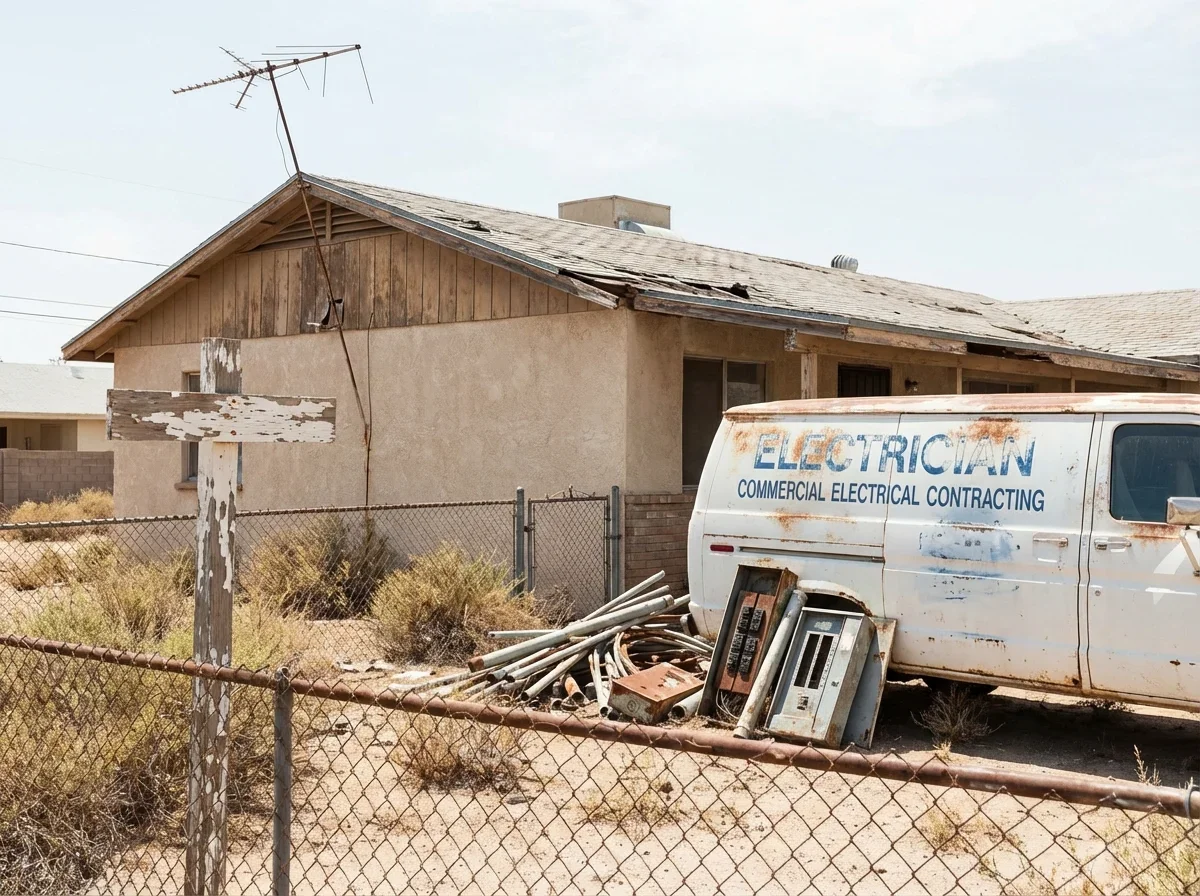
Your HVAC trips breakers during summer peaks. Half your office runs extension cords because there aren't enough outlets. The panel buzzes when you walk past it. You're planning a tenant improvement and the existing electrical can't support modern demands.
These aren't minor inconveniences. They're warnings.
Ignoring commercial electrical issues compounds fast. That breaker that keeps tripping? It's overheating connections and creating fire hazards. The flickering lights in your Scottsdale retail space? They're costing you sales — customers don't linger in poorly-lit stores. The outdated panel in your Mesa warehouse? It can't handle the equipment upgrades you need to stay competitive.
Arizona's extreme heat makes electrical problems worse. Temperatures routinely exceed 115°F in Phoenix and Glendale, putting additional stress on already-taxed systems. Connections expand and contract. Insulation degrades faster. Equipment that would last 25 years in milder climates needs replacement in 15.
Commercial electrical failures don't happen during business hours when it's convenient. They happen at 9pm when you're hosting an event, or during monsoon season when your backup systems should be working. A restaurant in Tempe loses $15,000 in spoiled inventory when their walk-in cooler circuit fails overnight. An office building in Chandler evacuates 200 employees because emergency lighting doesn't activate during a power outage.
Sound familiar? Your breakers trip weekly. Your electrician "fixed" it twice. The problem keeps coming back. Now you're facing a citation from the city inspector because your building isn't up to code.
What happens when you wait: Minor issues become major projects. A $2,500 circuit upgrade becomes a $25,000 panel replacement when the problem causes a fire. Insurance premiums increase after claims. You fail inspections. Tenants break leases. Equipment warranties void themselves when they're not on properly-sized circuits.
The average cost of deferred electrical maintenance? $12,000 per incident according to facility management data — and that doesn't include lost business, reputation damage, or potential liability when someone gets hurt.
$ Cost Guide
What Does Commercial Electrical Work Cost in Arizona?
Commercial electrical pricing operates differently than residential. You're paying for licensed contractors who carry higher insurance minimums, pull permits correctly, and understand three-phase systems and commercial building codes.
Labor rates in Arizona's major markets run $85-$150 per hour depending on the contractor's licensing classification and expertise. A basic C-11 licensed electrician costs less than a master electrician who specializes in design-build projects.[1]
Labor Rates and Project Pricing Models
Most commercial work follows one of two pricing structures:
Time & Materials — Common for service calls, repairs, and small upgrades. You pay hourly labor plus materials markup (typically 15-35%). Expect $125-$200 for a basic service call in Phoenix or Scottsdale, then hourly rates for the actual work. Emergency after-hours calls run 1.5x to 2x standard rates.
Project-Based Bidding — Standard for new construction, tenant improvements, and major renovations. Contractors bid a fixed price based on plans and specifications. This approach gives you budget certainty but requires detailed scope documentation upfront.
| Project Type | Typical Cost Range | Pricing Model |
|---|---|---|
| Service call + 1-2 hours repair | $300-$600 | Time & materials |
| Emergency after-hours service | $450-$1,200 | Time & materials (premium) |
| Tenant improvement (2,000 sq ft office) | $8,000-$18,000 | Project bid |
| New 200-amp 3-phase service | $6,500-$12,000 | Project bid |
| Parking lot lighting (10 fixtures) | $4,500-$8,500 | Project bid |
| Annual maintenance contract | $1,200-$4,000/year | Contract |
Factors That Affect Commercial Electrical Costs
Building age and existing infrastructure — Retrofitting electrical in a 1970s block building costs more than new construction. You're working around tenants, dealing with outdated materials, and often discovering problems that weren't visible during the initial assessment.
Code compliance requirements — Phoenix adopted the 2017 NEC with specific amendments that restrict certain cable types in commercial buildings.[2] Bringing older buildings up to current code during renovations adds 20-40% to project costs compared to simple replacement work.
Permit and inspection fees — Budget $400-$1,500 for permits depending on project scope and municipality. Gilbert and Surprise have different requirements than Phoenix. Inspection delays add costs when your contractor has to make multiple trips.
Access and scheduling — Work that happens after business hours costs more, but it's often worth it. Closing your Chandler retail store for three days of electrical work costs more in lost revenue than paying premium rates for night and weekend installation.
A preventive maintenance program costs $1,200-$4,000 annually depending on facility size, but it prevents the $8,000-$15,000 emergency repairs that happen when systems fail catastrophically. Quarterly inspections, thermal imaging of connections, and load testing catch problems early.
→ What to Expect
The Commercial Electrical Project Process
Commercial electrical projects follow a structured process that differs significantly from residential work. Understanding each phase helps you budget time and money appropriately.
1. Initial Assessment and Design Phase
A qualified contractor walks your facility and reviews your needs. For new construction or major renovations, this includes load calculations, equipment specifications, and preliminary design. Expect 1-3 weeks for this phase on complex projects.
Design-build projects — The electrical contractor handles design and installation. Faster and often more cost-effective for straightforward projects, but you have less independent oversight.
Design-bid-build projects — An engineer designs the electrical system, then contractors bid on the installation. Common for larger projects where the owner wants competitive pricing and independent design review.
2. Permitting and Code Compliance
Your contractor pulls permits through the local jurisdiction. Timeline varies dramatically by city. Phoenix typically processes commercial electrical permits in 5-10 business days. Smaller municipalities like Peoria or Surprise may take 2-3 weeks. Plan accordingly — starting work before permits are issued risks stop-work orders and fines.
Arizona requires C-11 or higher licensing for commercial electrical work.[1] Your contractor must carry minimum bonding and maintain proper insurance. The permitting process verifies these requirements.
3. Installation and Inspection
Installation timelines depend on scope:
- Service calls and repairs: Same day to 3 days
- Tenant improvements (small office): 1-2 weeks
- New construction electrical (5,000 sq ft commercial): 3-6 weeks
- Major retrofits with occupancy: 2-8 weeks (phased to minimize disruption)
Inspection scheduling matters. Your contractor requests inspections at specific milestones. Rough-in inspection happens before walls close. Final inspection happens before you get permission to energize the system. Failed inspections add 1-2 weeks to timelines while corrections are made and re-inspection is scheduled.
4. Testing and Commissioning
Professional contractors test systems before calling for final inspection. This includes verifying proper grounding, testing GFCI and AFCI protection, confirming correct voltage on all circuits, and validating that emergency systems function correctly.
Seasonal considerations: Arizona's monsoon season (July-September) can delay outdoor work. Plan major projects for October through May when weather is predictable. Summer heat affects both labor productivity and material handling — wire insulation becomes brittle in 120°F heat.
You receive documentation at project completion: as-built drawings, equipment specifications, warranty information, and maintenance recommendations. Keep these. You'll need them for insurance, future work, and when you sell the property.
✓ Choosing a Contractor
How to Choose a Commercial Electrical Contractor in Arizona
The cheapest bid costs you more when the contractor disappears mid-project or fails inspection. Commercial electrical work requires specific expertise and proper licensing — verify both before signing anything.
Licensing and Insurance Requirements
Arizona mandates C-11 Electrical Contractor licensing for commercial work under 600 volts.[1] Verify the contractor's license is current through the Arizona Registrar of Contractors (ROC) website. Check for complaints and disciplinary actions.
Required insurance minimums:
- General liability: $1,000,000 minimum
- Workers compensation: Required for any contractor with employees
- Bonding: Varies by license classification but typically $7,500-$15,000
Ask for certificates of insurance and verify they're current. Your business liability increases if you hire uninsured contractors and someone gets hurt.
Experience with Commercial Building Types
Retail electrical differs from industrial differs from office buildings. A contractor who specializes in data cabling for tech companies may not be the right fit for your restaurant's three-phase kitchen equipment.
Questions to ask:
- How many projects have you completed in [your building type]?
- Can you provide references from similar facilities in Gilbert/Mesa/Chandler?
- What's your experience with [specific equipment or requirement]?
- Do you have design-build capabilities or work with electrical engineers?
Request photos of completed projects similar to yours. Talk to those references — ask about timeline accuracy, change order handling, and problem-solving when unexpected issues arose.
Project Management and Scheduling Capabilities
Red flags that indicate poor project management:
- Vague timeline estimates ("probably 2-3 weeks")
- No written scope of work detailing exactly what's included
- Resistance to putting payment terms in writing
- Can't provide proof of permits for recent projects
- No clear point of contact for questions during the project
Strong contractors provide detailed proposals that specify materials by manufacturer and model number, include permit costs, outline inspection milestones, and establish clear payment schedules tied to completion phases.
Ask how they handle occupied buildings. Will they work after hours? How do they minimize disruption? What's their protocol when they discover unexpected conditions that affect scope or cost?
Verify their approach to code compliance. Phoenix's amendments to the NEC affect material choices and installation methods.[2] Contractors who don't stay current on code updates create liability for you when their work fails inspection.
For critical systems — fire alarm wiring, emergency lighting, life safety equipment — ask about their experience with those specific systems. These aren't areas for on-the-job learning.
Compare at least three qualified contractors. The lowest bid isn't always the best value, but the highest bid doesn't guarantee quality either. Look for contractors who ask detailed questions about your operations, identify potential issues during walkthrough, and demonstrate they understand your business needs beyond just the electrical scope.
A quality commercial electrical contractor becomes a long-term partner. They know your building, respond quickly when issues arise, and help you plan for future expansions. Choose accordingly.
Top Contractors for Commercial Electrical Contracting
View all →



Frequently Asked Questions
- Arizona Administrative Code (via Cornell Law School). "Ariz. Admin. Code § R4-9-102 - Commercial Contractor License Classifications and Scopes of Work." https://www.law.cornell.edu/regulations/arizona/Ariz-Admin-Code-SS-R4-9-102. Accessed April 06, 2026.
- City of Phoenix. "2017 National Electric Code (NEC) 2018 Phoenix Amendments." https://www.phoenix.gov/content/dam/phoenix/pddsite/documents/codes-ordinances/2017%20national%20electric%20code%20(nec)%202018%20phoenix%20amendments.pdf. Accessed April 06, 2026.
Estimate Your Commercial Electrical Contracting Cost
Get an instant price range based on your home and project details.