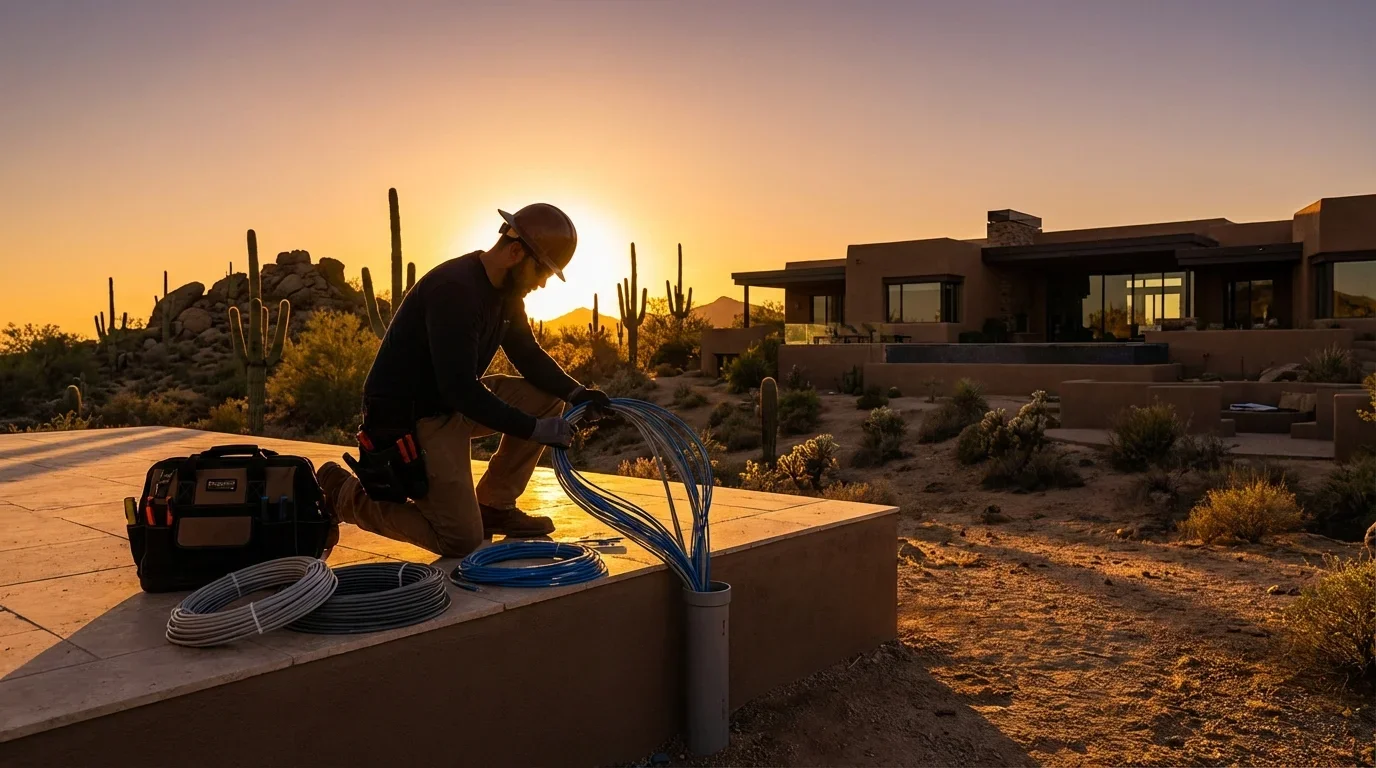
Fast, Reliable Networks Start with Professional Cabling
Slow internet, dropped connections, and tangled wiring kill productivity and frustrate your team. Arizona businesses and homeowners need structured cabling that works flawlessly from day one.
- Cat6 installation for blazing-fast data speeds
- Clean, code-compliant low voltage systems
- Network infrastructure built to scale with you
⚠ Common Issues
When Do You Need Professional Data Cabling?
Your current network setup is working. Mostly. Until someone needs to add a camera, relocate a desk, or figure out why the Wi-Fi keeps dropping in the back offices.
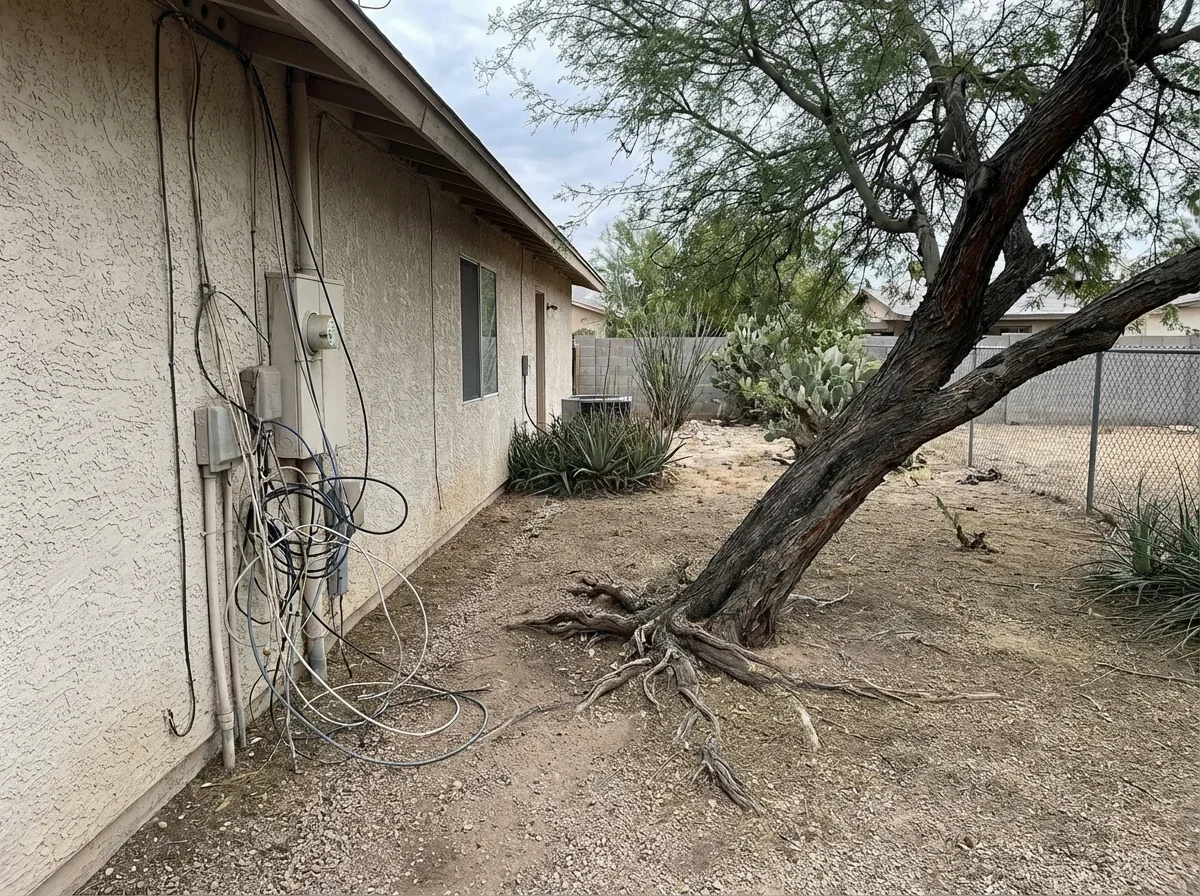
Here's what happens when businesses skip professional structured cabling: patch cables daisy-chained through drop ceilings, unlabeled runs that nobody can trace, non-plenum cable in HVAC spaces (a code violation), and "temporary" solutions that became permanent three years ago. When you need to troubleshoot, upgrade, or expand, you're starting from zero.
Commercial property managers in Mesa and Chandler see this constantly — a tenant wants to add VoIP phones or upgrade their surveillance system, and the existing cabling can't handle it. Either the category rating is too low (Cat5e maxing out at gigabit speeds), the runs exceed distance limitations, or nobody documented what goes where. The "cheap" installation becomes expensive the moment you need to change anything.
The ROI is real. Properly installed Cat6 or Cat6a cabling supports 10-gigabit speeds, Power over Ethernet (PoE) for cameras and access points, and eliminates the "which cable goes where" guessing game. Businesses in Scottsdale upgrading to structured cabling report faster troubleshooting, easier tenant improvements, and network infrastructure that actually keeps pace with technology upgrades.
This matters for:
- Office build-outs and expansions — every workstation needs reliable data, VoIP phone connectivity, and potentially dual drops for computers and phones
- Surveillance and security systems — IP cameras require PoE-capable cabling, and running coax in 2025 limits your camera options and resolution
- Wi-Fi infrastructure — mesh networks and enterprise access points need hardwired backhaul connections, not wireless repeaters
- Access control and building automation — card readers, intercoms, and smart building systems all rely on low voltage cabling that meets specific power and data requirements
Arizona building codes require low voltage installations to follow NEC Article 725 and include proper fire stopping where cables penetrate walls or floors.[2] That's not optional, and it's not something the "IT guy who also does cabling" typically handles. Licensed low voltage contractors understand both the electrical code requirements and the network performance standards your business actually needs.
$ Cost Guide
What Does Data & Low Voltage Cabling Cost in Arizona?
Commercial data cabling in Phoenix, Tempe, and surrounding areas typically runs $150-$300 per drop, depending on cable category, building complexity, and how accessible your ceiling spaces are. That's for a complete, certified installation — not just pulling cable and hoping it works.
Here's how pricing breaks down:
| Cable Category | Per Drop Cost | Bandwidth | Best For | |---|---|---| | Cat5e | $150-$200 | 1 Gbps | Basic office networks, budget projects | | Cat6 | $175-$250 | 10 Gbps (55m) | Standard commercial installations | | Cat6a | $225-$300 | 10 Gbps (100m) | Future-proofing, PoE++, high-performance needs |
Factors that affect installation pricing:
Building accessibility makes the biggest difference. Drop ceilings with easy access? Lower labor costs. Concrete buildings in downtown Phoenix requiring conduit runs? Higher. Attic spaces in Gilbert that hit 150°F in summer? Contractors charge more for the conditions, and you'll need plenum-rated cable if those spaces connect to HVAC returns.[2]
Cable category selection impacts both material costs and future capabilities. Cat6 is the current commercial standard in Arizona — it's specified by state technology standards for government buildings and offers a solid balance of cost and performance.[1] Cat6a costs 15-20% more but supports higher PoE wattages (critical for PTZ cameras and Wi-Fi 6E access points) and handles 10-gigabit speeds across the full 100-meter distance.
Per-Drop vs. Whole-Building Pricing
Small projects (5-10 drops) typically cost more per drop — you're paying for the contractor to mobilize, set up testing equipment, and handle permitting for minimal runs. Larger installations (50+ drops) bring the per-drop cost down as labor efficiency improves.
Typical commercial project costs in Arizona:
- Small office (10-15 drops): $2,000-$3,500
- Medium office (30-50 drops): $6,000-$12,000
- Warehouse surveillance (20 camera runs): $4,500-$7,500
- Multi-tenant building backbone: $15,000-$40,000+
Certification and testing add $50-$100 per drop but guarantee every connection meets TIA-568 performance standards.[1] This isn't optional for commercial installations — it's your proof that the cabling actually delivers the bandwidth and reliability you paid for. Contractors who skip testing are guessing, and you'll find out about bad runs when equipment doesn't work or performance degrades.
Fire stopping (sealing cable penetrations through fire-rated walls and floors) is required by Arizona code[2] and typically costs $25-$75 per penetration depending on size and location. This isn't padding the estimate — it's literal code compliance that protects your building and insurance coverage.
→ What to Expect
The Commercial Data Cabling Process
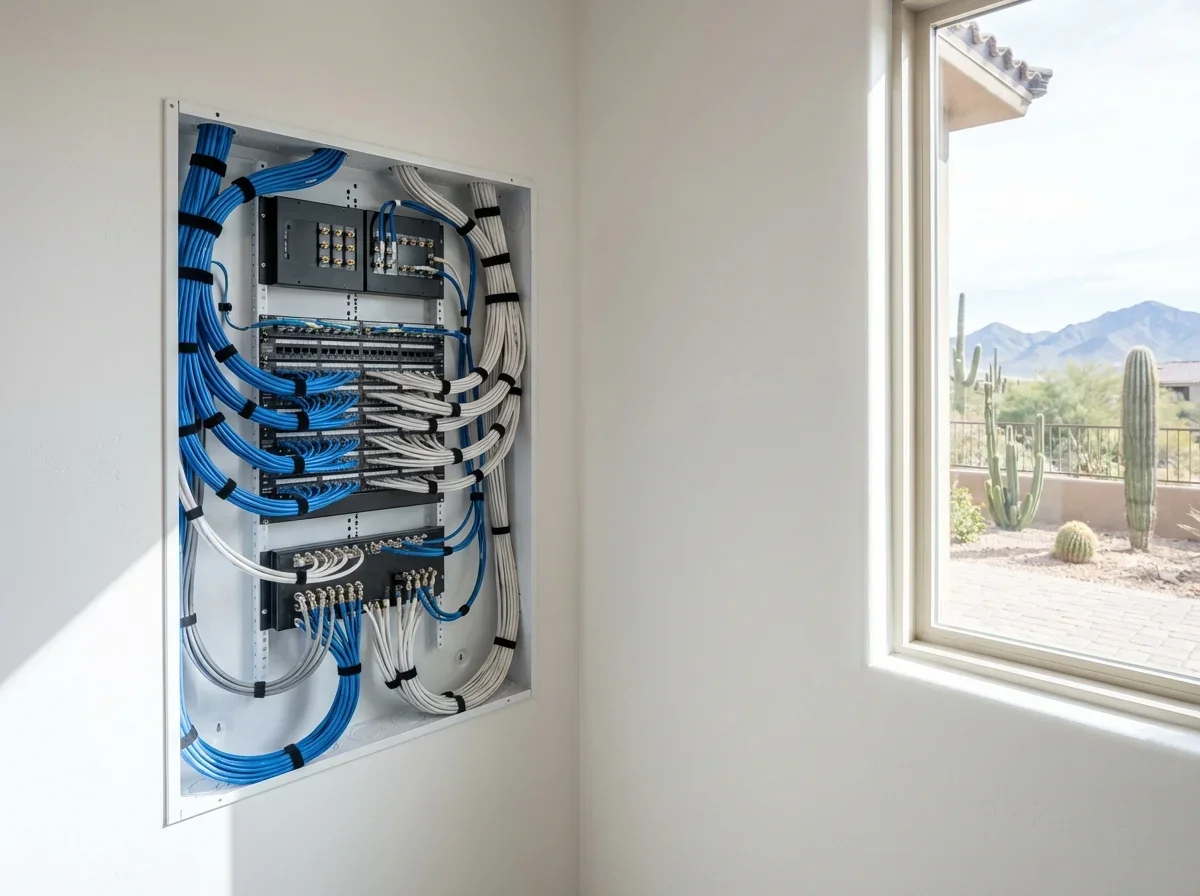
Professional structured cabling follows a defined process that separates certified installations from "guy with a spool of cable" work. Here's what actually happens:
1. Site Survey and Network Design
The contractor walks your space, identifies cable paths, measures distances, and maps out where network closets, patch panels, and end points will go. They're checking ceiling access, noting fire-rated barriers that need stopping, and confirming that cable runs stay under the 100-meter (328-foot) maximum distance for copper Ethernet.
This phase catches problems before installation starts. That beautiful open-concept office in Surprise? The lack of interior walls means longer cable runs and potentially additional network switches. The historic building in downtown Phoenix? Conduit runs through concrete walls instead of simple ceiling drops.
A proper design includes cable labeling schemes (so you know what's what), patch panel layouts, and compliance with TIA-568 structured cabling standards.[1]
2. Cable Installation and Termination
Contractors pull cables following the approved pathways, maintaining proper bend radius (4x cable diameter minimum), avoiding parallel runs with high-voltage electrical (minimum 12-inch separation unless properly shielded), and using plenum-rated cable where required by code.[2]
In Arizona's climate, attic and plenum installations require specific attention. Summer attic temperatures in Peoria and Glendale regularly exceed 140°F — hot enough to degrade non-rated cable jackets and cause performance issues. Plenum-rated cable costs 20-30% more but it's required by code anywhere the cable enters airflow spaces, and it's rated for those temperature extremes.
Terminations happen at both ends — jacks at workstation locations, patch panel connections in the network closet. Proper termination maintains the cable's twist rate (critical for performance), follows T568A or T568B wiring standards consistently, and keeps crosstalk and signal loss within spec.
3. Testing and Certification
Every single drop gets tested with a cable certifier — not just a basic toner or continuity checker. The certifier validates that the cable meets the category rating for bandwidth, identifies any faults (opens, shorts, split pairs), measures near-end and far-end crosstalk, and confirms the installation passes TIA-568 standards.[1]
You receive certification reports for every drop. This documentation proves the cabling performs as specified and provides baseline measurements for future troubleshooting. When that camera stops working two years later, you can verify whether it's a cable issue or an equipment problem.
Timeline expectations: Small offices (10-20 drops) typically take 2-3 days. Medium installations (40-60 drops) run 1-2 weeks. Large commercial projects require scheduling around business operations — most contractors in Chandler and Gilbert will work nights or weekends to minimize disruption.
✓ Choosing a Contractor
How to Choose a Data Cabling Contractor in Arizona
Not all electricians handle low voltage work, and not all "cable guys" understand Arizona electrical codes or structured cabling standards. Here's how to separate qualified contractors from those who'll leave you with an expensive mess:
Licensing and Insurance Requirements
Arizona requires contractors performing low voltage work to hold appropriate licensing (L-6 low voltage license or higher electrical license that includes low voltage). Verify licensing through the Arizona Registrar of Contractors — it takes two minutes and eliminates uninsured operators who disappear when problems arise.
Liability insurance matters for commercial work. Cable installations involve cutting into walls, accessing plenum spaces, and potentially disrupting existing systems. Contractors working in commercial buildings should carry minimum $1M liability coverage plus workers' comp.
Industry Certifications to Look For
BICSI (Building Industry Consulting Service International) certifications indicate the contractor understands structured cabling design and installation standards beyond just "making cables work." Look for BICSI Technician or Installer certifications on their team.
Manufacturer certifications (CommScope, Panduit, Belden) mean the contractor has been trained on specific cabling systems and can offer extended warranties on materials — typically 15-25 years versus the standard 1-year contractor warranty.
Questions to Ask Before Hiring
"Do you provide certification testing for every drop?" The answer should be yes, with written reports. If they say "we test with a cable toner" or "we don't usually do that unless you request it," keep looking.
"What cable category do you recommend and why?" This reveals whether they're thinking about your actual needs or just installing whatever's cheapest. For commercial work in 2025, Cat6 is the baseline — anything less is shorting your investment. Cat6a makes sense if you're planning for PoE++ devices, 10-gig networking, or want maximum future-proofing.
"How do you handle fire stopping and code compliance?" They should reference NEC Article 725 and Arizona building codes,[2] explain how they seal penetrations through fire-rated assemblies, and confirm they pull permits for commercial work.
"Can you provide references from similar commercial projects?" Ask specifically about office buildings, warehouses, or retail spaces similar to yours. A contractor who mostly does residential smart home wiring might struggle with commercial structured cabling requirements.
Red flags to avoid:
- No written scope of work detailing cable categories, number of drops, testing procedures, and code compliance
- "We'll just use what we have on the truck" approach to cable selection
- Refusal to provide certification testing or claiming it's "not necessary"
- Significantly lower pricing than other quotes (typically means skipped steps, uncertified cable, or no testing)
- No verifiable licensing or current insurance certificates
The best data cabling contractors in Phoenix, Scottsdale, and Mesa will walk your space, ask about your current and planned technology needs, and design a system that works now and scales later. They'll explain the difference between cable categories, provide detailed written quotes, and deliver certification reports proving every drop meets spec. That's the standard to expect — anything less leaves you with infrastructure that looks installed but doesn't perform when it matters.
Top Contractors for Data & Low Voltage Cabling
View all →



Frequently Asked Questions
- Arizona Strategic Enterprise Technology (ASET). "STANDARD - STRATEGIC ENTERPRISE TECHNOLOGY." https://aset.az.gov/sites/default/files/P710-S710%20Network%20Infrastructure%20standard.pdf. Accessed April 06, 2026.
- Arizona Strategic Enterprise Technology (ASET). "STANDARD - STRATEGIC ENTERPRISE TECHNOLOGY." https://aset.az.gov/sites/default/files/A800-T4-S10%20Structured%20Network%20Cabling.pdf. Accessed April 06, 2026.
Estimate Your Data & Low Voltage Cabling Cost
Get an instant price range based on your home and project details.