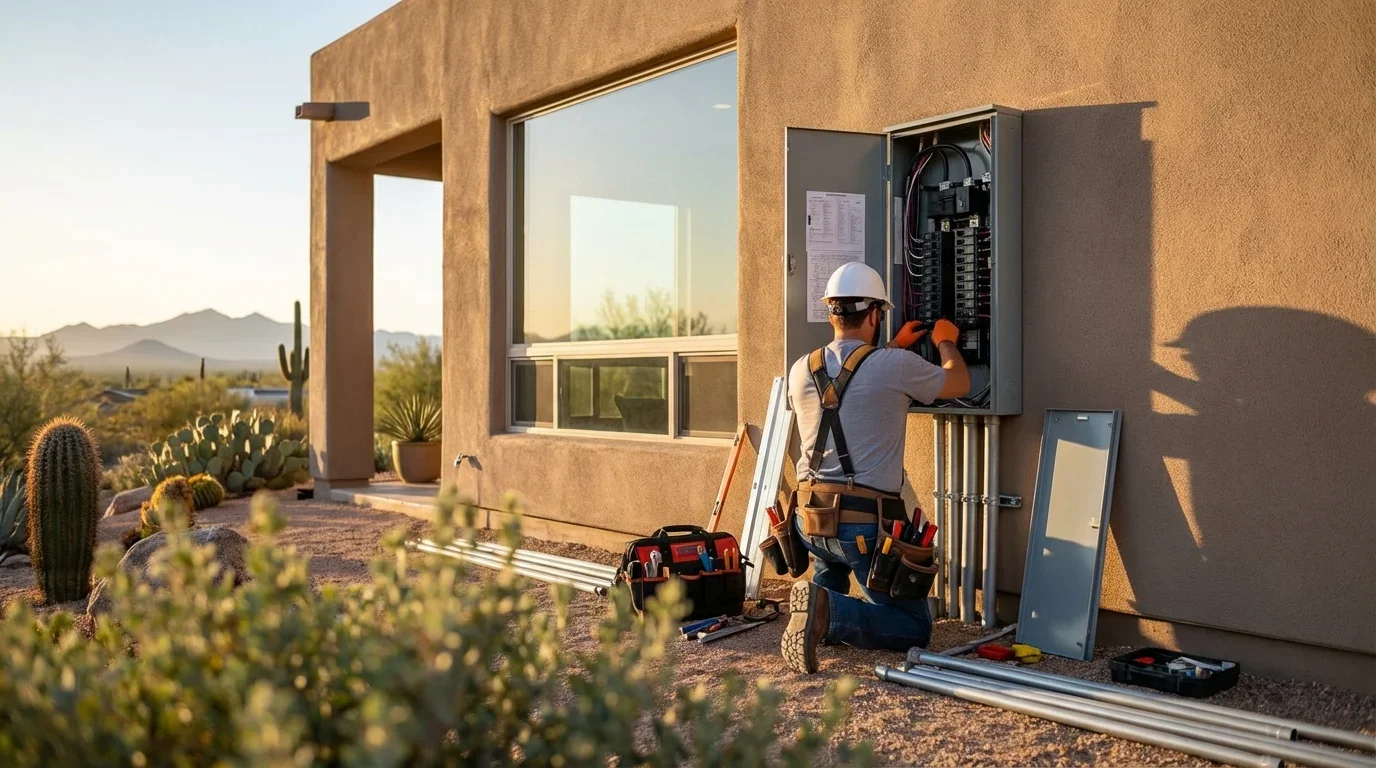
Power Your Home's Biggest Demands Safely
Your hot tub, EV charger, or workshop equipment shouldn't share circuits with your coffee maker. Dedicated 240V circuits prevent tripped breakers, equipment damage, and fire hazards.
- Eliminate constant breaker trips and voltage drops
- Protect expensive appliances from electrical damage
- Meet code requirements for high-amperage equipment
⚠ Common Issues
When Your Circuit Is Already Maxed Out
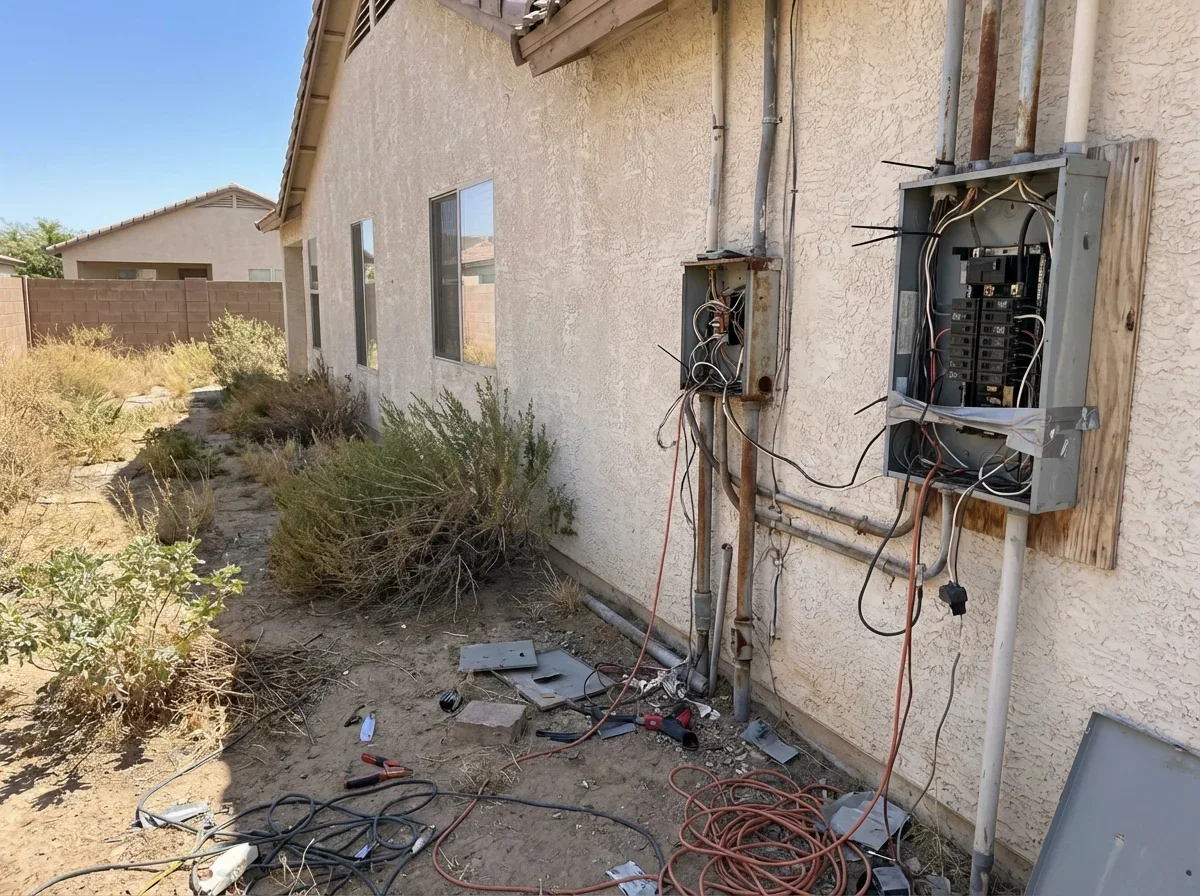
You plugged in your new appliance and the breaker tripped. Again. You reset it, tried a different outlet, maybe even swapped the breaker itself. But the problem keeps coming back because you're asking a 15-amp circuit to do a 40-amp job.
Most Arizona homes built before 2000 have shared circuits serving multiple rooms. Your garage outlet shares capacity with outdoor lights. Your kitchen counter outlets feed the same circuit as the dining room. When you add a welder, an EV charger, or a window AC unit to an already-loaded circuit, something has to give.
Sound familiar? You bought a Level 2 EV charger. The electrician said you need a dedicated 240V circuit. You thought it would plug into the dryer outlet. Now you're researching what "dedicated" actually means and why it costs $1,200.
When Dedicated Circuits Are Required by Code
The National Electrical Code mandates dedicated circuits for specific appliances—and Arizona municipalities enforce it strictly during inspections.[1] Code requires dedicated circuits for central air conditioning, electric ranges, built-in microwaves, garbage disposals, and any fixed appliance over 1,000 watts. That includes your new heat pump in Chandler, the hot tub you just installed in Gilbert, and the EV charger in your Scottsdale garage.
Dedicated means nothing else shares that circuit—no lights, no outlets, just the appliance. It prevents overload, reduces fire risk, and ensures the appliance gets consistent voltage without interference from other devices cycling on and off.
Shared Circuit Problems and Safety Risks
Overloaded circuits don't just trip breakers. They overheat wiring behind your walls. Connections loosen from repeated thermal expansion. Insulation degrades. You end up with melted wire nuts, scorched outlets, and arc faults—the leading electrical cause of home fires in Arizona.
A $15 hair dryer doesn't need its own circuit. A 9,000-watt EV charger absolutely does. The difference between convenience and code compliance is understanding load demand and doing the math before you plug something in.
$ Cost Guide
What Does Dedicated Circuit Installation Cost in Arizona?
Expect to pay $500 to $2,500 for a dedicated 240V circuit installation in the Phoenix metro area, depending on amperage, distance from the panel, and whether your existing panel has capacity. A simple 30-amp dryer circuit with a 15-foot run costs around $600. A 60-amp EV charger circuit with a 75-foot conduit run to a detached garage in Peoria can hit $2,200.
Most residential dedicated circuits fall into predictable ranges based on application:
| Application | Amperage | Typical Cost | Notes |
|---|---|---|---|
| Garbage disposal | 15-20A | $400–$650 | Short run, 120V circuit |
| Window AC unit | 20A | $450–$700 | 120V or 240V depending on unit |
| Electric dryer | 30A | $550–$900 | 240V, usually close to panel |
| Hot tub / spa | 40-50A | $900–$1,800 | Outdoor GFCI, conduit required |
| EV charger (Level 2) | 40-60A | $1,000–$2,500 | Distance and conduit add cost |
| Central AC / heat pump | 30-60A | $800–$1,600 | Outdoor disconnect required |
| Workshop welder | 30-50A | $700–$1,400 | May require 240V twist-lock receptacle |
Distance and Panel Upgrade Factors
The farther your appliance sits from the electrical panel, the more you'll pay. Conduit and wire cost $3–$8 per linear foot installed, depending on gauge and routing complexity. A hot tub installation in Surprise that requires 60 feet of outdoor conduit through stucco and pavers will cost significantly more than a kitchen range circuit with a 10-foot attic run.
If your panel is full—no open breaker slots—you'll need a subpanel or tandem breakers. Adding a subpanel costs $800–$1,500. Upgrading from a 100-amp to 200-amp main service runs $2,500–$4,500, but it's often necessary for homes in Mesa or Tempe adding multiple high-draw appliances like EV chargers and pool equipment simultaneously.
Permit and Inspection Costs
Arizona municipalities require electrical permits for dedicated circuit installations. Permit fees range from $50 to $150 depending on the city.[2] Your electrician pulls the permit, schedules the inspection, and ensures the work meets 2023 NEC amendments adopted by Phoenix, Scottsdale, and surrounding cities. Budget an extra $100–$200 for the permit and inspection process—it's not optional, and unpermitted work will surface during home sales or insurance claims.
→ What to Expect
The Dedicated Circuit Installation Process
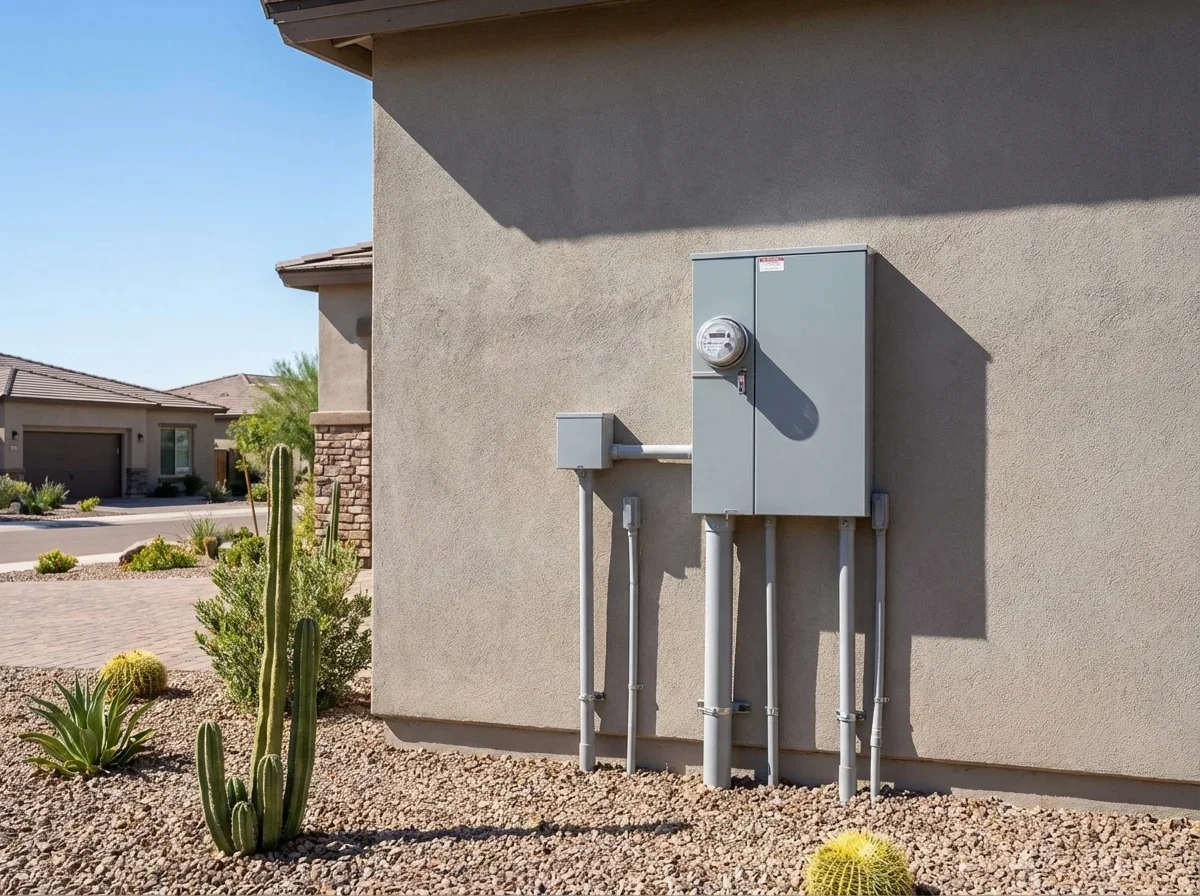
Professional dedicated circuit installation takes 3–6 hours for most residential applications. Here's what happens from start to finish:
1. Electrical Load Assessment and Panel Review
Your electrician calculates the total load on your existing panel and determines available capacity. Arizona homes typically have 100-amp, 150-amp, or 200-amp main service. A 60-amp EV charger on a 100-amp panel that's already serving a 40-amp AC unit and a 30-amp dryer won't work—you'll need a service upgrade before adding the circuit.
The electrician identifies an open breaker slot or determines whether a subpanel is required. They also check wire gauge and conduit routing options based on the appliance location. For EV charger installations in detached garages, this often means running conduit underground or along exterior walls.
2. Circuit Routing and Conduit Installation
The electrician routes wire from the panel to the appliance location. Indoor runs typically use Romex cable through attic spaces or wall cavities. Outdoor runs—common for hot tubs, AC units, and detached workshops in Buckeye and Glendale—require rigid metal conduit or PVC conduit buried 18–24 inches deep or surface-mounted on masonry.
Arizona's extreme heat requires conduit selection that handles thermal expansion. Metal conduit heats up in direct sun, causing wire insulation to degrade faster. Many electricians use schedule 40 PVC for underground runs and seal entry points to prevent scorpion and insect intrusion—a real concern in desert climates.
3. Breaker Installation and Final Connection
The electrician installs the appropriately sized breaker in the panel—30A, 40A, 50A, or 60A depending on the appliance. They connect the hot wires, neutral, and ground according to NEC standards, ensuring proper torque on terminal screws and labeling the breaker clearly.
At the appliance end, they install the correct receptacle or hardwire the connection. EV chargers and hot tubs typically hardwire directly. Dryers and some workshop equipment use NEMA receptacles (10-30R, 14-50R, 6-50R). The electrician installs a disconnect switch if required by code—mandatory for AC units and heat pumps.
4. Inspection and Testing
The electrician calls for a city inspection, typically scheduled within 2–5 business days. The inspector verifies proper wire gauge, correct breaker size, compliant conduit installation, and appropriate grounding. They test voltage and continuity, check for correct polarity, and confirm GFCI protection on outdoor circuits.
Once the work passes inspection, you receive a signed permit card and can use the appliance safely. Inspection approval also protects your homeowner's insurance coverage—unpermitted electrical work can void claims after a fire or electrical failure.
✓ Choosing a Contractor
How to Choose a Dedicated Circuit Electrician
Not every electrician handles dedicated circuit installations the same way. Some cut corners on wire gauge. Others skip the permit process. A few don't calculate load properly and leave you with an undersized circuit that trips under normal use.
Licensing Requirements in Arizona
Arizona requires a contractor's license for all electrical work—period. Verify your electrician holds an active C-11 (Electrical Contracting) license through the Arizona Registrar of Contractors. Handymen and unlicensed "electricians" can't legally pull permits or perform code-compliant installations. You'll pay twice when the city red-tags unpermitted work during a home sale or when the insurance adjuster denies your claim after a fire.
Ask to see the license number and verify it online before any work starts. Licensed electricians carry liability insurance and know Arizona's adopted amendments to the NEC—critical for outdoor installations and high-amperage circuits.
Questions to Ask Before Hiring
Ask these specific questions when comparing electricians for dedicated circuit work:
- Will you pull the permit and schedule the inspection, or do I handle that?
- Does my panel have capacity for this circuit, or will I need an upgrade?
- What wire gauge will you use, and does it meet code for the distance involved?
- How will you route the conduit, and what type will you use for outdoor runs?
- Do you warranty the installation, and for how long?
- Can you provide a detailed written estimate before starting work?
Vague answers or refusal to pull permits are immediate red flags. So is quoting a price without visiting the site to measure distances and inspect the panel. For specialized applications like hot tub wiring or commercial electrical projects requiring load calculations, ask about experience with similar installations.
Red Flags to Avoid
Walk away from electricians who suggest "testing it first" without a permit, offer to reuse old wire to save money, or claim you don't need a dedicated circuit for high-draw appliances. These shortcuts create safety hazards and code violations that surface during inspections or insurance claims.
Avoid electricians who can't explain why they're recommending a specific amperage or wire gauge. If they're guessing instead of calculating, they're not qualified for the job. A professional electrician in Phoenix, Tempe, or Gilbert should conduct a load assessment, reference the NEC, and explain their recommendations clearly before ever touching your panel.
Comparing licensed electricians in your area means you're hiring someone who understands Arizona code requirements, pulls permits correctly, and installs circuits that pass inspection the first time.
Top Contractors for Dedicated Circuit Installation
View all →



Frequently Asked Questions
- City of Phoenix. "Amendment to 2023 National Electrical Code (NEC) - City of Phoenix." https://www.phoenix.gov/content/dam/phoenix/pddsite/documents/codes-ordinances/amendmentcodes/2023-nec.pdf. Accessed April 06, 2026.
- City of Winslow, Arizona. "Chapter 15.12 ELECTRICAL INSTALLATIONS - General Code." https://www.codepublishing.com/AZ/Winslow/html/Winslow15/Winslow1512.html. Accessed April 06, 2026.
Estimate Your Dedicated Circuit Installation Cost
Get an instant price range based on your home and project details.