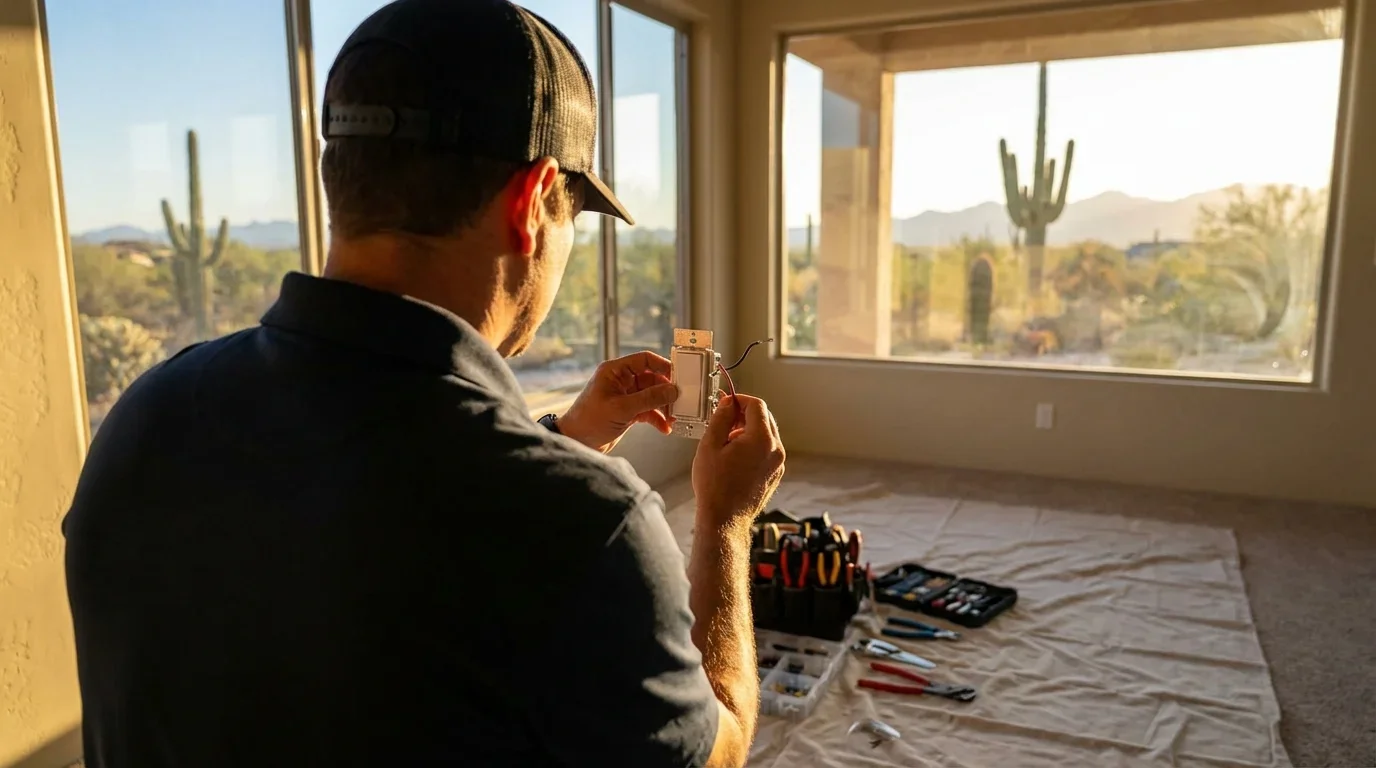
Set the Perfect Mood in Every Arizona Room
Whether you're upgrading to energy-efficient LEDs, installing smart home dimmers, or tackling complex 3-way setups, professional dimmer installation transforms how you live.
- Slash energy costs with LED-compatible dimmers
- Control lighting from anywhere with smart dimmers
- Eliminate flickering and buzzing from improper installation
⚠ Common Issues
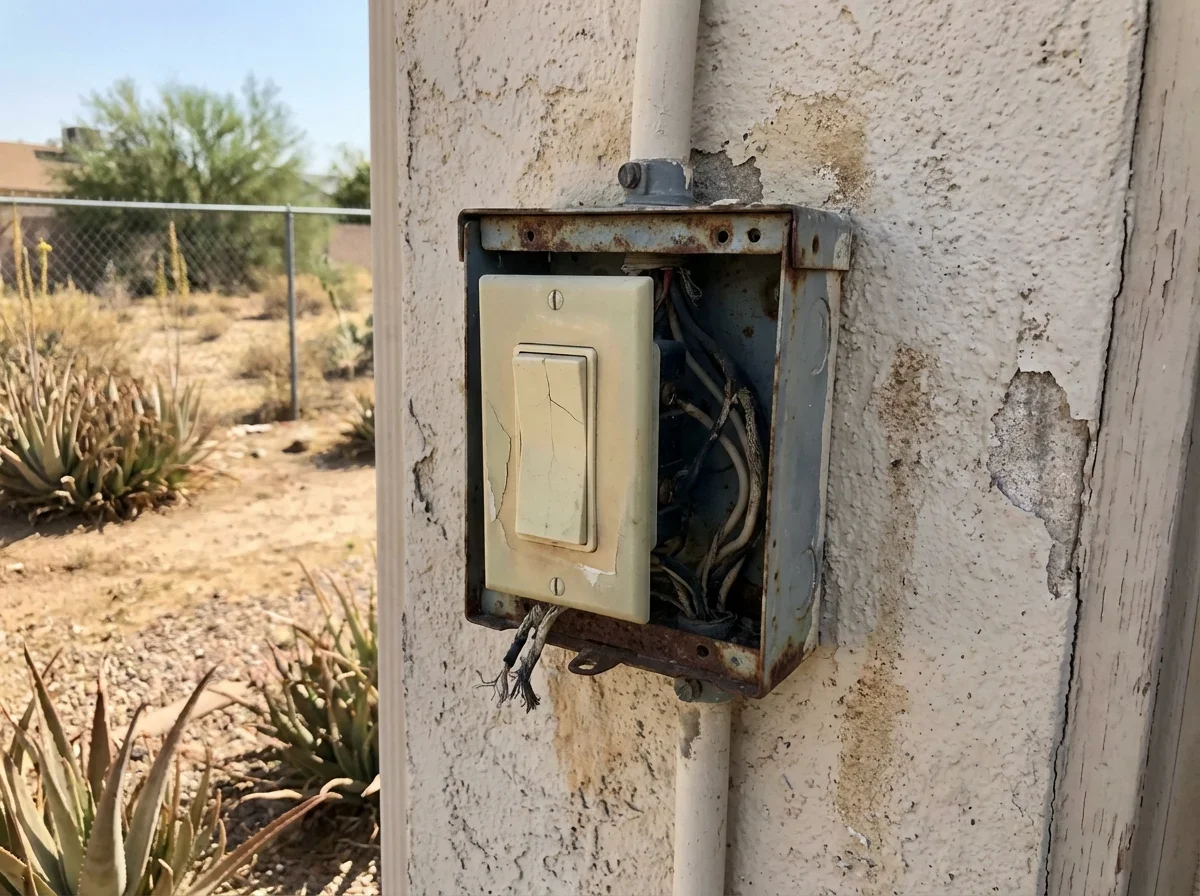
Signs You Need the Right Dimmer Switch
You replaced all your incandescent bulbs with LEDs to save energy. Smart move. Then you tried dimming them with your existing dimmer switch — or worse, bought a cheap dimmer at a big box store without checking compatibility.
Now your lights flicker at low settings. They buzz audibly when dimmed to 30%. Some won't turn on at all. You've swapped bulbs three times thinking they're defective.
The bulbs aren't the problem. The dimmer is.
Standard rotary dimmers and most slider dimmers were engineered for incandescent bulbs that draw 60-100 watts. Modern LED bulbs draw 8-12 watts. The dimmer can't regulate the lower wattage properly, causing the driver circuit in the LED to malfunction. You get flicker, buzz, premature burnout, or lights that won't dim below 40%.
Homeowners in Scottsdale and Phoenix replace an average of 15-20 switches when upgrading to LED-compatible dimmers throughout their homes. The investment pays back in energy savings within 18 months — but only if you use the right dimmer technology.
Sound familiar? Your new LEDs flicker when dimmed. You tried different bulb brands. Same problem. Now you're wondering if you need to go back to old-school incandescent bulbs just to get smooth dimming.
Three-way dimming situations (switches at both ends of a hallway or staircase) create even worse problems. You need compatible dimmer switches at both locations, and most homeowners don't realize this until they've already bought mismatched switches. The lights turn on but won't dim, or they dim from one switch but not the other.
Arizona's 2023 NEC adoption[1] doesn't require permits for simple switch replacement, but if you're adding new circuits or changing switch boxes, you need licensed work and permits[2]. That's when the "simple DIY project" becomes a code compliance issue.
$ Cost Guide
What Does Dimmer Switch Installation Cost in Arizona?
Expect to pay $150-$350 per switch for professional dimmer installation in the Phoenix metro area, including labor and a quality LED-compatible dimmer. That covers removing your old switch, installing the new dimmer with proper wire connections, testing compatibility with your bulbs, and cleanup.
Smart dimmers with Wi-Fi or hub integration run $200-$450 installed, depending on the brand and whether you're integrating with an existing smart home system.
Standard Single-Pole Dimmer Installation
| Dimmer Type | Equipment Cost | Labor | Total Installed | |---|---|---| | Basic LED-compatible slider | $15-$35 | $100-$150 | $150-$200 | | Lutron Diva LED+ | $25-$45 | $100-$150 | $175-$225 | | Leviton SureSlide | $30-$50 | $100-$150 | $180-$250 |
Single-pole installations (one switch controlling one set of lights) take 30-45 minutes per switch. Electricians in Mesa and Chandler typically charge $100-$150 per hour, so one switch is usually billed as a service call minimum.
Smart Dimmer and 3-Way Dimmer Costs
Smart dimmers cost more upfront but deliver scheduling, voice control, and energy monitoring. They're particularly popular in newer Gilbert and Tempe homes with whole-home automation systems.
| Smart Dimmer System | Equipment | Installation | Total | |---|---|---| | Lutron Caseta (Wi-Fi) | $60-$80 | $125-$175 | $200-$275 | | Leviton Decora Smart (Wi-Fi) | $45-$70 | $125-$175 | $200-$260 | | GE Cync (Bluetooth/Wi-Fi) | $35-$55 | $125-$175 | $175-$250 | | C by GE (hub required) | $50-$75 + hub $70 | $150-$200 | $300-$375 |
Three-way dimmer installations cost $250-$500 because you're replacing switches at two locations and ensuring they communicate properly. This requires compatible dimmer technology at both ends — you can't use a standard 3-way switch paired with a 3-way dimmer. Both switches need to be from the same manufacturer's 3-way dimmer line.
Multi-switch installations (5+ dimmers) often qualify for volume pricing. Electricians in Peoria and Glendale frequently quote whole-home LED dimmer upgrades at $175-$225 per switch when replacing 8-12 switches at once.
→ What to Expect
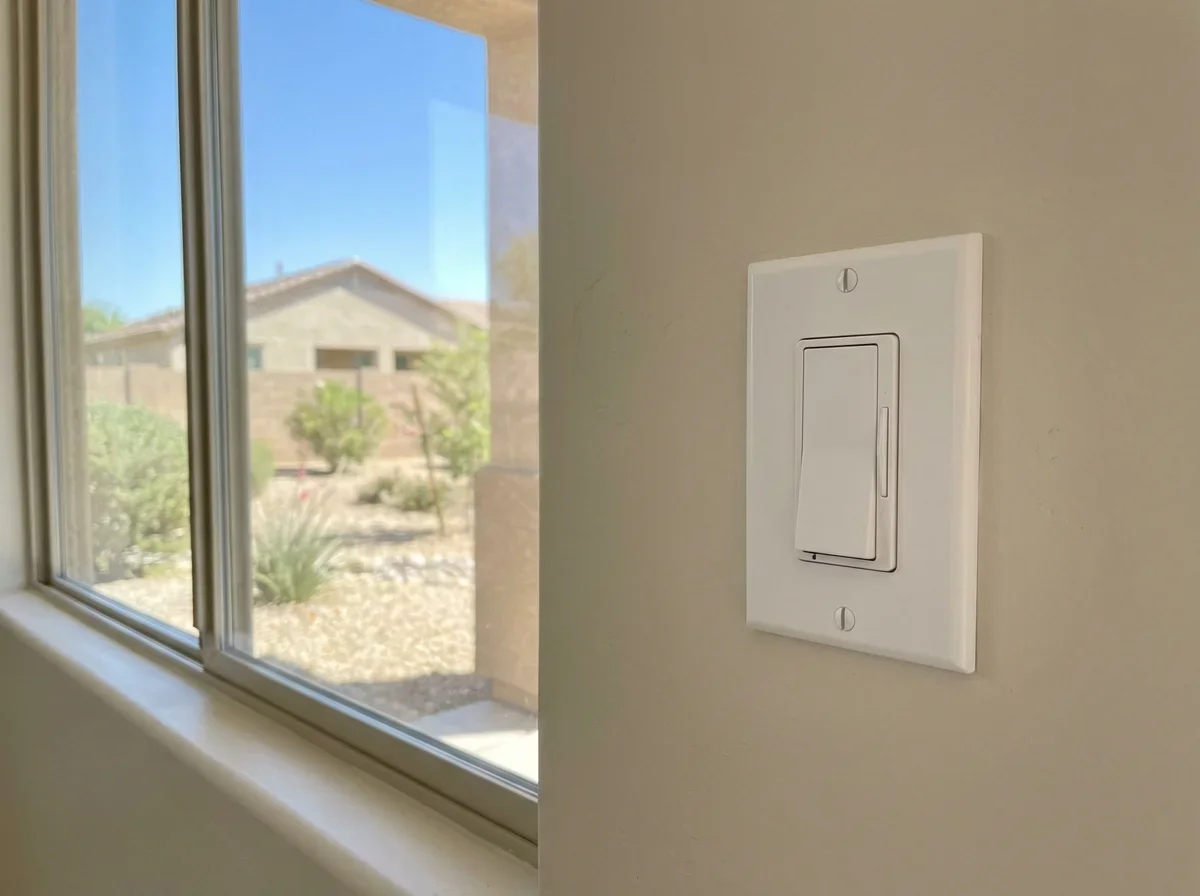
The Dimmer Installation Process
A licensed electrician takes 30-60 minutes per switch, depending on wire condition, box depth, and smart home integration requirements. Here's what happens.
Electrical Assessment and Compatibility Check
The electrician tests your existing switch to verify voltage and ground wire presence. Older Arizona homes built before 1985 sometimes lack ground wires in switch boxes, which is required for many smart dimmers.
They'll ask what bulbs you're using — LED wattage, brand, and whether they're dimmable. Not all LED bulbs support dimming even if they claim to. The electrician matches the dimmer technology (Triac, ELV, or MLV) to your specific bulbs. This prevents the flicker and buzz issues that plague DIY installations.
If you're installing smart dimmers, they verify your Wi-Fi signal strength at the switch location. Weak signals in Surprise or Buckeye homes with stucco or block construction can cause connectivity problems with Wi-Fi dimmers. They may recommend a different technology (Zigbee or Z-Wave hub-based systems) or a Wi-Fi extender.
Switch Removal and Wiring
Power gets shut off at the breaker. The electrician removes the old switch and inspects wire condition. Aluminum wiring (common in 1970s Arizona homes) requires special connectors and techniques covered under separate aluminum wiring replacement protocols.
The new dimmer gets wired following manufacturer specifications. LED dimmers typically require:
- Line (hot) wire to brass terminal
- Load wire to the dimmer output terminal
- Neutral wire to the neutral terminal (required for most smart dimmers)
- Ground wire to green screw
Standard mechanical dimmers don't need a neutral wire, but smart dimmers do. If your box lacks a neutral, the electrician may need to run new wire from the fixture — that's when you're looking at permit requirements and higher costs ($300-$500 per switch).
Testing and Smart System Integration
The electrician tests dimming across the full range — 10% to 100% — to verify smooth operation without flicker or buzz. They adjust minimum brightness settings if the bulbs won't turn on at very low dimmer positions.
For smart dimmers, they connect the switch to your Wi-Fi network or smart home hub, then test voice commands and app control. Integration with existing smart home wiring systems can add 15-30 minutes per switch for programming scenes and schedules.
Three-way installations require testing from both switch locations to ensure proper communication. The electrician programs the companion switch (if digital) or verifies traveler wire connections (if mechanical 3-way dimmer).
✓ Choosing a Contractor
How to Choose LED-Compatible Dimmers
Walk into any home improvement store in Phoenix and you'll see dozens of dimmer switches. Most aren't compatible with LED bulbs despite what the packaging says.
Why Standard Dimmers Don't Work with LEDs
Incandescent bulbs are purely resistive loads. You reduce voltage, they dim smoothly. Simple physics.
LEDs use electronic driver circuits that regulate power. Old-school Triac dimmers (designed for incandescent) chop the AC waveform in ways that confuse LED drivers. You get flicker at low settings because the driver can't handle the chopped waveform.
The solution: dimmers engineered specifically for LED driver circuits. These use different switching technology and include minimum load requirements that match LED wattage ranges.
Dimmer Types: Triac, ELV, and MLV
Triac (leading-edge): Standard dimmers. Work with incandescent and some "Triac-compatible" LEDs. Least expensive but highest flicker risk with LEDs.
ELV - Electronic Low Voltage (trailing-edge): Designed for LED drivers. Smoother dimming, less flicker. Most quality LED bulbs specify ELV compatibility. These are the dimmers electricians in Chandler and Gilbert install most often.
MLV - Magnetic Low Voltage: For magnetic transformers (older track lighting, some landscape lighting). Rarely needed in modern residential installations.
Check your LED bulb packaging for "dimmer compatibility" specs. Quality manufacturers (Philips, Cree, GE) list which dimmer technologies work with their bulbs. Match that to the dimmer you're buying.
For whole-home installations, stick with one dimmer brand (Lutron or Leviton) for consistent performance. Mixing brands in the same room can create mismatched dimming curves — one switch dims to 20%, the other only to 40%.
Top Contractors for Dimmer Switch Installation
View all →



Frequently Asked Questions
- MeltPlan. "Arizona Building Code & Permit Guide | IBC & IRC Versions." https://www.meltplan.com/blogs/arizona-building-codes-current-adoption-amendments-permit-guide. Accessed April 06, 2026.
- Arizona Building Officials (AZBO). "Permit Information." https://www.azbo.us/permits-info.html. Accessed April 06, 2026.
Estimate Your Dimmer Switch Installation Cost
Get an instant price range based on your home and project details.