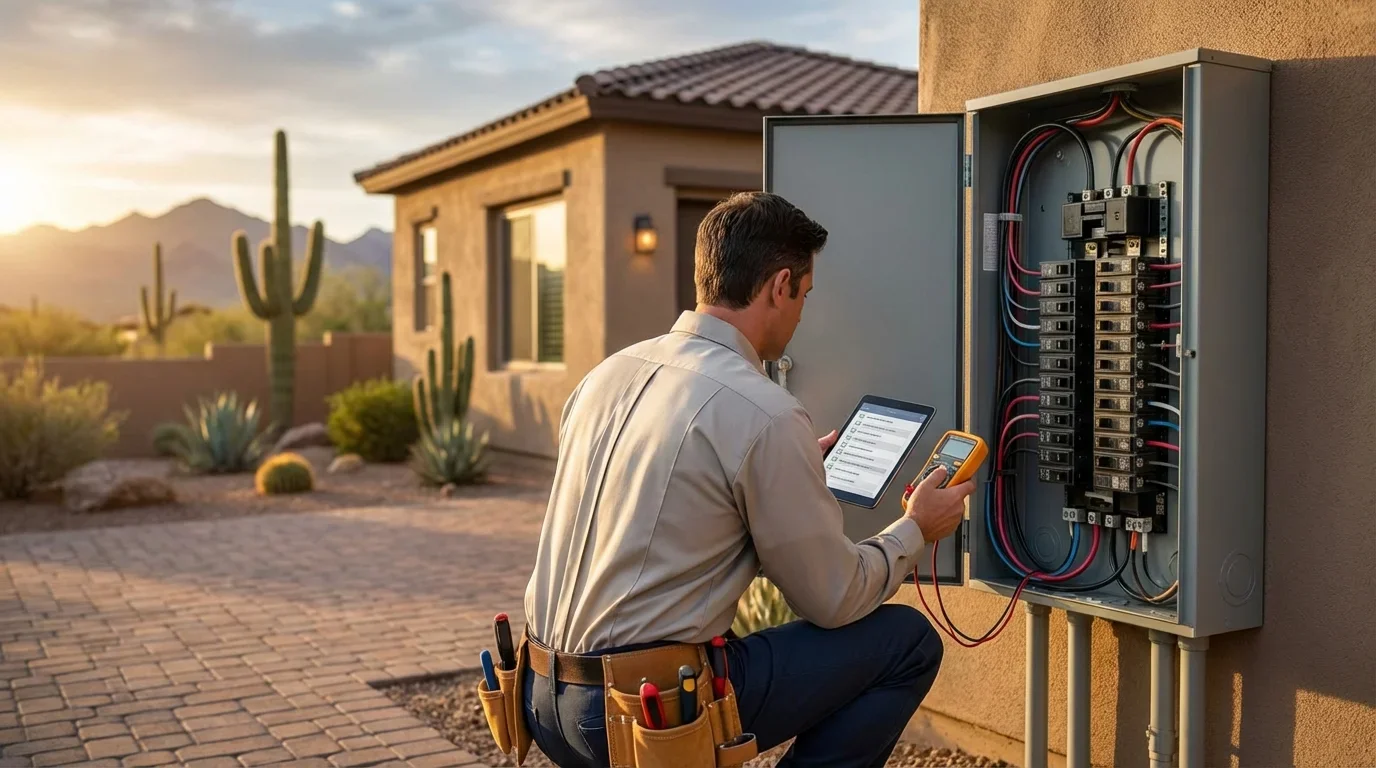
Get Your Permits Right the First Time
Failed inspections and code violations derail projects and drain budgets. Our electrical permit specialists navigate Phoenix's strict compliance requirements so your residential or commercial work passes inspection without delays.
- No rejected permits or costly rework
- Fast-tracked approvals with complete documentation
- Full code compliance for all Arizona jurisdictions
⚠ Common Issues
Why Electrical Permits Matter in Arizona
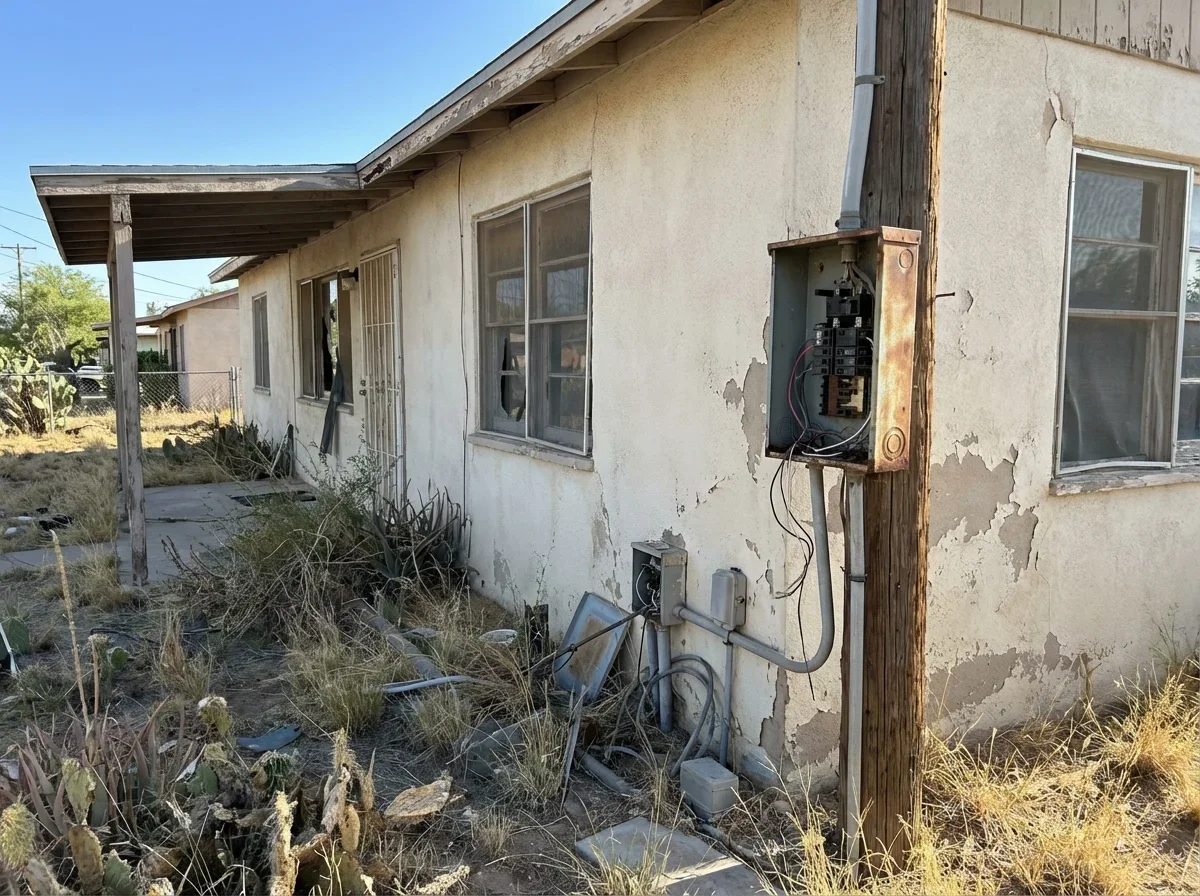
You're planning a panel upgrade. Installing an EV charger. Adding a pool. Maybe you bought a house and the inspector flagged unpermitted electrical work from the previous owner.
Here's the reality: Arizona law prohibits homeowners from pulling electrical permits. Only licensed contractors with active ROC (Registrar of Contractors) C-11 credentials can apply for electrical permits. That handyman who offers to "save you money" by skipping the permit? You're both breaking the law.
The consequences add up fast. Your homeowner's insurance can deny claims if a fire or injury stems from unpermitted work. When you sell, title companies often require permits for major electrical modifications — no permit means you're paying a licensed contractor to retroactively permit and correct the work, usually at 150-200% of the original cost.
The permit protects you. Inspectors in Phoenix, Scottsdale, and Mesa verify your work meets the 2023 National Electrical Code and local amendments. That's not red tape — it's the difference between safe electrical infrastructure and a house fire.
Arizona municipalities take this seriously. Cities like Scottsdale require property owners to bring buildings into compliance within 60 days if they fail annual electrical testing.[2] Phoenix adopted the 2023 NEC with specific amendments for desert climate conditions, including service conductor sizing requirements for one-family dwellings.[1]
Common unpermitted work that comes back to bite homeowners: panel upgrades done by unlicensed workers, EV charger installations without proper load calculations, pool and spa electrical that lacks required GFCI protection, and whole-house rewiring hidden behind finished walls.
The inspection isn't adversarial. It's verification that your $8,000 panel upgrade will actually deliver safe, code-compliant power for the next 30 years. Contractors who handle permits regularly in Chandler and Gilbert know exactly what inspectors look for — and they build it right the first time.
$ Cost Guide
What Does Electrical Permit Service Cost in Arizona?
Permit fees are the smallest part of your project cost, but they vary significantly based on scope and jurisdiction.
Residential Permit Fees
Standard residential electrical permits in the Phoenix metro typically run $150-$400 for common projects. Here's what you're actually paying for:
| Project Type | Typical Permit Fee | Plan Review Time | Total Timeline |
|---|---|---|---|
| Outlet/switch additions (1-5 devices) | $150-$225 | Not required | 3-5 days |
| EV charger installation | $175-$275 | 3-5 business days | 5-8 days |
| Sub-panel installation | $225-$350 | 5-7 business days | 7-10 days |
| Main panel upgrade (200A) | $300-$500 | 7-10 business days | 10-14 days |
| Whole-house rewire | $500-$1,200 | 10-15 business days | 15-20 days |
These fees cover plan review, inspection scheduling, and certificate of occupancy or completion. The contractor typically includes permit costs in their bid, but you'll see it itemized.
Cities set their own fee schedules. Scottsdale and Tempe often charge slightly higher fees but offer faster online permit tracking. Mesa and Glendale run closer to the lower end of these ranges. Peoria and Surprise sometimes waive plan review for straightforward installations under 60 amps.
Commercial Permit and Plan Review Costs
Commercial work requires engineered plans and more extensive review. Expect $500-$2,000+ for permits alone:
- Tenant improvement electrical: $500-$1,000
- Restaurant kitchen electrical systems: $800-$1,500
- Solar tie-in systems (commercial): $1,000-$2,500
- New commercial construction: 1-2% of total electrical contract value
Plan review can take 2-4 weeks for commercial projects in Phoenix and Chandler. Expedited review adds 50-100% to the permit fee but cuts wait time to 3-5 business days.
Your contractor's experience matters here more than anywhere else. A C-11 contractor who regularly works in Gilbert knows exactly what the building department requires for commercial electrical submittals. First-time submissions that get kicked back for corrections add 7-10 days to your timeline.
Inspection fees are usually included in the initial permit, but re-inspections cost $75-$150 per visit if work fails. That's pure waste — which is why you hire contractors with high first-time pass rates.
→ What to Expect
The Arizona Electrical Permit Process
Here's exactly what happens from design to final approval.
Permit Application and Documentation
Your contractor submits the permit application to the local building department. This includes:
- Scope of work description — Detailed explanation of what's being installed, modified, or replaced
- Load calculations — Required for panel upgrades, sub-panel installations, and dedicated circuit work over 30 amps
- Site plan or layout — Shows existing electrical service and proposed modifications
- Equipment specifications — Make, model, and ratings for panels, disconnects, and major appliances
For straightforward residential work (adding outlets, installing a ceiling fan, replacing fixtures), many Phoenix-area cities use over-the-counter permits. The contractor walks in, pays the fee, gets the permit, and starts work that day.
Complex projects require plan review. The building department checks calculations, verifies code compliance, and issues corrections if needed. Scottsdale's building department reviews plans for EV charger installations within 3-5 business days. Phoenix takes 7-10 days for panel upgrades and whole-house work.
Inspection Stages
Arizona electrical permits typically require two inspections:
Rough-in inspection happens after wiring is run but before walls are closed. The inspector verifies:
- Wire sizing matches load requirements
- AFCI protection is installed per 2023 NEC requirements[1]
- Boxes are properly secured and grounded
- Conduit runs meet code for outdoor/wet locations
You can usually schedule rough-in inspections within 24-48 hours in Mesa, Chandler, and Tempe. The contractor must be present.
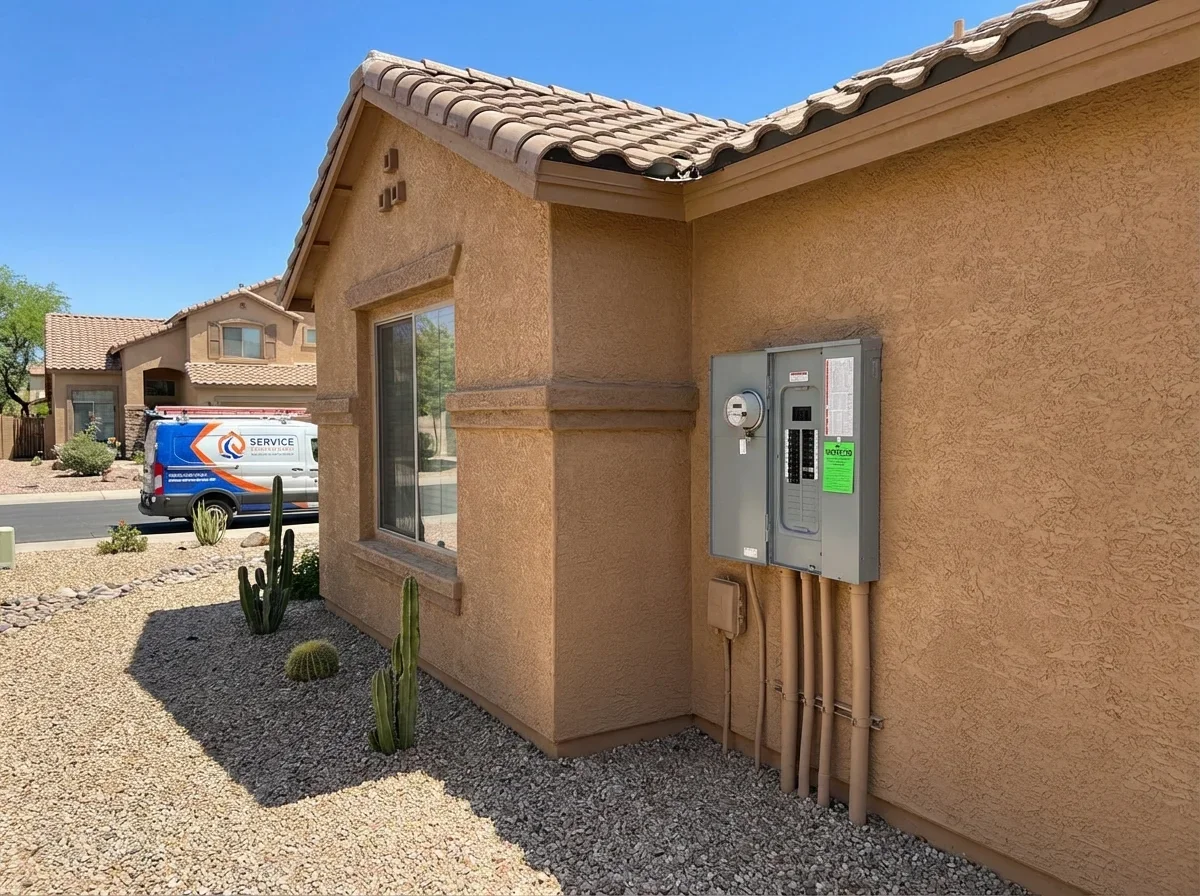
Final inspection happens after all devices are installed, panels are labeled, and the system is energized. The inspector tests GFCI/AFCI devices, checks panel labeling, verifies proper torque on connections, and confirms the installation matches approved plans.
Pass the final, and you get a signed inspection card or digital certificate. That document stays with the property forever — it's what title companies and insurance companies want to see.
Re-Inspections and Corrections
If work fails inspection, the inspector issues a correction notice. Common failures in Arizona:
- Missing AFCI protection on bedroom circuits (required statewide)
- Incorrect outdoor junction box types (Arizona heat requires specific UV-rated materials)
- Improper wire derating for high ambient temperatures
- Incomplete labeling or missing breaker directory
Your contractor fixes the issues and calls for re-inspection. Good contractors in Glendale and Surprise build extra time into schedules to address corrections immediately — usually 1-2 days for minor issues.
Re-inspection fees apply if the failure was avoidable. Most jurisdictions charge $75-$150 per re-inspection visit. Contractors who know the local inspectors and code requirements rarely fail initial inspections.
✓ Choosing a Contractor
How to Choose an Electrical Contractor for Permit Work
Not all licensed electricians handle permitting with the same competence. Here's how to separate the professionals from the corner-cutters.
Arizona ROC License Verification
Every electrical contractor in Arizona must hold an active ROC license. For electrical work, that's a C-11 classification. Verify it yourself at azroc.gov before signing anything.
Look for:
- Active license status — Not expired, suspended, or revoked
- Bond and insurance current — Required by law, protects you if something goes wrong
- Complaint history — A few complaints over 10+ years is normal; multiple recent complaints is a red flag
- License holder vs. qualifying party — Make sure the actual electrician running your job holds the credential, not just the business owner
Ask to see the physical license. It should list the contractor's name, ROC number, expiration date, and classifications. If they hesitate, walk away.
Experience with Local Building Departments
Contractors who work regularly in your city know what local inspectors expect. Phoenix has different amendment requirements than Scottsdale.[1][2] Buckeye and Surprise often have different interpretations of outdoor wiring requirements due to newer development codes.
Questions to ask:
- How many permits have you pulled in [your city] this year?
- What's your first-time inspection pass rate?
- Have you worked with the inspector assigned to my area?
- Can you show me examples of similar permitted projects?
Contractors who regularly handle commercial panel upgrades and whole-house generator installations will have dozens of inspection records. Ask to see them.
Inspection Pass Rate and Corrective Work Policies
Here's the question that separates pros from amateurs: "What happens if the work fails inspection?"
The right answer: "We fix it immediately at no additional cost to you, and we cover the re-inspection fee."
Red flags:
- "Inspectors are just picky" — No. Inspectors enforce life-safety codes.
- "We can probably skip the inspection" — Absolutely not.
- "You'll need to pay extra if we have to come back" — That's their failure, not yours.
Established contractors in Gilbert and Chandler build inspection costs into their bids. They account for the occasional re-inspection because they know code compliance isn't negotiable. If a contractor lowballs everyone else by 30%, they're either skipping permits or cutting corners that will fail inspection.
Ask for references from recent permitted projects. Call them. Ask if inspections went smoothly, if corrections were needed, and how quickly the contractor resolved issues.
For specialized work like aluminum wiring replacement or fire alarm wiring, verify the contractor has specific experience with those code sections. Generic residential electricians sometimes struggle with commercial fire alarm permit requirements — ask about their NFPA 72 familiarity if that's your project.
The permit process protects your investment. Hire the contractor who treats it as a standard part of professional electrical work, not an obstacle to work around.
Top Contractors for Electrical Code Compliance & Permit Services
View all →



Frequently Asked Questions
- City of Phoenix. "Amendment to 2023 National Electrical Code (NEC)." https://www.phoenix.gov/content/dam/phoenix/pddsite/documents/codes-ordinances/amendmentcodes/2023-nec.pdf. Accessed April 06, 2026.
- City of Scottsdale. "2020 National Electrical Code (NEC) Amendments (PDF)." https://www.scottsdaleaz.gov/docs/default-source/scottsdaleaz/codes---ordinances/building-codes/2020-national-electrical-code-(nec)-amendments.pdf?sfvrsn=45932118_2. Accessed April 06, 2026.
Estimate Your Electrical Code Compliance & Permit Services Cost
Get an instant price range based on your home and project details.