Not sure if it's an emergency?
Take our free 3-question diagnostic to find out.
When the Lights Go Out, Every Second Counts
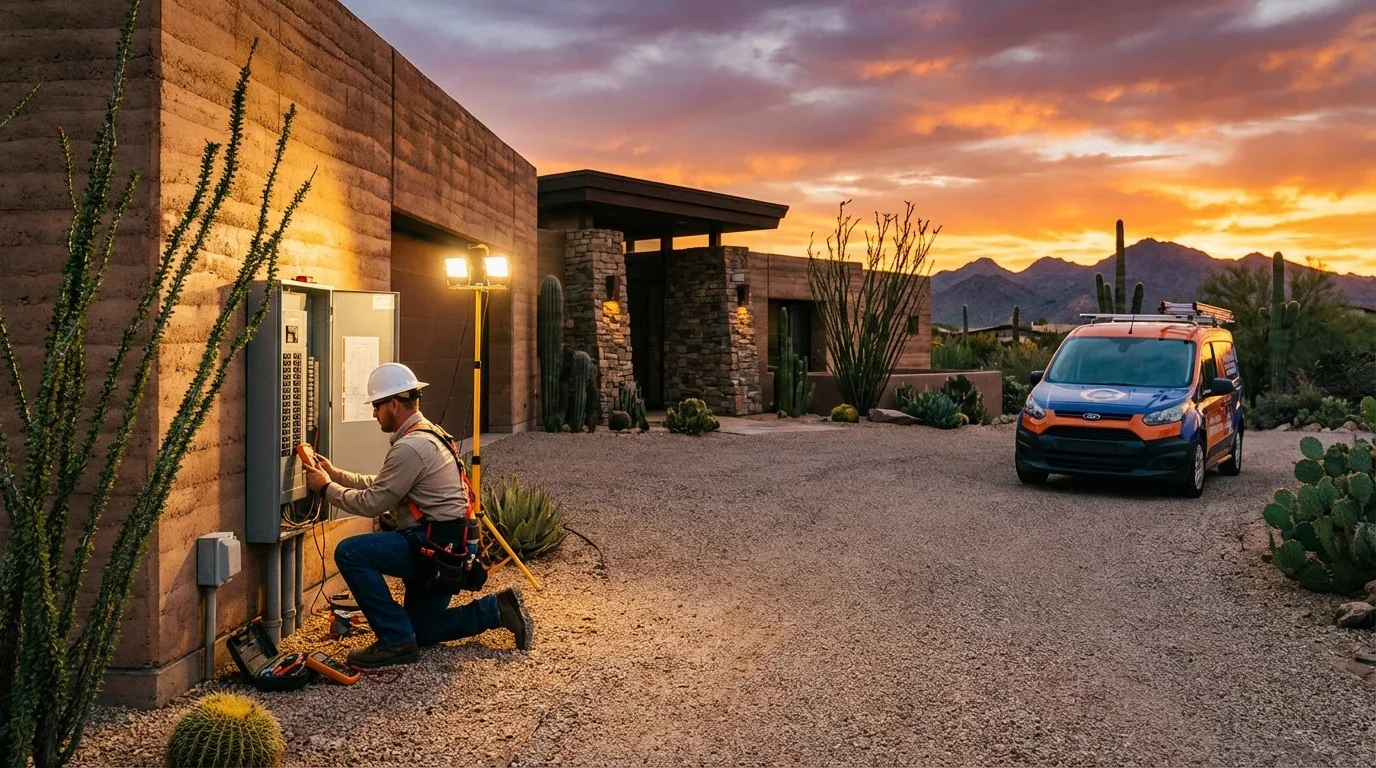
Electrical emergencies don't wait for business hours. From sudden power failures to sparking outlets and burning smells, we're on-site fast—24/7/365.
- Licensed electricians dispatched immediately
- Safety hazards resolved, not just patched
- Same rapid response, day or night
⚠ Common Issues
What Qualifies as an Electrical Emergency?
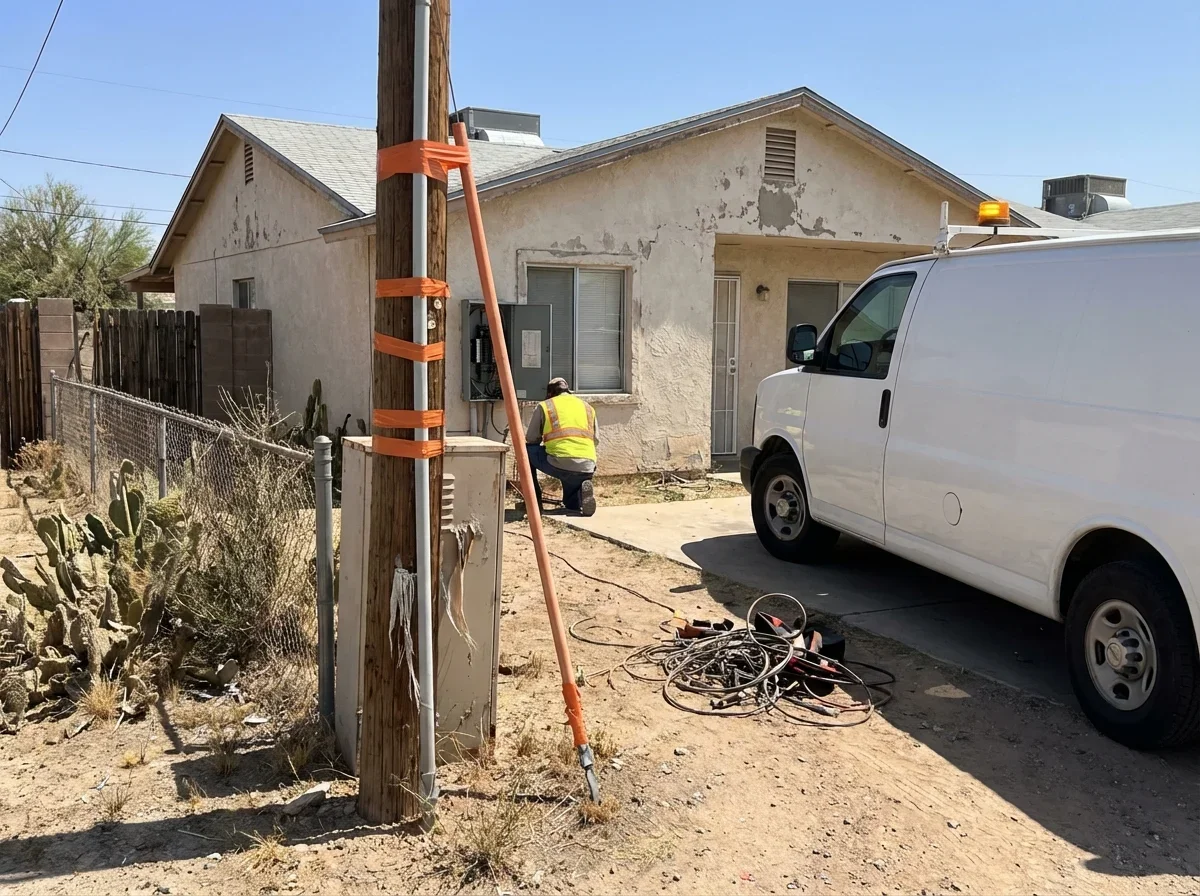
Not every flipped breaker needs a midnight callout. But some situations demand immediate professional response — and knowing the difference can prevent property damage, injuries, or worse.
Electrical emergencies put lives at risk. That burning smell from an outlet isn't "probably nothing." The sparking behind your wall isn't going to resolve itself. When electrical systems fail, they escalate quickly.
Immediate Dangers Requiring Emergency Response
Call an emergency electrician immediately if you experience any of these situations:
Burning smell or visible smoke from outlets, switches, or your electrical panel. This indicates active overheating and imminent fire risk. Shut off power at the main breaker if safe to do so, evacuate, and call for help.
Sparking or arcing from any electrical component. Small sparks when plugging something in might be normal static. Continuous sparking, especially inside walls or from the panel, means damaged wiring or failed connections creating extreme heat.
Power outage affecting only your property when neighbors have electricity. This suggests a service entrance problem, meter failure, or main panel issue — all requiring professional diagnosis. Homeowners in Mesa and Chandler frequently discover this during monsoon season when debris damages service lines.
Exposed or damaged wiring from vehicle impact, tree damage, or animal activity. Any visible copper or aluminum conductors present electrocution and fire hazards.
Electrical panel problems including a hot-to-touch panel box, buzzing sounds, or breakers that won't reset. Panel failures in Arizona's extreme heat can escalate rapidly, especially in older homes with Federal Pacific or Zinsco panels.
Water intrusion into electrical systems from roof leaks, flooding, or plumbing failures. Water and electricity create immediate shock hazards. Monsoon-damaged roofs in Scottsdale and Gilbert commonly cause emergency calls when rain enters attic junction boxes or recessed lighting fixtures.
When to call 911 vs. an electrician: Active electrical fires with visible flames require fire department response. Shocked or electrocuted victims need immediate medical attention. Smoking outlets, burning smells without flames, and power emergencies need emergency electricians. If you're unsure, call 911 — they'll dispatch appropriate responders.
Issues That Can Wait Until Morning
Some electrical problems feel urgent but don't require premium emergency rates:
- Single tripped breaker that resets successfully
- Non-functioning light fixture or switch (unless you smell burning)
- GFCI outlet that trips but has no visible damage
- Planned generator installation before storm season
- Dimmer switches that stopped working
Schedule a same-day or next-day appointment for these situations. You'll save on emergency callout fees while still addressing the problem promptly. Most electrical issues in Tempe and Peoria can be safely managed with temporary measures until regular business hours.
The exception: if any "non-emergency" develops burning smells, heat, or sparking, it just became an emergency.
$ Cost Guide
What Does Emergency Electrical Service Cost in Arizona?
Emergency electrical rates reflect after-hours availability, rapid response commitment, and the expertise required to diagnose problems under pressure. Here's what you'll actually pay when you need an electrician at 3 AM.
Emergency Callout Fees and After-Hours Rates
Most Arizona emergency electricians charge a callout fee of $150-$300 just to dispatch a truck and technician to your property. This covers response time, fuel, and opportunity cost of pulling a licensed electrician from on-call status.
After-hours labor runs $100-$200 per hour depending on time of day, with weekend and holiday rates at the higher end. For comparison, regular business-hour service typically costs $75-$125 per hour.
Time-of-day rate structure:
- Evening (6 PM - 10 PM): $100-$140/hour
- Late night (10 PM - 6 AM): $140-$200/hour
- Weekends: $125-$175/hour
- Major holidays: $175-$250/hour
These rates apply across Phoenix, Chandler, and Surprise. More remote areas like Buckeye may see slightly higher callout fees due to travel distance, but hourly rates remain consistent.
Typical Repair Costs by Emergency Type
Here's what common emergency repairs actually cost, including callout fee and labor:
| Emergency Type | Typical Total Cost | Timeline |
|---|---|---|
| Tripped main breaker (service entrance issue) | $300-$600 | 1-2 hours |
| Replace failed breaker in panel | $250-$450 | 45-90 minutes |
| Repair damaged outlet (smoking/sparking) | $275-$500 | 1-1.5 hours |
| Temporary repair of damaged service line | $400-$800 | 1.5-3 hours |
| Generator emergency startup/repair | $350-$700 | 1-2 hours |
| Emergency sub-panel inspection after water intrusion | $300-$650 | 1-2 hours |
| Electrical fire investigation and safe shutdown | $400-$900 | 2-4 hours |
Major emergency repairs requiring extensive troubleshooting or parts (like replacing a failed meter base or repairing monsoon-damaged service masts) can exceed $1,000-$2,500 for after-hours work.
Most emergency calls in Gilbert and Mesa cost $400-$700 total when you include the callout fee, diagnostic time, and repair labor for straightforward issues like failed breakers or damaged circuits.
Some emergency electricians waive callout fees if you proceed with recommended repairs. Ask about this policy when calling — it can save you $150-$300 on legitimate emergency repairs.
Is Emergency Service Worth the Premium?
Consider the alternative. Electrical fires cause an estimated $1.3 billion in property damage annually. A $500 emergency callout that prevents a house fire is the best money you'll ever spend.
For borderline situations that can safely wait until morning, you'll save 40-50% by scheduling first-available service instead of emergency dispatch. But don't gamble with genuine safety hazards — the premium exists for a reason.
→ What to Expect
How Emergency Electrical Service Works
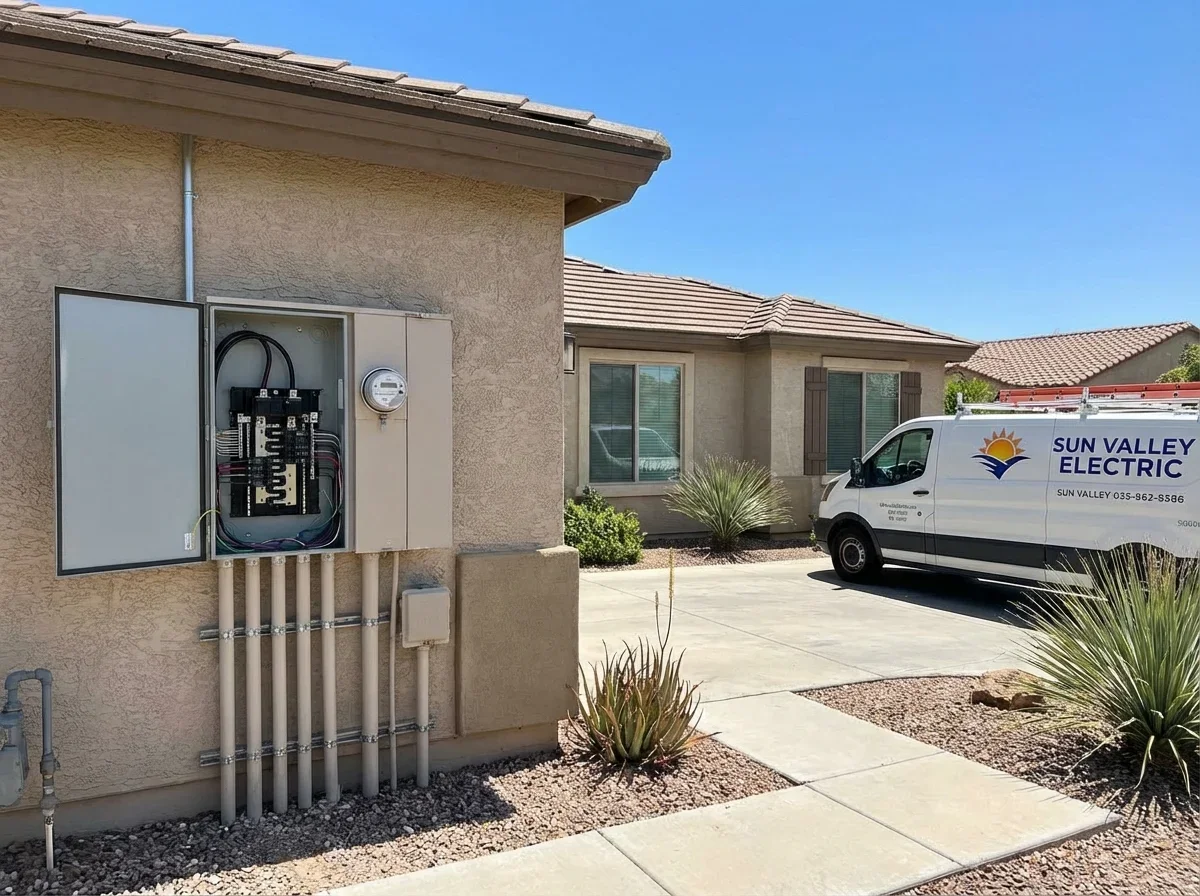
Understanding the emergency service process helps you act quickly and communicate effectively when time matters most.
Response Time Expectations Across Arizona
Urban Phoenix metro areas (Phoenix, Scottsdale, Tempe, Mesa, Chandler, Gilbert, Glendale) typically see 30-60 minute response times for emergency electrical calls. Established emergency electricians maintain on-call technicians strategically positioned to minimize travel time.
Suburban and outlying areas (Peoria, Surprise, Buckeye) generally experience 60-90 minute response windows due to geography. If you're calling from east Gilbert or far west Buckeye, communicate your exact location clearly — response times depend heavily on where the nearest on-call technician is positioned.
During monsoon season (July-September), response times extend citywide as multiple emergencies occur simultaneously. Storm-related electrical damage creates demand surges that can push wait times to 90-120 minutes even in central Phoenix.
When you call, the dispatcher will ask:
- Nature of the emergency — be specific about what you're seeing, smelling, or hearing
- Immediate safety status — is anyone in danger right now?
- Location and access information — gate codes, parking, electrical panel location
- Your contact number — the electrician will call when 10-15 minutes away
What to Do While Waiting for the Electrician
First priority: eliminate immediate hazards. If you smell burning, shut off power at the main breaker if you can safely access the panel. Don't touch a hot panel box — that's a fire waiting to happen.
For smoking outlets or sparking switches, shut off the specific circuit breaker controlling that area. If you're unsure which breaker, shut off the main. You can manage without power for 30-60 minutes.
Evacuate the area around electrical problems. Keep family members and pets away from affected rooms. If smoke is visible or smells are getting stronger, evacuate the home entirely and wait outside.
Locate and clear access to your electrical panel. Emergency electricians need immediate access to your main panel and service entrance. Move storage boxes, furniture, or holiday decorations blocking panel access before they arrive. In Surprise and Glendale homes, panels are often in garages — make sure the electrician can get in.
Document the problem with photos or video if safe to do so. This helps both insurance claims and electrician diagnosis, especially for intermittent issues that might not be active when help arrives.
Never attempt DIY repairs on active electrical emergencies. This isn't a stuck garbage disposal. Electrical systems operating abnormally are unpredictable and dangerous. Homeowners in Chandler and Mesa frequently escalate problems by attempting amateur fixes that create additional faults.
The Service Call Process
Once the electrician arrives, expect this sequence:
- Safety assessment (5-10 minutes) — visual inspection, thermal imaging if available, voltage testing
- Problem diagnosis (15-30 minutes) — systematic testing to identify root cause
- Repair options discussion (5-10 minutes) — emergency temporary fix vs. permanent repair
- Repair work (30-90 minutes depending on complexity)
- Testing and verification (10-15 minutes) — ensure problem is resolved and no related issues exist
Most emergency electricians carry common parts (breakers, outlets, wire, connectors) to complete repairs on-site. Complex issues requiring specialty parts may receive temporary safe repairs with scheduled follow-up for permanent fixes.
✓ Choosing a Contractor
How to Choose a 24/7 Emergency Electrician
Not all "emergency electricians" actually provide true 24/7 service. Here's how to identify legitimate emergency electrical contractors before you need them.
Licensing and Insurance Verification
Arizona requires electrical contractors to hold a Residential or Commercial Electrical license issued by the Arizona Registrar of Contractors (ROC). Verify the license before hiring — even in emergencies. Unlicensed electricians create liability nightmares and insurance claims get denied.
Visit azroc.gov and search the company name or ROC number. Check for:
- Active license status — not expired, suspended, or revoked
- Proper classification — electrical contractors need CR-7 (residential) or CR-11 (commercial) licenses
- Complaint history — multiple unresolved complaints signal problems
- Insurance verification — minimum $750,000 general liability required
Emergency electrical work in Mesa, Gilbert, and Scottsdale requires the same licensing standards as scheduled work. Don't let urgency pressure you into hiring unqualified contractors.
Response Area and Availability Guarantees
Ask specific questions before agreeing to service:
- What's your typical response time to my area? (Get a specific window, not "as soon as possible")
- Do you have electricians on-call right now, or are you forwarding calls to subcontractors?
- What's your callout fee, and does it apply toward repair costs?
- Are you licensed, insured, and bonded in Arizona?
- Can you provide your ROC license number for verification?
- What payment methods do you accept for emergency service?
Red flags that indicate unprofessional operators:
- Refusing to provide ROC license numbers
- Demanding full payment before starting work
- Significant price changes between phone quote and on-site estimate
- Pressure to authorize work without clear scope explanation
- No written documentation or invoicing
What Separates Legitimate Emergency Services from Marketing
Many electrical contractors advertise "24/7 emergency service" but actually forward after-hours calls to answering services that schedule next-day appointments. True emergency electricians maintain dedicated on-call rotation with technicians ready to dispatch immediately.
Verify emergency capability by asking:
- Do you have electricians dispatching right now, or will someone call me back tomorrow?
- What trucks and equipment do you maintain for emergency calls?
- How many emergency electricians do you staff on weekends and holidays?
Companies serving Phoenix, Tempe, and Glendale with genuine 24/7 capability typically mention response time guarantees, on-call technician availability, and emergency dispatch protocols on their websites and phone greetings.
Finding Pre-Vetted Emergency Electricians
The time to research emergency electricians is before you need one — not when your panel is smoking at midnight. Browse the 602 Electric directory now to identify licensed, insured emergency electrical contractors serving your area. Compare response areas, read verified reviews, and save contact information for the professionals covering Chandler, Surprise, Peoria, or your specific city.
During an actual emergency, you'll have the information needed to make a fast, confident decision instead of gambling on the first Google result. Many homeowners keep emergency electrician contact information with their home documents — right next to the main breaker shutoff instructions.
If you have surge protection installed, check whether your emergency electrician can service and reset those systems — whole-house surge devices often trip during electrical emergencies and require professional reset. Similarly, homes with sub-panels or recent aluminum wiring replacement may need electricians familiar with those specific installations for accurate emergency diagnosis.
Top Contractors for Emergency Electrical Service
View all →



Frequently Asked Questions
Estimate Your Emergency Electrical Service Cost
Get an instant price range based on your home and project details.