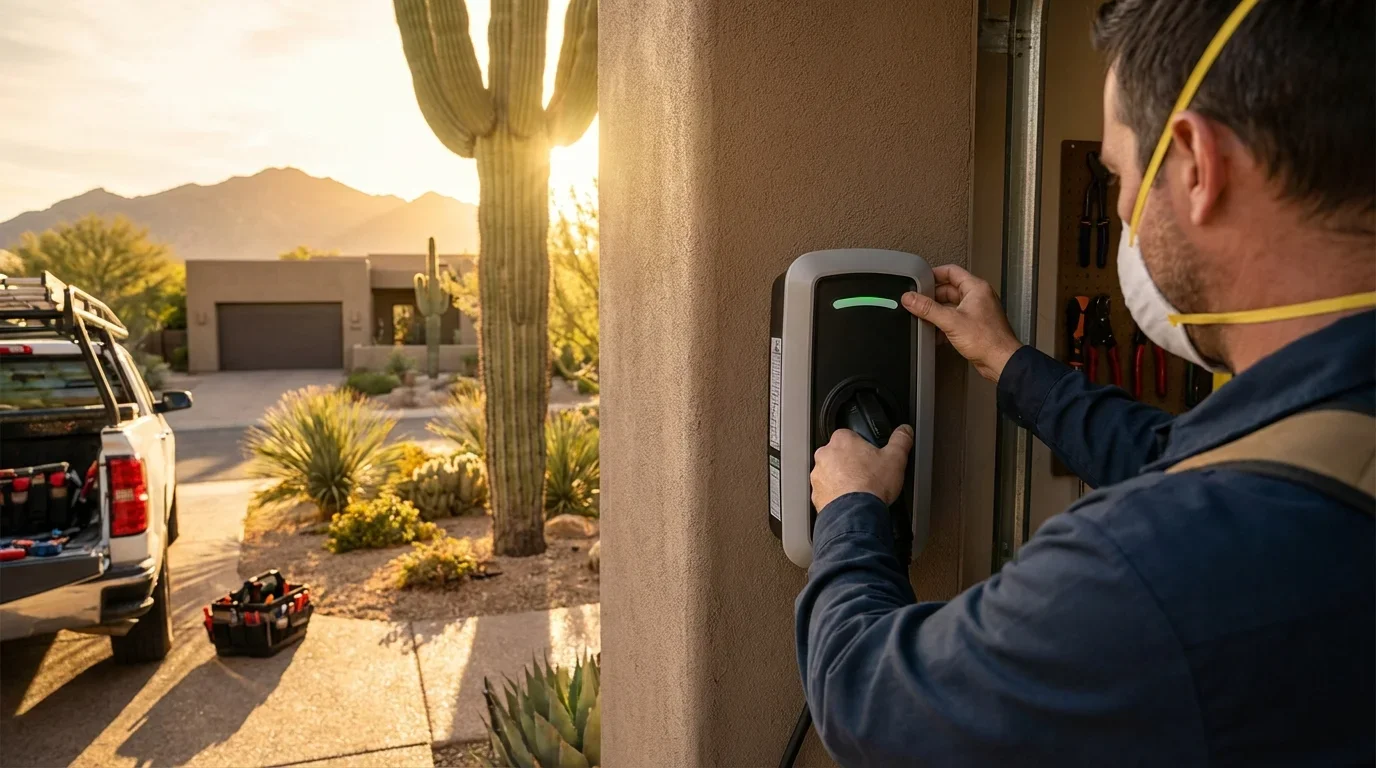
Charge Faster. Drive Farther. Install Once.
Waiting 24 hours for a full charge kills the EV ownership experience. Your 120V outlet wasn't designed for this.
- Level 2 charging adds 25-30 miles of range per hour — not per day
- Works with every EV brand from Tesla to Rivian to Ford F-150 Lightning
- Arizona rebates and federal credits cut installation costs significantly
⚠ Common Issues
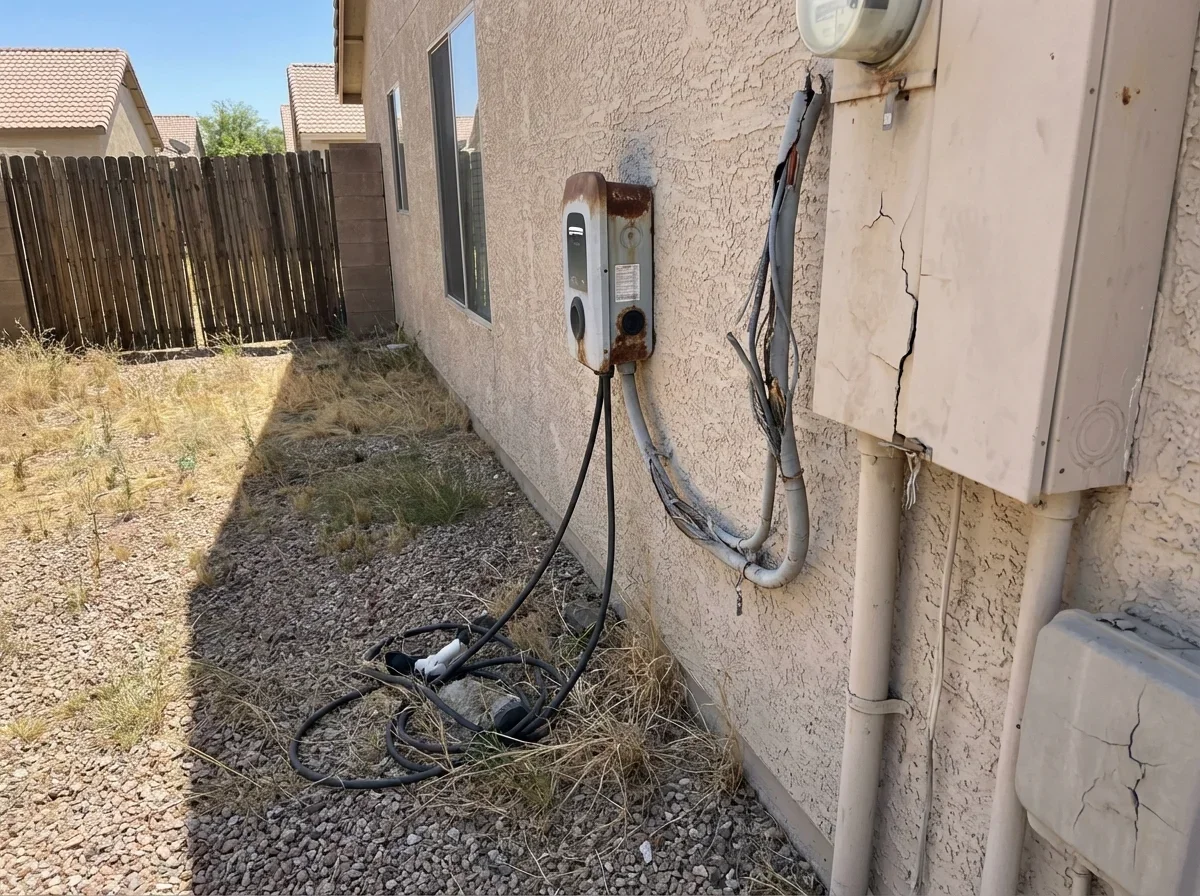
Level 2 vs Level 1 Charging: What You Need
You plugged your new EV into a standard garage outlet and realized it'll take a full day to charge from empty. That 120V Level 1 charger your car came with adds maybe 3-5 miles of range per hour. If you drove 150 miles today, you're looking at 30+ hours to fully recharge.
Level 2 charging changes everything. The 240V system adds 25-30 miles of range per hour — the same voltage that runs your dryer or hot tub. Most EV owners in Phoenix and Scottsdale get a complete overnight charge in 6-8 hours, even after heavy driving days.
When a Panel Upgrade Is Necessary
Here's the reality check: Level 2 chargers need a dedicated 40-60 amp circuit. Many Arizona homes built before 2010 have 100-amp or 150-amp electrical panels that can't handle the additional load, especially if you're already running air conditioning, a pool pump, and standard appliances during Phoenix summers.
You'll know you need a panel upgrade if:
- Your main panel is 100 amps or less
- All breaker slots are filled with no room for a double-pole 40-50 amp breaker
- Your home is over 40 years old with original electrical (common in older Mesa and Tempe neighborhoods)
- You experience frequent breaker trips during high-demand periods
A sub panel installation can sometimes avoid a full main panel replacement, but that depends on your existing service capacity. The electrician checks this during the site assessment — it's not something you can eyeball yourself.
The charging speed difference is measurable. A Tesla Model 3 with a 75 kWh battery takes 30+ hours on Level 1. The same car on a 240V/40-amp Level 2 charger? About 8 hours from empty to full. For a Rivian R1T with its larger 135 kWh battery, Level 1 becomes impractical — you'd need nearly 60 hours for a complete charge.
The math is simple. Drive 200 miles today. Level 1 needs 40-50 hours to recover that range. Level 2 does it in 7-8 hours while you sleep.
$ Cost Guide
Level 1 (120V)
$300 – $600
- ✓ Dedicated 120V outlet install
- ✓ 3–5 miles of range per hour
- ✓ No panel upgrade needed
- ✓ Best for PHEVs & overnight charging
Level 2 (240V)
$800 – $2,000
- ✓ 240V / 40–50A circuit
- ✓ 25–30 miles of range per hour
- ✓ Hardwired or NEMA 14-50 outlet
- ✓ Smart charging & scheduling
- ✓ Full charge overnight
Commercial / Multi-Bay
$3,000 – $7,000+
- ✓ Dual or multi-port stations
- ✓ Load management & metering
- ✓ Panel upgrade often included
- ✓ HOA & ADA compliance
Prices include labor and materials for Phoenix metro installs. Charger unit cost is separate unless noted. Panel upgrades add $1,500–$3,000.
→ What to Expect
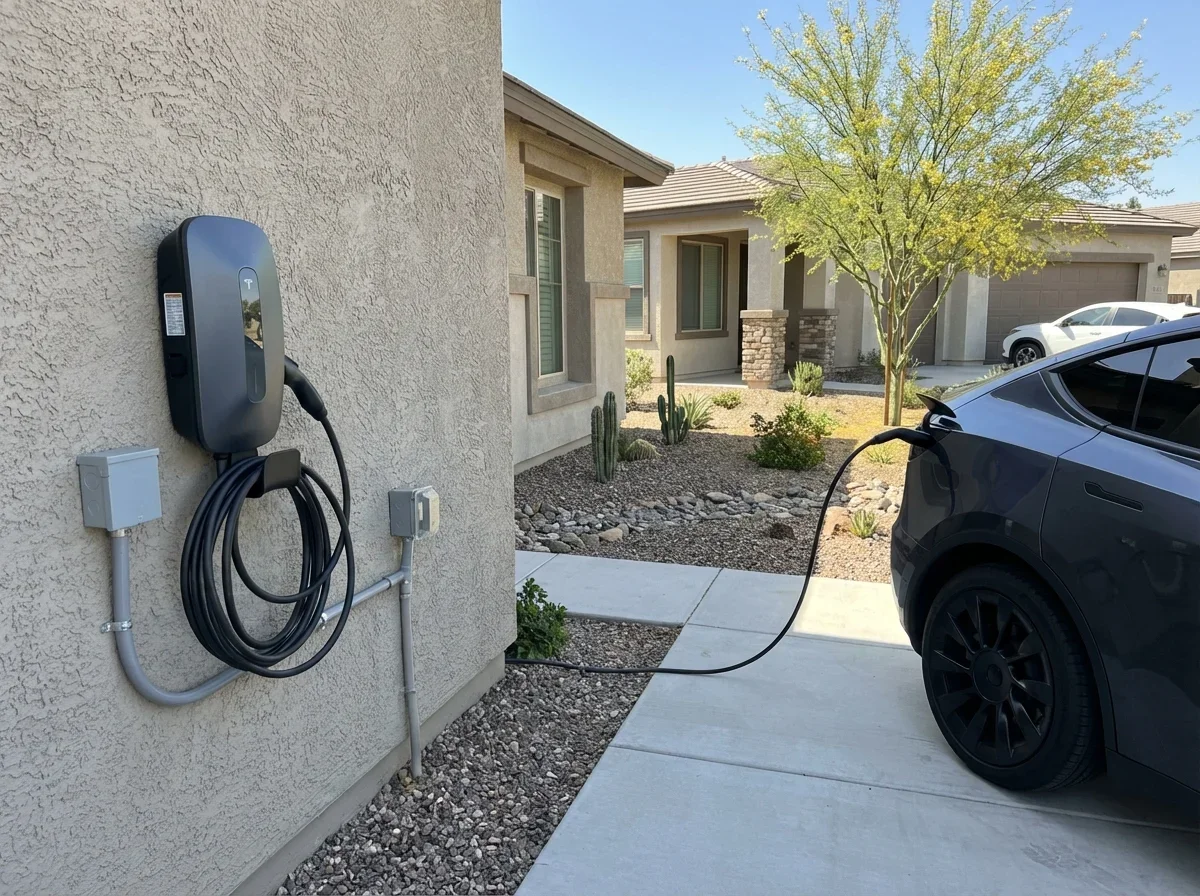
The EV Charger Installation Process
The complete process takes 3-7 days from initial assessment to final inspection, with most of that time waiting for permits and utility coordination.
Site Assessment and Electrical Capacity Check
The electrician starts with a load calculation — measuring your existing electrical service capacity against current and planned usage. They check the main panel amperage, count available breaker slots, and review the service entry conductors from the utility meter.
In Arizona's extreme heat, they also factor in AC load during peak summer months. A home in Buckeye running two AC units, a pool pump, and kitchen appliances during a July afternoon might already be pushing 150+ amps on a 200-amp service. Adding a 48-amp EV charger requires careful load management or a service upgrade.
They measure the distance from panel to charging location, identify obstacles (block walls, existing conduit routes, attic access), and determine whether the installation is indoor or outdoor. Outdoor installations in Arizona need weatherproof enclosures and UV-resistant materials — the desert sun degrades standard electrical boxes within 2-3 years.
Permit Requirements and Inspection
Your electrician pulls permits through the city building department. Phoenix, Mesa, and Chandler have streamlined EV charger permits with 24-48 hour approval for standard installations. Scottsdale requires engineered drawings for service upgrades, which adds 3-5 days.
The permit covers:
- Electrical work and circuit installation
- Panel modifications or upgrades
- Final inspection and code compliance verification
Some homeowners try to skip permits for "simple" plug-in installations. Don't. If you sell the house, unpermitted electrical work becomes a disclosure issue and negotiation leverage for buyers. Insurance companies can deny fire claims if they trace the source to unpermitted electrical modifications.
Installation and Testing
The physical installation takes 3-6 hours for straightforward runs, up to a full day for complex routing or panel upgrades:
- Circuit installation: Run 6-gauge or 4-gauge copper wire from panel to charger location through rigid conduit
- Breaker installation: Mount dedicated 40-60 amp double-pole breaker with GFCI protection
- Charger mounting: Secure wall bracket or pedestal mount at optimal height (48-54 inches to cable connection)
- Connection: Hardwire unit or install NEMA 14-50 outlet and plug in charger
- Testing: Verify voltage, ground continuity, GFCI function, and actual charging speed with vehicle connected
Many electricians install the charger slightly offset from center of the parking space — it prevents the cable from dragging across the vehicle hood during connection/disconnection and keeps it clear of the driver door swing.
The city inspector verifies the installation matches permit plans, checks wire gauge and conduit sizing, confirms GFCI protection, and validates the charger is listed by a recognized testing laboratory (UL, ETL). Inspection scheduling takes 24-72 hours depending on the city.
Final step: The electrician programs smart chargers to your WiFi network and walks through the scheduling features. Setting charging to start at 11pm automatically captures those $0.05/kWh super off-peak rates if you're on an SRP or APS EV plan.
✓ Choosing a Contractor
How to Choose an EV Charger Installation Electrician
Not every electrician understands EV charging requirements. You need someone who knows load calculations, panel capacity assessments, and Arizona's specific code requirements for high-amperage circuits.
Licensing Requirements in Arizona
Your electrician must hold a Residential or General Journeyman Electrician license through the Arizona Registrar of Contractors. For installations requiring panel upgrades or service modifications, they need a Master Electrician supervising the work.
Verify licensing at azroc.gov. Look for:
- Active license status with no disciplinary actions
- Workers' compensation and liability insurance (minimum $1 million coverage)
- Bond coverage protecting you if work is abandoned or defective
Some solar companies offer EV charger installation as an add-on service. Make sure the actual electrician performing the work holds Arizona credentials — the solar company's license doesn't transfer to electrical contractors.
Questions to Ask Before Hiring
"How many EV charger installations have you completed in the past year?" You want someone who's done at least 20-30 installations. EV charging is common enough in Phoenix and Scottsdale that experienced electricians handle multiple jobs monthly. If they've only done "a few," you're paying for their learning curve.
"Do you handle permit applications and inspections?" The right answer is yes, with permit fees included in the quote or itemized separately. Walk away from contractors who suggest skipping permits "to save money."
"What charger brands do you recommend and why?" Good electricians suggest 2-3 options based on your vehicle, budget, and charging habits. Red flag: they push one brand exclusively because they get dealer kickbacks.
"How do you determine if I need a panel upgrade?" Listen for talk of load calculations, existing service capacity, and checking available amperage. If they quote an installation price without assessing your panel first, they're guessing.
"What's your warranty on installation work?" Standard is 1-2 years on labor, separate from the charger manufacturer's warranty (typically 3 years). Some electricians offer extended warranties if they install specific charger models.
Compare at least three quotes. The lowest bid often skips permit costs, uses undersized wire to save $50, or doesn't include GFCI protection required by code. Mid-range quotes from licensed contractors with verifiable EV installation experience deliver the best results.
If your installation involves significant electrical work beyond the charger itself — outdated panels, aluminum wiring replacement, or whole-house surge protection upgrades — choose an electrician who handles comprehensive electrical projects, not just specialty charger installations.
The Directory makes this comparison easy. Filter for licensed electricians in your area who specifically list EV charger installation experience, read verified reviews from other Arizona homeowners, and request quotes from multiple contractors simultaneously.
Top Contractors for EV Charger Installation
View all →



Frequently Asked Questions
Estimate Your EV Charger Installation Cost
Get an instant price range based on your home and project details.