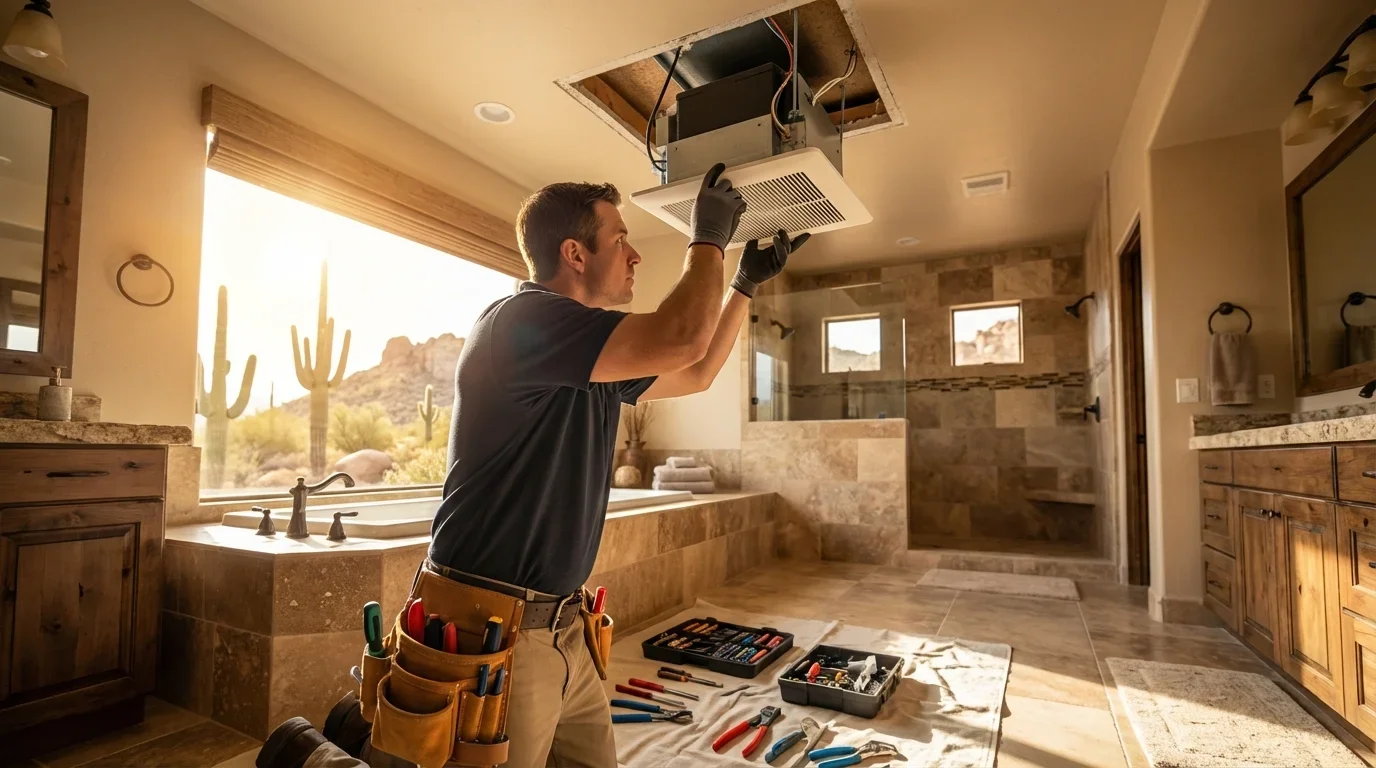
Stop the Mold Before It Starts
Arizona bathrooms need proper ventilation to fight moisture, mildew, and poor air quality. We install exhaust fans correctly—with expert electrical wiring and ductwork that actually works.
- Eliminates dangerous mold and mildew growth
- Removes steam, odors, and humidity fast
- Code-compliant electrical work guaranteed
⚠ Common Issues
When Your Bathroom Needs Better Ventilation
You notice it after every shower. The mirror stays fogged for 20 minutes. The walls feel damp. There's a musty smell that never quite goes away.
In Arizona's climate, poor bathroom ventilation creates a perfect storm. The monsoon season brings humidity spikes that overwhelm inadequate fans. Year-round, the extreme attic temperatures mean any moisture that doesn't get exhausted outside turns into condensation on roof decking and insulation.
That builder-grade fan from 1998? It's pulling maybe 30 CFM now — well below the 50 CFM minimum required by the International Residential Code.[1] The motor hums louder every month. It might run constantly or not at all.
Sound familiar? Your bathroom fan rattles like a helicopter. You replaced it once with a Home Depot special. The new one lasted 18 months before the motor burned out. Now you're dealing with paint bubbling on the ceiling.
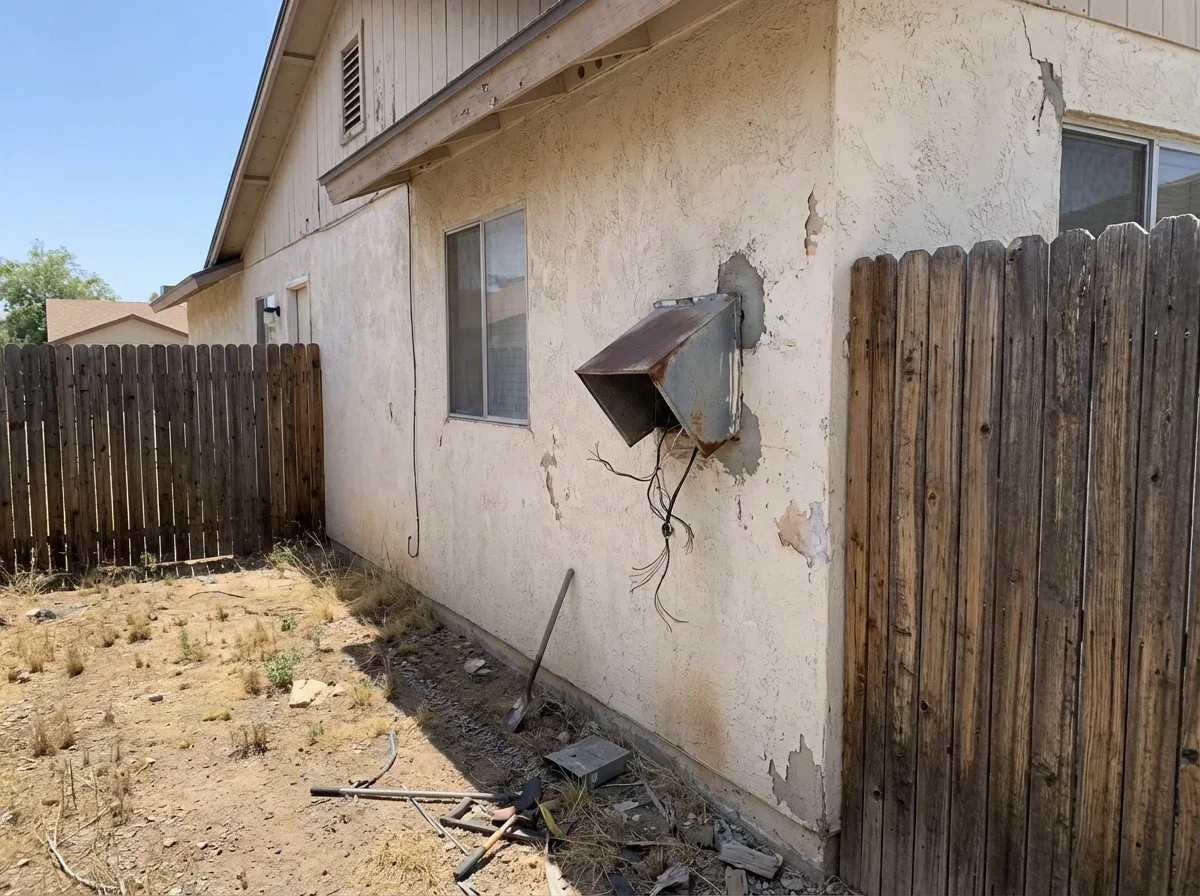
What happens when you ignore failing bathroom ventilation:
Homeowners in Chandler and Gilbert frequently discover mold growth in wall cavities during remodels — traced directly to years of inadequate exhaust. The moisture has nowhere to go, so it migrates into drywall and insulation.
The damage escalates predictably. Month one: persistent condensation. Month six: mildew stains on grout and caulk. Year two: paint failure and soft spots in drywall. Year three: structural wood damage and potential mold remediation costs ($2,000-$8,000).
Mesa and Tempe building inspectors cite improper bathroom ventilation as one of the most common code violations in older homes. If you're selling or refinancing, that failing fan could derail your timeline.
The electrical component matters more than people realize. A fan that keeps tripping the breaker or won't shut off points to wiring issues. DIY installations often create fire hazards — improper wire gauge, no junction box, fans wired directly to light switches without proper load calculation. Arizona law requires licensed electrical contractors for any wiring modifications beyond simple device replacement.
$ Cost Guide
What Does Bathroom Exhaust Fan Installation Cost in Arizona?
Expect to pay $200-$600 for professional bathroom exhaust fan installation in the Phoenix metro area. That includes the fan unit, electrical work, ductwork modifications if needed, and final testing.
The wide range depends on what your bathroom requires.
Basic Installation vs. Complex Retrofits
Simple replacement (existing electrical, ductwork in place, accessible attic): $200-$350. The electrician swaps the old fan for a new unit, verifies proper duct connection, tests CFM output, done in 1-2 hours.
New installation (running new circuit, installing ductwork, cutting roof penetration): $400-$600. This involves electrical rough-in, potentially a dedicated circuit if your bathroom doesn't have adequate power, ductwork installation, roof jack mounting, and coordination with building permits.
| Installation Complexity | Cost Range | What's Included |
|---|---|---|
| Direct replacement (same footprint) | $200-$300 | Fan unit, electrical hookup, testing |
| Replacement with duct repair | $300-$400 | Fan, duct reconnection/sealing, verification |
| New installation (existing electrical) | $350-$475 | Fan, new ductwork, roof vent, labor |
| New installation (new circuit required) | $475-$600 | Fan, dedicated circuit, ductwork, roof vent, permit |
Factors That Affect Installation Cost
Fan selection drives the base price. A basic 50 CFM builder-grade unit costs $60-$100. Mid-tier models with humidity sensors and quieter motors (0.5-1.0 sones) run $120-$200. Premium combination units with integrated lighting and heater elements reach $250-$400.
Humidity-sensing fans are popular in Scottsdale and Paradise Valley for good reason — they activate automatically when moisture hits a threshold, then shut off once the air clears. No timer switches to remember. They're worth the $40-80 premium during monsoon season.
Electrical work complexity matters. If your current fan shares a circuit with bathroom outlets and lighting, and you're upgrading to a high-CFM or combination unit, you might need new wiring. Most licensed electricians in Peoria and Surprise charge $125-$175 per hour for this work.
Ductwork determines whether this is a 90-minute job or a half-day project. Existing rigid metal duct in good condition? Quick connection. Flexible duct that's been compressed in the attic for 20 years? Needs replacement. No ductwork at all? Full installation with proper slope, insulation, and exterior termination.
Per IRC requirements, exhaust must discharge outdoors — not into your attic.[2] Contractors who find fans venting into attic spaces (surprisingly common in homes built before 2000) must correct this to pass inspection. Add $150-$250 for new ductwork and roof jack installation.
DIY is not cheaper when you factor in the risks. The fan unit might cost $100, but improper electrical connections create fire hazards. Incorrect duct sizing (common with DIY) means the fan can't move rated CFM. Skipping the building permit leads to problems at sale time. Licensed electricians carry liability insurance and pull permits that DIY work can't replicate.
✓ Choosing a Contractor
How to Choose a Bathroom Exhaust Fan Installer
Start with electrical licensing, not handyman services. Arizona law requires licensed electrical contractors for wiring modifications. An ROC (Registrar of Contractors) license in electrical classification means they've passed competency exams and carry required bonding and insurance.
Verify the license at azroc.gov before hiring anyone. You want contractors who specialize in residential electrical, not companies that "also do fans."
Questions That Separate Good Contractors from Amateurs
"Do you pull building permits for fan installations?" The answer should be yes for any installation involving new electrical or ductwork. Permits ensure inspections verify code compliance. Contractors who skip permits are cutting corners that will haunt you at sale time.
"What CFM capacity do you recommend for my bathroom size?" They should measure the space and calculate requirements based on square footage, not guess. If they immediately suggest a specific brand without assessing your bathroom, that's a red flag.
"How do you handle ductwork termination?" You want to hear "exterior roof jack with proper flashing" or "soffit vent with backdraft damper." Anyone suggesting attic termination doesn't understand IRC requirements[2] or Arizona's climate challenges.
"What's the sones rating on the fans you install?" Quiet operation matters. Fans rated 0.5-1.0 sones are whisper-quiet. Anything above 2.0 sones is noticeably loud — often why people don't run their fans long enough to clear moisture.
Red Flags to Avoid
Contractors who won't provide written estimates with itemized costs. "We'll figure it out when we get there" pricing leads to surprise bills.
Anyone suggesting you don't need permits for "just a fan swap." Even simple replacements can require permits if electrical modifications are involved.
Extremely low bids that seem too good to be true. Quality exhaust fans cost $100-$400. Professional electrical labor runs $125-$175/hour. If someone quotes $150 for the entire job including a "premium" fan, they're either using inferior materials or aren't licensed.
The right contractor explains options. They discuss standard fans vs. humidity-sensing models. They show you sones ratings and explain why quieter costs more. They walk you through ductwork conditions in your attic and recommend solutions — not just the cheapest fix.
Check for electrical code compliance experience and ask about warranty coverage. Reputable contractors warranty their installation work for at least one year and use fans with manufacturer warranties of 3-5 years.
Look for contractors who schedule follow-up verification. Some electricians return 30-60 days after installation to verify the fan operates properly through different humidity conditions — a sign they stand behind their work.
Compare at least three licensed contractors. Focus on communication quality, licensing verification, detailed estimates, and references from recent bathroom ventilation jobs. The directory listings here connect you with ROC-licensed electrical contractors serving Phoenix, Scottsdale, Mesa, and surrounding cities who specialize in code-compliant residential work.
Top Contractors for Bathroom Exhaust Fan Installation
View all →



Frequently Asked Questions
- Pacific Northwest National Laboratory (PNNL). "Bathroom Exhaust Fans." https://basc.pnnl.gov/resource-guides/bathroom-exhaust-fans. Accessed April 06, 2026.
- International Code Council (ICC). "CHAPTER 15 EXHAUST SYSTEMS - 2018 INTERNATIONAL RESIDENTIAL CODE (IRC)." https://codes.iccsafe.org/content/IRC2018/chapter-15-exhaust-systems. Accessed April 06, 2026.
Estimate Your Bathroom Exhaust Fan Installation Cost
Get an instant price range based on your home and project details.