Code-Compliant Fire Alarm Systems That Actually Save Lives
Arizona's fire codes don't give second chances. Your commercial property needs wiring that works when it matters most.
- NFPA-compliant installation from licensed electricians
- Low voltage systems that integrate seamlessly
- 24/7 emergency service across the Valley
⚠ Common Issues
When Do You Need Fire Alarm System Installation?
You're staring at permit conditions for your new office build in Chandler. The architect flagged "fire alarm system required." Your general contractor is asking for an electrical bid. And the clock is ticking on your certificate of occupancy.
Or maybe you're renovating an existing warehouse in Glendale — gutting 40% of the interior for new tenant spaces. Your building department just told you the remodel triggers full fire alarm upgrade requirements under current Arizona Fire Code.[2]
This isn't optional. Arizona adopts the International Fire Code with specific amendments, and the triggers are clear: most commercial buildings over 3,000 square feet need fire alarm systems. Assembly occupancies, healthcare facilities, multi-family residential over three stories — the requirements kick in based on use and size, not whether you think you need one.
Arizona Commercial Building Requirements
The State Fire Marshal's office enforces specific thresholds.[2] New construction almost always requires fire alarm installation if you're building anything beyond a small standalone retail space. Occupancy type matters more than square footage in many cases — a 2,000 sq ft daycare needs a fire alarm system even though a 4,000 sq ft warehouse might not.
Your local Authority Having Jurisdiction (AHJ) — whether that's Phoenix Fire, Scottsdale Fire, or Mesa's building department — interprets and enforces these codes during plan review. They're the ones who approve your drawings and conduct final inspection.
Tenant Improvement and Remodel Triggers
Here's where property owners get surprised: substantial renovation can trigger full fire alarm upgrades even in existing buildings that were grandfathered under old code. In Tempe and Gilbert, AHJs commonly require fire alarm installation when tenant improvements exceed 50% of the building area or when you're changing occupancy classification.
Sound familiar? Your tenant signed a lease. Your architect submitted TI plans. The city came back with "fire alarm system required per IFC Section 907." Now you're scrambling to find a qualified contractor who can design, install, and get inspected before your tenant's move-in date.
The alternative — delaying occupancy while you sort out fire safety compliance — costs you lease revenue and tenant goodwill. Commercial fire alarm installation isn't something you add at the end. It's designed into the electrical infrastructure from the start.
$ Cost Guide
What Does Commercial Fire Alarm Wiring Cost in Arizona?
The short answer: $3 to $10 per square foot for most commercial fire alarm installations across the Phoenix metro area. A 10,000 sq ft office building runs $30,000 to $100,000 depending on system complexity.
The wide range reflects real differences in building requirements and system design.
System Size and Building Factors
| Building Type | Typical Cost per Sq Ft | 10,000 Sq Ft Example |
|---|---|---|
| Basic office / retail | $3-$5 | $30,000-$50,000 |
| Multi-tenant warehouse | $4-$7 | $40,000-$70,000 |
| Medical / healthcare | $7-$10 | $70,000-$100,000 |
| High-rise / complex | $10-$15+ | $100,000-$150,000+ |
Small professional offices in Scottsdale with simple floor plans and standard 9-foot ceilings hit the low end. Healthcare facilities in Mesa with strict notification requirements, corridor smoke detection, and integration with HVAC shutdown systems hit the high end.
Device count drives cost more than raw square footage. A 5,000 sq ft open warehouse might need 12 devices (smoke detectors, pull stations, horn/strobes). A 5,000 sq ft medical office with 20 exam rooms needs 40+ devices to meet spacing and notification requirements under NFPA 72.[1]
Installation Complexity and Code Requirements
Low voltage wiring configuration matters. NFPA 72 defines Class A and Class B circuit wiring — and the choice impacts both cost and reliability.[1]
Class B circuits run a single path from the control panel to each device. Less wire, lower material cost, but a single break anywhere in the circuit disables everything downstream. You'll see Class B in smaller buildings where the cost savings matter.
Class A circuits loop back to the panel, creating redundant paths. A wire break doesn't disable the system — signals route around the damage. More labor-intensive, higher material cost, but required in many larger commercial applications and preferred by sophisticated property owners in Chandler and Gilbert who want maximum reliability.
Monitoring service integration adds $500-$2,000 to installation cost, but it's often required by your insurance carrier and local fire code for certain occupancies. The system needs cellular or IP communication to a central monitoring station that contacts emergency services when an alarm triggers.
Permit and inspection fees in Arizona cities typically run $300-$800 depending on jurisdiction and project size. Your electrical contractor should include these in their bid, along with plan review time.
The real cost difference between contractors? Experience with commercial fire alarm work. A licensed electrician who primarily does residential service calls will underbid the job, then struggle with system programming, zone mapping, and AHJ inspection requirements. You'll pay the difference in change orders and schedule delays.
→ What to Expect
The Fire Alarm Installation Process
Commercial fire alarm installation isn't a one-day rough-in. It's a multi-phase process coordinated with your general contractor, architect, and local fire department. The work typically takes 2-6 weeks from permit submission to final inspection, depending on building size and AHJ review times.
Here's what happens when you hire a qualified contractor in the Phoenix area.
1. System Design and Permitting
Your electrician reviews architectural plans and creates a fire alarm layout showing device locations, wiring pathways, and control panel placement. This isn't eyeballed in the field — NFPA 72 specifies maximum device spacing based on ceiling height, room geometry, and occupancy type.[1]
Smoke detector spacing in Peoria office buildings: typically 30 feet on center for smooth ceilings under 10 feet. Heat detectors in warehouse spaces with 20-foot ceilings: spacing changes to 50 feet depending on detector type. Pull stations near every exit. Notification appliances (horn/strobes) placed for audible and visible coverage in all occupied areas.
The contractor submits plans to your local building department — whether that's Surprise, Buckeye, or Phoenix — along with permit applications and equipment specifications. Plan review takes 1-3 weeks in most Arizona cities.
2. Wiring and Device Installation
Once permits are issued, rough-in happens during the electrical first-fix phase of construction. Low voltage fire alarm wire (typically 18/2 or 18/4 FPLR-rated cable) runs through walls and above ceilings before drywall goes up.
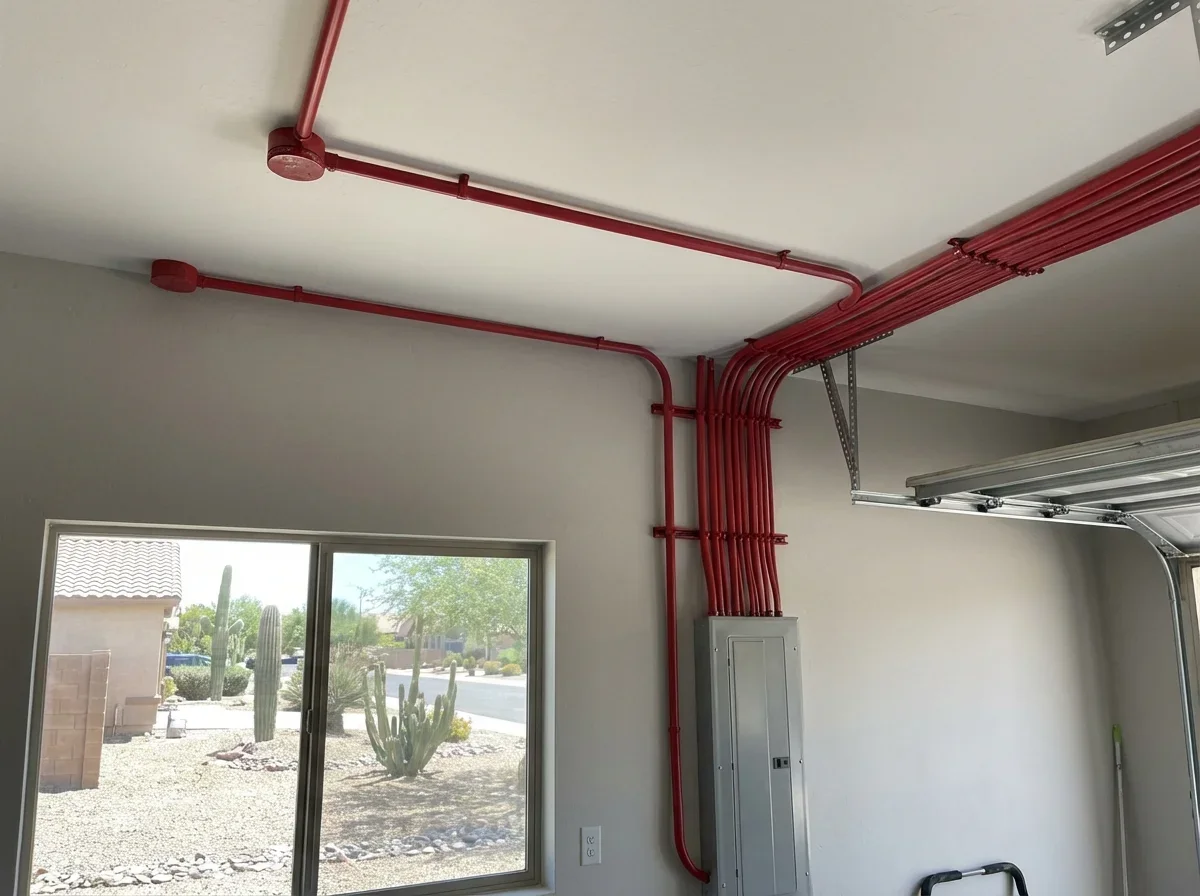
Conduit isn't always required for fire alarm wiring in commercial buildings, but many contractors in Scottsdale and Chandler run EMT or ENT anyway for mechanical protection and easier troubleshooting. The control panel gets mounted in a dedicated location — usually the main electrical room with backup power supply.
Device installation happens after finishes are complete. Smoke detectors mount to ceiling boxes, pull stations go near exit doors at ADA-compliant heights, horn/strobe notification appliances get spaced for code-required coverage.
3. Programming and System Testing
This is where contractor experience shows. The fire alarm control panel needs programming for zone mapping, notification sequences, and monitoring communication. Each device gets addressed and tested. Smoke detectors verified with test aerosol. Pull stations manually activated. Horn/strobes checked for proper synchronization.
Your contractor submits test reports to the AHJ and schedules final inspection. The fire marshal or building inspector witnesses alarm activation, verifies notification coverage, checks battery backup operation, and confirms monitoring communication. Most commercial fire alarm systems in Arizona require witnessed acceptance testing before the building can receive a certificate of occupancy.
The whole process — from design to final inspection — typically takes 3-6 weeks for a mid-size commercial building. Rush timelines are possible but expect premium pricing and contractor availability challenges during busy construction seasons.
✓ Choosing a Contractor
How to Choose a Fire Alarm Contractor in Arizona
The cheapest electrical bid isn't the right one for commercial fire alarm work. You need a contractor who can design compliant systems, navigate AHJ plan review, and get final inspection approval the first time. Here's what separates qualified fire alarm contractors from general electricians.
Required Licenses and Certifications
Arizona ROC electrical license is non-negotiable. Commercial fire alarm installation requires either a CR-11 (Commercial Electrical) or CR-6 (Low Voltage) contractor license from the Arizona Registrar of Contractors. Verify the license is current and carries no disciplinary actions.
NICET certification matters for system design and programming. The National Institute for Certification in Engineering Technologies offers Fire Alarm Systems certification at four levels. Level II or higher means your contractor's technicians have demonstrated competency in NFPA 72 requirements, system design, and troubleshooting. Not every licensed electrician has NICET-certified staff — ask specifically.
Experience with Commercial Systems
Fire alarm installation experience differs completely from residential electrical work. A contractor who installs smoke detectors in Phoenix homes might never have programmed a networked fire alarm control panel or coordinated AHJ acceptance testing.
Ask about recent commercial fire alarm projects similar to your building type. Request references from property managers or general contractors in Mesa, Tempe, or Gilbert who can speak to the contractor's plan review responsiveness and inspection pass rates.
Questions to ask before hiring:
- How many commercial fire alarm systems have you installed in the past 12 months?
- Do you have NICET-certified technicians on staff? What level?
- Which fire alarm equipment manufacturers do you typically specify? (Notifier, Simplex, Edwards are common commercial brands)
- What's your typical timeline from permit submission to final inspection approval?
- Do you coordinate monitoring service setup or does the property owner handle that separately?
- Have you worked with [this specific AHJ] before? (Insert your city's fire marshal or building department)
Red flags: contractors who can't explain the difference between Class A and Class B wiring, don't mention NFPA 72 in their initial consultation, or suggest "we'll figure out device placement during installation." Commercial fire alarm work requires upfront system design, not field improvisation.
For complex projects involving integration with other building systems — like coordinating with commercial electrical contractors on emergency power or tying into existing data cabling infrastructure — you want a contractor who regularly works on larger commercial properties, not someone stepping up from residential service work.
The 602 Electric directory helps you compare licensed fire alarm contractors across the Phoenix metro who specialize in commercial installations. Look for contractors with documented commercial experience, NICET certifications, and familiarity with your local AHJ's specific inspection requirements. The right contractor saves you time, headaches, and expensive change orders when fire alarm installation is part of your building's critical path to occupancy.
Top Contractors for Fire Alarm Wiring
View all →



Frequently Asked Questions
- National Fire Protection Association (NFPA). "National Fire Alarm and Signaling Code." https://www.nfpa.org/codes-and-standards/all-codes-and-standards/list-of-codes-and-standards/detail?code=72. Accessed April 06, 2026.
- Arizona Division of Fire, State Fire Marshal. "International Fire Code (IFC) 2021 Edition - Arizona Amendments." https://dfm.az.gov/sites/default/files/2023-03/2021IFC_wAZA_3-1-23.pdf. Accessed April 06, 2026.
Estimate Your Fire Alarm Wiring Cost
Get an instant price range based on your home and project details.