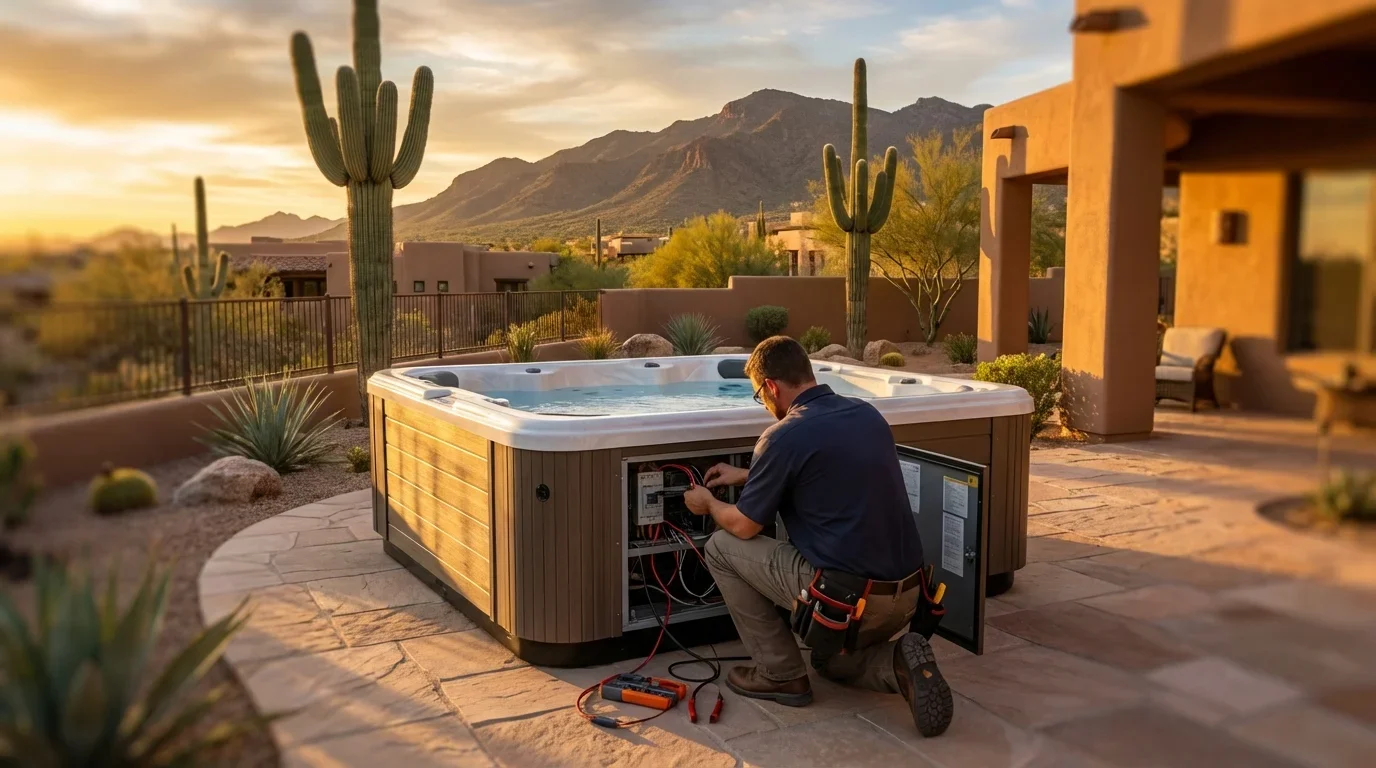
Your Hot Tub Needs More Than Just a Plug
Arizona heat demands relaxation, but your spa requires proper 240V power to deliver it safely. We install dedicated circuits that protect your investment and your family.
- GFCI protection prevents electrical hazards near water
- Dedicated circuits handle high-amp spa loads without tripping
- Code-compliant installation protects your home's resale value
⚠ Common Issues
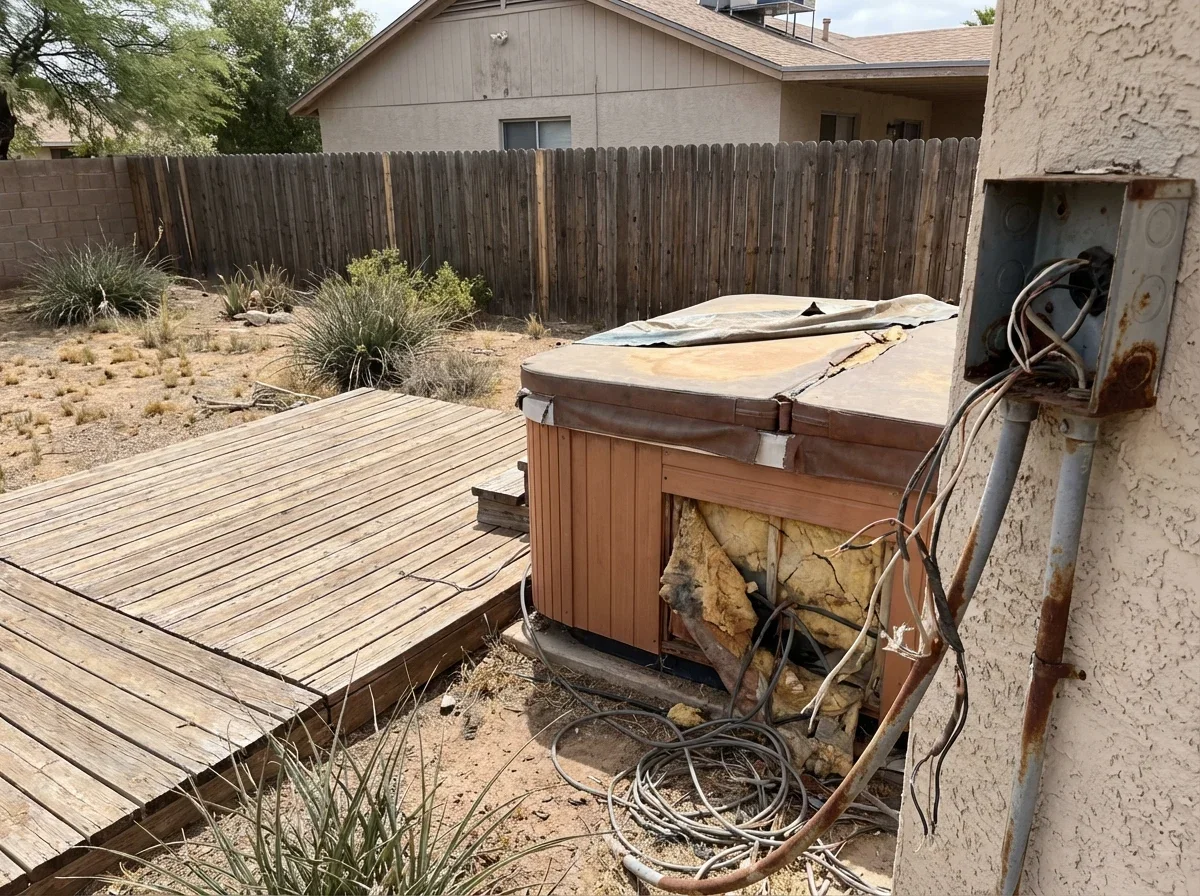
Why Hot Tub Wiring Isn't a DIY Project
You've got the hot tub sitting in your driveway. The dealer mentioned you need "electrical work." You looked at the specs — 240 volts, 50 amps, GFCI breaker. Maybe you thought about running the wire yourself.
Then you saw the code requirements.
Hot tub circuits fall under NEC Article 680, one of the most stringent sections of electrical code. You need GFCI protection, a properly sized dedicated circuit, and a disconnect switch placed exactly 5-10 feet from the water's edge.[1] Get the disconnect location wrong — even by a foot — and you fail inspection. Bond the wrong metal parts and you create a shock hazard.
Arizona adds another layer of complexity. Your outdoor installation faces UV exposure that degrades standard conduit in 18-24 months. Monsoon rains pool around improperly sealed boxes. Summer heat expands wire differently than cooler climates. Phoenix and Scottsdale inspectors know what to look for — and they'll red-tag work that doesn't account for desert conditions.
The stakes are real. An improperly wired hot tub can trip your main panel every time you turn on the jets. Worse, inadequate bonding creates electrocution risk in water. Insurance companies have denied claims over unpermitted electrical work.
The permit question. You can't hide a hot tub. Inspectors in Mesa, Chandler, and Gilbert know the compliance requirements. Unpermitted work surfaces during home sales, insurance claims, or when something goes wrong. The $150 permit fee is cheaper than the $2,500 rework.
This isn't outlet installation. It's specialized electrical work governed by safety codes written specifically for water and electricity. The right electrician knows NEC 680, understands Arizona's UV and weatherproofing requirements, and pulls permits as standard practice.
The wrong approach costs you twice — once for the failed DIY attempt, again for the professional fix.
$ Cost Guide
What Does Hot Tub Wiring Cost in Arizona?
Most hot tub electrical installations in the Phoenix metro area run $800-$2,500 depending on distance from your electrical panel, required upgrades, and site complexity. That includes materials, labor, permit, and inspection.
Here's how the numbers break down:
| Installation Type | Cost Range | What's Included |
|---|---|---|
| Simple installation (panel 20-30 ft away, clear path) | $800-$1,200 | Circuit, GFCI breaker, disconnect, conduit, permit |
| Standard installation (40-60 ft run, some trenching) | $1,200-$1,800 | Above + trenching, PVC burial, concrete patching |
| Complex installation (80+ ft, obstacles, landscaping) | $1,800-$2,500 | Above + extensive trenching, directional boring, multiple bends |
| Panel upgrade required (insufficient capacity) | +$1,200-$2,200 | 200-amp panel upgrade to support spa load |
Factors That Affect Your Final Price
Distance from electrical panel to hot tub location is the primary cost driver. Every 50 feet of run adds $100-$300 depending on installation method. Direct burial costs less but isn't always feasible if you're crossing patios, driveways, or established landscaping in Scottsdale or Tempe neighborhoods.
Your existing electrical capacity determines whether you need a panel upgrade. A 50-60 amp hot tub circuit requires dedicated capacity. If your home has a 100-amp service or an already-loaded 200-amp panel, you're looking at an upgrade. Homes built before 1990 in older Phoenix and Glendale neighborhoods frequently need this work.
Arizona-specific material costs run slightly higher than national averages. UV-rated schedule 40 PVC conduit costs 15-20% more than standard gray conduit, but it's required for exposed runs. Weatherproof boxes rated for monsoon conditions cost more than basic outdoor enclosures.
Site conditions add variables:
- Concrete drilling for conduit penetration: $150-$250
- Trenching through caliche hardpan: +$200-$400
- Crossing under existing hardscape: +$300-$600
- Tree root navigation: +$150-$300
The permit fee in most Arizona cities runs $120-$175. Inspection scheduling is straightforward — most municipalities offer next-day or same-week slots. The inspection itself is free, but corrections for failed inspections cost you the electrician's return trip time.
Compare that to the DIY approach: $400-$600 in materials (if you buy the right components), no warranty, no permit, and a 60-70% chance you'll need to hire an electrician anyway to fix code violations. Professional installation with permit gives you documented compliance — critical for insurance and resale.
→ What to Expect
The Hot Tub Wiring Installation Process
Pre-Installation Assessment and Permitting
Your electrician starts with a site evaluation — measuring the run from panel to hot tub location, checking panel capacity, identifying obstacles. They verify your hot tub's electrical specifications (voltage, amperage, connection type) and determine whether you need a 50-amp or 60-amp circuit.
The permit application goes to your local building department, typically approved within 1-3 business days in Phoenix, Mesa, and Chandler. Some cities like Scottsdale offer same-day electronic permits for straightforward installations.
Circuit Installation and GFCI Protection
Installation day typically takes 4-8 hours depending on run complexity. The electrician installs a dedicated 240V circuit with GFCI protection at the breaker (required by NEC 680.42)[1]. They run UV-rated conduit from panel to hot tub location, using direct burial for underground sections or wall-mounted conduit for exposed runs.
Trenching depth matters — Arizona code requires 18-inch minimum burial for rigid conduit, 24 inches for direct-burial cable. Shallower depths fail inspection. The conduit terminates in a weatherproof junction box at the hot tub connection point.
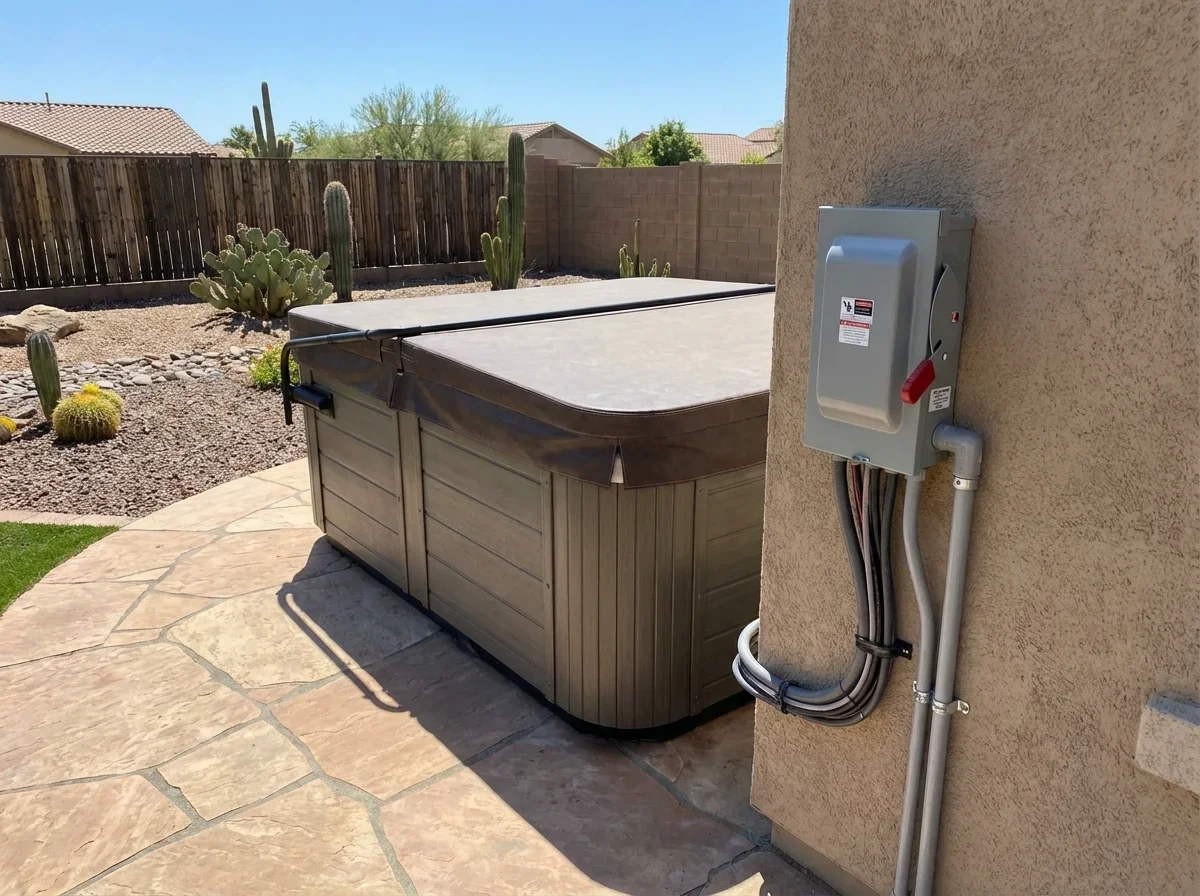
The disconnect switch gets mounted 5-10 feet from the water's edge, within sight of the hot tub. This is non-negotiable for inspection approval. Too close and it's a shock hazard; too far and it doesn't meet emergency shutoff requirements.[1]
Bonding and Final Connections
Equipotential bonding connects all metal components within 5 feet of the spa — pumps, heater housings, metal panels, even metal fencing.[1] This creates equal electrical potential, preventing shock if a fault occurs. It's invisible work that saves lives.
The electrician makes the final connections to your hot tub per manufacturer specifications, tests the circuit, and verifies GFCI function. Then they schedule the inspection.
Inspection and Sign-Off
Arizona municipal inspectors verify circuit sizing, GFCI protection, disconnect placement, bonding connections, and burial depth. They check for proper weatherproofing on all boxes and fittings — critical in monsoon season. Most inspections take 15-20 minutes.
Pass the inspection and you're done. The electrician hands you permit documentation and signed-off inspection certificate — keep these with your home records. Power on the spa and start heating.
Timeline from start to finish: 3-7 days including permit approval, installation, and inspection. Faster in Peoria, Surprise, and Buckeye where inspection scheduling is less congested.
✓ Choosing a Contractor
How to Choose a Hot Tub Electrician in Arizona
Not every electrician specializes in NEC Article 680 work. You need someone who understands bonding requirements, GFCI placement rules, and Arizona's UV and weatherproofing standards — not just someone who can pull wire.
Licensing and Insurance Requirements
Verify the contractor holds an active Arizona Residential or General Electrician license. Check the ROC (Registrar of Contractors) database for complaints or disciplinary action. Hot tub wiring requires proper liability insurance — ask for proof of coverage and verify it's current.
Ask these questions before hiring:
- Do you regularly install hot tub circuits under NEC Article 680?
- Will you pull the permit and schedule the inspection?
- What's included in your quote — trenching, concrete patching, panel upgrade if needed?
- Do you warranty your work, and for how long?
- Can you provide references from recent hot tub installations in my area?
Red flags: contractors who suggest skipping the permit, quote significantly below $800 for standard installations, or can't explain GFCI placement requirements. A legitimate electrician in Gilbert or Glendale knows the inspection process and builds permit costs into their estimate.
What Separates Good Contractors from Bad Ones
Good electricians assess your panel capacity before quoting. They account for future electrical loads — if you're planning an EV charger installation or pool equipment, they factor that into sizing recommendations.
They use UV-rated materials as standard practice, not just because code requires it. They explain why the disconnect goes where it does, and they trench to proper depth even when "no one would know."
They show up when scheduled, communicate inspection results, and leave you with documentation. This matters when you sell your home or file an insurance claim.
Compare local electricians on experience with Article 680 work, permit track record, and customer reviews specific to hot tub installations. The directory shows you licensed Arizona electricians who specialize in this exact work — contractors who handle dedicated circuit installation and electrical permitting daily.
Your hot tub investment deserves electrical work done right the first time. Start comparing qualified electricians in your area.
Top Contractors for Hot Tub & Spa Wiring
View all →



Frequently Asked Questions
- Jessup Borough. "Spa & Hot Tub Code Requirements." https://www.jessupborough.com/app/download/769906140/Spa+and+Hot+Tub+Code+Requirements.pdf. Accessed April 06, 2026.
- Arizona Board of Orienteers (AZBO) / Arizona Building Code Authority. "Appendix G – Swimming pools, spas and hot tubs shall be amended." https://www.azbo.us/documents/documents/Swimming_Pool_Details_and_Commentary.pdf. Accessed April 06, 2026.
Estimate Your Hot Tub & Spa Wiring Cost
Get an instant price range based on your home and project details.