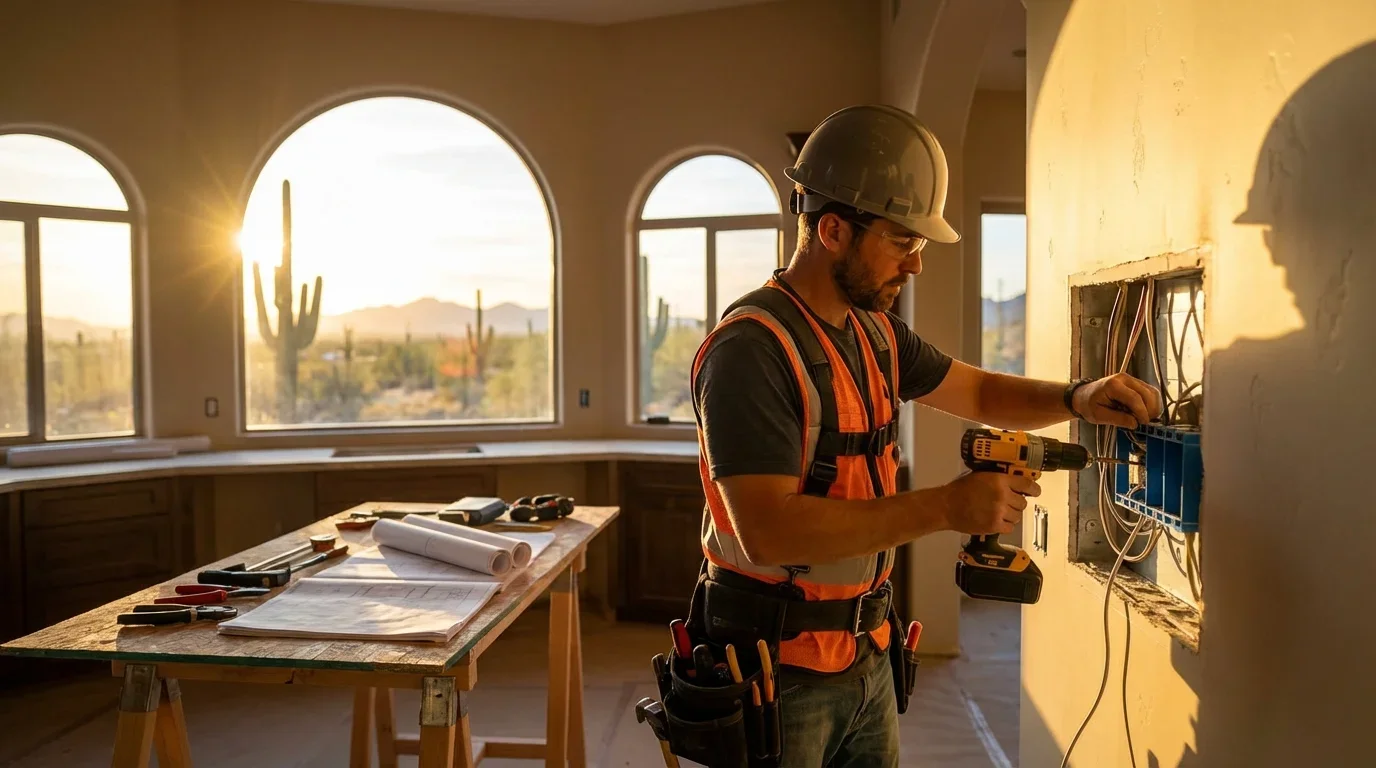
Your Kitchen Remodel Just Hit an Electrical Wall
You're gutting the kitchen, but your 1980s electrical panel can't handle a microwave and coffee maker at the same time without tripping.
- That's not a breaker problem — it's a capacity problem
- Code requires dedicated 20-amp circuits for every major appliance
- Most Arizona kitchens need 4-7 new circuits, not just outlet swaps
⚠ Common Issues
Signs Your Kitchen Electrical Can't Handle the Remodel
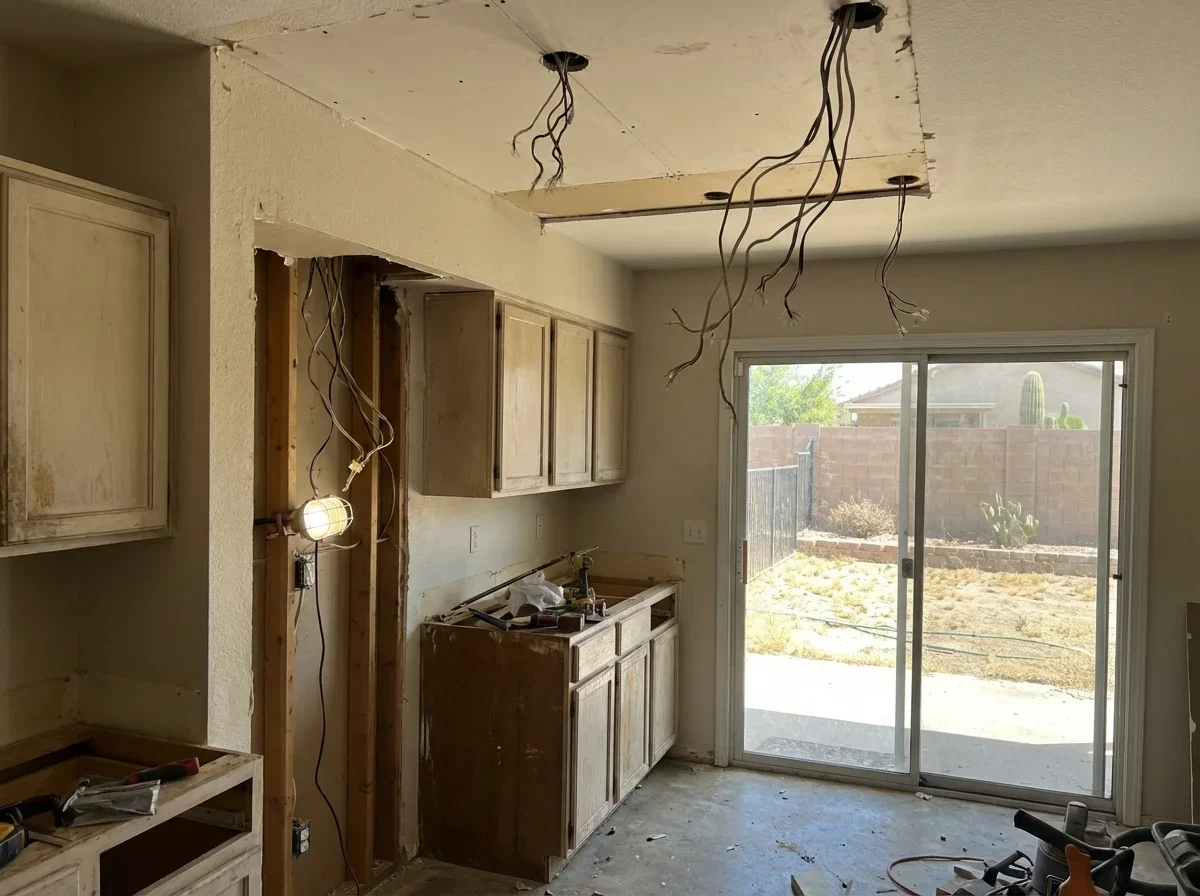
You've demoed the cabinets and realized there are exactly two outlets on the entire back wall. One of them is wired to the garage circuit. The other shares a line with the hallway bathroom.
This is what happens when you plan around cabinets before you plan around code.
Walk into any kitchen in Scottsdale built before 2000 and you'll see the same thing: outlets spaced eight feet apart, no GFCI protection near the sink, and a single 15-amp circuit trying to power a countertop microwave, toaster oven, and stand mixer. The breaker trips every Sunday morning.
Sound familiar? Your contractor says you need "at least four new circuits." The electrician mentions a panel upgrade. You thought this was just about adding outlets. Now you're looking at a $4,000 electrical budget before you've touched flooring or countertops.
Modern kitchens don't just need more outlets — they need more power. The National Electrical Code[1] requires dedicated 20-amp circuits for refrigerators, dishwashers, microwaves, and garbage disposals. That's four circuits right there, before you count the two 20-amp small appliance circuits for countertop receptacles. Arizona adopted these standards statewide, and inspectors in Phoenix and Mesa enforce them strictly during remodels.
You can't fake this with power strips. You can't "make it work" with the existing wiring. If you're moving walls, adding a kitchen island, or upgrading to a 48-inch range, you're rewiring. Period.
The good news? Once it's done right, you'll never think about it again. The bad news? Most homeowners underestimate the scope by half.
$ Cost Guide
What Does Kitchen Electrical Remodeling Cost in Arizona?
The electrician walks the space and asks how many outlets you want on the island. You say three. He explains that's two circuits minimum, plus a junction box above the ceiling for code access. You're already at $600 before he mentions GFCI requirements.
Kitchen electrical costs scale with appliance count and layout complexity, not square footage.
Here's what the average remodel costs across Phoenix, Chandler, and Gilbert:
| Scope | Cost Range | What's Included |
|---|---|---|
| Basic Circuit Upgrade | $800–$1,500 | 2-3 new 20-amp circuits, GFCI outlets, reconnect existing appliances |
| Full Remodel Rewire | $2,500–$6,000+ | 5-7 dedicated circuits, island power, under-cabinet lighting, recessed fixtures, panel upgrade if needed |
| High-End Smart Kitchen | $6,000–$10,000+ | Smart switches, USB outlets, sensor lighting, Wi-Fi-controlled dimming, dedicated refrigerator surge protection |
Circuit Upgrades and Panel Capacity
Most homes in Tempe and Peoria built in the '90s have 100-amp or 150-amp panels. Adding 5-6 kitchen circuits often pushes you past safe capacity, especially if you're also running AC and a pool pump. A sub panel installation runs $1,200–$2,200, or you upgrade to a 200-amp main service for $2,500–$4,000.
Dedicated circuit installation costs break down like this:
- 20-amp appliance circuit (dishwasher, disposal, microwave): $180–$300 per circuit
- Small appliance circuits (countertop outlets every 4 feet): $250–$400 each (minimum two required)
- Island outlets (minimum one circuit): $300–$500 depending on distance from panel
- Range circuit (40-50 amp for electric ranges): $400–$700
Lighting Installation Costs
Recessed lighting runs $150–$250 per fixture installed, including LED trim and dimmer-compatible drivers. A typical Arizona kitchen uses 4-6 cans for ambient lighting, plus 2-3 pendant fixtures over an island ($200–$400 each installed).
Under-cabinet lighting options:
- Hardwired LED strip (dimmable): $350–$600 total for 12-15 linear feet
- Plug-in puck lights (6-pack): $120–$180 DIY, $300–$450 professionally installed
- Motion-sensor LED bars: $400–$700 for smart integration with whole-home systems
Smart home features are climbing fast in Glendale and Surprise remodels. Expect to add $800–$1,500 for Wi-Fi switches, USB outlets at countertops, and app-controlled dimming.
Labor and Permit Fees
Phoenix requires permits for any kitchen work involving new circuits or service changes.[2] Permit fees run $75–$150, and inspection scheduling typically takes 1-3 business days. Most electricians include permit costs in flat-rate bids.
Labor for a full kitchen rewire (rough-in to final devices) runs $1,800–$3,500 depending on access and whether you're working around existing drywall or open studs. Open walls cut labor by 30-40%.
| DIY Circuit Add | Professional Install | |
|---|---|---|
| Cost | $80–$150 (wire, breaker, box) | $250–$400 per circuit |
| Code Compliance | Unlikely without experience | Guaranteed |
| Inspection Pass Rate | ~40% first attempt | 95%+ |
| Warranty | None | 1-year minimum on labor |
| Time to Complete | 6–8 hours (one circuit) | 1–2 hours |
The math is clear: hire the pro. You're not saving money if the inspector red-tags your work and you pay someone to redo it anyway.
→ What to Expect
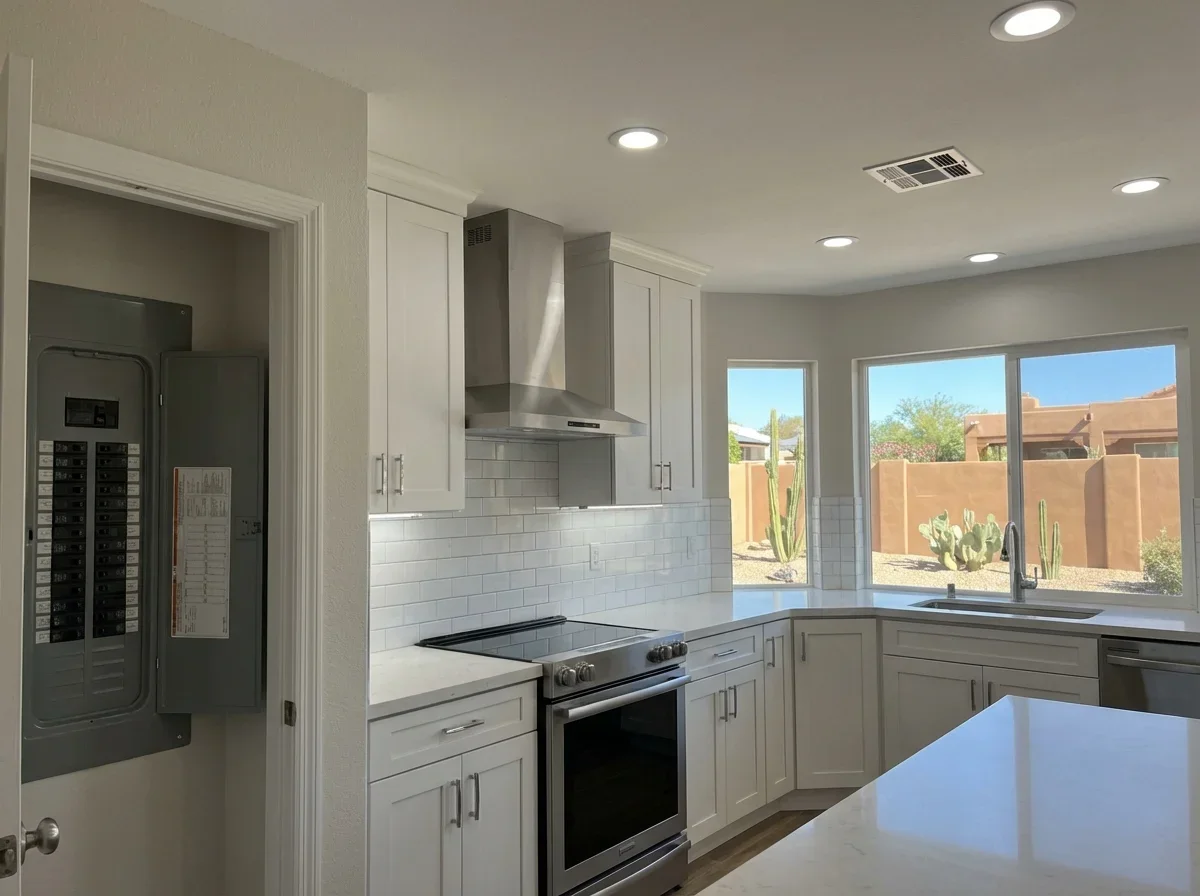
The Kitchen Electrical Remodel Process
The electrician shows up before the drywall comes down. If you wait until the tile is in and cabinets are hung, you're fishing wire through finished walls at triple the cost.
Initial Assessment and Load Calculation
First visit is a walkthrough. The electrician maps your appliance list (range, hood, refrigerator, microwave, dishwasher, disposal, wine fridge, coffee station) and calculates total amperage. If you're in Mesa or Buckeye with an older 100-amp panel, this is when you find out you need an upgrade.
Expect questions about future additions — are you planning an outdoor kitchen next year? Adding a pool heater? These decisions dictate panel sizing now.
Rough-In and Circuit Installation
Rough-in happens after framing and plumbing, before insulation. The electrician:
- Installs new circuits from the panel to each appliance location and outlet box
- Runs dedicated lines for hardwired appliances (disposal, dishwasher, hood)
- Places junction boxes above ceiling for code-required access points
- Stubbs out island circuits through the floor or ceiling depending on slab vs. crawlspace
- Marks outlet heights per your cabinet plans (typically 42-44 inches for backsplash outlets)
This phase takes 1-2 days for an average kitchen. The work gets inspected before insulation and drywall closure — this is the "rough inspection" required in Phoenix and Scottsdale.[2]
Fixture and Device Installation
Once drywall and paint are done (but before cabinets if you're doing undercabinet lighting), the electrician returns to install:
- GFCI outlets at countertop locations (every 4 feet, and within 6 feet of the sink)[1]
- Dimmer switches for recessed and pendant lights
- Under-cabinet LED strips hardwired to wall switches
- Smart outlets or USB combo receptacles if specified
- Final connections to appliances once they're delivered
Typical timeline: half-day to full day depending on fixture count.
Inspection and Final Connection
The city inspector checks GFCI placement, outlet spacing, wire gauge for each circuit, and grounding. Pass rate is 95%+ when a licensed contractor does the work. If something's flagged, fixes take a few hours and re-inspection is usually same-week.
After final inspection approval, the electrician connects appliances and tests everything under load. You should walk through with them — verify every outlet works, dimmers function smoothly, and no breakers trip when you run the microwave and toaster simultaneously.
Total project timeline from rough-in to final: 2-3 weeks if there are no cabinet delays or permit issues.
✓ Choosing a Contractor
How to Choose a Kitchen Electrical Contractor
You're comparing three bids. One's $1,200 cheaper but lists "outlets and circuits" with no details. One mentions AFCI breakers and load calculations. One guy showed up 40 minutes late and didn't bring a tape measure.
The cheapest bid skips the work that keeps your kitchen legal and safe.
Arizona requires electrical contractors to hold an active ROC license (Registrar of Contractors). Verify it at roc.az.gov before signing anything. Look for "CR-11" (residential) or "CR-7" (dual residential/commercial) classifications. If they're not listed or the license is expired, walk away.
Questions to Ask Every Contractor
- "How many dedicated circuits will you install, and which appliances get their own?" Correct answer: refrigerator, dishwasher, microwave, disposal each get a 20-amp circuit, plus two 20-amp small appliance circuits for countertops.
- "Will you pull permits and schedule inspections?" If they say permits aren't necessary, they're either unlicensed or planning to hide substandard work.
- "What's your experience with panel upgrades?" Half of kitchen remodels in Phoenix and Gilbert need 200-amp service. If they subcontract panel work, you're adding coordination delays and cost markups.
- "How do you handle under-cabinet lighting and smart switches?" You want someone who's installed smart home wiring recently, not someone learning on your dime.
Red Flags to Avoid
- Bids with lump-sum pricing and no circuit-by-circuit breakdown
- Contractors who don't ask about your appliance list or cabinet layout
- Anyone who says "we'll figure out GFCI placement later" (it's code, not optional)
- Electricians who don't coordinate timing with your general contractor or cabinet installer
What Separates Good Contractors from Bad Ones
The best kitchen electricians in Scottsdale and Chandler walk your space with your cabinet plans in hand. They ask where you want the coffee station, whether you're adding a wine fridge, if you plan to hardwire the microwave or use a plug. They've done enough remodels to know that homeowners always add "one more outlet" mid-project, and they account for that in the bid.
They also know the inspection process cold. They're scheduling the rough inspection before your drywaller shows up, not scrambling two weeks later when the city won't approve because wiring is buried behind sheetrock.
Compare at least three licensed contractors who've done kitchens similar to yours in scope. Ask for photos of recent jobs — not stock images, actual work. Check ROC complaint history. And make sure they're available when your GC needs them, not juggling six other remodels and showing up three weeks late.
The difference between a $3,000 job that passes inspection and a $3,000 job that gets red-tagged twice? The contractor who shows up on time, knows Arizona code[1], and doesn't treat your kitchen like a side gig.
Top Contractors for Kitchen Remodel Electrical
View all →



Frequently Asked Questions
- Arizona Registrar of Contractors. "Arizona Electrical Codes." https://housley.com/arizona-electrical-codes/. Accessed April 06, 2026.
- City of Phoenix Development Services. "Electrical Permits and Inspections." https://www.phoenix.gov/pdd/sites/trades/electrical.html. Accessed April 06, 2026.
Estimate Your Kitchen Remodel Electrical Cost
Get an instant price range based on your home and project details.