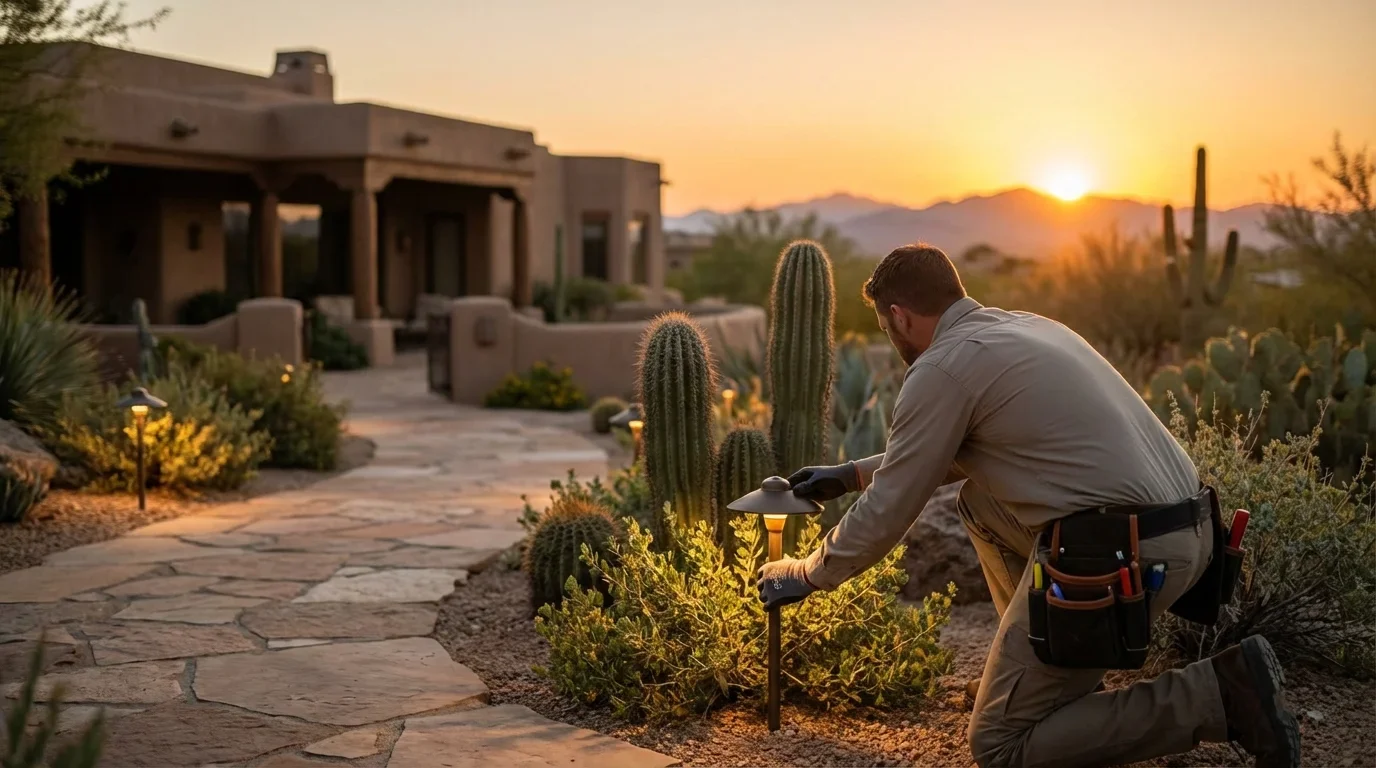
Transform Your Arizona Nights Into Something Beautiful
Professionally installed low voltage landscape lighting turns your outdoor space into an evening showcase while boosting security and curb appeal.
- Highlight your desert landscaping and architecture after dark
- Safe, illuminated pathways prevent trips and falls
- Energy-efficient LEDs built for Arizona's extreme heat
⚠ Common Issues
Why Arizona Homeowners Invest in Landscape Lighting
Your landscaping looks incredible during the day. By 7 PM, it disappears.
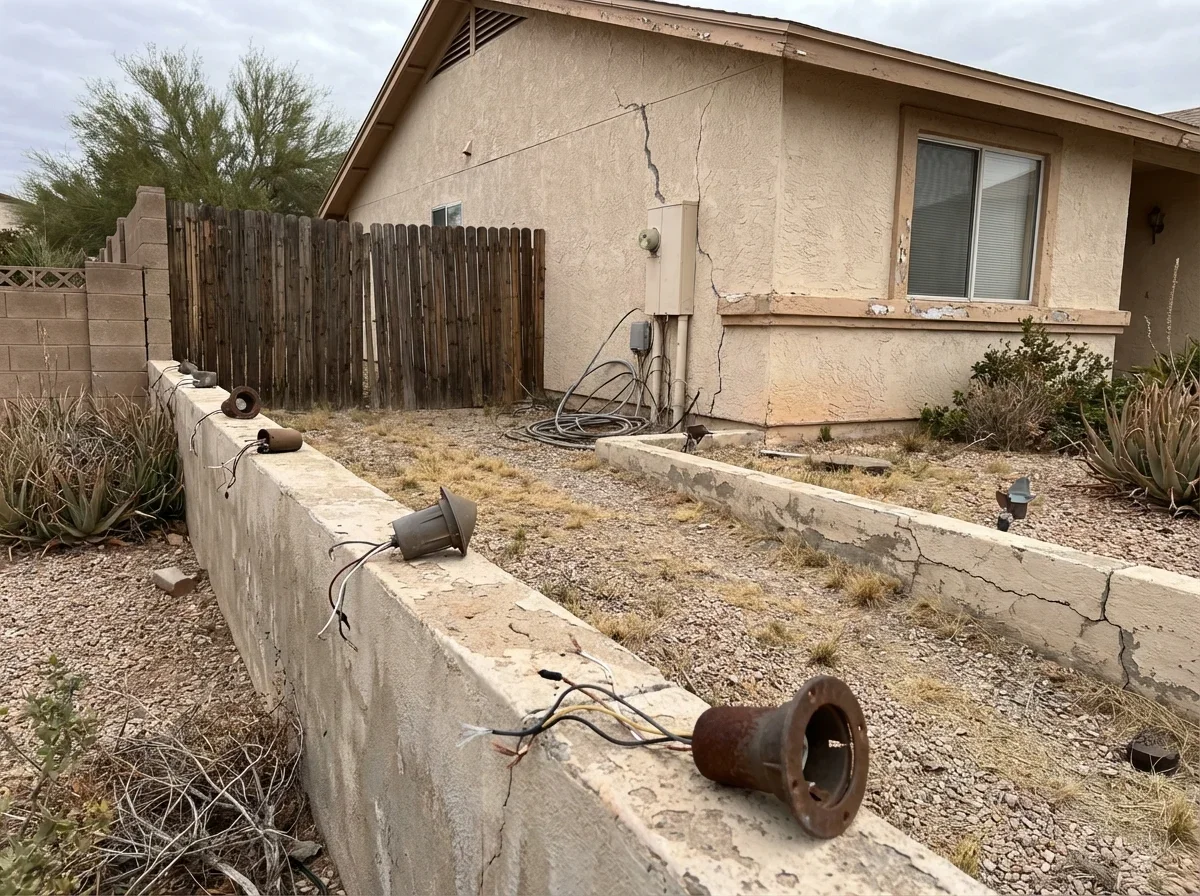
You've thought about adding lights — maybe you even bought a few solar stakes from the hardware store. They worked for a month, then started tilting. The batteries died. Now half of them don't turn on at all.
Professional landscape lighting isn't decoration — it's an electrical system designed for Arizona's climate. The desert environment presents unique challenges: extreme heat that kills cheap fixtures, monsoon storms that test waterproofing, and UV exposure that degrades plastic components in months.
Homeowners in Scottsdale and Paradise Valley understand this. When you drive through established neighborhoods after dark, you see the difference between $200 worth of solar stakes and a properly designed low-voltage system. One looks like landscape lighting. The other looks like you're trying.
The ROI is measurable. According to the National Association of Realtors, outdoor lighting projects return 50-75% of their cost at resale, but the real value shows up every evening when you pull into your driveway. Your home looks intentional. Established. Worth protecting.
Consider what you're highlighting: mature saguaros that took decades to grow, custom water features, desert landscaping that cost thousands to install. Those investments disappear at sunset without proper lighting.
The ROI is real. Landscape lighting in Phoenix metro areas typically adds $3,000-$6,000 to perceived home value while reducing homeowners insurance premiums through improved security lighting.
Safety matters too. Desert landscaping means rocks, elevation changes, and pathways that aren't always obvious in the dark. Proper pathway lighting prevents trips and falls while guiding guests safely to entries.
$ Cost Guide
What Does Landscape Lighting Cost in Arizona?
Most residential landscape lighting systems in Arizona run $2,500-$8,000 depending on property size and design complexity.
That's not a fixture count — it's a complete electrical system with transformer, wiring, controls, and professional installation. Breaking it down:
| System Component | Cost Range | Notes |
|---|---|---|
| Transformer (150W-600W) | $200-$800 | Sized to total fixture load |
| LED fixtures (each) | $75-$300 | Brass/copper last longer in AZ heat |
| Low voltage wire (per foot) | $0.50-$2 | Direct burial rated, 12-14 gauge |
| Timer/smart controls | $100-$600 | Photocell to app-based systems |
| Labor (design + install) | $1,200-$4,000 | Licensed electrician rates |
Installation Cost Factors
Property size drives the biggest cost variable. A typical Gilbert home with front yard accent lighting (8-12 fixtures highlighting architecture and key plants) runs $2,500-$4,000. Add backyard entertainment areas, pool perimeter lighting, and pathway systems, and you're looking at $5,000-$8,000 for comprehensive coverage.
Fixture quality matters in Arizona's climate. Budget fixtures with plastic housings fail within 2-3 years under UV exposure and 115°+ summer heat. Brass and copper fixtures cost more upfront ($150-$300 each vs $75-$150) but last 15+ years in desert conditions.
Wiring complexity affects labor costs. If you're lighting saguaros 40 feet from the house or running wire under existing hardscape in Tempe, trenching and wire runs increase installation time. Expect $800-$1,500 additional for complex layouts requiring extensive burial or conduit work.
Fixture and System Pricing
Here's what typical Arizona installations include:
Basic Front Yard Package ($2,500-$3,500)
- 8-12 LED path/accent fixtures
- 300W transformer with photocell timer
- Uplight 2-3 architectural features or mature plants
- Pathway lighting to front entry
Comprehensive Property Lighting ($5,000-$8,000)
- 20-30 LED fixtures (mix of path, accent, downlights)
- 600W transformer with smart controls
- Front and backyard coverage
- Pool/spa area lighting (if applicable)
- Seasonal dimming and zone control
Smart controls add $200-$600 but pay off in Arizona's long summer daylight. Astronomical timers adjust automatically as sunset shifts from 5:30 PM in winter to 8 PM in June, preventing lights from running during daylight hours and wasting energy.
LED vs halogen operating costs matter here. Arizona's hot climate means outdoor lights run 10-12 hours nightly year-round. A 20-fixture halogen system costs roughly $180/year in electricity. The same system in LED costs $35/year and lasts 25,000+ hours vs 2,000 hours for halogen.[2]
→ What to Expect
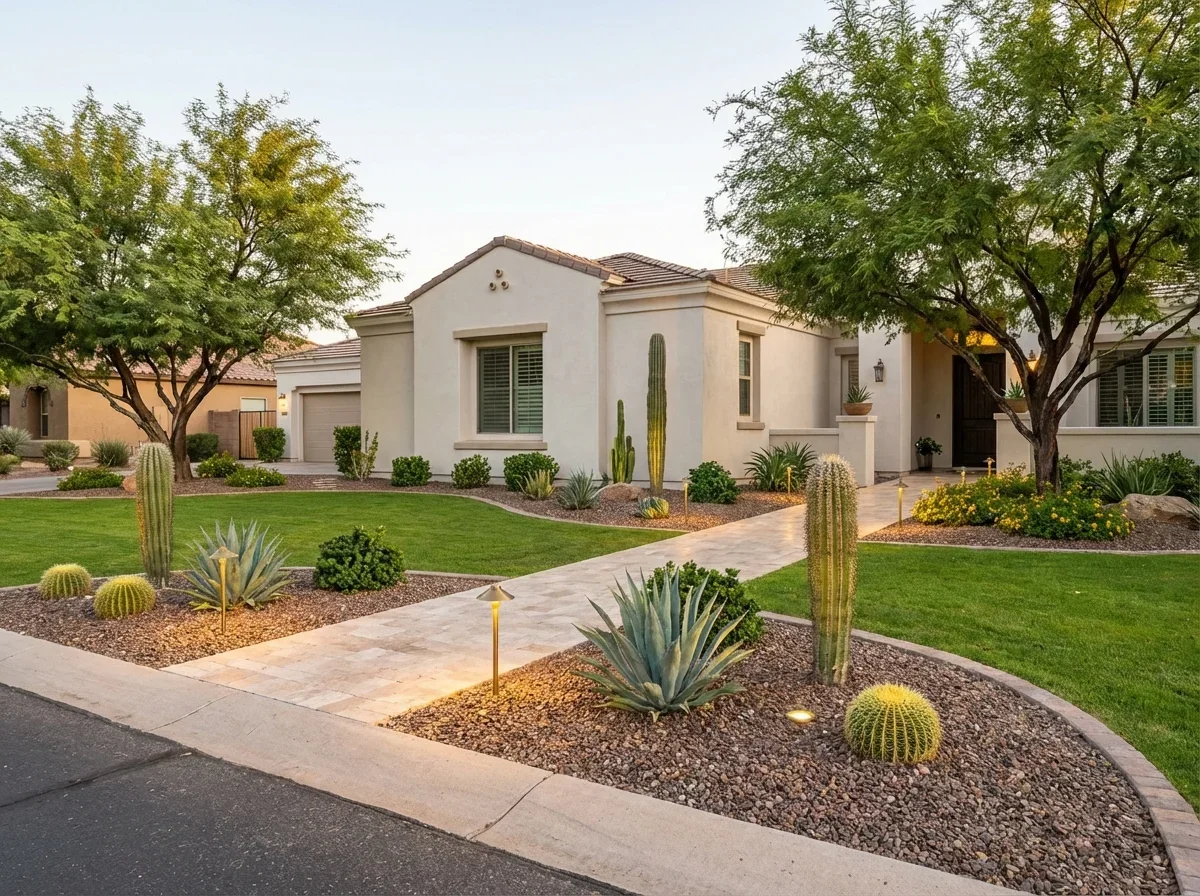
The Landscape Lighting Installation Process
Professional installation takes 1-3 days depending on system size. Here's what happens:
Design and Layout Planning
The electrician walks your property with you, identifying what to light and why. This isn't guesswork — it's zoning strategy.
Pathway lighting handles safety (steps, grade changes, walkways). Fixtures placed 8-10 feet apart provide consistent illumination without glare. In Mesa and Chandler neighborhoods with desert rock landscaping, this prevents twisted ankles and guides guests safely.
Uplighting highlights focal points: saguaros, agave clusters, water features, architectural elements like stacked stone or custom ironwork. Each fixture gets positioned to graze texture without creating harsh shadows.
Accent lighting draws attention to specific features — a specimen tree, a focal point in your garden, outdoor art. One well-placed fixture creates more impact than six poorly positioned ones.
The designer calculates total wattage to size the transformer correctly. A 300W transformer handles roughly 20-25 LED path lights (most draw 3-7 watts each). Undersizing causes voltage drop and dim fixtures. Oversizing wastes money.
Transformer and Wiring Installation
The transformer mounts near your electrical panel, typically in a garage or exterior utility area. It requires a dedicated 120V circuit — this is electrical work requiring a licensed contractor per Arizona code.[1]
Low-voltage wire (12V or 15V) runs from the transformer to fixture locations via buried cable. The electrician trenches 6-8 inches deep, lays direct-burial rated wire, and backfills carefully to avoid disturbing existing landscaping. In Surprise and Peoria properties with extensive hardscape, conduit protects wire under pavers and concrete.
Wire gauge matters for voltage drop. Longer runs (over 50 feet) require 12-gauge wire to maintain consistent brightness. Cheap installations use 16-gauge throughout and you end up with bright fixtures near the transformer and dim ones at distance.
Fixture Placement and Testing
Fixtures get positioned, aimed, and tested at dusk. The electrician fine-tunes angles to eliminate glare and ensure even coverage. Smart controls get programmed for your schedule — typically on at sunset, off at 11 PM or midnight for front areas, later for backyards if you entertain.
Arizona's monsoon season (July-September) tests installation quality. Proper waterproofing on connections and quality fixtures prevent moisture intrusion that kills systems. Most licensed electricians warranty their work for 1-2 years and use fixtures with 5-10 year manufacturer warranties.
✓ Choosing a Contractor
How to Choose a Landscape Lighting Installer in Arizona
Not all outdoor lighting contractors are electricians. That matters.
Licensing Requirements for Electrical Work
Any work connecting to your home's electrical system — including the transformer for landscape lighting — requires a licensed electrician in Arizona. The contractor should carry a residential or general electrician license (ROC classification), not just a landscaping license.[1]
Ask to see their license number and verify it's active through the Arizona Registrar of Contractors. This isn't being difficult — it's protecting yourself from code violations that surface during home inspections or insurance claims.
Some landscaping companies subcontract the electrical work. That's fine if they're transparent about it. You want to know who's actually doing the transformer installation and making electrical connections.
Portfolio and Design Experience
Request photos of completed installations in similar properties. A contractor experienced with Phoenix-area desert landscaping understands how to light saguaros (uplight from base to show vertical structure), how to avoid glare on gravel surfaces, and which fixtures hold up in 115°+ heat.
Questions to ask:
- What fixtures do you typically install and why? You want specific brands and materials (brass, copper, powder-coated aluminum), not generic "commercial grade" claims.
- How do you calculate transformer sizing? They should mention total wattage load plus 20-30% buffer for future additions.
- What wire gauge do you use for runs over 50 feet? Correct answer: 12-gauge minimum to prevent voltage drop.
- Do you offer smart controls or just timers? Both work, but smart systems allow seasonal adjustment and zone control via app.
Warranty and Maintenance Support
Reputable installers warranty labor for 1-2 years and use fixtures with manufacturer warranties of 5-10 years. LED lamps should be rated for 25,000+ hours — that's 6-7 years of nightly use before replacement.
Ask about maintenance plans. Quality systems need minimal service, but occasional adjustments (fixture repositioning as plants grow, timer updates, lamp replacement) keep everything looking professional. Some contractors offer annual checkups for $150-$300 that include cleaning fixtures, checking connections, and adjusting timers seasonally.
Red flags to avoid:
- Prices significantly below $2,000 for whole-property systems (they're cutting corners somewhere)
- Refusal to provide license information or proof of insurance
- No written warranty on labor or materials
- Installing halogen fixtures in 2024 (LED is standard now)
The right contractor makes this process straightforward. They assess your property, explain options clearly, provide a detailed estimate breaking out fixtures/labor/controls, and schedule installation within 2-3 weeks. For help comparing licensed electricians specializing in landscape lighting across Phoenix, Scottsdale, and surrounding areas, explore qualified professionals who understand Arizona's unique installation requirements.
Top Contractors for Landscape Lighting
View all →



Frequently Asked Questions
- Arizona State Legislature. "Arizona Residential Electrical Code." https://www.azleg.gov/ars/36/01363.htm. Accessed April 06, 2026.
- University of Arizona Cooperative Extension. "Landscape Lighting Guide." https://extension.arizona.edu/sites/extension.arizona.edu/files/pubs/az1492-2015.pdf. Accessed April 06, 2026.
Estimate Your Landscape Lighting Cost
Get an instant price range based on your home and project details.