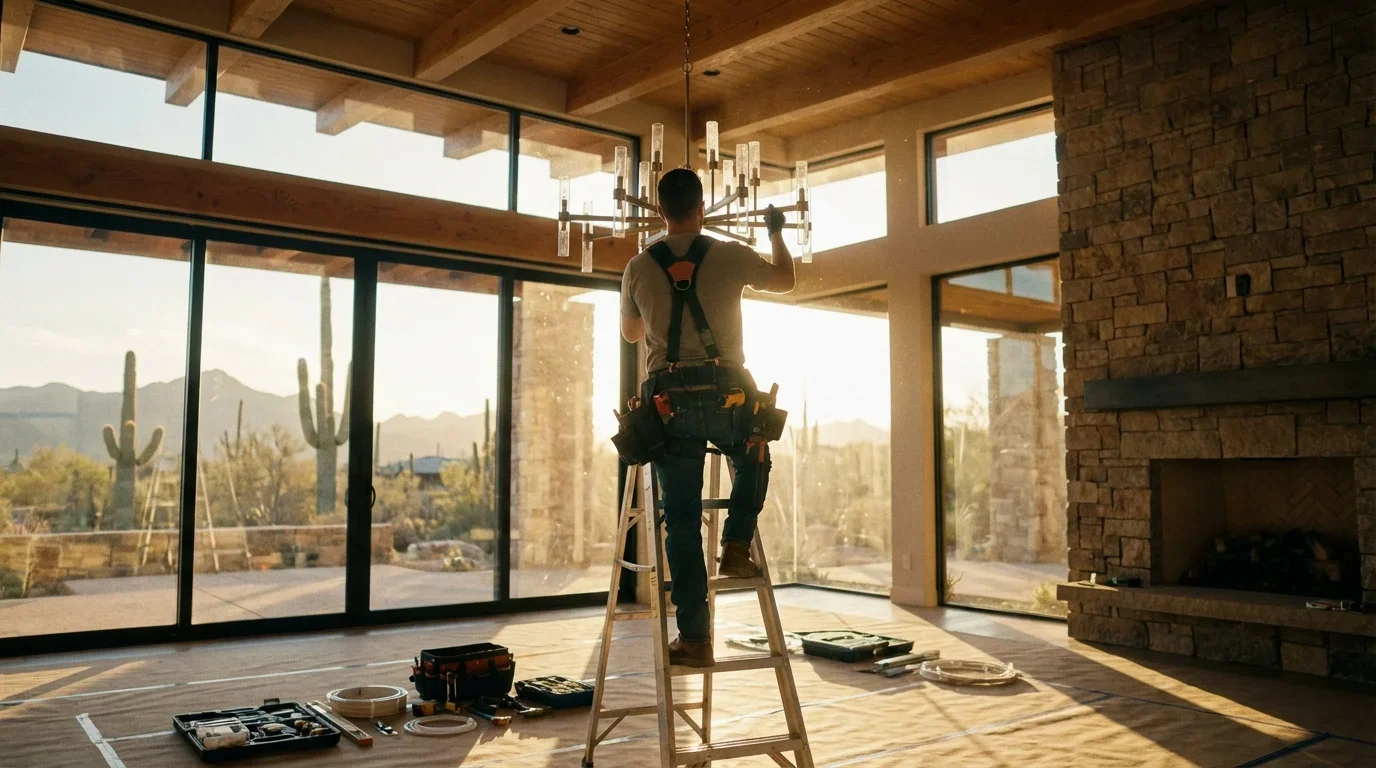
Light Up Your Space the Right Way
From outdated fixtures to dangerous DIY wiring, your Arizona home deserves professional lighting that works safely and looks stunning.
- Chandeliers, pendants, and sconces installed correctly
- Interior and exterior upgrades handled
- Licensed electricians who show up on time
⚠ Common Issues
When Your Light Fixtures Become Safety Hazards
You flip the switch and hear buzzing. Or nothing happens at all. Maybe that fixture worked fine yesterday, but today it's flickering like a strobe light.
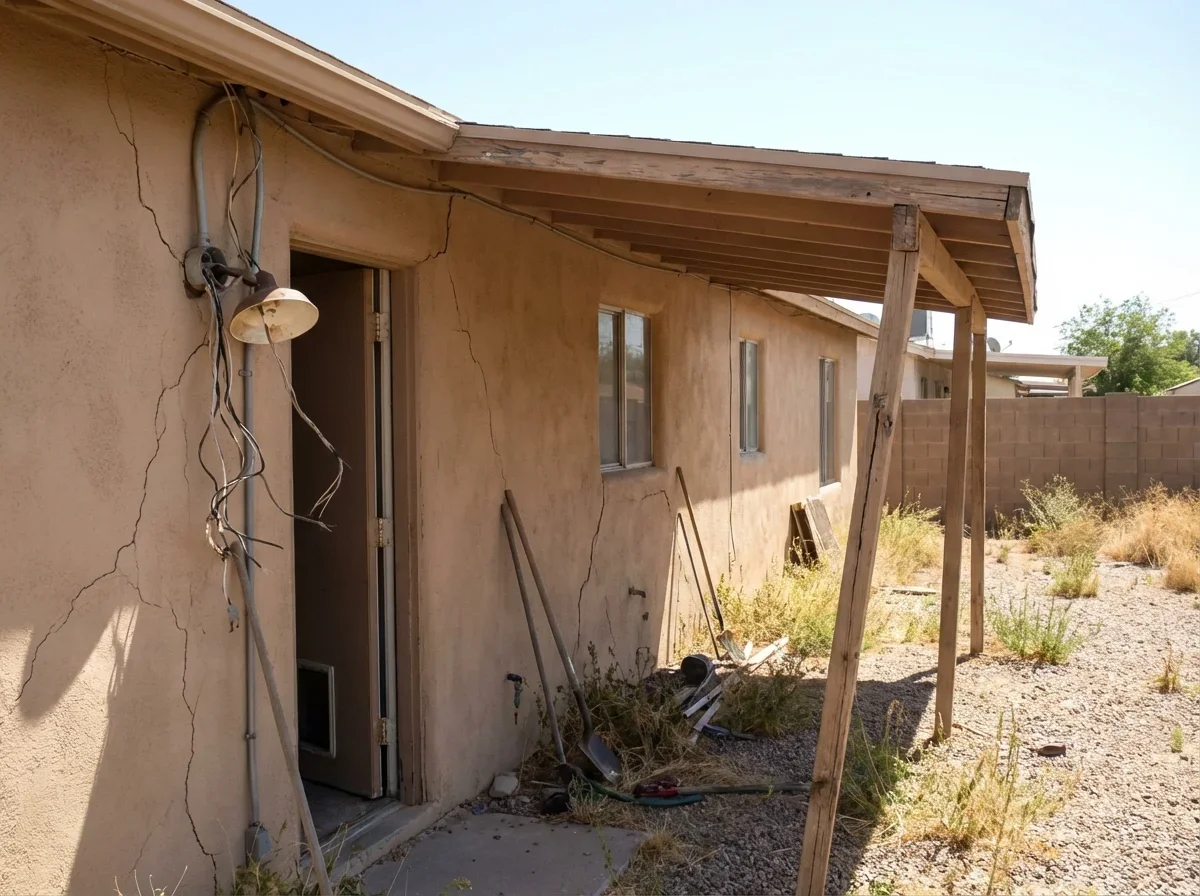
Here's what's actually happening. Loose wiring connections create resistance. Resistance creates heat. Heat degrades insulation and wire nuts. In Arizona's attic spaces where temperatures hit 150°F in summer, this degradation accelerates. What started as an annoying flicker becomes a legitimate fire risk.
Homeowners in Scottsdale and Gilbert often discover the problem when they try to replace a fixture themselves — the junction box is scorched, the insulation is brittle, or there's no ground wire at all because the house was built in the 1970s.
Sound familiar? You bought that new chandelier six months ago. It's still in the box because you're not sure if your ceiling can support 60 pounds. You watched a YouTube video. Now you're less confident, not more.
The cost of waiting escalates fast. A simple fixture replacement runs $75-150. Repairing fire damage from faulty wiring? $3,000-15,000 after insurance deductibles. Homeowners in Mesa and Chandler learn this the hard way when that "small electrical smell" turns into a service call from the fire department.
Outdoor fixtures fail differently in Arizona. Dust intrusion during monsoon season. UV degradation on plastic components. Thermal cycling that loosens connections. That front porch light that worked fine for five years suddenly won't turn off — the photocell is cooked, and the switch is bypassed with wire nuts that are now exposed to weather.
You need a licensed electrician when the fixture weighs more than 50 pounds, when you're adding new wiring, or when you're converting from one fixture type to another (swapping a flush-mount for a pendant requires reboxing). You definitely need one when your homeowner's insurance requires permitted electrical work for claims coverage.[1]
$ Cost Guide
What Does Light Fixture Installation Cost in Arizona?
A straightforward fixture swap in Phoenix — same location, same wiring, similar weight — runs $75-150 including labor. You're paying for 1-2 hours of work, safe wire connections, and someone who knows which wire is hot without guessing.
Here's where it gets expensive:
| Installation Type | Cost Range | What's Included |
|---|---|---|
| Simple replacement (like-for-like) | $75-150 | Shutoff, swap, testing |
| New fixture location | $200-400 | Box installation, wire run, drywall patching |
| Heavy chandelier with brace | $250-500 | Ceiling brace install, support verification, mounting |
| Outdoor security fixture with motion sensor | $150-300 | Weatherproof connections, sensor wiring, testing |
| Recessed can conversion to pendant | $180-350 | Reboxing, support modifications, trim work |
The wiring changes everything. If your new fixture requires a different electrical configuration — say, converting a single switch to a three-way, or adding a dimmer circuit — add $150-300. Running new wire from the panel for a dedicated circuit? That's $300-600 depending on distance and accessibility.
Permit fees in Maricopa County add $50-150 to projects requiring new wiring or panel connections. Not every fixture replacement needs a permit, but anything involving circuit modifications does.[1] Licensed contractors in Tempe and Peoria pull permits as part of their service — it's included in their quotes, and it keeps your homeowner's insurance valid.
What You're Really Paying For
The fixture itself is separate. These prices cover labor and basic supplies (wire nuts, mounting hardware, electrical tape). Your $2,000 statement chandelier from a Scottsdale showroom costs the same to install as a $200 Home Depot pendant — same labor, same structural requirements.
The ceiling structure matters more than the fixture style. A 15-pound pendant on a standard junction box? Easy. A 60-pound crystal chandelier on a ceiling without blocking between joists? The electrician needs to install a fan-rated brace box or add blocking from the attic. That's the $250-500 scenario.
| DIY Store Fixture | Professional Installation | |
|---|---|---|
| Cost | $0 labor | $75-500 labor |
| Time | 2-4 hours (if it goes well) | 1-3 hours guaranteed |
| Ceiling support verification | Hope for the best | Load calculations, brace installation |
| Code compliance | Unknown | Permitted, inspected |
| Insurance coverage | Voids coverage if faulty | Licensed, bonded work |
Outdoor fixtures in Arizona need UV-rated gaskets and dust seals that most big-box fixtures don't include. A good electrician in Glendale or Surprise knows which caulks and sealants survive 115°F days and monsoon rains. That's the difference between a fixture that lasts 10 years and one that fails in 18 months.
→ What to Expect
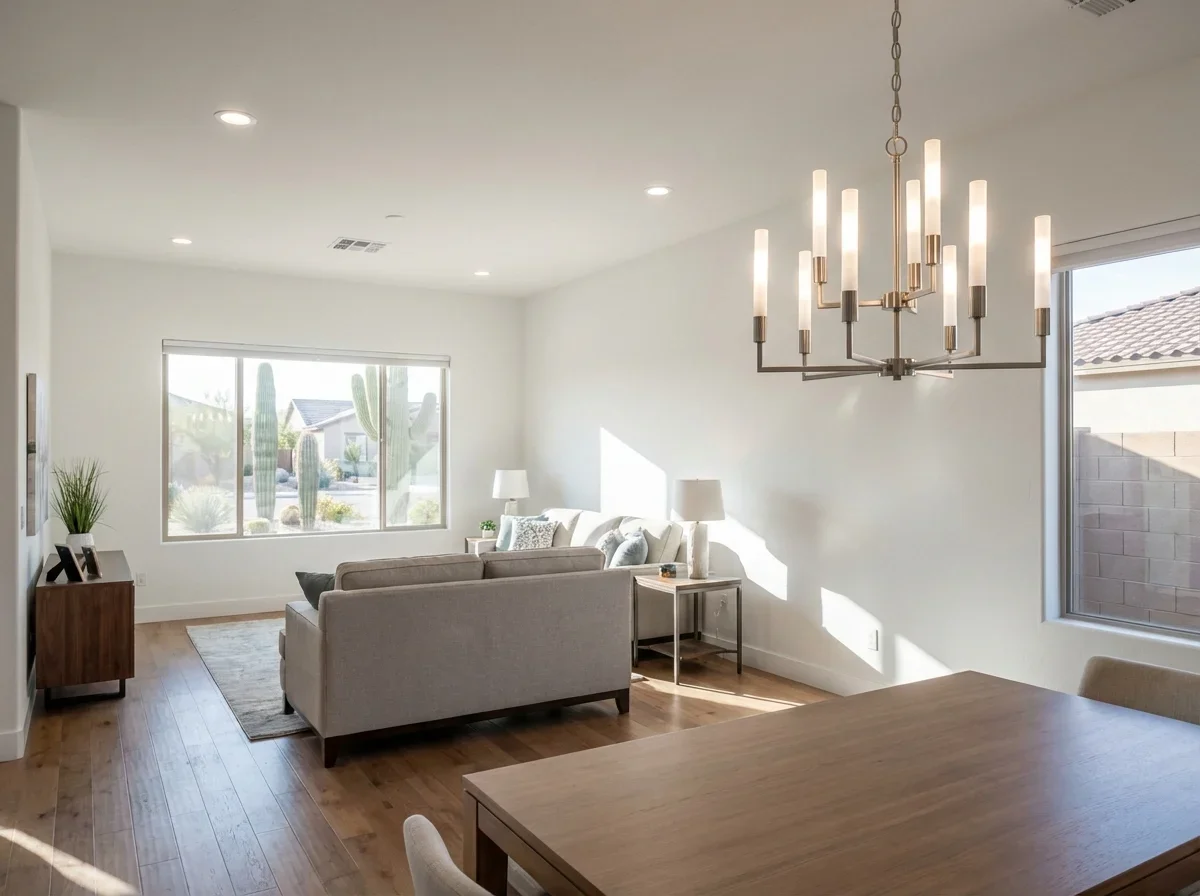
The Light Fixture Installation Process
Pre-Installation: Assessment and Preparation
Your electrician starts by verifying what you actually have. Is there power to the existing fixture? What's the ceiling structure — solid blocking, or drywall on joists? Is the existing junction box rated for the new fixture's weight?
For heavy chandeliers or ceiling fans, they'll check from the attic. If there's no blocking, they install a fan-rated brace box before touching any wiring. Homeowners in Chandler with vaulted ceilings discover this step adds an hour — accessing the space above a 16-foot ceiling requires scaffolding or extension ladders.
They also verify the circuit capacity. If you're replacing four 60-watt incandescent bulbs with a new fixture using eight 75-watt halogens, that's a load increase that might overload a 15-amp circuit. LED conversions rarely have this issue, but statement chandeliers with multiple bulbs sometimes do.
Installation Steps and Safety Protocols
Power shutoff at the breaker. Not the wall switch — the actual circuit breaker. They verify it's off with a non-contact voltage tester before touching any wires.
- Remove the old fixture — disconnect wires, remove mounting hardware, inspect the junction box for damage
- Prepare the new mounting — attach the mounting bracket, verify it's level (especially critical for multi-bulb chandeliers)
- Connect the wiring — match hot to hot (black), neutral to neutral (white), ground to ground (bare copper or green)
- Secure the fixture — mount according to manufacturer specs, verify weight support
- Install bulbs and trim — add bulbs, glass shades, or decorative elements
- Test all functions — switches, dimmers, motion sensors if applicable
For outdoor fixtures, they add silicone sealant around the mounting plate to prevent water intrusion. In Arizona, they also check that the fixture housing has ventilation holes — sealed outdoor fixtures can trap heat and fail prematurely when it's 110°F in direct sun.
Testing and Code Compliance
After installation, they test with the power on. Does it turn on and off correctly? Do dimmer switches operate smoothly without buzzing? For three-way switches, do both locations control the fixture?
If a permit was required, they schedule the city inspection. The inspector verifies proper box support, correct wire gauge, GFCI protection where required (bathrooms, outdoor areas within 6 feet of grade), and proper grounding.[1] In Phoenix and Mesa, inspections typically happen within 2-3 business days of the installation.
Timeline expectations: A basic fixture swap takes 1-2 hours start to finish. Installing a chandelier with ceiling brace modifications runs 3-5 hours. Multiple fixtures throughout a house — say, replacing all eight light fixtures during a remodel — is a half-day to full-day project depending on complexity and access.
✓ Choosing a Contractor
How to Choose a Light Fixture Installation Electrician
Arizona Licensing and Insurance Requirements
Every electrician working in Arizona needs a contractor's license issued by the Arizona Registrar of Contractors. For electrical work, that's either a residential or commercial electrical license depending on the property type. The license number should be on their truck, their website, and their business cards.
Verify the license is active. The ROC website lets you search by license number or company name. You'll see complaint history, bonding status, and whether they're current on their insurance. Unlicensed handymen offer cheaper rates — $40-60 per fixture — but they can't pull permits, and their work voids your homeowner's insurance if something goes wrong.
Insurance matters more than most homeowners realize. General liability covers property damage during installation — like dropping a chandelier through your dining room table. Workers' comp covers injuries to the electrician. Without both, you're liable if someone gets hurt in your home.
Questions to Ask Before Hiring
Start with these specifics:
- "Do you pull permits for this type of work?" — Some fixture installations require permits, some don't. A professional knows the difference and doesn't skip permits to save time.
- "How do you verify ceiling support for heavy fixtures?" — The answer should mention accessing the attic or using a brace box, not "it'll probably be fine."
- "What's included in your quote?" — Labor only, or does it include supplies like wire nuts, mounting hardware, and weatherproof sealant for outdoor fixtures?
- "Do you provide a warranty on your work?" — Most reputable electricians in Scottsdale and Gilbert offer at least a 1-year warranty on labor.
Red flags: "I don't need a permit for this" (when code says otherwise), "I can do it cheaper without pulling the fixture down first" (means they're not inspecting the junction box), or "cash only, no receipt" (means no paper trail when something fails).
Look for experience with your fixture type. Installing recessed lighting requires different skills than hanging a 100-pound crystal chandelier. If you're doing a specialty installation — say, outdoor lighting for a pool area or low-voltage landscape fixtures — find someone who's done it before, not someone who's "pretty sure" they can figure it out.
The best electricians show up with the right tools: voltage testers, wire strippers, ceiling brace installation kits for heavy fixtures, and torque screwdrivers for securing connections that won't loosen from vibration. They don't borrow your ladder or "make do" with undersized wire nuts.
Compare at least three licensed professionals in your area. The cheapest quote usually cuts corners on prep work or skips the permit. The most expensive might be overkill for a simple swap. The middle quote from a contractor with verifiable reviews and an active ROC license? That's usually your best value.
Top Contractors for Light Fixture Installation
View all →



Frequently Asked Questions
- Arizona Registrar of Contractors. "Arizona Electrical Systems Rules and Requirements." https://housley.com/wp-content/uploads/2023/05/Arizona-Electrical-Code-2023.pdf. Accessed April 06, 2026.
Estimate Your Light Fixture Installation Cost
Get an instant price range based on your home and project details.