Transform Your Space with Expert Lighting Design
Poor lighting costs you comfort, safety, and energy dollars every month. Whether you're building new or upgrading existing spaces, professional lighting design maximizes functionality and ambiance.
- Custom plans for residential and commercial properties
- Energy-efficient solutions that reduce utility costs
- Perfect lighting for every room and purpose
⚠ Common Issues
Why Professional Lighting Design Matters in Arizona
You've bought fixtures based on what looks good in the store. Installed them where they seemed right. Added more when rooms felt dark. Now you're stuck with hot spots, glare on screens, shadows where you need to work, and electric bills that spike every summer.
Arizona's extreme climate makes lighting decisions more critical than anywhere else. Every watt of inefficient lighting generates heat your AC has to remove. Those decorative Edison bulbs? They're mini space heaters running 12 hours a day in your Phoenix kitchen while your HVAC fights to keep up.
The hidden cost is real. A 2,500 sq ft Scottsdale home with outdated halogen recessed lighting can spend $400-600 more per year on cooling costs compared to properly designed LED systems. That's before you factor in replacement bulbs and fixture failures from 115°F attic temperatures.
Professional lighting design isn't about making things pretty — though that happens. It's about understanding photometrics, color rendering, heat load, and control integration. A lighting designer electrician specifies fixtures that deliver the right light levels while minimizing thermal gain, critical in Mesa commercial spaces where every BTU matters.
The difference shows up immediately in kitchens. Most homeowners layer in undercabinet strips, a couple of pendants, and existing recessed cans. A designer creates distinct zones — 50 foot-candles at task surfaces, 20 at circulation areas, dimmable accent lighting for evening entertaining. Different needs, different solutions, all working together.
Commercial properties in Chandler and Gilbert face harder requirements. Arizona energy code mandates specific efficacy minimums, automatic shutoff controls, and daylight harvesting in buildings over 10,000 square feet. Miss those requirements and you'll fail inspection — or worse, get tagged during a tenant improvement audit.
The outdoor lighting challenge is unique to Arizona. Dark sky compliance isn't optional in many Phoenix metro jurisdictions.[2] Mercury vapor fixtures were banned over a decade ago, and all exterior lighting must use fully shielded cutoff-style fixtures. That decorative wall-mounted lantern from the big box store? Probably not compliant. A lighting designer knows exactly which fixtures meet municipal codes before you buy anything.
Smart lighting integration adds another layer of complexity. Lutron systems, Control4 automation, astronomical timers that adjust seasonally — these aren't plug-and-play. They require programming, scene creation, and integration with your existing electrical infrastructure. Most electricians can wire the fixtures. A lighting design electrician makes the entire system work as intended.
$ Cost Guide
What Does Lighting Design & Consultation Cost in Arizona?
Expect to pay $150-300 per hour for residential lighting design consultation in the Phoenix metro area. Commercial projects run $200-500 per hour depending on complexity and scope. Most designers offer flat-rate packages that bundle consultation, design development, and installation coordination.
Residential Lighting Design Fees
| Project Scope | Typical Fee | What's Included |
|---|---|---|
| Single room consultation | $400-800 | Site visit, lighting plan, fixture specs |
| Whole home design (2,000-3,000 sq ft) | $2,000-4,000 | Complete photometric analysis, control system design, fixture specification |
| Kitchen/bath remodel lighting | $800-1,500 | Layered lighting design, fixture selection, electrical load calculation |
| Outdoor/landscape lighting design | $1,200-2,500 | Dark sky compliant design, fixture placement, control integration |
| Smart lighting system integration | $1,500-3,500 | Control programming, scene creation, automation setup |
Residential projects in Scottsdale and Paradise Valley trend toward the higher end because of larger homes and more complex control systems. A 4,000 square foot home with integrated Lutron RadioRA systems and architectural lighting might run $6,000-8,000 for complete design services.
Commercial Lighting Design Pricing
Commercial work bills differently. Most designers charge hourly for initial assessment ($200-350/hour), then switch to flat fees based on square footage or project complexity.
| Commercial Space Type | Design Fee Range | Typical Timeline |
|---|---|---|
| Retail space (2,000-5,000 sq ft) | $3,000-7,000 | 2-3 weeks |
| Office build-out (5,000-10,000 sq ft) | $5,000-12,000 | 3-4 weeks |
| Restaurant/hospitality | $4,000-10,000 | 3-5 weeks |
| Warehouse/industrial retrofit | $8,000-20,000 | 4-6 weeks |
Tempe and Mesa commercial clients often request energy modeling and rebate application services — add $1,500-3,000 to these ranges. SRP and APS offer substantial rebates for commercial LED conversions, and a designer who knows how to maximize those incentives saves you far more than their fee.
What's Included in Professional Lighting Design Services
You're paying for expertise, not just fixture selection. A complete design package includes:
- Site assessment and photometric analysis — measuring existing light levels, identifying problem areas, calculating required illumination per IES standards
- Detailed lighting plans with fixture locations, beam spreads, and mounting heights
- Complete fixture specification with cut sheets, photometric data, and approved-equals lists
- Control system design including dimming, occupancy sensors, and daylight harvesting
- Energy compliance documentation for Arizona Title 24 and municipal code requirements
- Coordination with electrical contractors during installation
- System commissioning and programming for smart controls
The ROI on commercial LED conversion projects in Arizona runs 2-4 years with rebates factored in. A Chandler warehouse converting 200 metal halide high bays to LED fixtures might spend $40,000 on new equipment but save $15,000 annually in energy costs plus another $3,000 in maintenance. SRP rebates could cover $12,000 of the upfront cost. That's a three-year payback on a system rated for 15+ years.
For major municipal projects in Phoenix, life cycle costing and IESNA Lighting Handbook standards are mandatory for buildings over a certain threshold.[1] Lighting designers who understand these requirements save time during plan review and prevent costly redesigns.
→ What to Expect
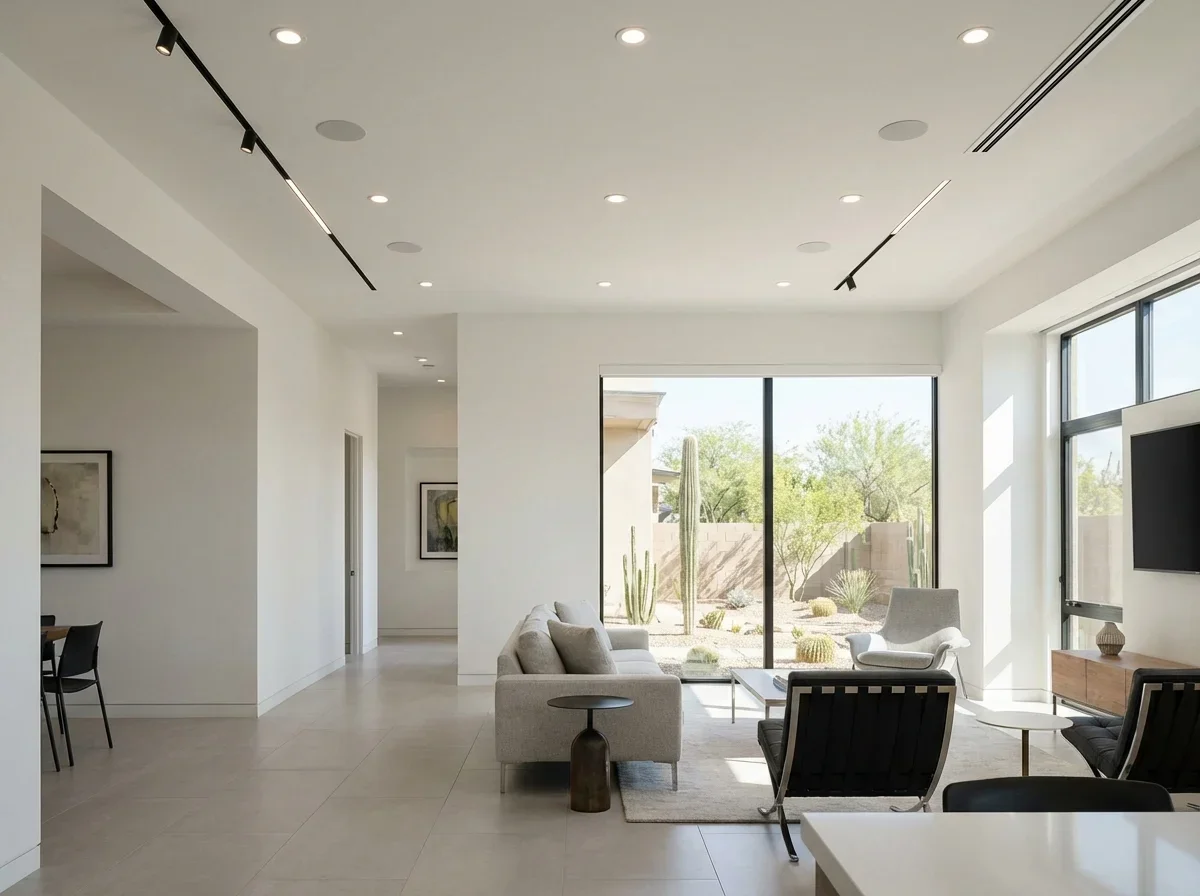
The Lighting Design Process
Professional lighting design follows a structured workflow that ensures every fixture serves a purpose and every dollar gets justified.
Initial Consultation and Site Assessment
The designer visits your property to understand how you actually use each space. For residential projects in Gilbert or Surprise, this means walking through your daily routines — where you cook, where kids do homework, how you entertain. Commercial assessments in Glendale focus on operational hours, task requirements, and employee workflow.
They measure existing light levels with calibrated meters, photograph problem areas, and document architectural features that affect lighting. Ceiling height matters enormously — a 12-foot ceiling in a Peoria great room needs different fixture selection than an 8-foot ceiling in an older Phoenix home.
The designer also audits your existing electrical infrastructure. Are there enough circuits for new loads? Can the panel handle smart controls and dimming systems? Do you need dedicated circuits for high-draw fixtures? These questions get answered before any fixtures get ordered.
Design Development and Fixture Selection
This phase separates professionals from fixture salespeople. The designer creates layered lighting plans that address ambient, task, and accent needs independently. Your Scottsdale kitchen gets three separate lighting systems that work together but control independently.
Fixture selection factors in Arizona's brutal environment. Attic-mounted recessed cans need IC-rated housings and high-temperature drivers. Outdoor fixtures need IP65+ weather ratings and UV-resistant finishes that won't degrade in 180-degree surface temperatures. Cheap fixtures fail fast in Arizona — a designer specifies commercial-grade equipment with thermal management engineered for extreme heat.
For commercial projects, the designer generates photometric renderings showing foot-candle levels across the entire space. This isn't guesswork — it's engineered proof that lighting meets code requirements and task needs. Inspectors in Phoenix metro jurisdictions expect this documentation.
Smart control integration gets designed during this phase. Scene programming, occupancy sensor placement, astronomical clock schedules — all mapped out before installation. A smart home lighting system only works if the design accounts for how you'll actually use it.
Installation Coordination and Programming
Designers don't typically do the installation work themselves — they coordinate with licensed electricians who execute the plan. They provide detailed installation drawings, fixture placement diagrams, and control wiring schematics.
During installation, the designer conducts site visits to verify fixture placement and address field conditions that differ from plans. A beam spread that looked perfect on paper might need adjustment once the actual fixtures are mounted.
Final programming happens after installation. Smart controls get commissioned, scenes get created, and timers get programmed. The designer walks you through every control function so you know exactly how to operate your new system.
For commercial properties in Buckeye or Peoria, this includes training facility managers on override procedures, scheduling adjustments, and basic troubleshooting. A well-designed system shouldn't need constant attention — but operators need to understand what they're controlling.
✓ Choosing a Contractor
How to Choose a Lighting Design Electrician
Not every electrician offers design services, and not every lighting designer understands electrical code. You need someone who bridges both disciplines.
Certifications and Professional Credentials
Look for licensed electricians (Arizona ROC license) with specialized lighting education. NCQLP (National Council on Qualifications for the Lighting Professions) certification demonstrates professional-level lighting knowledge. IES (Illuminating Engineering Society) membership shows ongoing education.
For commercial work in Phoenix, Tempe, or Mesa, ask about energy code compliance experience. Arizona adopted aggressive efficiency standards, and designers who don't stay current cause expensive problems during plan review.
Questions to ask during initial consultation:
- How many similar projects have you completed in the Phoenix metro area? — local experience matters for climate-specific challenges
- What photometric software do you use for light modeling?
- Do you handle rebate applications for SRP and APS programs?
- How do you address dark sky compliance for exterior lighting?
- What's your process for coordinating with the installation crew?
- Do you provide as-built documentation after project completion?
Portfolio Review and Project Experience
Request photos and case studies of completed projects similar to yours. A designer who specializes in kitchen remodel electrical work might not be the right fit for a 30,000 square foot warehouse conversion.
Pay attention to fixture quality in portfolio projects. Designers who specify contractor-grade big-box fixtures won't deliver long-term value in Arizona's harsh climate. Look for commercial-grade manufacturers like Lithonia, Cree, Acuity Brands, or Lutron for controls.
Ask about problem-solving examples. How did they handle a ceiling too low for ideal fixture mounting? What was their solution for glare control on a west-facing Chandler office with floor-to-ceiling windows? The answer reveals whether they adapt or just apply cookie-cutter solutions.
Energy Code Compliance and Rebate Knowledge
Arizona commercial properties must meet specific efficacy requirements and control standards — your designer should know these cold. Ask them to explain how their typical design meets Title 24 without you having to translate code language.
For projects in Surprise, Glendale, or other municipalities with dark sky ordinances, verify the designer's experience with shielded fixtures and cutoff requirements.[2] Municipal inspectors reject non-compliant outdoor lighting, and replacing fixtures post-installation destroys budgets.
Rebate expertise directly affects your ROI. SRP and APS both offer tiered incentives based on fixture efficiency and control integration. A designer who maximizes these programs saves you thousands on upfront costs. Ask for examples of projects where they secured rebates — and how much those incentives covered.
Compare at least three lighting design electricians before committing. The cheapest option rarely delivers long-term value, but the most expensive isn't automatically the best. Look for clear communication, relevant experience, and detailed proposals that show they understand your specific needs — not generic solutions that could apply to any project in any city.
Top Contractors for Lighting Design & Consultation
View all →


Frequently Asked Questions
- Arizona Revised Statutes. "§ 9-499.11 - Lighting standards for municipal buildings; life cycle costing; evaluation standards; shielding." https://law.justia.com/codes/arizona/title-9/section-9-499-11/. Accessed April 06, 2026.
- Salt River Project (SRP). "Outdoor Lighting Standards." https://www.srpnet.com/assets/srpnet/pdf/doing-business/builders-developers-contractors/commercial-specifications-guidelines-and-handbooks/outdoor-lighting-standards.pdf. Accessed April 06, 2026.
Estimate Your Lighting Design & Consultation Cost
Get an instant price range based on your home and project details.