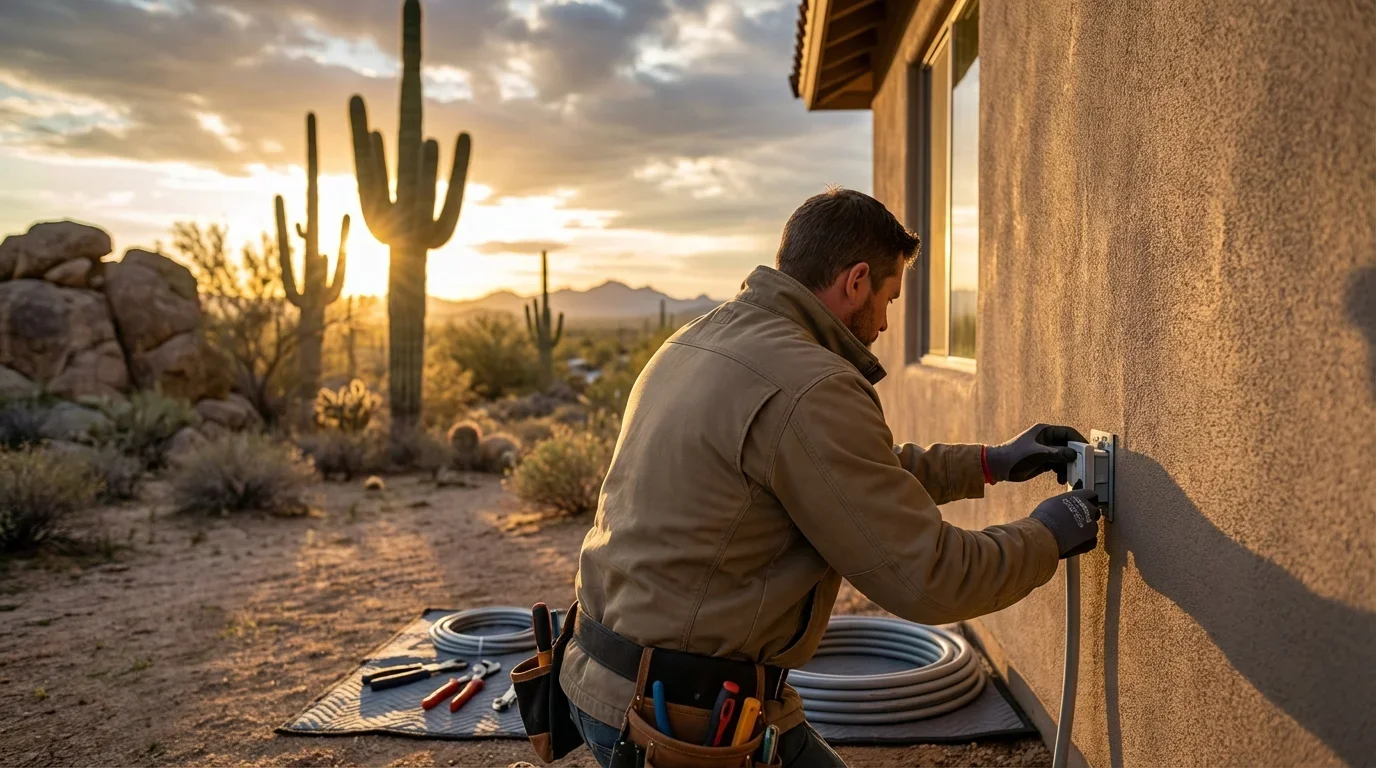
Power Where You Need It, Protected From Arizona's Elements
Stop running extension cords through windows or wishing you had outdoor power. Professional weatherproof outlet installation puts electricity exactly where you use it.
- Safe outdoor power for pool equipment, landscape lighting, and patio entertaining
- Weather-sealed against monsoons, dust, and extreme heat
- Code-compliant GFCI protection for your family's safety
⚠ Common Issues
When Do You Need an Exterior Outlet?
You're dragging a 100-foot extension cord from the garage every time you need to trim hedges. Or worse — you've got a power strip zip-tied to the patio railing because there's literally no outdoor power on the back of your house.
That setup works until monsoon season hits Phoenix and suddenly you're dealing with wet connections and tripped breakers. Or until you add a pool and realize the inspector won't sign off on your unpermitted outlet 3 feet from the water's edge.
Exterior outlets aren't just convenient — in Arizona, they're essential for outdoor living. You need power for landscape lighting timers, patio entertainment systems, pool equipment, holiday decorations, pressure washers, and lawn maintenance. Without proper outlets, you're either limiting how you use your yard or creating electrical hazards.
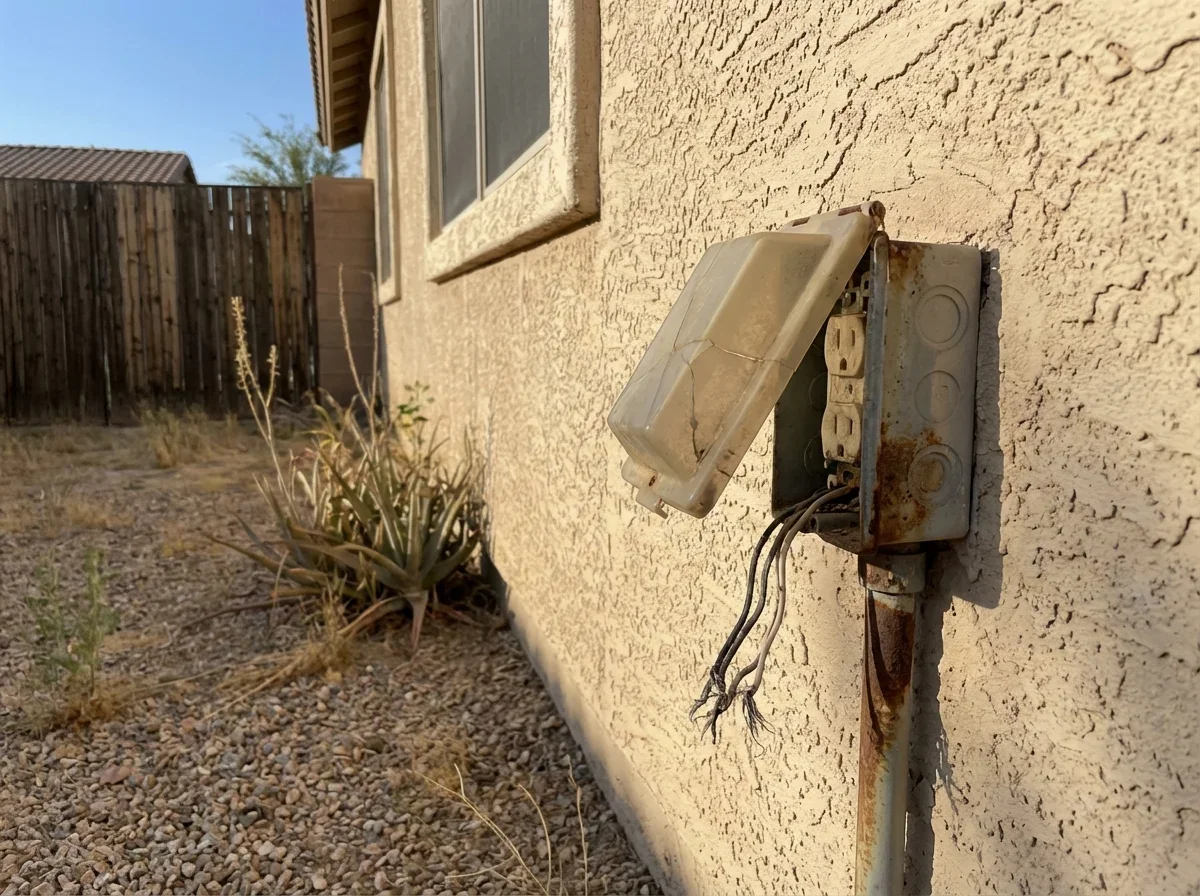
The DIY outlet you installed five years ago? If it's not GFCI-protected and weatherproofed to NEC standards, it's a code violation waiting to be discovered during a home sale inspection. Arizona's extreme heat accelerates UV degradation on cheap plastic covers. Summer temperatures above 115°F can literally melt non-rated components.
Sound familiar? Your patio outlet stopped working after last year's monsoons. You reset the breaker twice. Now it won't hold a reset at all, and you've got a dinner party planned with string lights that need power.
Common scenarios that demand professional exterior outlet installation: new pool or spa construction (requires dedicated 20-amp GFCI circuits), covered patio buildouts in Scottsdale or Gilbert, outdoor kitchen installations, landscape lighting controllers, holiday decoration zones, RV parking areas, workshop access in detached garages. Each location has specific code requirements for outlet height, GFCI protection, and weatherproof enclosures.[1]
The cost of getting it wrong? Failed inspections that delay projects, electrical fires from overloaded circuits, equipment damage from improper grounding, and liability issues if someone gets shocked at your property.
$ Cost Guide
What Does Exterior Outlet Installation Cost in Arizona?
Expect to pay $200-$500 per outlet for professional installation in the Phoenix metro area. That's not a ripoff — it's the reality of code-compliant exterior electrical work that involves GFCI breakers, weather-resistant materials, and often significant wire runs or trenching.
The variables that determine your actual cost: distance from your electrical panel, accessibility of the installation location, whether you need conduit run through block walls or trenched underground, and the level of weatherproofing required for the specific use case.
Factors That Affect Installation Price
Wire run distance is the single biggest cost driver. If your panel is in the garage and you want an outlet on the opposite side of the house, that's 60+ feet of wire, possibly requiring conduit trenched around the foundation or fished through walls. Every additional foot adds material and labor cost.
Material quality matters in Arizona's climate. UV-resistant conduit, weather-resistant GFCI outlets, and in-use covers rated for extreme temperatures cost more than basic hardware-store components — but they last decades instead of years under desert sun exposure.
| Installation Scenario | Typical Cost Range | What's Included |
|---|---|---|
| Simple outlet near panel | $200-$300 | 10-15ft wire run, GFCI outlet, standard WR cover |
| Mid-distance patio outlet | $300-$400 | 20-40ft run, conduit, GFCI, in-use cover |
| Pool area 20-amp GFCI | $400-$500 | Dedicated circuit, conduit, compliant spacing |
| Trenched underground run | $450-$650+ | Excavation, buried conduit, restoration |
Cost Breakdown by Location Type
Pool and spa areas in Mesa and Chandler require 20-amp GFCI circuits with outlets positioned at least 6 feet from water's edge — no exceptions.[1] These installations typically run $400-$500 because they demand dedicated circuits from the panel, not taps off existing exterior circuits.
Covered patios need "in-use" weatherproof covers that protect the outlet even when something's plugged in. These covers cost $25-$45 versus $15-$20 for standard while-not-in-use covers. The price difference is negligible compared to the protection they provide during summer monsoons.[2]
Front yard outlets for holiday lighting or landscaping timers are often the cheapest installations ($200-$275) because they're typically close to the main panel and don't require the heavy-duty protection needed in wet areas.
Add $150-$200 if you need a new GFCI breaker installed in your panel — required if you're adding a dedicated outdoor circuit rather than extending an existing GFCI-protected circuit. Most modern panels in Tempe and Peoria already have GFCI breakers for existing outdoor circuits, but older homes may not.
Permit costs in Arizona cities typically run $50-$100 for exterior outlet work, and licensed electricians pull permits as part of the service. Skipping the permit to save money means failed home inspections later and potential insurance claim denials if something goes wrong.
→ What to Expect
The Outdoor Outlet Installation Process
Professional exterior outlet installation starts with a site assessment — not just measuring where you want the outlet, but evaluating the entire electrical path from panel to finished installation point.
Site Assessment and Code Compliance
Your electrician maps the wire route, identifies obstacles (block walls, concrete, landscaping), and determines whether the installation requires a new dedicated circuit or can extend an existing GFCI-protected line. They verify your panel has capacity for additional circuits if needed.
Code compliance planning happens upfront. NEC 2020 Section 210.8(G) mandates GFCI protection for all outdoor outlets, regardless of height or location.[1] In Arizona, that means selecting GFCI outlets and covers rated for UV exposure and temperatures exceeding 120°F in direct sun.
For pool and spa installations, electricians calculate the required 6-foot minimum distance from water, identify bonding requirements, and plan for dedicated 20-amp circuits. These aren't suggestions — they're inspection requirements in every Arizona municipality.
Trenching, Conduit, and Wiring
Mark and prepare the route — If the wire run goes underground (common in Surprise and Buckeye for backyard installations), the electrician trenches 18-24 inches deep for buried PVC conduit. Surface-mounted installations use UV-resistant conduit attached to exterior walls.
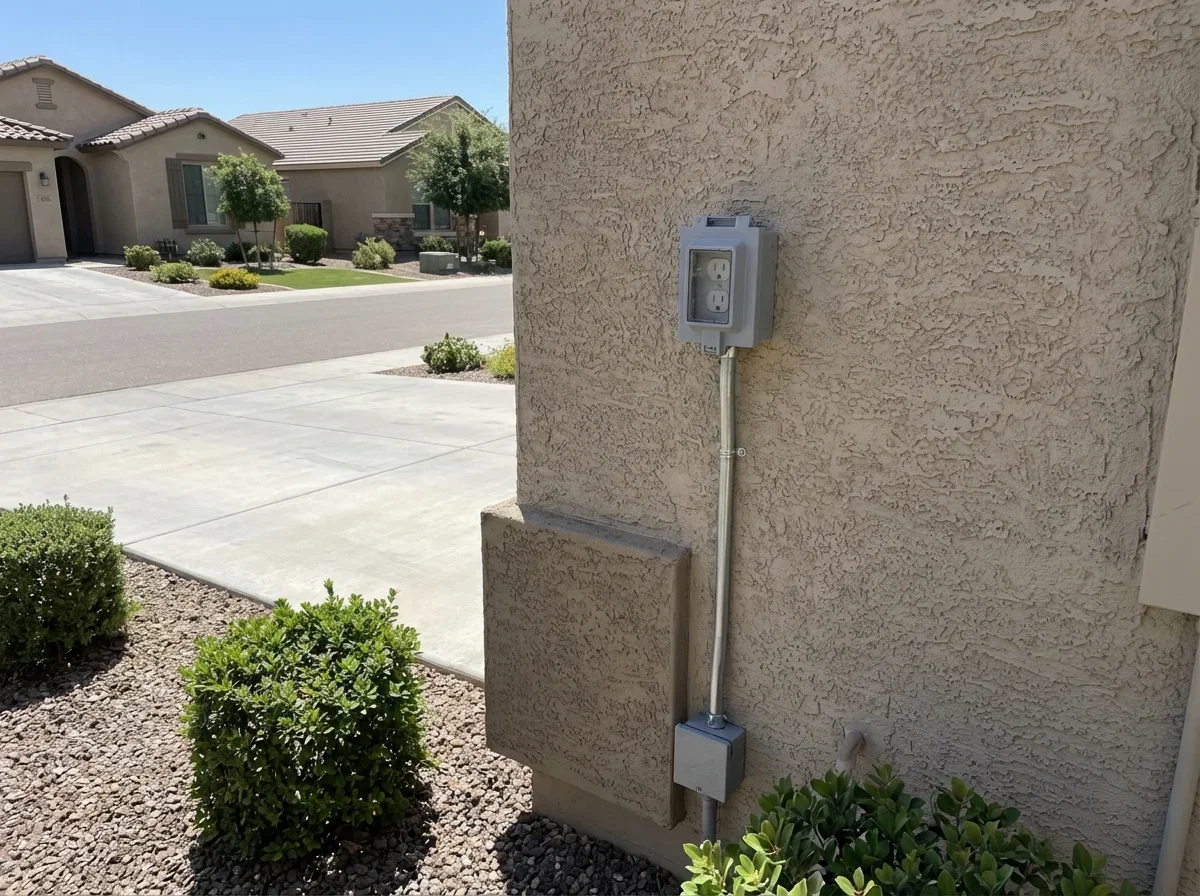
Install outlet box and conduit — Weather-resistant boxes mount securely to stucco, block, or wood surfaces. Conduit runs are sealed at every connection point to prevent moisture and insect intrusion.
Pull wire and make connections — Licensed electricians use appropriate gauge wire (12-gauge for 20-amp circuits, 14-gauge for 15-amp) and ensure proper grounding. All connections happen inside rated boxes, never exposed.
Final Installation and Testing
The GFCI outlet installs with weatherproof gaskets behind the cover plate. In-use covers add a hinged, gasketed enclosure that protects plugged-in cords from rain and debris. Standard weatherproof covers work for outlets that won't have permanent connections.
Testing verifies proper GFCI function (the test button should trip the outlet), correct polarity, and adequate voltage at the new outlet. The electrician confirms the installation meets NEC requirements before the inspector arrives.
Timeline: Most single-outlet installations complete in 2-4 hours. Complex jobs involving trenching, multiple outlets, or panel upgrades may take a full day. Schedule installations during cooler months if possible — working conduit and electrical boxes in 115°F heat isn't pleasant for anyone.
✓ Choosing a Contractor
How to Choose an Outdoor Outlet Installer in Arizona
The electrician who wired your garage isn't automatically qualified for exterior work — outdoor electrical installations require specific knowledge of weatherproofing, code compliance, and Arizona's unique environmental challenges.
Licensing and Code Knowledge
Verify the electrician holds a current Arizona ROC (Registrar of Contractors) license with electrical classification. This isn't optional. Unlicensed electrical work voids your homeowner's insurance and creates massive liability if something fails.
Ask specifically about NEC 2020 outdoor outlet requirements. If the electrician can't immediately cite GFCI mandates, in-use cover requirements for wet locations, and pool area spacing rules, keep looking. These are fundamental code points that separate professionals from handymen.[1]
Questions to ask during quotes:
- Will you pull permits and schedule inspections? (Answer should be yes)
- What gauge wire and GFCI amperage do you recommend for my specific use case?
- How do you protect connections from monsoon moisture intrusion?
- What's your warranty on materials and labor?
Weatherproofing Experience
Arizona's combination of extreme heat, monsoon flooding, and intense UV exposure destroys electrical components that would last decades in other climates. Your electrician needs regional experience, not just general electrical knowledge.
Red flags: Quotes that don't specify UV-resistant materials, electricians who suggest "any outdoor-rated" components without discussing temperature ratings, anyone who says permits aren't necessary for "simple" outlet additions.
Look for contractors who automatically include in-use covers for patio and pool areas, recommend conduit over direct-burial cable for underground runs, and discuss proper box sealing techniques. These details indicate someone who's dealt with Arizona failures and learned what actually lasts.
The directory listings for Pool & Spa Electrical contractors often overlap with qualified exterior outlet installers — pool work demands the highest weatherproofing standards, so those electricians know outdoor installations inside and out.
Compare at least three licensed electricians. The lowest bid isn't always the best value, especially if it skips permits, uses commodity-grade materials, or doesn't include proper GFCI protection. Pay for work that passes inspection the first time and still functions after five years of Arizona summers.
Top Contractors for Exterior Outlet Installation
View all →



Frequently Asked Questions
- National Fire Protection Association (NFPA). "210.8(G) – Outdoor Outlets." https://www.nfpa.org/codes-and-standards/all-codes-and-standards/list-of-codes-and-standards/detail?code=70. Accessed April 06, 2026.
- Mike Holt Enterprises (NFPA-authorized NEC training provider). "NEC Requirements for Outdoor Receptacles." https://www.mikeholt.com/technical-electrical-articles-outdoor-receptacles.php. Accessed April 06, 2026.
Estimate Your Exterior Outlet Installation Cost
Get an instant price range based on your home and project details.