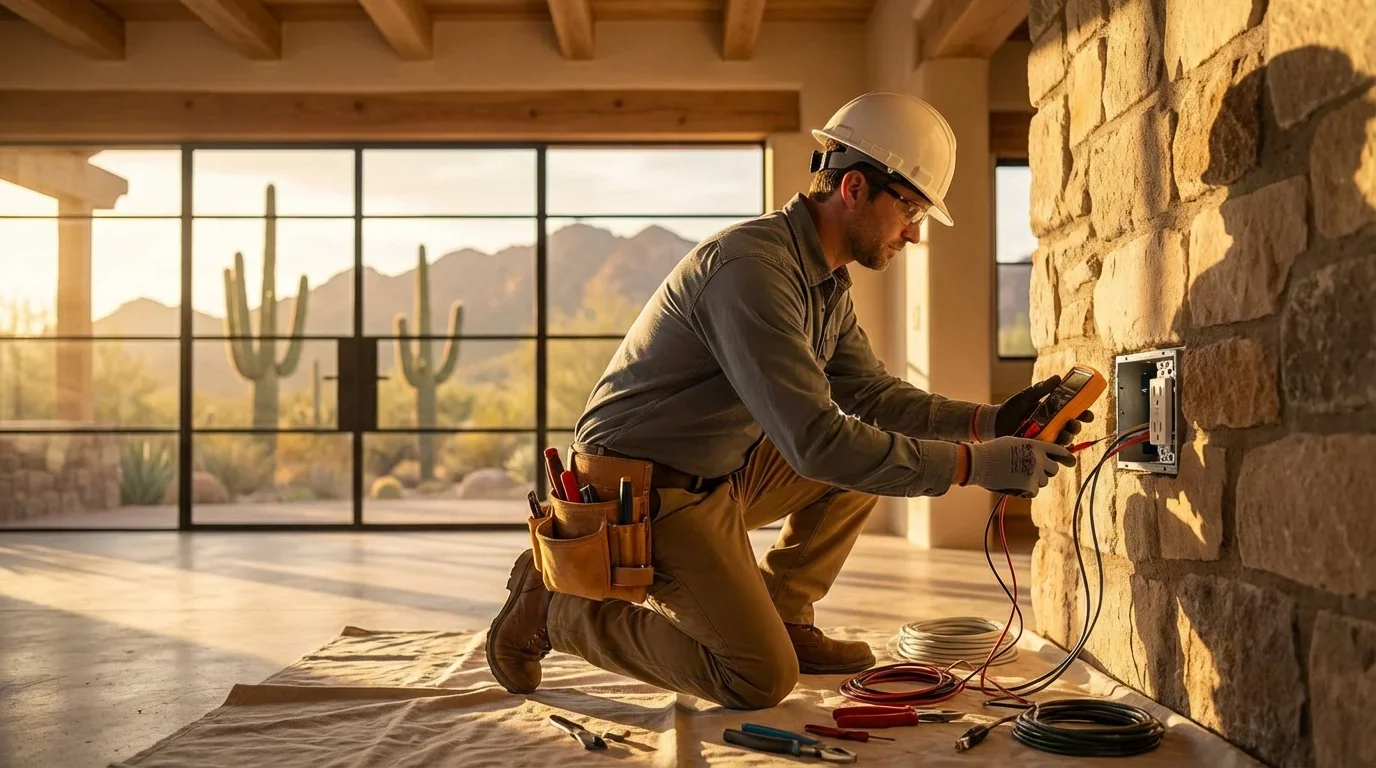
Power Where You Need It, Working Like It Should
From outdated two-prong outlets to modern USB-equipped installations, Arizona homes need electrical access that keeps pace with today's demands. 602 Electric delivers code-compliant solutions that work safely and reliably.
- GFCI protection for wet locations and Arizona monsoon season safety
- 240V outlets for appliances, EV chargers, and power tools
- USB outlets that eliminate bulky adapter clutter
⚠ Common Issues
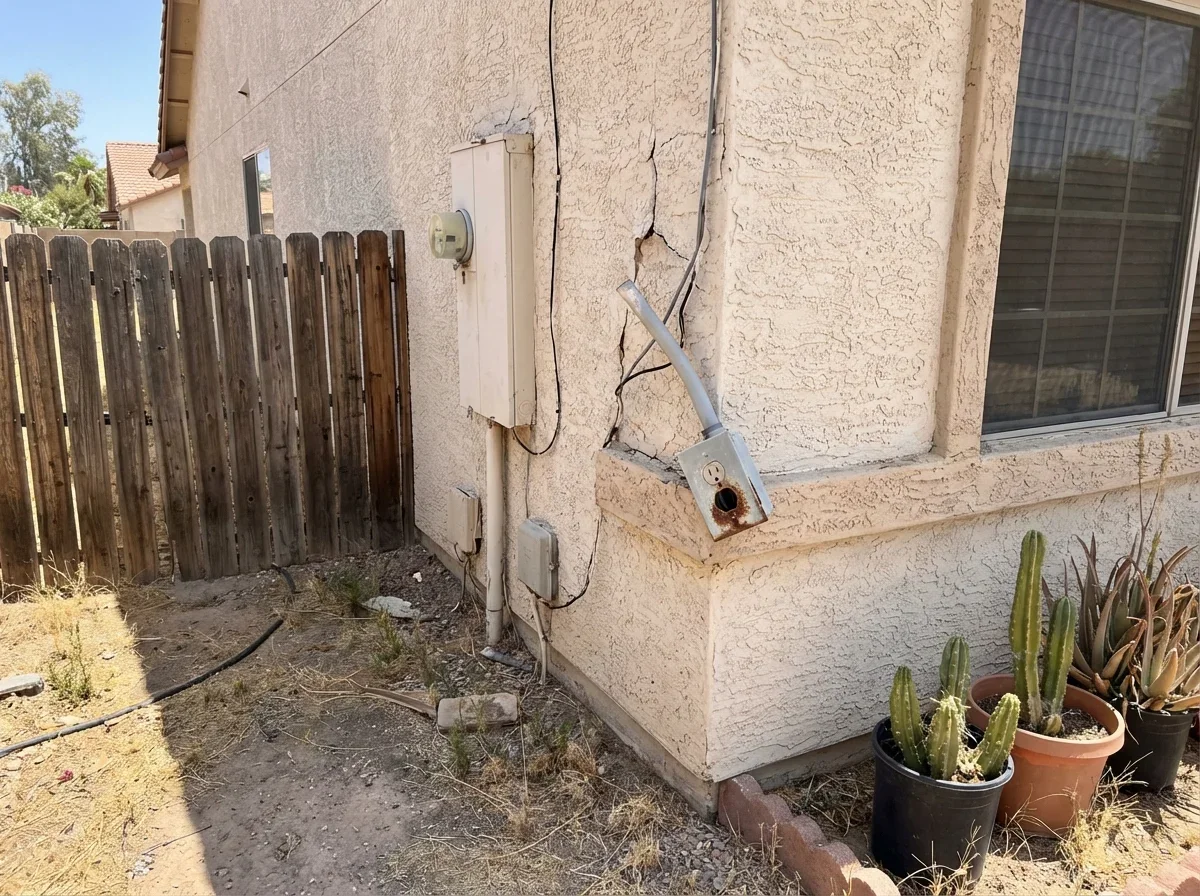
When Do You Need Outlet Repair or Replacement?
You plug in your phone charger and the outlet spits a spark. Or the prongs slip right out. Or the faceplate feels warm to the touch. These aren't minor annoyances — they're warnings.
Most outlet failures announce themselves before they become emergencies. Loose connections create resistance. Resistance generates heat. Heat degrades wiring insulation. The smell of burning plastic isn't the time to start researching electricians.
Warning Signs of Outlet Failure
If any plug falls out without a firm tug, the internal contacts have worn down. This is especially common in high-traffic outlets — kitchen counters, home offices, garage workbenches. That loose fit creates arcing, which creates carbon buildup, which accelerates failure.
Intermittent power is worse than no power. Your lamp flickers. Your TV cuts out. You jiggle the plug and it works again. That's not the device — it's the outlet making inconsistent contact. In Phoenix and Chandler homes built before 2000, these outlets often lack the tamper-resistant shutters and improved contact tension required in modern installations.
Sound familiar? Your bedroom outlet worked fine for years. Then your phone started charging slowly. Now it only works if you angle the plug just right. You bought a new charger. Same problem.
Burn marks around the plug openings mean arcing has already happened. The plastic discoloration is melted insulation. The next step is ignition. This requires same-day professional attention, not a weekend project.
Code Compliance and Safety Upgrades
Arizona follows the National Electrical Code (NEC) with local amendments. If your home was built or last updated before 2020, your outlets likely don't meet current safety requirements. GFCI protection is now mandatory in bathrooms, kitchens, garages, laundry areas, basements, and all outdoor outlets.[1] Ground Fault Circuit Interrupter outlets detect current leaks and shut off power in milliseconds — critical protection in wet environments.
AFCI (Arc Fault Circuit Interrupter) protection is required for bedroom circuits in Arizona homes. These detect dangerous arcing conditions that standard breakers miss. Many Tempe and Mesa homeowners discover during home inspections or insurance assessments that their outlets need compliance upgrades.
What happens if you wait? Insurance claims for electrical fires get scrutinized. If the adjuster finds outdated, non-compliant outlets, your coverage becomes questionable. Selling your home? The inspection will flag missing GFCI protection, and you'll pay for the upgrade anyway — on the buyer's timeline, not yours.
$ Cost Guide
What Does Outlet Installation & Repair Cost in Arizona?
Outlet work pricing depends on three factors: outlet type, circuit condition, and accessibility. A straightforward replacement in a Glendale living room costs less than a new GFCI installation in a Surprise bathroom that requires circuit rewiring.
Standard Outlet Replacement
Replacing a failed standard outlet runs $75-150 per outlet in the Phoenix metro area. This assumes the existing box, wiring, and circuit are in good condition. If the electrician opens the wall and finds damaged wiring, cloth insulation, or undersized gauge wire, the scope expands.
Multiple outlets on the same visit reduce per-unit cost. Replacing six worn outlets during a single service call typically costs $350-500 total — about $60-85 each. Electricians in Chandler and Gilbert often bundle outlet replacements with other electrical work to improve efficiency.
GFCI and Specialty Outlet Installation
GFCI outlet installation costs $125-200 per outlet, including the device and labor. The higher price reflects the more expensive outlet ($25-40 vs. $2-5 for standard) and additional testing requirements. Every GFCI installation must be tested with a proper load tester to verify trip functionality.
USB-integrated outlets run $150-225 installed. These include two standard AC outlets plus two USB ports (Type-A, Type-C, or both). Popular locations include kitchen counters, bedroom nightstands, and home office desks. The Phoenix market has seen strong uptake — homeowners appreciate eliminating bulky charging adapters, and the outlets typically include higher-amp USB ports (3.0A or more) that charge devices faster than standard USB wall adapters.
| Outlet Type | Device Cost | Installed Cost | Typical Use |
|---|---|---|---|
| Standard 15A | $2-5 | $75-150 | General purpose |
| GFCI 15/20A | $25-40 | $125-200 | Wet locations, code compliance |
| USB combo | $30-50 | $150-225 | Kitchen, bedroom, office |
| 20A appliance | $8-15 | $100-175 | Kitchen small appliances |
| Smart outlet | $40-80 | $175-250 | Home automation |
Weather-resistant outdoor outlets (required for all exterior installations) add $15-25 to material costs. These include sealed covers and corrosion-resistant contacts — essential for Arizona's monsoon season and dust storms.
240V Outlet Installation for Appliances
Installing a 240V outlet requires dedicated circuit wiring from the panel. Costs range $300-500 for straightforward installations (dryer, range, water heater replacement in existing locations) to $800-1,500 for new circuit runs requiring wire pulls through walls or attics.
EV charger installations frequently require 240V outlets or hardwired circuits. A NEMA 14-50 outlet (common for Level 2 EV charging) installed in a Peoria garage with 40-50 feet of wire run from the panel typically costs $600-900. If the panel lacks capacity for a 40-50 amp circuit, add $200-400 for subpanel work or dedicated circuit installation.
Pool equipment, workshop welders, and RV hookups also require 240V circuits. The wide cost range reflects distance from the panel, required wire gauge (6 AWG for 50A circuits, 8 AWG for 40A), and conduit requirements for exposed runs.
→ What to Expect
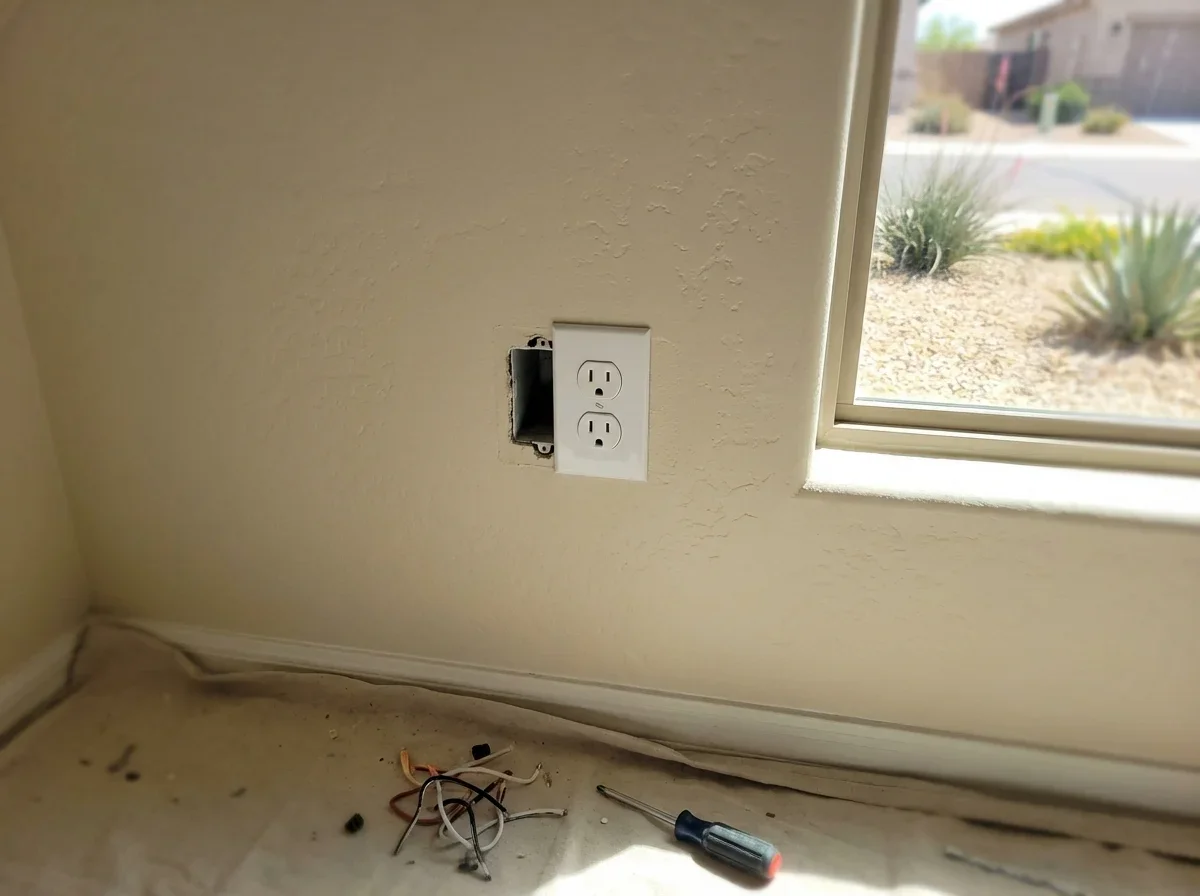
The Outlet Installation Process
Professional outlet work follows a methodical sequence. Electricians don't just swap devices — they verify the entire circuit is safe and code-compliant.
Inspection and Circuit Assessment
The electrician starts with the panel, not the outlet. Before touching any outlet, they identify which breaker controls the circuit, verify proper breaker sizing (15A or 20A), and check for shared neutral issues common in older Arizona homes. Multi-wire branch circuits (one neutral shared by two hot wires) require special handling during outlet replacement to prevent neutral disconnect hazards.
Circuit identification and testing — The electrician maps which outlets share circuits, tests voltage and grounding, and uses outlet testers to identify reversed polarity, open grounds, or bootleg grounds (improper grounding shortcuts common in pre-1970 construction).
Load assessment — If you're upgrading to USB outlets or adding new outlets, the electrician calculates existing circuit load. Kitchen counter circuits in Mesa and Chandler homes often run at capacity with modern appliances. Adding outlets may require circuit splitting or kitchen electrical upgrades.
Box inspection — Opening the outlet reveals box condition, wire quality, and available space. Metal boxes in older homes may lack proper grounding. Plastic boxes may be damaged or undersized for modern outlets with USB components. Crowded boxes require upsizing before new outlets install.
Installation and Testing
After verifying the circuit can safely support the work, installation proceeds with power shut off at the panel. Not just the outlet — the entire circuit gets locked out during work.
Wiring and connection — New outlets connect with proper wire stripping lengths (3/4 inch for most devices), terminal screws torqued to manufacturer specs (12 in-lbs for residential outlets), and pigtail connections if multiple wires attach to the outlet. Back-stab connections (push-in wire terminals) are avoided in professional work — they loosen over time and create heat.
GFCI placement strategy — A single GFCI outlet can protect multiple downstream outlets on the same circuit. Electricians in Scottsdale often install one GFCI at the first outlet in a bathroom or garage circuit, then use standard outlets for the remaining locations. This saves $50-100 per circuit while maintaining full protection.
Testing and verification — After installation, the electrician tests with proper equipment: outlet testers for polarity and grounding, GFCI testers to verify 4-6 milliamp trip thresholds, USB port voltage testing, and thermal imaging to check for hot spots during initial load.
Timeline for most outlet jobs: 30-90 minutes per outlet, including testing. Larger projects (replacing all outlets during a whole house rewiring project) can take 1-2 days depending on home size and access.
✓ Choosing a Contractor
How to Choose an Outlet Installation Electrician
Outlet work seems simple until it goes wrong. The difference between a $100 outlet replacement and a $5,000 electrical fire is the electrician's attention to details most homeowners never see.
Licensing Requirements in Arizona
Every electrician performing outlet work in Arizona must hold a valid state license or work under a licensed contractor's supervision. The Arizona Registrar of Contractors requires journeyman or master electrician licenses for electrical work. Before hiring anyone in Peoria, Surprise, or Buckeye, verify their ROC license number at azroc.gov. Active license, current bond, proper insurance.
Ask for the actual electrician's license number, not just the company's contractor license. Some companies send unlicensed helpers to "simple" outlet jobs. That voids your insurance coverage if something goes wrong, and it's illegal under Arizona law.
What to Ask Before Hiring
Request specifics about testing procedures. How do they verify grounding? What equipment do they use to test GFCI function? If they can't explain their testing process, they probably don't have one.
- Do they pull permits for new circuit work? (Required by most Arizona cities for 240V installations and new circuits)
- What's included in the quote? (Testing, disposal of old outlets, cleanup, or just device swap?)
- Will they identify other safety issues during inspection? (A good electrician mentions overloaded circuits, missing GFCI protection, or panel concerns — even if you didn't ask)
- What warranty covers the work? (Reputable electricians warranty both parts and labor for 1-2 years minimum)
Red flags: Quotes that seem impossibly low usually are. An electrician quoting $40 for GFCI installation is either using bottom-grade devices, skipping proper testing, or padding other line items. Quality GFCI outlets alone cost $25-40 wholesale.
Compare licensing, insurance, and testing protocols across 2-3 electricians. The directory listings include licensed professionals serving Phoenix, Scottsdale, Mesa, and surrounding areas — all verified for proper credentials and insurance. Look for electricians who explain what they'll inspect beyond just swapping the outlet, and who can handle related work if they discover circuit issues.
Outlet work connects directly to your home's safety systems. Choose electricians who treat it that way.
Top Contractors for Outlet Installation & Repair
View all →



Frequently Asked Questions
- City of Phoenix. "Amendment to 2023 National Electrical Code (NEC)." https://www.phoenix.gov/content/dam/phoenix/pddsite/documents/codes-ordinances/amendmentcodes/2023-nec.pdf. Accessed April 06, 2026.
- Arizona Public Service (APS). "Electric Service Requirements Manual - Section 300: Metering Installation Requirements." https://www.aps.com/-/media/APS/APSCOM-PDFs/About/Construction-and-Power-Line-Siting/Construction-Services/Electric-Service-Requirements-Manual/300.pdf. Accessed April 06, 2026.
Estimate Your Outlet Installation & Repair Cost
Get an instant price range based on your home and project details.