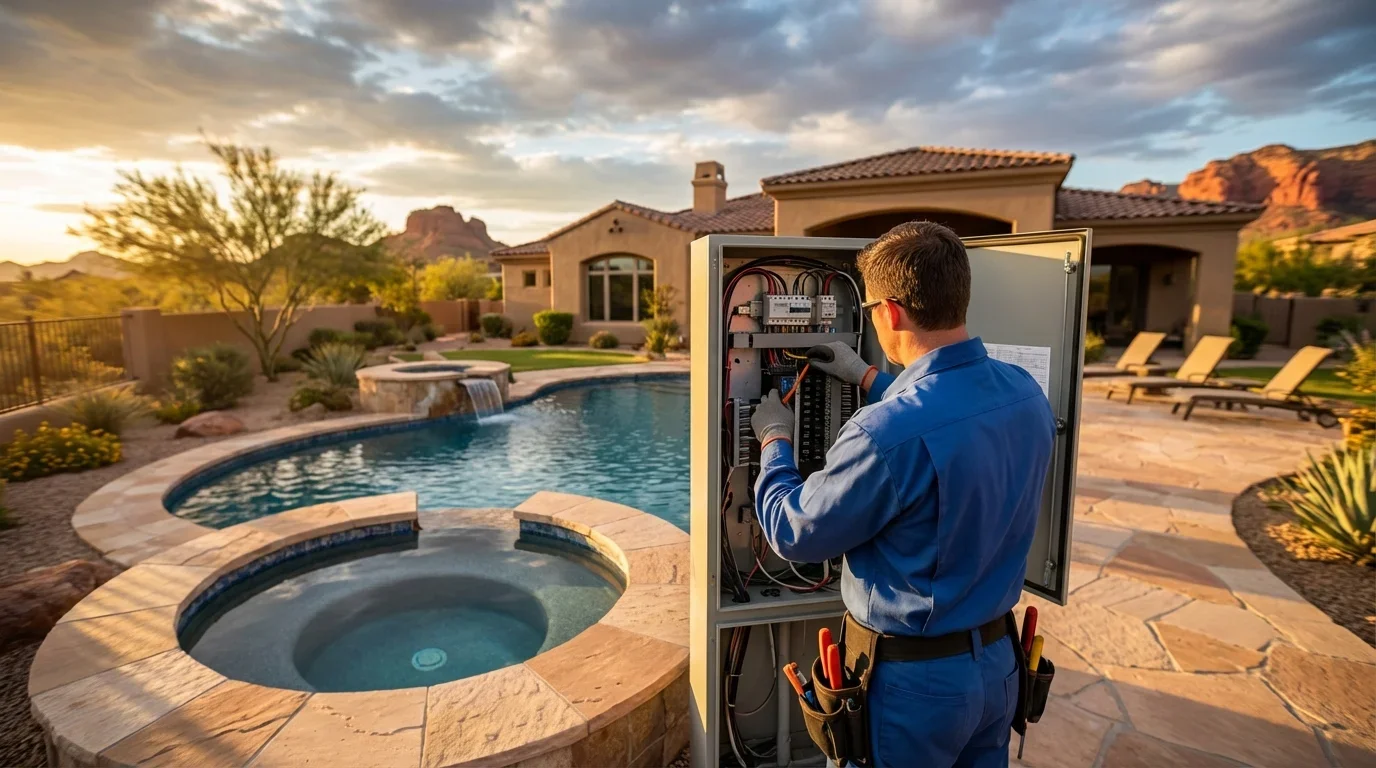
Arizona Pool Electrical Done Right the First Time
Your pool equipment needs more than power—it needs proper bonding, GFCI protection, and code-compliant installation that passes inspection.
- NEC Article 680 compliance for Arizona conditions
- Bonding grids that handle monsoon season safely
- Licensed electricians who know pool electrical inside out
⚠ Common Issues
When Do You Need Pool Electrical Services?
You just installed a beautiful pool in Gilbert, and now you're staring at the equipment pad wondering how the pump, filter, and heater actually get power. Or your 20-year-old pool system in Scottsdale still uses regular breakers instead of GFCI protection—every time it rains, you worry about safety.
Pool and spa electrical work isn't like adding a light fixture. You're working with water and electricity simultaneously, which means specialized code requirements that don't apply anywhere else in your home. Arizona's extreme heat adds another layer of complexity—buried conduit expands and contracts dramatically, wire insulation ratings matter more, and equipment runs harder than in milder climates.
New pool construction requires comprehensive electrical setup: dedicated circuits from your main panel, bonding grids connecting all metal within five feet of the water, GFCI protection for every circuit, proper grounding for monsoon season lightning protection. Equipment upgrades trigger similar requirements—switching to a variable speed pump means new wiring rated for the larger load, adding a heater requires 240V circuits with proper disconnect switches.
Arizona code is stricter than you think. Your spa disconnect can't just be a breaker in the panel—inspectors require a physical disconnect at the equipment or separate shutoff switch.[2] Miss this detail and your final inspection fails.
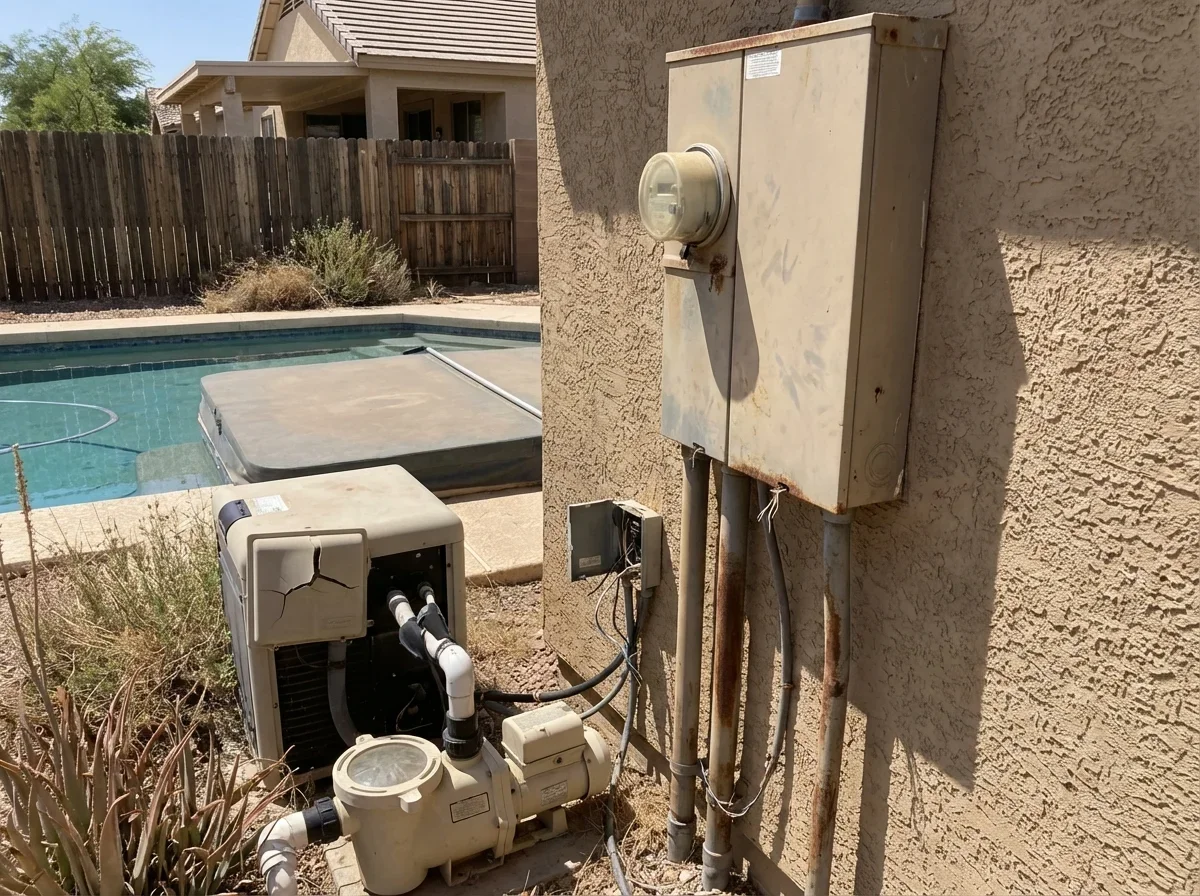
Older pools often have outdated electrical systems. If your pool was built before 2008, it probably lacks adequate GFCI protection. Metal handrails, ladders, and light fixtures might not be properly bonded. The junction box for your pool light could be too close to the water line—NEC requires it eight inches above maximum water level, but older installations sometimes sit lower.
You'll know you need pool electrical work when: you're adding new equipment and the existing circuit can't handle the load, your pool light stopped working and you're not sure if it's the bulb or something more serious, you're converting to automation and need low-voltage wiring plus equipment circuits, or an inspector flagged bonding or GFCI issues during a home sale.
Pool electrical mistakes don't just fail inspection—they create genuine shock hazards. Water conducts electricity efficiently. Without proper bonding, voltage gradients form in the water itself. Without GFCI protection, a ground fault that would trip a breaker in your house might not trip at all near the pool.
$ Cost Guide
Basic Pool Wiring
$1,500 – $3,000
- ✓ Pool pump circuit (240V/30A)
- ✓ GFCI disconnect & bonding
- ✓ Timer/automation wiring
- ✓ NEC Article 680 compliant
Spa + Pool Combo
$3,000 – $5,500
- ✓ Pool pump + spa heater circuits
- ✓ Sub-panel at equipment pad
- ✓ LED pool light wiring
- ✓ Equipotential bonding grid
- ✓ Automation controller hookup
Full Outdoor Package
$6,000 – $12,000+
- ✓ Pool, spa, water features
- ✓ Landscape & patio lighting
- ✓ Outdoor kitchen circuits
- ✓ Dedicated outdoor sub-panel
35% of Phoenix homes have pools. All pool electrical work requires NEC Article 680 compliance and city inspection.
→ What to Expect
The Pool Electrical Installation Process
Inspection and Permit Requirements
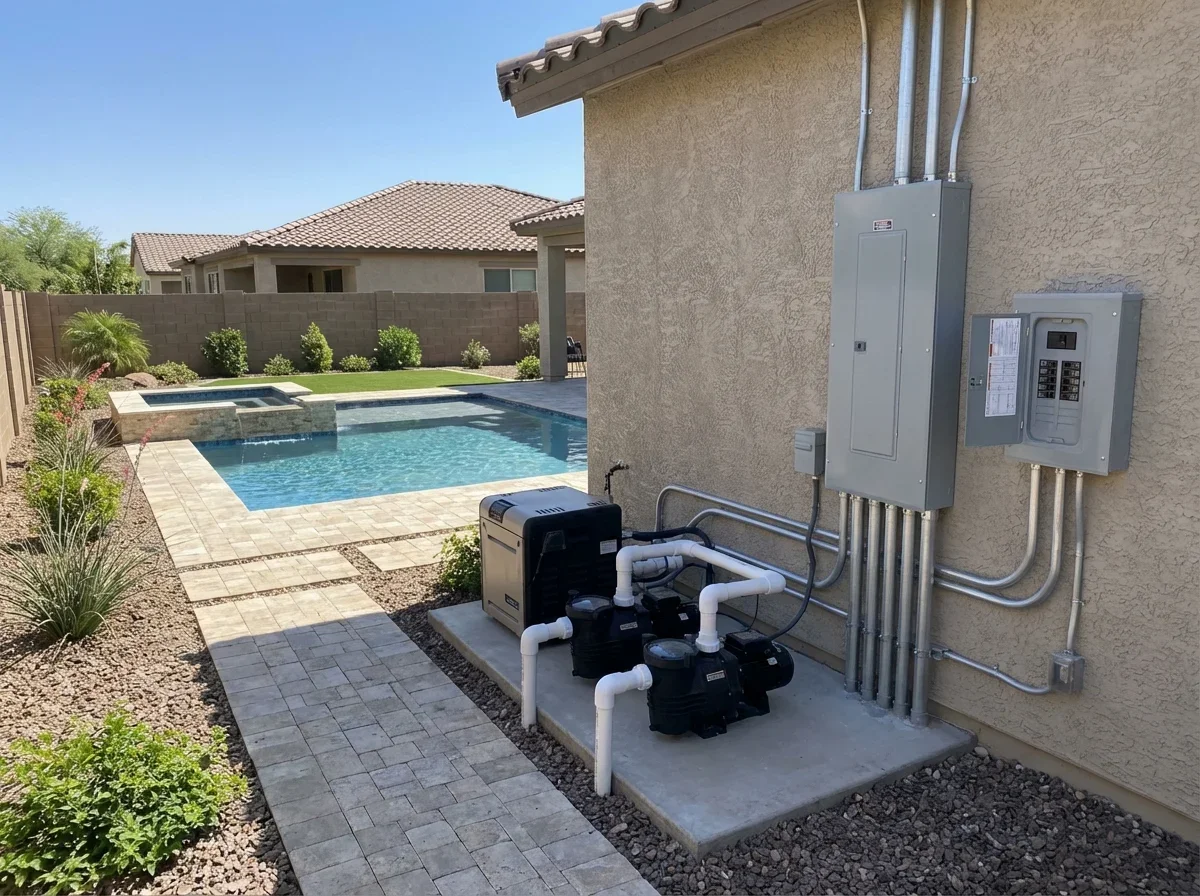
Your electrician starts by assessing your electrical panel capacity and existing infrastructure. They calculate the required circuits based on your equipment list, verify you have adequate breaker slots and total amperage, and plan the conduit routes from panel to equipment pad.
Next comes permit application with your city or county building department. The electrician submits electrical plans showing circuit sizes, bonding specifications, GFCI protection, and equipment locations. Permit approval takes 3-10 business days depending on jurisdiction workload. Scottsdale and Phoenix typically process faster than smaller cities.
Bonding Grid and Equipment Grounding
Before any circuits get installed, proper bonding goes in. This is the most critical safety component—it equalizes electrical potential across all conductive surfaces so voltage gradients can't form in the water.
The electrician installs a #8 bare copper bonding conductor forming a perimeter loop around the pool, connected to the pool shell rebar (in new construction) or anchored to deck (in existing pools). This bonding grid connects to:
- All metal within 5 feet of the pool perimeter—fences, handrails, ladders, light fixtures, diving board stands
- Pool equipment—pumps, filters, heaters, control systems
- Metal water supply and fill lines
- Any metal structures, posts, or permanent fixtures
Arizona pools also need robust grounding for monsoon season lightning protection. The bonding grid ties into your home's grounding system, creating a path for electrical discharge that protects both people and equipment. Lightning protection systems can integrate with pool bonding for comprehensive protection.
GFCI Protection and Circuit Installation
Once bonding is complete, circuit installation begins. The electrician trenches or bores conduit paths from your panel to the equipment pad—typically 18-24 inches deep in Arizona to prevent thermal stress from our extreme temperature swings.
Wire gets pulled through conduit, sized appropriately for both load and ambient temperature. A typical pool requires:
- 15-20 amp GFCI circuit for single-speed pump
- 30-50 amp GFCI circuit for heater (240V)
- 15 amp GFCI circuit for pool lights
- 15-20 amp GFCI circuit for automation system
Each circuit terminates at a GFCI breaker in your main panel. Standard breakers aren't legal for pool equipment—GFCI protection is mandatory for everything. At the equipment pad, proper disconnects get installed per code—inspectors specifically verify these are accessible and properly rated.[2]
Pool lights require special attention. The electrician places junction boxes at least 8 inches above maximum water level, installs transformers for 12V lighting, and ensures wet-niche fixtures are properly sealed. Light circuits need dedicated GFCI protection separate from equipment circuits.
Final step: inspection. The inspector verifies bonding continuity, confirms GFCI functionality, checks wire sizing and conduit installation, measures junction box heights, and tests disconnect operation. Pass the inspection and you're cleared to fill your pool. Any issues get corrected and re-inspected—your electrician handles this as part of the service.
Timeline: expect 2-5 days for complete pool electrical installation depending on complexity, with additional time for permit processing and inspection scheduling.
✓ Choosing a Contractor
How to Choose a Pool Electrician in Arizona
Pool electrical work requires more than a residential electrical license. You need an electrician who knows NEC Article 680 inside out and has successfully passed pool electrical inspections in your city. General electricians sometimes struggle with pool-specific code requirements that don't apply to standard residential work.
Licensing and Pool-Specific Experience
Start by verifying Arizona electrical licensing—your electrician must hold a valid Residential or Commercial electrical contractor license. Ask specifically about pool and spa electrical experience: How many pool installations have you completed in the past year? What percentage of your work involves pool electrical? Can you provide references from recent pool projects?
Experience with Arizona-specific conditions matters. Electricians working in Peoria, Glendale, and Phoenix understand how our heat affects wire ratings and buried conduit. They know local inspection requirements vary between jurisdictions. They've worked through monsoon season and understand grounding requirements for our summer storms.
Ask these specific questions:
- How do you size wire and conduit for Arizona's extreme heat conditions?
- What bonding method do you use for existing pools without rebar access?
- How do you handle pool equipment requiring different GFCI protection?
- What's your inspection pass rate for pool electrical work?
- Do you coordinate with pool builders, or do you handle standalone equipment upgrades?
Red Flags to Avoid
Run from any electrician who suggests skipping permits or claims inspection "isn't really necessary" for equipment replacement. Pool electrical requires permits for good reason—it's life-safety work where mistakes kill people.
Avoid contractors who can't clearly explain bonding requirements. If they talk about "just running some ground wire" instead of describing a comprehensive equipotential bonding grid connecting all metal components, they don't understand pool electrical code.
Be wary of unusually low bids. Proper pool electrical work requires specific materials—GFCI breakers cost more than standard breakers, bonding wire specifications are non-negotiable, proper disconnect switches aren't optional. Someone bidding $1,200 for work that should cost $2,500 is cutting corners somewhere.
Watch for electricians unfamiliar with hot tub and spa wiring code differences. Spas have different disconnect requirements and GFCI specifications than in-ground pools—lumping them together suggests superficial knowledge.
Choose an electrician who provides detailed written estimates breaking down circuits, bonding work, permit costs, and inspection fees. Who explains what happens if inspection identifies issues. Who discusses equipment load calculations and panel capacity honestly—you want to know upfront if you need a sub panel, not discover it mid-project.
The right pool electrician makes the permitting and inspection process smooth. They schedule inspections efficiently, pass on the first attempt, and stand behind their work. When you're comparing Arizona pool electrical contractors, experience with pool-specific code requirements matters more than general electrical experience. Your inspector will verify every detail—make sure your electrician already knows what they're looking for.
Top Contractors for Pool & Spa Electrical
View all →



Frequently Asked Questions
- Arizona Legislature. "36-1681 - Pool enclosures; requirements; exceptions; enforcement." https://www.azleg.gov/ars/36/01681.htm. Accessed April 06, 2026.
- Arizona Department of Child Safety. "Pool Guide Life Safety Inspections." https://dcs.az.gov/sites/default/files/CSO-1602.pdf. Accessed April 06, 2026.
Estimate Your Pool & Spa Electrical Cost
Get an instant price range based on your home and project details.