Transform Dark Spaces Into Bright, Modern Living Areas
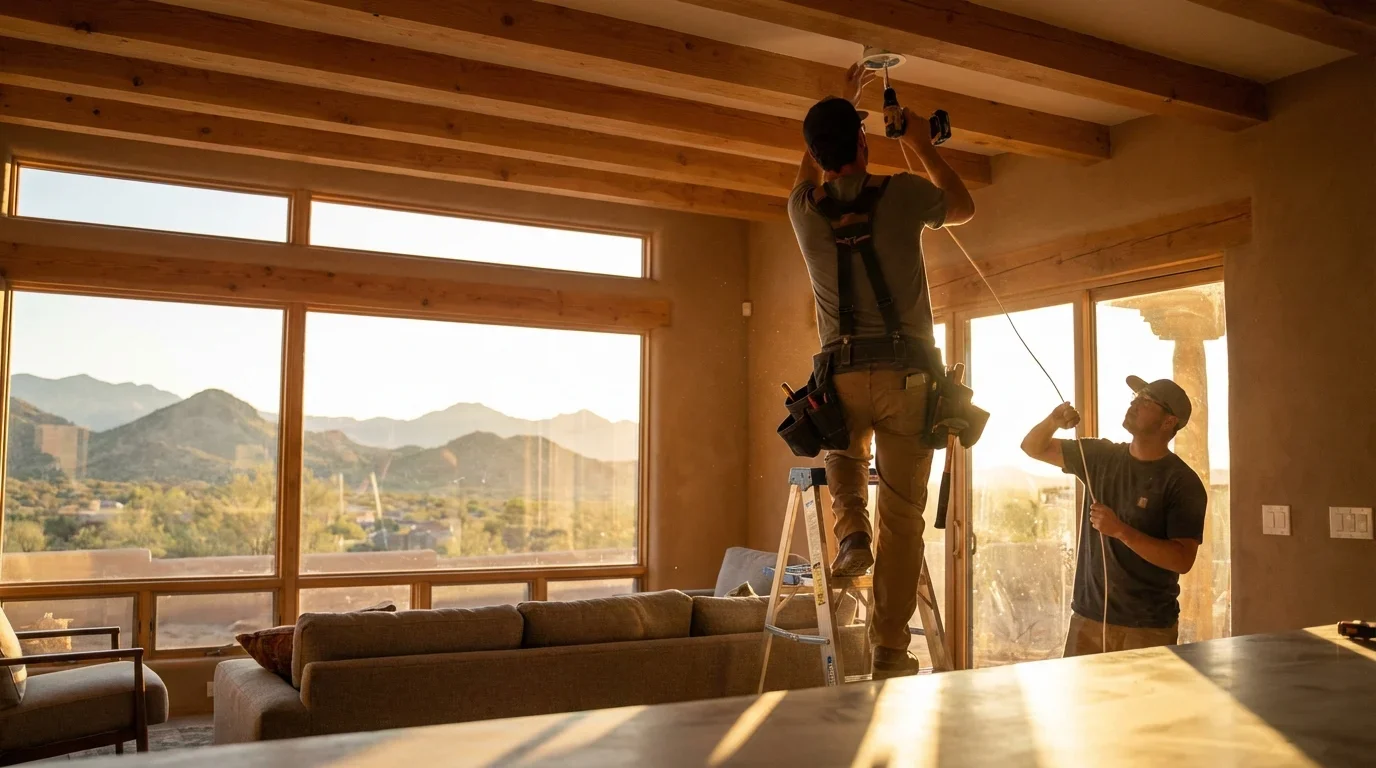
Outdated lighting makes your home feel dim and cramped. Our recessed lighting installations bring clean, modern illumination exactly where you need it.
- Sleek, flush-mounted lights that disappear into your ceiling
- Energy-efficient LED upgrades that slash your power bill
- Custom kitchen and living room layouts for perfect ambiance
⚠ Common Issues
Signs Your Home Needs Recessed Lighting
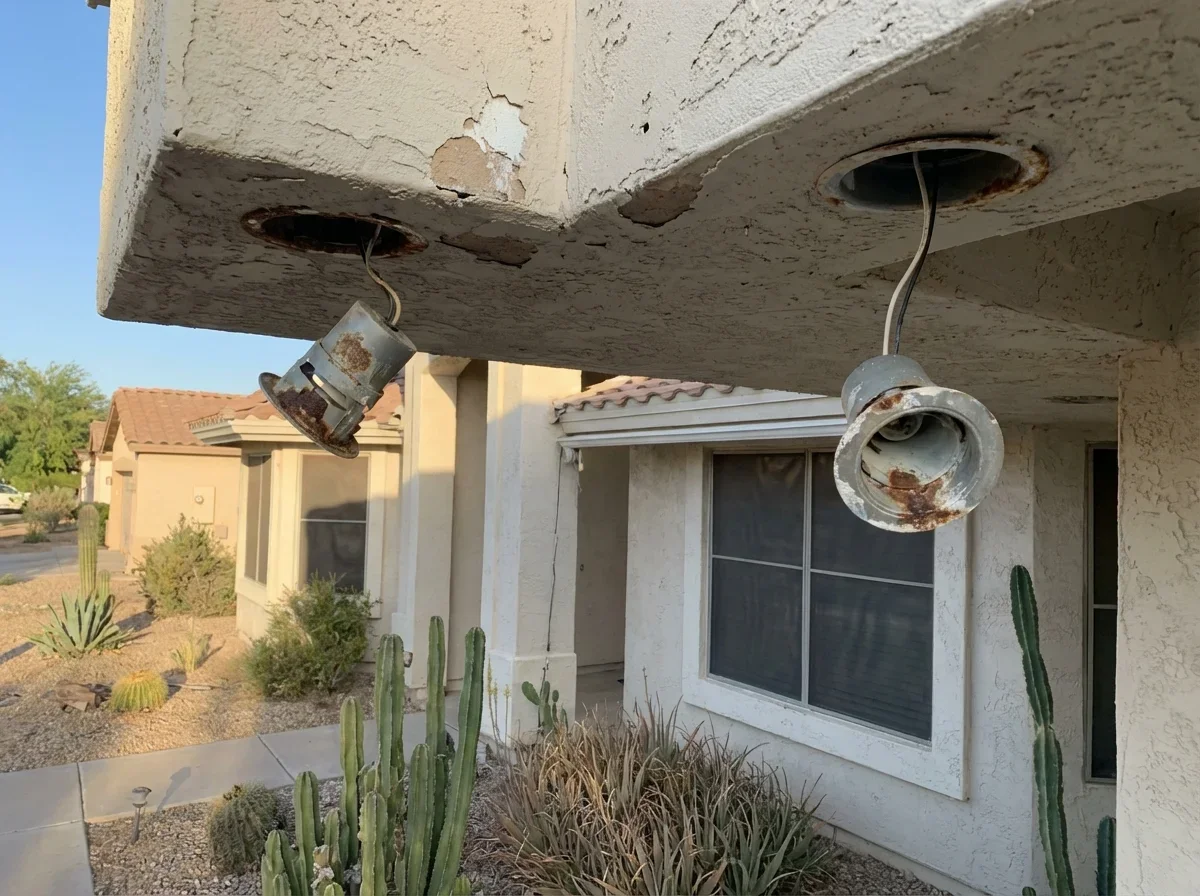
Walk into your kitchen at night and count the shadows. Check your light switch and notice you're using four table lamps just to read comfortably in the living room. Your current fixtures are outdated, your ceilings feel cluttered, and you're paying cooling bills inflated by heat-generating bulbs.
Recessed lighting isn't just about aesthetics. It's about putting light exactly where you need it without the visual clutter of pendant fixtures or the wasted energy of old incandescent bulbs. In Phoenix and Scottsdale homes, where cooling costs dominate utility bills, the switch to LED recessed fixtures delivers 75-80% energy savings compared to traditional options. That's real money every month, not marketing hype.
But here's what homeowners in Mesa and Chandler get wrong: they assume any electrician can drill holes and drop in lights. Arizona's building codes require IC-rated fixtures when insulation makes contact — which is standard in attics that hit 120°+ in summer.[1] Non-compliant installations create fire risks and fail inspections. Permits are required for this electrical work in most Arizona municipalities, and only ROC-licensed electricians should be touching your wiring.[2]
Sound familiar? Your dining room has one ceiling fixture in the center. It casts shadows everywhere. You tried adding floor lamps. Now your room feels cluttered and you're still squinting.
You're dealing with retrofit installation — cutting into existing drywall, routing wire through framing, working around insulation in a 130-degree attic. The spacing matters: too far apart and you still have dark corners; too close and you've wasted money on fixtures you didn't need. Kitchen task lighting works at 4-6 feet spacing. Living rooms need 6-8 feet for ambient coverage.
The longer you live with inadequate lighting, the more you're overpaying for electricity and underusing your spaces. Those old bulbs generate heat your AC works overtime to remove. LED recessed lights pay for themselves through lower cooling bills — especially relevant when Gilbert and Tempe homeowners run AC 8+ months a year.
$ Cost Guide
Single Room
$400 – $900
- ✓ 4–6 LED recessed cans
- ✓ Dimmer switch included
- ✓ IC-rated for insulation contact
- ✓ Kitchen or living room
Multiple Rooms
$1,200 – $2,500
- ✓ 10–16 LED recessed cans
- ✓ 2–3 rooms with dimmers
- ✓ Layout planning included
- ✓ Separate switching zones
- ✓ Volume pricing per can
Whole House
$3,000 – $6,000+
- ✓ 20–30+ recessed lights
- ✓ Every room on dimmers
- ✓ Smart dimmer upgrade available
- ✓ May require new circuits
Includes LED cans, trim, wiring, and dimmers. Vaulted ceilings or no attic access may add 20–30% to install cost.
→ What to Expect
The Recessed Lighting Installation Process
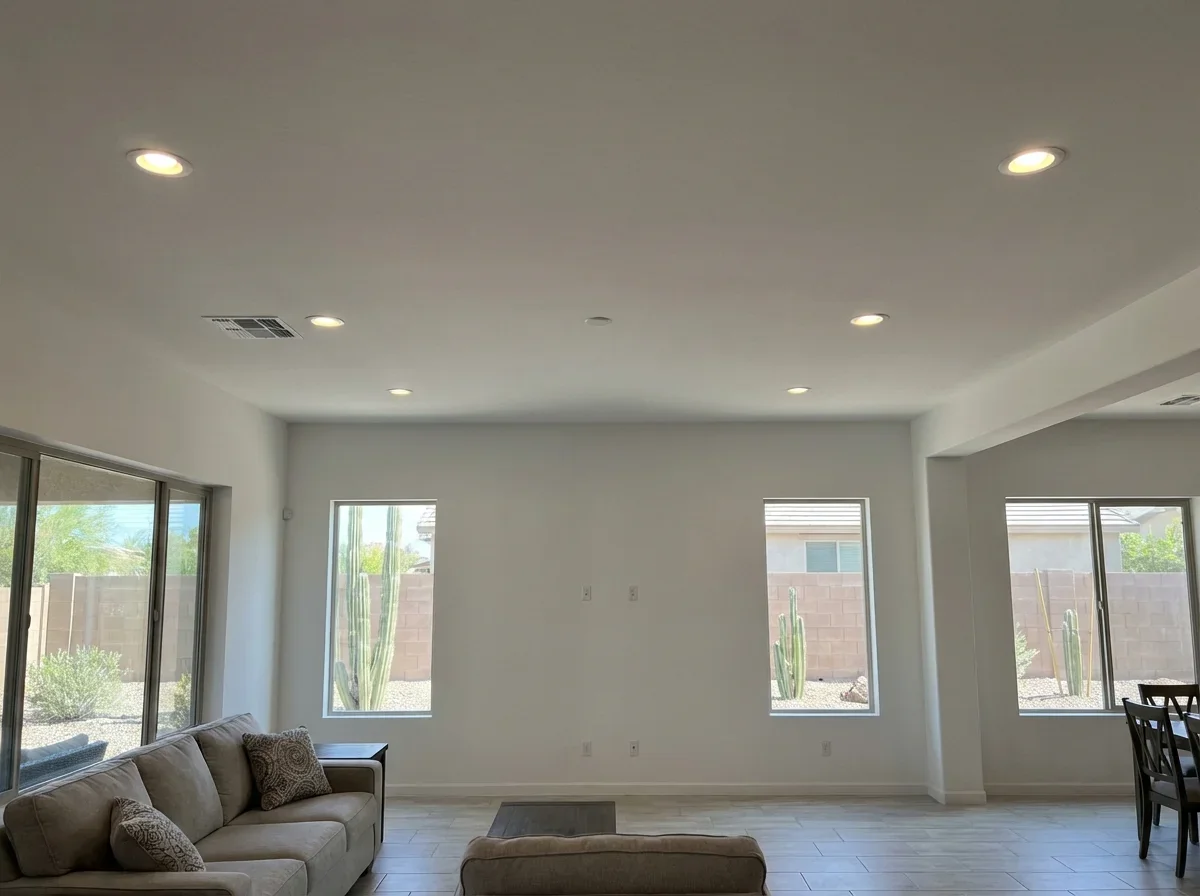
Professional recessed lighting installation takes 1-3 days depending on fixture count and ceiling access. Here's what happens from quote to final inspection.
Initial Assessment and Layout Planning
Your electrician walks the space with you, measuring room dimensions and discussing lighting goals. Task lighting for kitchen counters needs tighter spacing (4-6 feet between fixtures) than ambient living room lighting (6-8 feet). They'll check your electrical panel capacity, map existing circuits, and determine if you need new wiring or can tap existing circuits.
Code compliance starts here. Arizona municipalities require permits for recessed lighting installations that involve new circuits or ceiling modifications.[2] Your electrician pulls permits (typically $50-$200 depending on scope) and schedules inspections before drywall closure and at project completion.
The layout phase determines success. Lights placed randomly create hot spots and shadows. Properly spaced fixtures deliver even illumination without over-lighting. Electricians use room dimensions, ceiling height, and fixture beam spread to calculate optimal placement. For an 8-foot ceiling, fixtures should be 2-3 feet from walls, never directly above where people stand.
Installation Methods: New Construction vs Retrofit
New construction installations happen during building or remodeling when framing is exposed. Electricians mount housings directly to joists, run wire before drywall, and achieve code-compliant installations easily. This is the cheapest scenario ($100-$150 per light all-in).
Retrofit installations — adding lights to existing ceilings — require old-work housings with integrated clips that grab drywall. The electrician cuts precise holes using a template, fishes wire from attic or through walls, and connects to existing circuits or new wire runs. In Buckeye homes with blown insulation, this means moving insulation, installing IC-rated (insulation contact) housings that won't overheat when buried, and replacing insulation around fixtures.
Arizona's extreme attic temperatures (120-150°F in summer) make fixture selection critical. Non-IC rated housings require 3 inches of clearance from insulation — impractical in most retrofits. IC-rated LED housings cost $10-$20 more but install safely against insulation without fire risk.[1]
Wiring, Testing, and Final Inspection
Electricians run 14/2 or 12/2 Romex (depending on circuit amperage) from your panel or nearest junction box. Each light connects to the circuit with wire nuts in the housing junction box. If you're adding dimmer switches, the electrician installs dimmer-compatible LED fixtures — not all LEDs dim smoothly without flicker.
After wiring, they test each fixture for proper operation, check voltage, and verify switch control. The final inspection confirms code compliance: proper wire gauge, secure connections, IC-rated housings where required, and correct placement per Arizona electrical code. Your electrician schedules this inspection (usually 2-3 days out) and meets the inspector on site.
Timeline expectations: 3-4 light bathroom takes half a day. An 8-light kitchen takes 1-2 days depending on attic access. Whole-home retrofits (20-30 lights) span 2-4 days with inspection delays.
✓ Choosing a Contractor
How to Choose a Recessed Lighting Electrician in Arizona
The difference between a successful installation and a code violation comes down to electrician selection. Arizona requires ROC (Registrar of Contractors) electrical licensing for all wiring work — but not every licensed electrician specializes in retrofit lighting installations in extreme attic conditions.
Licensing and Insurance Requirements
Verify ROC licensing before any work begins. Arizona law requires electrical contractors carry a CR-11 (residential) or CR-7 (commercial) license depending on project scope. Unlicensed electricians can't pull permits, can't pass inspections, and leave you liable for code violations.
Ask these questions during quotes:
- What's your ROC license number? (Verify at azroc.gov)
- Do you pull permits for this work? (Required in most AZ cities[2])
- Are you insured for property damage and liability? (Attic work risks ceiling damage)
- What IC-rated housings do you install? (Must be rated for insulation contact)
- Can I see photos of similar retrofit projects? (Especially relevant for limited attic access)
Portfolio and Specialty Experience
General electricians handle recessed lighting, but specialists who focus on retrofit residential lighting finish faster with cleaner results. Ask to see completed projects similar to yours — especially if you have vaulted ceilings, limited attic access, or you're coordinating with lighting design consultation services.
Red flags that should end the conversation:
- "We don't need permits for lighting work" (False — permits required for new circuits and ceiling modifications)
- Quotes that don't specify IC-rated vs non-IC fixtures (Suggests they're cutting corners)
- Unwillingness to provide ROC license or insurance certificates
- Significantly lower pricing than other bids (Often indicates unlicensed work or substandard materials)
- No written contract detailing fixture specifications, circuit details, and permit responsibility
Check reviews for mentions of cleanup quality. Attic work creates dust and insulation debris. Professional electricians seal off work areas, use drop cloths, and vacuum thoroughly after completing installations.
Compare at least three licensed electricians. The 602 Electric directory connects you with ROC-licensed professionals serving Phoenix, Scottsdale, Mesa, and surrounding Arizona communities — contractors who understand local code requirements, work safely in extreme attic heat, and deliver installations that pass inspection the first time.
Look for electricians who ask detailed questions about your lighting goals, recommend fixture counts based on room measurements (not arbitrary suggestions), and explain the permitting timeline upfront. The right contractor makes code compliance invisible — you get beautiful, functional lighting without worrying about inspections or safety issues.
Top Contractors for Recessed Lighting Installation
View all →



Frequently Asked Questions
- Arizona Department of Transportation. "Appendix H. Using Building Codes." https://apps.azdot.gov/files/24/Arizona-ALUM/Appendix-H-Using-Building-Codes.pdf. Accessed April 06, 2026.
- Pima County, AZ. "Building Permits Resources." https://www.pima.gov/1038/Building-Permits-Resources. Accessed April 06, 2026.
Estimate Your Recessed Lighting Installation Cost
Get an instant price range based on your home and project details.