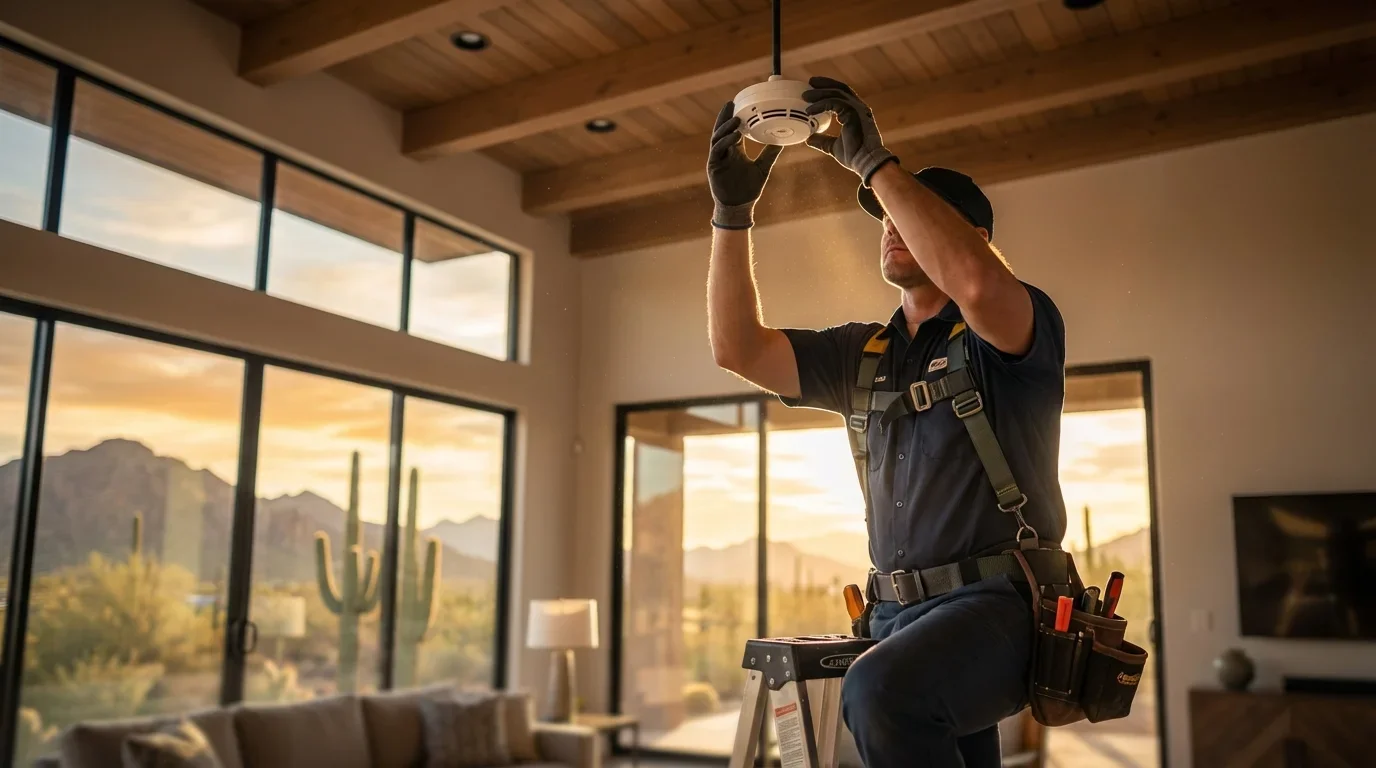
Sleep Soundly Knowing Your Family's Protected
Arizona code requires hardwired smoke and carbon monoxide detectors in every home. We install systems that meet current building standards and actually work when seconds count.
- Code-compliant hardwired installation
- Interconnected detectors throughout your home
- Professional testing and certification included
⚠ Common Issues
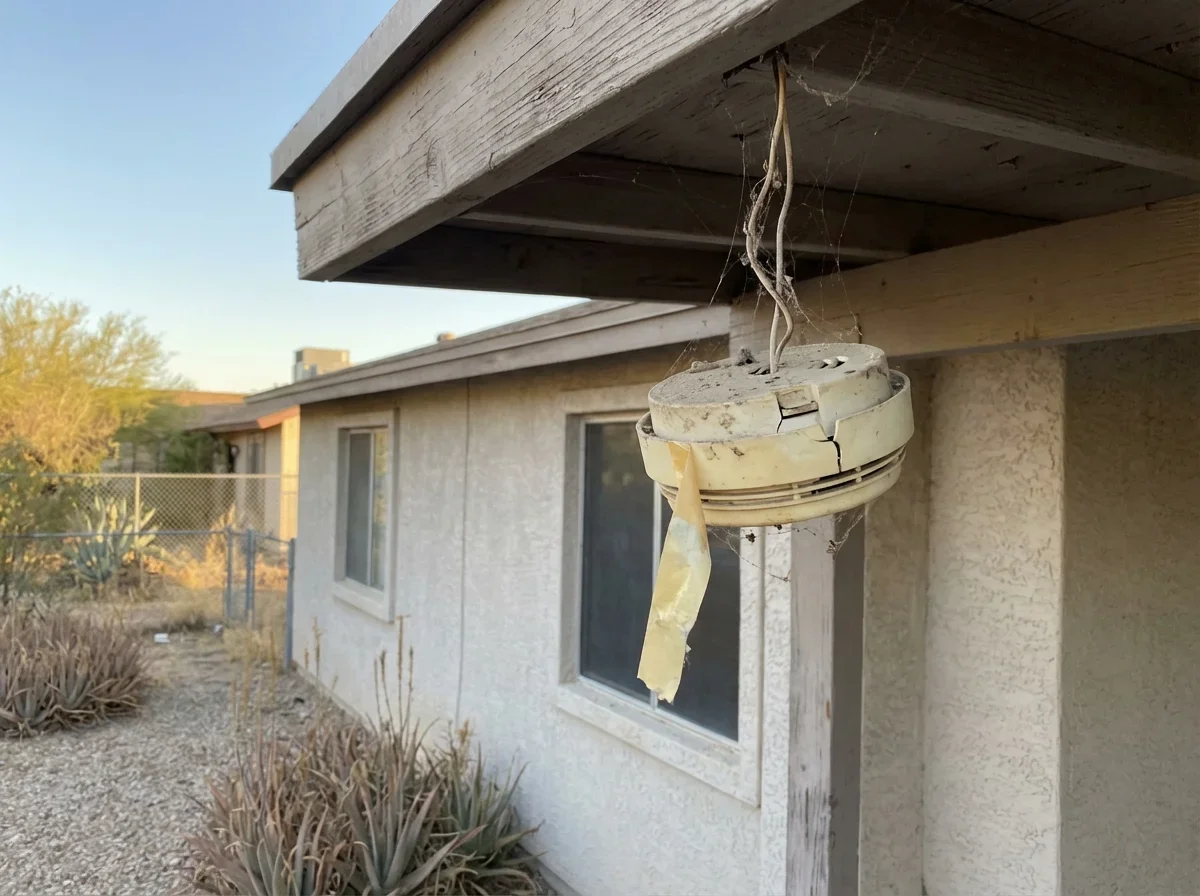
Signs Your Smoke Detectors Need Professional Installation
You're selling your home and the buyer's inspector flagged your detectors. Or you're mid-renovation and just learned that battery-only units won't satisfy code. Maybe you've got a mix of old chirping alarms scattered around — some hardwired, some battery, none talking to each other.
Here's what most Arizona homeowners don't realize: If you're doing any remodeling that requires a permit, or adding/changing sleeping areas, state law requires upgrading to hardwired, interconnected smoke alarms throughout the entire dwelling.[1] That single battery detector in the hallway doesn't cut it anymore.
The Arizona climate makes this worse. Attics in Phoenix and Chandler routinely hit 150°F in summer. That extreme heat degrades detector electronics and backup batteries faster than in moderate climates. A ten-year detector might need replacement in seven years here.
What happens when you ignore this? Home sales fall through because inspections fail. Insurance claims get denied after fires because detectors weren't code-compliant. Worst case — a fire starts in one corner of your Scottsdale home, and the detectors in the bedrooms never sound because they're not interconnected.
Sound familiar? You changed batteries in that hallway detector twice last year. You have no idea how old the one in the guest room is. You're pretty sure there's supposed to be one near the garage, but you've never tested it. Now you need a permit for your kitchen remodel and the city wants a full smoke alarm upgrade.
The cost of waiting isn't just the eventual installation — it's failed inspections, delayed closings, voided insurance, and the very real risk that a fire in your garage won't wake anyone upstairs.
Arizona law is clear: residential units undergoing permitted work need compliant systems.[2] The battery-only shortcut doesn't work anymore.
$ Cost Guide
What Does Smoke Detector Installation Cost in Arizona?
Expect to pay $150-$300 per hardwired detector for professional installation connected to your home's electrical system with battery backup. Battery-only retrofits (where code allows) run $75-$150 per unit, but most permitted work requires hardwired systems.
Hardwired vs. Battery-Powered Systems
| System Type | Cost Per Unit | Primary Power | Backup | Interconnection | Code Compliance | |---|---|---|---|---| | Hardwired (standard) | $150-$250 | 120V AC | 9V battery | Wired or wireless | Required for permitted work[2] | | Hardwired (wireless interconnect) | $200-$300 | 120V AC | Sealed lithium | Radio frequency | Meets IRC requirements | | 10-year sealed battery | $75-$150 | Lithium battery | Built-in | Wireless capable | Allowed in some retrofit situations | | Standard battery-only | $50-$100 | 9V replaceable | None | None | Does NOT meet remodel code |
The hardwired requirement isn't arbitrary. When your smoke detector pulls power from your electrical panel, it doesn't fail because you forgot to change batteries. The interconnection means a fire starting in your Gilbert home's garage triggers every alarm in every bedroom simultaneously — critical in multi-story homes where seconds matter.
Factors Affecting Installation Price
Home size and layout: A 1,500 sq ft ranch in Mesa needs 3-4 detectors minimum (one per floor, one outside sleeping areas). A two-story 3,000 sq ft home in Peoria typically needs 6-8 units. Code requires one on each level, one in each bedroom, and one outside each sleeping area.[2]
Existing wiring: If your home has old detectors hardwired, the electrician uses existing junction boxes and wiring — lower labor cost. Homes with only battery units need new electrical runs from the panel, adding $200-$400 per detector.
Carbon monoxide requirements: Arizona requires CO detectors within 10 feet of bedrooms if you have fuel-burning appliances or an attached garage. Combination smoke/CO units run $250-$350 installed, versus separate devices.
Attic access and routing: Routing wire through Phoenix-area attics in summer costs more. Smart electricians schedule this work October through April when attic temps are manageable. Summer installations often include hazard pay.
Full-Home Installation Examples
- 1,400 sq ft 2-bedroom (Tempe): 4 hardwired detectors interconnected = $800-$1,200
- 2,200 sq ft 3-bedroom (Chandler): 6 hardwired smoke + 2 CO detectors = $1,600-$2,400
- 3,500 sq ft 4-bedroom two-story (Scottsdale): 8 hardwired combo units with wireless interconnect = $2,400-$3,200
Those numbers include electrical work, code-compliant placement, interconnection setup, and testing. They don't include permit fees ($50-$150 depending on city) or electrical panel upgrades if your existing panel can't handle the additional circuits.
→ What to Expect
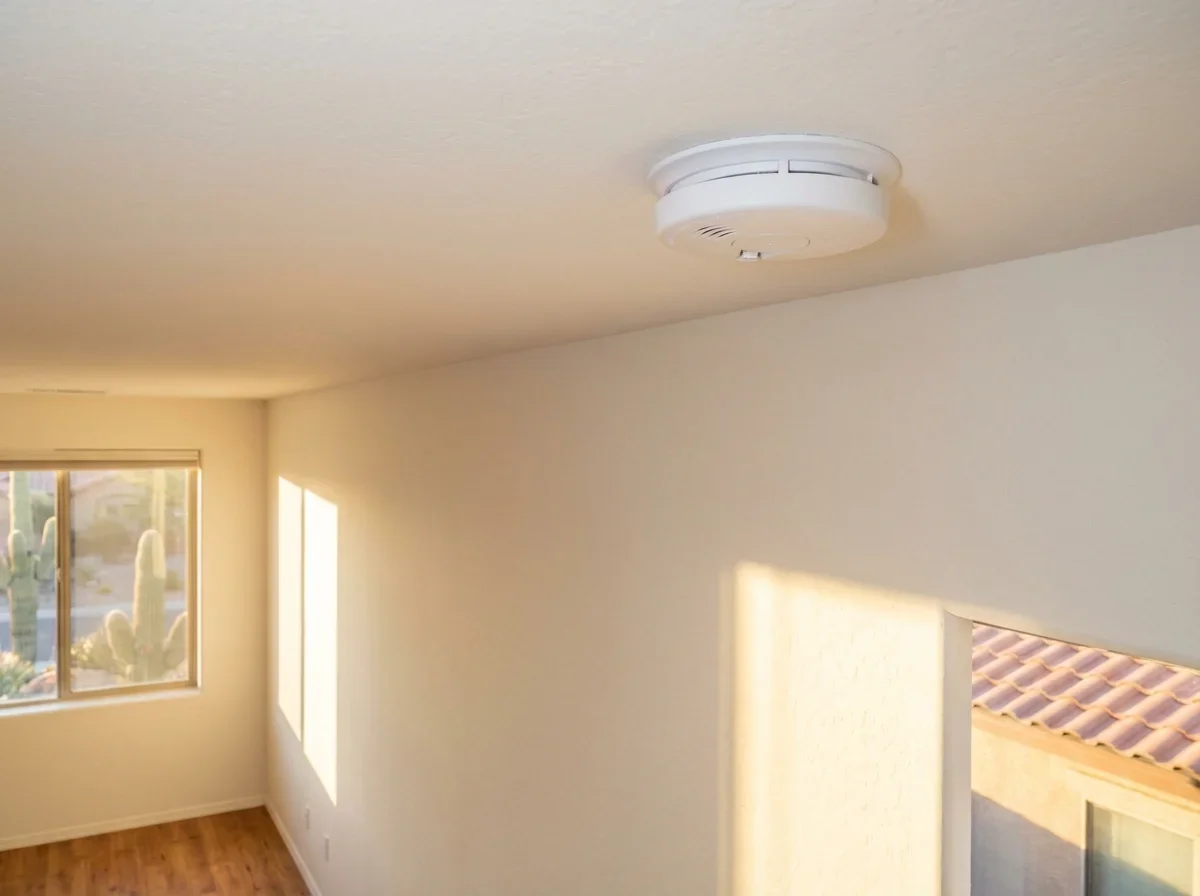
The Smoke Detector Installation Process
Initial Assessment and Planning
A licensed electrician starts with a walkthrough to count required detector locations based on your floor plan and Arizona code. They identify sleeping areas, check how many floors you have, note fuel-burning appliances, and inspect your electrical panel capacity.
They'll ask about recent permits — if you pulled a permit for that bathroom remodel in Surprise last year, code requires detectors throughout the home even if the bathroom work is done.[1]
The electrician maps the most efficient wiring routes to interconnect all units. In two-story homes, they often run wire through the attic to avoid cutting into finished walls. They verify your panel has available breaker slots or if you need a sub-panel installation first.
Electrical Work and Wiring
For homes without existing hardwired detectors, the electrician runs 14/3 or 12/3 wire (depending on code requirements) from your electrical panel to each detector location. The third wire handles the interconnection signal — when one detector trips, it sends current through that wire to trigger all others simultaneously.
Proper placement matters. Detectors go on the ceiling or high on walls (heat and smoke rise). They're installed at least 10 feet from cooking appliances to prevent false alarms, but not in garages where extreme heat and fumes trigger nuisance alarms. In homes with vaulted ceilings, detectors mount within 3 feet of the peak.
The electrician installs code-compliant junction boxes, connects the 120V power, attaches the interconnect wiring, and installs battery backup systems. Most Arizona electricians use photoelectric or dual-sensor detectors (ionization + photoelectric) because they're less prone to false alarms from dust and cooking.
If you're going with wireless interconnected units (popular in retrofit situations), the electrician still hardwires each detector's power but they communicate via radio frequency instead of physical wire. This saves labor cutting into walls while maintaining code compliance.
Testing and Certification
Once installed, the electrician tests each detector individually and verifies interconnection — triggering one unit should sound all alarms throughout the house. They test backup batteries by cutting power at the breaker.
Timeline: Most residential installations take 4-8 hours depending on home size and whether new wire runs are needed. The electrician coordinates with your city's building department for required inspections. In Phoenix and Mesa, an inspector verifies detector placement, interconnection, and power source before issuing final approval.[2]
You'll receive documentation showing code compliance — critical for home sales, insurance requirements, and permit closure.
✓ Choosing a Contractor
How to Choose a Smoke Detector Installation Electrician
Licensing and Code Knowledge
Arizona requires a licensed electrician (L-37 or residential specialty license) for hardwired smoke detector installations. Don't hire handymen or DIY this when permits are involved — improperly wired interconnection systems fail inspections and create genuine fire risks.
Ask specific questions:
- "Are you familiar with current IRC Section R314 requirements for smoke alarm placement and interconnection?"
- "How do you handle detector placement in homes with open-concept layouts or vaulted ceilings?"
- "Do you pull permits and coordinate inspections, or is that on me?"
- "What detector brands do you install, and why?" (Look for photoelectric or dual-sensor recommendations)
Red flag: contractors who suggest battery-only detectors for permitted remodel work. That's a code violation waiting to happen.[1]
Arizona-Specific Expertise
The best electricians understand how extreme Arizona heat affects detector lifespan and placement. They know not to mount detectors near ceiling vents where 120°F air blows in summer, causing temperature-related false alarms. They route wiring to avoid attic areas where heat degrades insulation.
Ask: "How does Arizona's climate affect detector selection and placement in attics versus living spaces?"
Strong answer: mentions heat-rated detectors, avoiding garage installations, routing wire through conditioned spaces where possible, and recommending photoelectric sensors that handle dust better than ionization in our dry climate.
Warranty and Maintenance Plans
Professional installations include 1-year minimum labor warranties. The detectors themselves typically carry 5-10 year manufacturer warranties. Some Glendale and Gilbert electricians offer annual testing and battery replacement plans — worth considering if you're managing rental properties.
Detectors need replacement every 10 years regardless of type (sealed battery units have printed expiration dates). Backup batteries in hardwired units need changing every 1-2 years. A good electrician labels each detector with installation date and sets expectations for replacement timing.
Integration with Other Electrical Work
If you're already doing kitchen remodel electrical or whole house rewiring, bundle the smoke detector upgrade. You'll save on the electrician's trip charge and they can coordinate all work under one permit. Same logic applies if you're adding a dedicated circuit for major appliances — have them verify your detectors while they're in the panel.
Compare at least three licensed Arizona electricians. Check license status with the Registrar of Contractors. Read reviews specifically mentioning code compliance and inspection passage. The cheapest bid often skips proper interconnection testing or uses bargain detectors that fail prematurely in Arizona heat.
Your home's life safety system isn't the place to cut corners.
Top Contractors for Smoke Detector Installation
View all →



- Arizona Legislature. "36-1637 - Smoke detectors; residential housing." https://www.azleg.gov/ars/36/01637.htm. Accessed April 06, 2026.
- City of Phoenix Planning & Development. "Residential Smoke Alarms." https://www.phoenix.gov/content/dam/phoenix/pddsite/documents/trt/external/dsd_trt_pdf_00619.pdf. Accessed April 06, 2026.
Estimate Your Smoke Detector Installation Cost
Get an instant price range based on your home and project details.