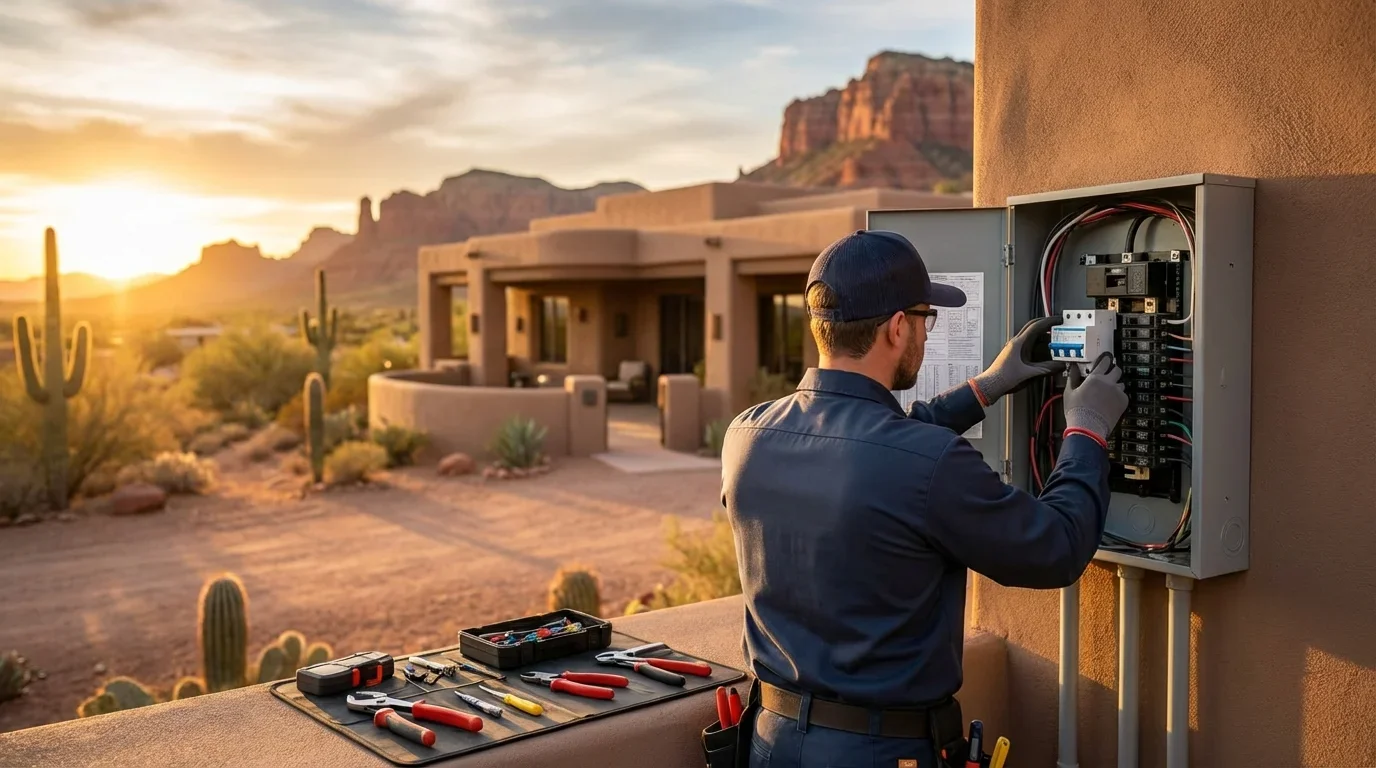
Your Electronics Deserve Better Than a Power Strip.
Arizona's monsoon lightning and desert heat stress hit electrical systems harder than almost anywhere in the country. Last summer's storms left thousands of Phoenix and Scottsdale homes with fried appliances and blown HVAC boards.
- Whole-house protection installed at your panel — not just outlet strips
- 40,000+ joule devices that react in nanoseconds when lightning strikes
- Required by code for all new Arizona homes since the 2023 NEC update
⚠ Common Issues
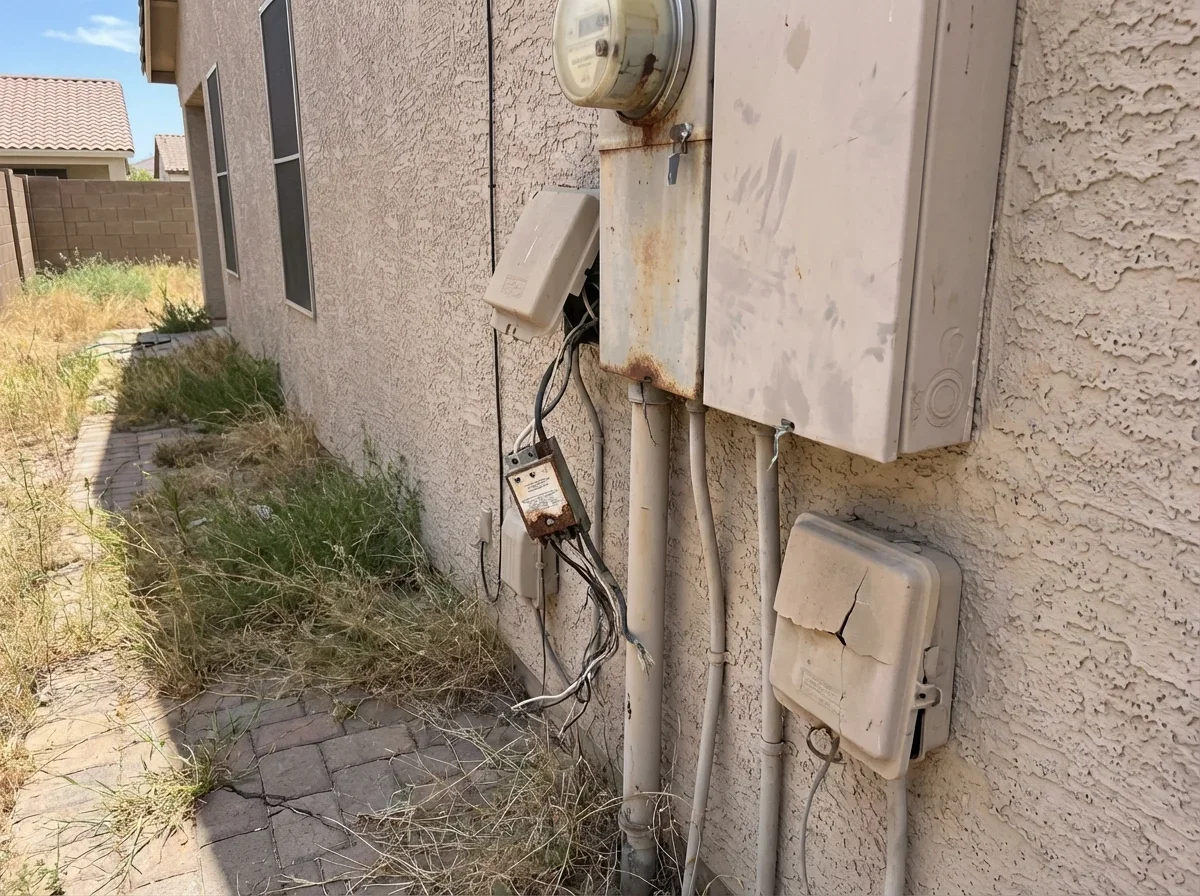
Why Arizona Homes Need Surge Protection
You probably landed here after a monsoon knocked out your microwave. Or your AC stopped working the day after lightning hit nearby. Maybe your internet router keeps dying and you're tired of replacing it every summer.
Arizona has the perfect storm for surge damage. Literally. The monsoon season brings 30,000+ lightning strikes to the Phoenix metro area between June and September. Each bolt carries up to 200,000 amps — enough to fry every circuit in your home if it finds the right path.[1] But lightning isn't the only culprit.
Monsoon Season Lightning Risks
That dramatic lightning show over Camelback Mountain? It's hitting power lines, transformers, and ground systems all around the valley. Even a strike half a mile away sends a voltage spike through the grid that travels straight into your panel. Your refrigerator, computer, smart TV, garage door opener — they're all designed for 120 volts. When 6,000 volts hits for a microsecond, sensitive electronics don't stand a chance.
Homeowners in Mesa and Gilbert see this every July. The storm passes, lights flicker, everything seems fine. Then two days later the dishwasher won't start and the HVAC control board is toast. That's a $1,200 repair bill for a surge that lasted less than you can blink.
Grid Stress from Extreme Heat
The other threat doesn't announce itself with thunder. When Chandler and Tempe hit 115°F for days straight, the electrical grid struggles. Everyone's AC runs full blast. Transformers overheat. Voltage sags, then spikes when demand drops at night. Your home electrical system sees constant fluctuations — sometimes 10-15% swings in a single evening.
The ROI is real. A $600 whole-house surge protector can save you from $5,000+ in simultaneous equipment damage. Insurance companies in Arizona are starting to require them for coverage renewal on homes with expensive electronics or smart home systems.
Air conditioners are especially vulnerable. The compressor and control boards in modern HVAC systems cost $800-$2,500 to replace. A voltage spike from grid stress can kill them overnight. That's why HVAC contractors in Peoria and Glendale now recommend surge protection as standard when installing new systems.
New construction in Arizona requires it. As of 2023, NEC Section 230.67 mandates Type 1 or Type 2 surge protection devices for all new homes, service replacements, and even multifamily units.[2] If it's required for new builds, your existing home probably needs it too.
$ Cost Guide
Point-of-Use
$150 – $400
- ✓ Dedicated outlet surge suppressor
- ✓ Protects single appliance
- ✓ A/C unit or pool pump
- ✓ Quick same-day install
Whole-House SPD
$400 – $800
- ✓ Panel-mounted Type 2 SPD
- ✓ Protects all circuits at once
- ✓ Monsoon & lightning defense
- ✓ LED indicator for status
- ✓ 50,000+ amp surge rating
Whole-House + Panel
$1,200 – $2,500
- ✓ Type 1 + Type 2 layered protection
- ✓ Meter-base & panel SPDs
- ✓ Sub-panel protection included
- ✓ Best for homes with pools & solar
Phoenix monsoon season causes 10,000+ lightning strikes per year. Whole-house surge protection pays for itself after a single event.
→ What to Expect
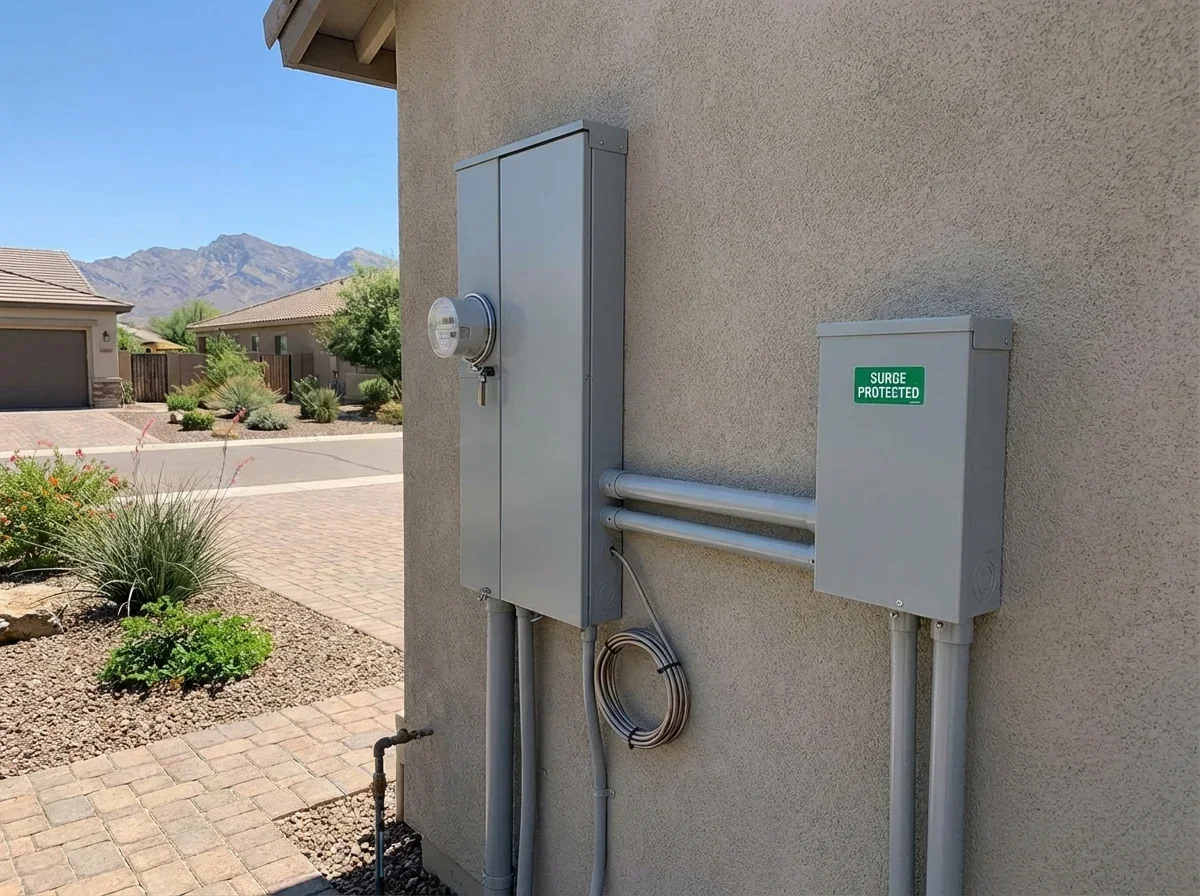
The Surge Protector Installation Process
A whole-house surge protector installation takes 30-90 minutes for an experienced electrician. You'll need to be home, and power will be completely off for about 20-30 minutes during the actual installation. Not a big deal in February. Plan accordingly if it's July in Gilbert.
Pre-Installation Assessment
The electrician starts by examining your electrical panel. They're checking available space (surge protectors take up 2-4 breaker slots), verifying your panel's compatible with the selected device, and looking for any code violations that need fixing first. Older panels sometimes require an upgrade before surge protection can be safely installed.
They'll also ask about your priority protection needs. If you have expensive smart home systems, home theater equipment, or dedicated circuits for medical devices, that changes device selection. A home with a $10,000 solar inverter needs different protection than one with standard appliances.
Installation Steps and Downtime
Here's what actually happens:
Main breaker shutdown — All power to your home gets cut at the panel. HVAC shuts down, clocks reset, you're in the dark if it's evening. Refrigerator and freezer stay cold for the 20-30 minute outage without issue.
Device mounting — The surge protector mounts inside the panel, connecting to a dedicated breaker. Type 2 devices typically need a 20-30 amp double-pole breaker. The electrician secures mounting brackets and makes wire connections following NEC Article 285 requirements.
Grounding connection — Critical step. The SPD must connect to your grounding system properly or it won't work. This means verifying your existing ground is up to code. Homes in Tempe and Chandler built before 2000 sometimes need grounding improvements.
Testing and power restoration — Before closing the panel, the electrician tests continuity, verifies the indicator light shows protection is active, and checks that installation didn't create any ground faults. Power comes back on, breakers reset, work is done.
Total time with power off: 20-30 minutes. Total job time including assessment and testing: 45-90 minutes depending on panel conditions and access.
Testing and Documentation
You should get a dated label on your panel showing the device type, joules rating, and installation date. This matters for insurance claims and future electrical work. The electrician should also explain the indicator light — most devices have a green LED showing active protection and a red or no light indicating the device absorbed too many surges and needs replacement.
Quality contractors photograph the installation and provide documentation for your homeowner records. If you ever file an insurance claim for lightning damage, this proves you had protection installed.
Arizona monsoon season peaks July-September. If you're installing preventive protection, schedule it in spring before storm season hits. Electricians in Phoenix and Scottsdale get slammed with surge-related calls after the first big July storms. The homeowners who installed in April are already protected.
✓ Choosing a Contractor
How to Choose a Surge Protection Contractor
Arizona law requires a licensed electrician to install whole-house surge protection devices. This isn't a handyman job or a DIY project — you're working inside your main panel with potentially lethal voltage. Verify the contractor holds a current ROC (Registrar of Contractors) electrical license. Ask for the license number and check it at azroc.gov.
The license matters because improper installation voids the device warranty and creates serious safety risks. An SPD installed with inadequate grounding or wrong wire sizing can actually make surge damage worse by creating new paths for voltage spikes.
Key Questions to Ask
Before hiring, get answers to these specifics:
What joules rating do you recommend for my home? If they suggest anything under 30,000 joules for Arizona, they're cutting corners. Quality contractors recommend 40,000-50,000 joules for valley homes.
Will you install Type 1 or Type 2, and why? There's no universal right answer, but they should explain the difference and why they're recommending one over the other for your situation.
What's the device response time? You want under 1 nanosecond. If they don't know or say "it doesn't matter," find someone else.
Does the price include permit and inspection if required? Some jurisdictions require permits for panel work. This should be clear upfront, not a surprise add-on.
What warranty comes with the device and installation? Manufacturer warranties typically cover the device for 3-5 years. Installation workmanship should be warranted separately for at least one year.
Red Flags to Avoid
Walk away if the contractor suggests skipping the permit when code requires it. That's an automatic red flag. Also avoid anyone who can't explain the difference between whole-house protection and point-of-use devices, or claims a single whole-house protector eliminates the need for all other protection.
Here's reality: Whole-house surge protectors stop 80-90% of surge events, but sensitive electronics still benefit from point-of-use protection. Home theater systems, computers, medical equipment — these often need both levels of protection. A good contractor explains this instead of overselling what whole-house protection can do.
Similarly, be skeptical of contractors pushing unnecessary upgrades. If your 200-amp panel is in good condition and has available breaker space, you don't need a panel replacement to add surge protection. Some contractors use this as an upsell opportunity when it's not warranted.
Price shopping matters, but the lowest bid often means the cheapest device. A $400 installed price probably uses a 20,000-joule unit with slow response time. For $200 more, you get double the protection capacity and faster response. That's the better investment.
Check that the contractor carries proper insurance — both general liability and workers compensation. If someone gets hurt working on your panel, you don't want to be liable. Licensed contractors should provide proof of insurance without hesitation.
After installation, the contractor should explain how to monitor the device status light and when to call for replacement. Most SPDs eventually sacrifice themselves to protect your home — that's how they're designed. When the indicator shows failure, you need replacement quickly before the next storm. The right contractor sets up that relationship for ongoing protection, not just a one-time installation.
If you're combining surge protection with other electrical work like a generator installation, EV charger, or sub panel addition, coordinate everything with one licensed contractor. That ensures proper sizing and integration across your entire electrical system.
Top Contractors for Surge Protection Installation
View all →



Frequently Asked Questions
- National Fire Protection Association (NFPA). "NFPA 70, National Electrical Code Article 285." https://www.nemasurge.org/nfpa/. Accessed April 06, 2026.
- Schneider Electric. "2023 National Electric Code changes for surge protection." https://blog.se.com/energy-management-energy-efficiency/electrical-safety/2023/03/27/2023-national-electric-code-changes-for-surge-protection/. Accessed April 06, 2026.
Estimate Your Surge Protection Installation Cost
Get an instant price range based on your home and project details.