Get Your Build-Out Powered Up and Permitted Fast
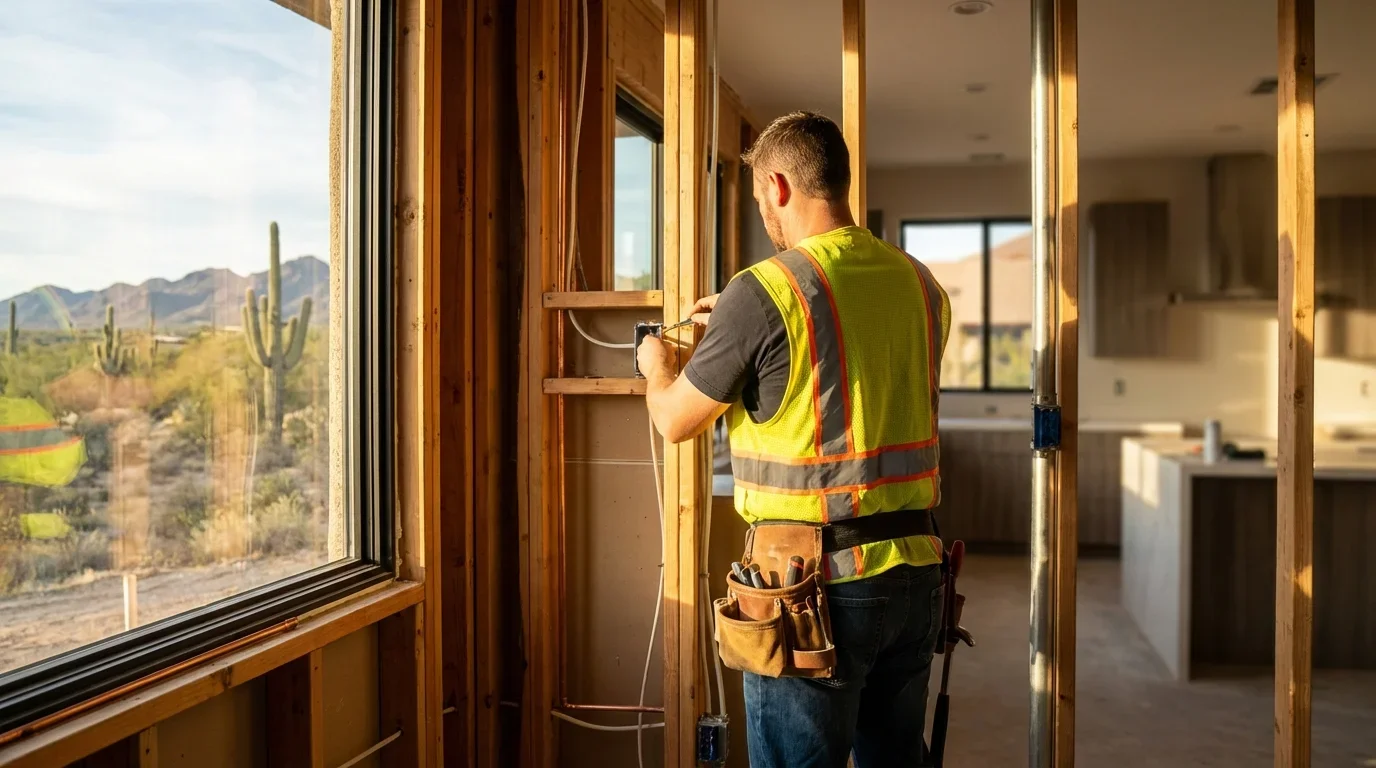
Your lease clock is ticking and your space needs electrical work before you can open. We handle tenant improvement wiring, panels, and lighting so you pass inspection the first time.
- Code-compliant electrical for Arizona commercial spaces
- Faster build-outs mean faster revenue
- Licensed contractors who work with your timeline
⚠ Common Issues
What Is Tenant Improvement Electrical Work?
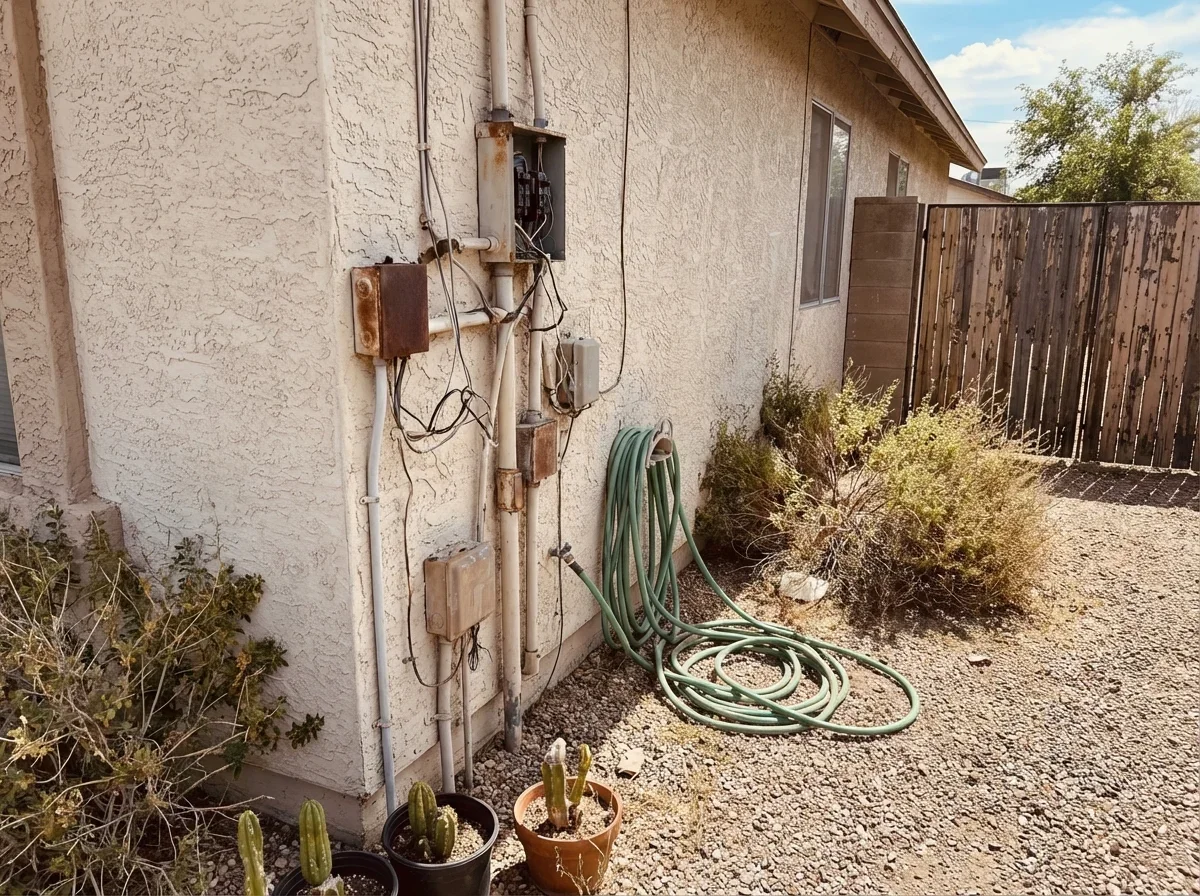
You've got empty commercial space and a vision. Between signing the lease and opening for business, someone needs to make the lights turn on, the computers connect, and the HVAC run — all while keeping the building inspector happy and the landlord's engineer off your back.
Tenant improvement electrical transforms raw or outdated commercial space into a functional office, retail shop, restaurant, or medical suite. It's not just about wiring — it's about coordinating with your architect, your landlord's base building systems, and every other trade rushing toward the same Certificate of Occupancy deadline.
The stakes are different than residential work. Miss an inspection in Phoenix or Scottsdale, and you're looking at 2-4 week re-inspection windows that blow past your lease commencement date. Install the wrong panel configuration, and you'll pay for costly fixes when the final walkthrough reveals you can't power half your equipment.
Common TI Electrical Scope
Pima County requires detailed Electric Plans for tenant improvement permits — service/subpanel locations, receptacle layouts, lighting circuits with numbers, GFCI placements, emergency and exit lighting, panel schedules, load calculations, and service size documentation.[1] Your electrical contractor handles all of it, but you need to understand what you're paying for.
Power distribution starts at the landlord's base building panel. Your electrician installs a tenant subpanel, sizes it based on load calculations for your equipment, and runs circuits to workstations, break rooms, server closets, and HVAC units. Office spaces in Tempe or Gilbert typically need 20-amp circuits every 12 feet for computers and printers, plus dedicated 20-amp circuits for kitchen appliances and copiers.
Lighting systems include overhead fixtures, emergency egress lighting (code-required in all commercial spaces), exit signs with battery backup, and switching/dimming controls. Retail spaces need higher foot-candle levels than offices — expect more fixtures and higher electrical loads.
Data and telecom infrastructure means running conduit and boxes for network drops, phone systems, security cameras, and access control hardware. Most electricians coordinate with low-voltage specialists, but the electrical contractor pulls permits and rough-in boxes during the same wall-opening phase.
HVAC connections require dedicated circuits sized for your specific equipment — undersized circuits trip breakers, oversized ones waste panel capacity you might need later. Your mechanical contractor specifies requirements; your electrician makes it happen.
Office vs Retail Requirements
Office TI projects focus on dense power distribution — dozens of workstations, multiple conference rooms with AV systems, server rooms requiring dedicated circuits and sometimes separate cooling. A 3,000 square foot office in Chandler might need 30-40 circuits. Budget includes panel capacity for future expansion (because you'll add employees before your lease ends).
Retail TI projects emphasize lighting (lots of it), point-of-sale power, display case circuits, and sometimes three-phase power for commercial refrigeration or specialized equipment. A boutique in Scottsdale Fashion Square needs different electrical design than a medical office in Mesa — retail lighting creates the buying experience, so fixture selection and placement matter as much as code compliance.
The lease clock starts whether you're ready or not. Your landlord's base building has 400 amps. Your equipment needs 350. You discover this three weeks into construction. Now you're negotiating utility service upgrades, delaying every trade, and burning rent on empty space.
$ Cost Guide
What Does Tenant Improvement Electrical Cost in Arizona?
Commercial electrical pricing operates differently than residential work. You're paying for engineering coordination, permit management, inspection scheduling, and the headache of working around six other trades in an active construction zone. Budget $12-$25 per square foot for TI electrical in Phoenix-area commercial spaces — but that range shifts dramatically based on your space type and existing conditions.
Cost Factors by Space Type
| Space Type | Typical Range (per sq ft) | Key Cost Drivers |
|---|---|---|
| Basic Office | $12-$16 | Standard receptacle/lighting density, open ceiling access |
| High-Density Office | $18-$25 | Server rooms, conference AV, dense workstation power |
| Retail Shop | $14-$20 | Display lighting, POS circuits, storefront signage |
| Restaurant/Café | $22-$35+ | Kitchen equipment circuits, hood systems, three-phase power |
| Medical/Dental | $20-$30 | Specialized equipment circuits, emergency power, strict code requirements |
A 2,500 square foot accounting office in Gilbert with standard layouts might run $32,000-$40,000 for complete electrical (panel, circuits, lighting, data rough-in). The same square footage as a dental office in Peoria jumps to $50,000-$75,000 because of equipment loads, medical-grade receptacles, and emergency power requirements.
Existing panel capacity makes or breaks your budget. If the landlord's base building panel has 200 spare amps and easy access, you're installing a subpanel and pulling circuits. If it's maxed out, you're requesting utility service upgrades — add $15,000-$40,000 and 6-8 weeks to your timeline. Smart tenants verify electrical capacity before signing the lease.
Finished ceiling access costs more than open plenum. T-bar ceilings in Surprise office parks let electricians pull wire easily. Drywall ceilings require cutting access holes, fishing wire, patching, and painting coordination — budget 20-30% more labor.
After-hours requirements add premium rates. If your landlord restricts construction to nights and weekends (common in occupied multi-tenant buildings), expect 15-25% labor premiums. A $40,000 electrical package becomes $46,000-$50,000 because crews work 6 PM-2 AM to avoid disrupting other tenants.
Hidden Electrical Costs in TI Projects
Permit fees run $500-$2,000 depending on project scope and municipality. Phoenix and Scottsdale charge based on project valuation; smaller cities often use flat fees. Your electrical contractor pulls the permit, but you pay the fees — factor them into your budget from day one.
Inspection delays cost money even when they're not your fault. The City of Phoenix applies amendments to the 2023 National Electrical Code with specific provisions for commercial work[2] — inspectors enforce local interpretations that sometimes surprise contractors from other states. A failed rough-in inspection in Chandler means your drywall contractor sits idle for two weeks waiting re-inspection. You're paying rent on empty space.
Landlord coordination fees happen when base building work requires their engineer's approval or their maintenance team's access. Some landlords charge $500-$2,000 "review fees" for tenant electrical connections. Others require you use their preferred vendor for panel connections — eliminating competitive bidding on that portion.
Design changes mid-construction destroy budgets. You approved plans showing 12 offices. Halfway through rough-in, you decide you want open workspace with 18 benching stations. Your electrician re-routes circuits, adds receptacles, revises the permit, and bills change orders. A $35,000 job becomes $42,000 because you changed your mind after walls went up.
Code compliance upgrades for older buildings surprise tenants. You're renting 1,800 square feet in a 1985 Tempe office building. Current code requires upgraded emergency lighting and fire alarm integration that wasn't in the original building. Your improvement triggers the upgrade requirement — add $3,000-$8,000 you didn't budget.
→ What to Expect
The TI Electrical Process
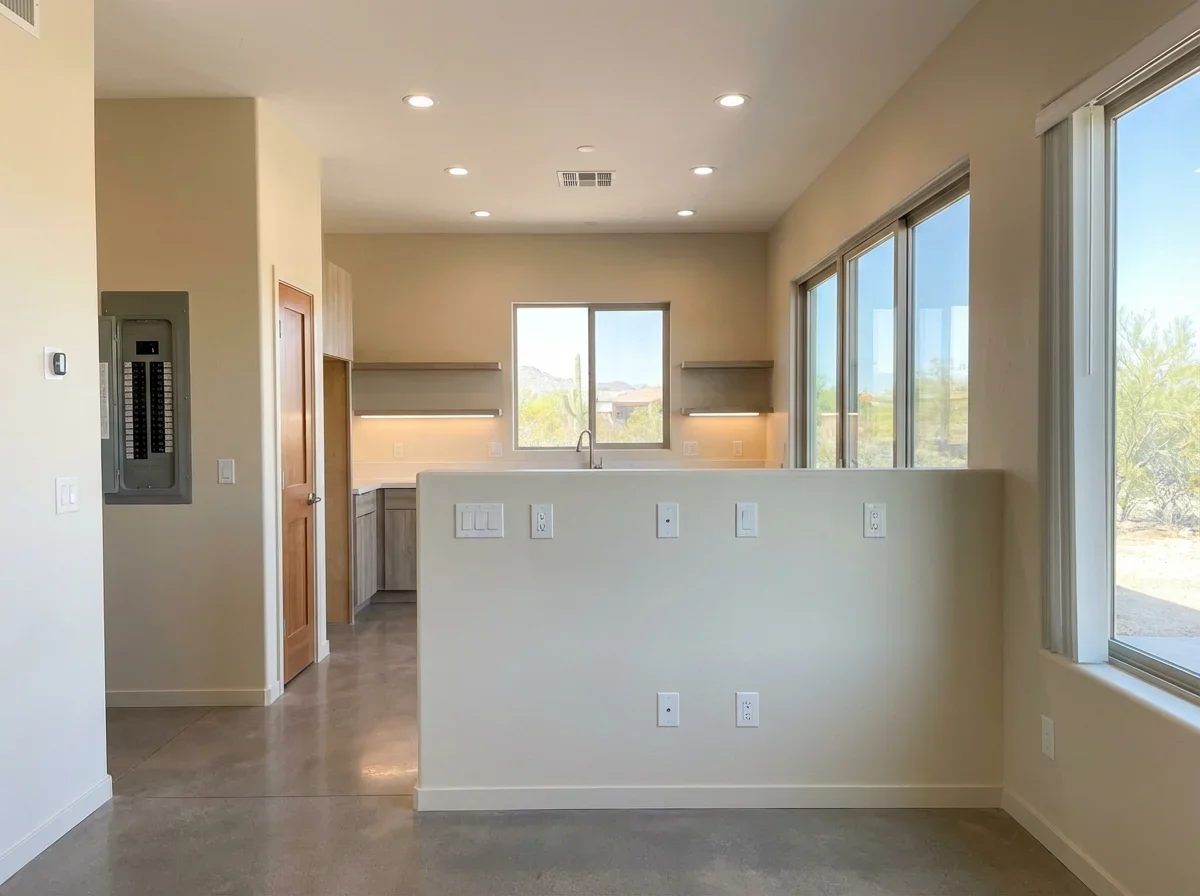
Commercial tenant improvements follow a structured sequence from lease signing to Certificate of Occupancy. Electrical work weaves through every phase — miss a step, and you're adding weeks to your timeline while paying rent on unusable space.
Pre-Construction Phase
Weeks 1-2: Initial coordination and load assessment. Your electrical contractor reviews architectural plans, meets with your IT consultant and equipment vendors, and calculates total electrical load. They verify landlord's available panel capacity and transformer sizing. This is when you discover whether the base building can handle your needs or if you're requesting utility upgrades.
During this phase, contractors in Mesa and Chandler submit preliminary plans to building departments to identify potential code issues before final design. It's cheaper to redesign on paper than mid-construction.
Weeks 2-4: Detailed design and permit application. Your electrician produces the detailed plans Pima County requires[1] — panel schedules, circuit layouts, load calculations, emergency lighting placement, and single-line diagrams showing base building connections. They submit permits and coordinate review comments with your architect.
Phoenix and Scottsdale permit review typically takes 2-3 weeks for straightforward TI work, longer if plan reviewers request revisions. Glendale and Peoria often approve faster — 7-10 business days for complete submissions. Your contractor tracks this; you track your lease commencement date getting closer.
Week 4-5: Material procurement and scheduling. Once permits issue, your electrician orders panels, fixtures, wire, and conduit. They coordinate rough-in timing with your general contractor's framing and mechanical trades schedule. Everyone's trying to work in the same ceiling space — sequencing matters.
Installation and Inspection
Weeks 5-7: Rough-in phase. Electricians install panels, run conduit and wire through open ceilings and walls, mount junction boxes for fixtures and devices, and coordinate data/low-voltage pathways. This happens after framing, before insulation and drywall. Inspectors verify rough-in work before walls close up — there's no faking it later.
A failed rough-in inspection costs 10-14 days in most Arizona cities. Your electrician fixes noted deficiencies, requests re-inspection, and waits. Meanwhile, your drywall contractor's crew moves to another job. When electrical passes, drywall's schedule is full — you wait another week.
Weeks 8-9: Trim-out and fixture installation. After drywall and paint, electricians return to install receptacles, switches, light fixtures, and cover plates. They terminate circuits at the panel, label everything per code, and test all connections. This phase looks fast but requires coordination with ceiling installers, finish carpenters, and flooring crews all working simultaneously.
Week 10: Final inspection. The building inspector verifies completed work matches permitted plans, tests GFCI outlets and emergency lighting, confirms proper panel labeling, and checks torque on breaker connections. Most inspectors in Tempe and Gilbert also verify smoke detector integration with fire alarm systems in commercial spaces.
Final Walkthrough and CO
Week 11: Owner walkthrough and training. Your electrician walks you through the completed system — which breakers control what circuits, how to reset tripped breakers, where emergency lighting test buttons are located, and what maintenance your lease requires. They provide as-built drawings showing actual circuit routing (often different from design plans because of field conditions).
Week 12: Certificate of Occupancy. The building department issues your CO after all trades pass final inspection. Your electrical contractor provides signed affidavits, test reports, and warranty documentation. You can't legally occupy the space without the CO — insurance won't cover you, and landlords can terminate leases for non-compliance.
Smart contractors in Surprise and Buckeye schedule final inspections early in the week — if something fails, they can fix it and re-inspect within the same week instead of waiting through a weekend.
✓ Choosing a Contractor
How to Choose a TI Electrical Contractor
The wrong electrical contractor blows your budget, misses your timeline, and leaves you fighting with inspectors over code violations. The right one coordinates seamlessly with other trades, anticipates permitting delays, and delivers a system that works on day one. Here's how to tell the difference.
Verify commercial licensing and experience. Arizona requires C-11 electrical contractor licenses for commercial work. Ask how many tenant improvements they complete annually, what types of commercial spaces they specialize in, and whether they're familiar with your city's inspection requirements. A contractor who primarily does residential service calls will struggle with commercial permitting and multi-trade coordination.
Request references from recent TI projects similar to yours — office build-outs if you're building an office, retail if you're opening a shop. Call those references and ask about timeline performance, change order transparency, and how they handled unexpected issues.
Assess coordination and communication capabilities. Commercial TI work requires constant coordination with general contractors, architects, landlords, and other trades. Ask potential contractors:
- How do they handle scheduling conflicts when multiple trades need ceiling access?
- What's their process for submitting RFIs (requests for information) when plans conflict with field conditions?
- How do they communicate permit status and inspection results?
- Who's your primary point of contact when the project manager is on another job site?
Contractors who answer vaguely or suggest "we'll figure it out" create chaos. You want detailed processes and dedicated project managers who respond to texts within an hour.
Evaluate timeline and budget management. Ask for a detailed project schedule showing rough-in windows, inspection milestones, and trim-out dates. Compare it to your general contractor's overall schedule — do they align? Request a line-item bid breaking out panel costs, circuit installation, fixture allowances, and permit fees separately. Lump-sum bids hide pricing and make change orders harder to evaluate.
Discuss how they handle delays outside their control (permit review taking longer than expected, other trades running behind) and cost overruns (landlord requiring unexpected upgrades, design changes mid-construction). You want contractors who build buffer time into schedules and communicate cost impacts before doing extra work.
Check permitting track record. Ask what percentage of their inspections pass on first attempt. Good commercial electricians in Phoenix and Scottsdale pass rough-in inspections 85-95% of the time — they know local inspectors' preferences and code interpretations. Contractors who frequently fail inspections either cut corners or don't understand commercial code requirements.
Verify they pull permits for all work. Some contractors suggest skipping permits for "minor" TI projects to save money and time. When your landlord's insurance auditor discovers unpermitted work, you're paying to rip it out and start over — permitted and properly inspected.
Red flag: Contractors who blame inspectors for delays. Professional electricians work with inspectors, understand their concerns, and fix issues promptly. Contractors who complain about "picky inspectors" usually do substandard work.
Compare proposals from 3-4 licensed contractors with commercial TI experience. The lowest bid often comes from contractors who underbid and make up margins through change orders. The highest bid might include better fixtures, more robust panels, or more realistic timelines. Focus on total value — quality work delivered on schedule — not just upfront price.
Your electrical contractor determines whether you're moving in on time or writing rent checks for empty space. Choose based on commercial experience, coordination skills, and permitting competence — not whoever answers the phone first.
Top Contractors for Tenant Improvement Electrical
View all →



Frequently Asked Questions
- Pima County, AZ. "Tenant Improvements." https://www.pima.gov/1049/Tenant-Improvements. Accessed April 06, 2026.
- City of Phoenix. "Amendment to 2023 National Electrical Code (NEC)." https://www.phoenix.gov/content/dam/phoenix/pddsite/documents/codes-ordinances/amendmentcodes/2023-nec.pdf. Accessed April 06, 2026.
Estimate Your Tenant Improvement Electrical Cost
Get an instant price range based on your home and project details.