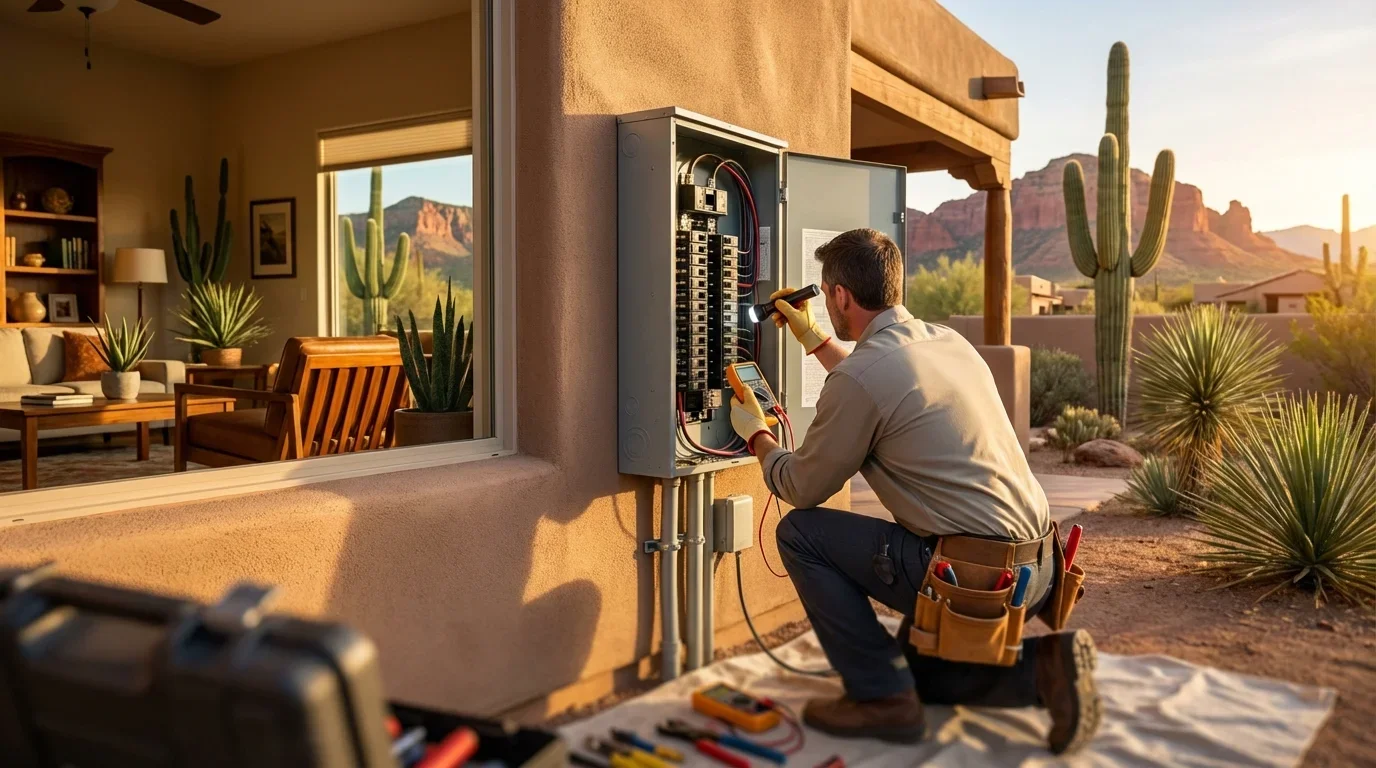
Flickering Lights? Dead Outlets? We'll Find the Problem Fast.
Electrical issues don't announce themselves—until something stops working. Our licensed electricians track down shorts, diagnose power failures, and solve mysterious electrical problems throughout Arizona homes.
- Pinpoint the issue without guessing or replacing parts you don't need
- Stop circuit breakers from tripping constantly
- Restore power and safety to your home today
⚠ Common Issues
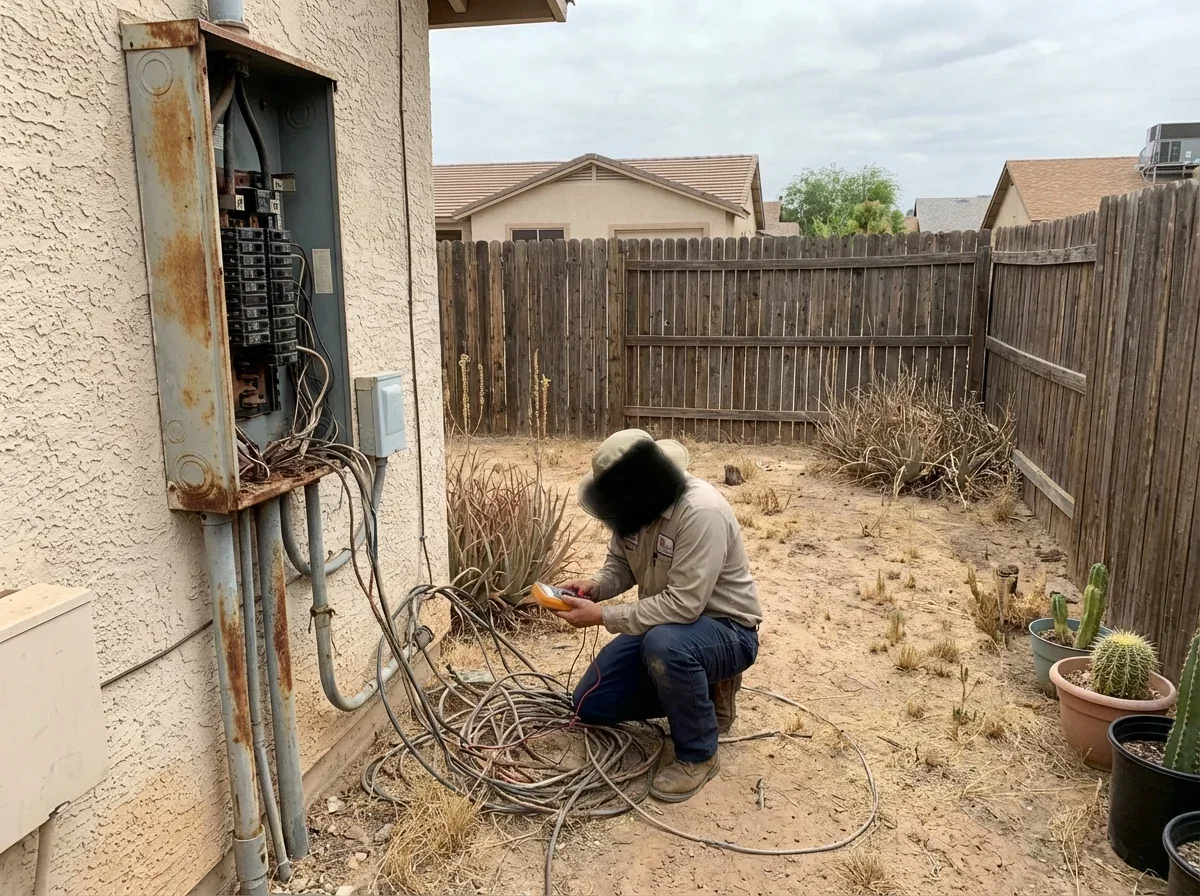
When Do You Need Electrical Troubleshooting?
You flip a switch. Nothing happens. Or the lights flicker every time the AC kicks on. Or one bedroom's outlets are dead while the rest of the house works fine.
Electrical problems rarely announce themselves clearly. A tripping breaker might be protecting you from a serious short, or it might just be an overloaded circuit. That burning smell near an outlet could mean loose wiring heating up inside the wall — a fire waiting to happen.
Emergency Warning Signs
Some symptoms demand immediate attention. Call for emergency troubleshooting if you notice:
- Burning smell near outlets, switches, or the electrical panel — this is heat from resistance, often from loose connections or overloaded circuits
- Sparks when plugging in devices or flipping switches
- Outlets or switch plates that are warm or hot to the touch
- Buzzing or crackling sounds from the panel or outlets
- Complete power loss to parts of your home with no tripped breaker
- Smoke from any electrical device, outlet, or fixture
Arizona's extreme heat makes electrical emergencies more dangerous. Ambient temperatures in Phoenix or Buckeye already push 115°F in summer — add faulty wiring generating heat, and ignition risks spike fast.[1]
Non-Emergency Electrical Issues
These problems need professional diagnosis, but they're not immediate safety threats:
- Lights that flicker when the HVAC or pool pump runs (often voltage drop from undersized circuits)
- GFCI outlets that trip repeatedly in kitchens or bathrooms — required by Arizona code within six feet of sinks[2]
- Outlets that stopped working with no visible damage
- Breakers that trip occasionally but reset without issue
- Dead light fixtures after replacing bulbs
- Dimmer switches that hum or don't dim smoothly
Sound familiar? Half your living room outlets stopped working. You checked the breaker — it's not tripped. You tested other rooms — they're fine. You've narrowed it down, but now what?
Homeowners in Scottsdale and Gilbert often discover these issues aren't simple. A dead outlet might be a failed GFCI upstream, a loose wire in a junction box, or a break in the circuit buried in the wall. Professional troubleshooting tools locate the exact failure point — something a homeowner with a voltage tester can't do safely or efficiently.
Arizona's heat affects electrical systems in ways that don't show up immediately. Thermal expansion in wiring connections causes them to loosen over time. UV exposure degrades outdoor junction boxes and conduit. Air conditioning systems cycling constantly stress circuits. Troubleshooting in Mesa or Chandler requires understanding these environmental factors — not just textbook electrical theory.
If you're experiencing intermittent problems that come and go, that's often harder to diagnose than total failures. Intermittent issues might be temperature-related (connections that fail when hot), vibration-related (loose terminals), or voltage-related (undersized circuits under load). These require monitoring tools and systematic testing to isolate.
For recurring GFCI trips or issues with specific circuits like bathroom exhaust fans or kitchen appliances, professional troubleshooting identifies whether the problem is the device, the circuit, or the protection itself.
$ Cost Guide
What Does Electrical Troubleshooting Cost in Arizona?
The diagnostic visit and the repair are separate expenses. Understanding this upfront prevents sticker shock.
Service Call and Diagnostic Fees
| Service Type | Typical Cost | What's Included |
|---|---|---|
| Standard diagnostic visit | $150-$200 | Travel, initial inspection, basic voltage testing |
| Emergency troubleshooting (after hours) | $250-$400 | Immediate response, safety assessment, preliminary diagnosis |
| Advanced diagnostics | $200-$300 | Thermal imaging, circuit tracing, ground fault detection |
Most licensed electricians in Tempe and Peoria charge a flat service call fee that covers the first hour or 90 minutes. This includes the truck roll, visual inspection, safety check, and basic testing with multimeters and voltage testers.
Advanced diagnostic tools cost more but find problems faster. Thermal imaging cameras ($200-$300 add-on) detect hot spots in panels and behind walls without opening anything up. Circuit tracers locate breaks in wiring or identify which outlets are on which circuits. Ground fault detection equipment isolates problems in GFCI-protected circuits.
For intermittent issues — flickering that only happens under specific conditions — electricians may need to monitor circuits over time or test under load, which can extend diagnostic time and costs.
Repair Costs After Diagnosis
Once the electrician identifies the problem, repair costs vary widely based on the issue:
| Problem Found | Repair Cost Range | Typical Scope |
|---|---|---|
| Loose connection in outlet or switch | $100-$200 | Tighten terminals, replace device if damaged |
| Failed GFCI outlet | $150-$250 | Replace outlet, test downstream protection |
| Tripping breaker (overload) | $200-$500 | Install dedicated circuit for appliance |
| Tripping breaker (short circuit) | $300-$800 | Locate short, replace damaged wiring section |
| Failed circuit in wall | $400-$1,200 | Open wall access, replace wire run, patch/paint |
| Panel issues (bus bar, main breaker) | $500-$2,000 | Panel repair or replacement, permit required |
| Aluminum wiring problems | $1,500-$6,000+ | Aluminum wiring replacement or copper pigtailing |
In Phoenix and Surprise, the diagnostic fee is often credited toward repair costs if you proceed with the work the same day. Ask about this policy when booking.
Some problems require permits and inspections under Arizona's adopted National Electrical Code.[1] Panel work, new circuits, and wiring replacement all trigger permitting, which adds $100-$300 to the total but ensures code compliance and safety.
Emergency repairs cost more, but they prevent catastrophic failures. A loose connection generating heat might only cost $150 to fix today. Ignore it, and you're looking at fire damage, insurance claims, and tens of thousands in restoration. The ROI on electrical troubleshooting is measured in disaster prevention.
For whole-home electrical issues — multiple circuits failing, frequent outages, undersized service — the diagnosis often reveals the need for whole house rewiring or a service panel upgrade. In those cases, the troubleshooting fee becomes the first step in a larger project.
→ What to Expect
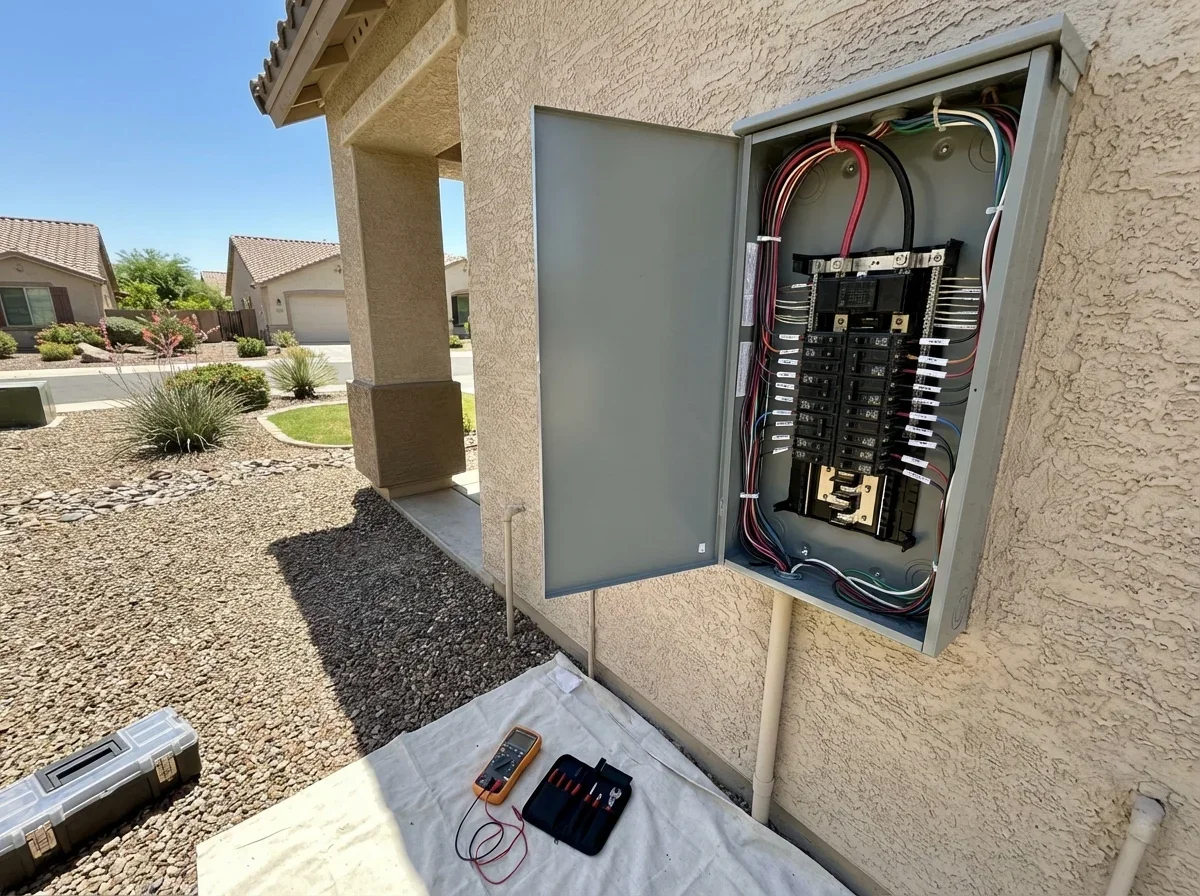
The Electrical Troubleshooting Process
Professional troubleshooting follows a systematic approach. Here's what happens from the service call to the repair plan.
1. Initial Assessment and Safety Check
The electrician arrives and starts with questions: When did the problem start? Does it happen all the time or only under certain conditions? Have you noticed any smells, sounds, or visual signs like scorch marks?
Next comes the safety inspection. The electrician checks the panel for signs of overheating, confirms proper grounding, and uses a voltage tester to verify circuits are safe to work on. If there's an immediate safety hazard — like a hot breaker or loose panel connection — that gets addressed first, before any diagnostics.
In Glendale and Buckeye, electricians often find that Arizona's heat has caused connections to loosen over time. Thermal expansion and contraction cycles stress terminals and wire nuts. A visual panel inspection catches many issues immediately.
2. Testing and Diagnosis
With safety confirmed, the electrician uses diagnostic tools to isolate the problem:
- Voltage testing: Confirms power is reaching the circuit and identifies voltage drop issues
- Continuity testing: Checks whether wiring is intact or broken somewhere in the circuit
- Ground fault detection: Isolates GFCI trips to specific devices or wiring faults
- Thermal imaging: Identifies hot spots that indicate high resistance or overload
- Circuit tracing: Maps which outlets and fixtures are on which circuits, locating breaks or shared neutrals
For intermittent problems, the electrician may test circuits under load — running the AC or appliances that trigger the issue. This replicates real-world conditions and exposes problems that don't show up during idle testing.
Advanced diagnostics take longer but save money in the long run. Opening walls to "hunt and peck" for a problem is expensive. Thermal imaging and circuit tracing pinpoint the fault before anyone picks up a drywall saw.
3. Repair Recommendations
Once the electrician identifies the root cause, you get a detailed explanation and repair options:
- What's wrong (the specific component or circuit failure)
- Why it's happening (overload, age, faulty device, environmental factors)
- How to fix it permanently (not just a band-aid)
- Cost estimate for repair
- Timeline and whether permits are required
Good electricians explain the safety implications, not just the fix. A circuit that trips occasionally might seem like an inconvenience, but if it's tripping because of a ground fault, that's a shock hazard. If it's tripping because of overload, that's a fire risk.
For code-related issues — missing GFCI protection near sinks, improper grounding, outdated wiring methods — the electrician explains Arizona's requirements under the adopted NEC[1] and what's needed for compliance. This matters if you're selling a home or if an electrical wiring inspection flagged violations.
If the problem requires specialized work — like upgrading to a sub-panel to handle added circuits or installing surge protection to prevent recurring damage — the electrician provides a full scope and quote for that project.
Timeline depends on the issue. Simple repairs (replacing an outlet, tightening connections) happen same-day. Wiring replacement or panel work might require scheduling a longer visit, pulling permits, and arranging inspections.
✓ Choosing a Contractor
How to Choose an Electrical Troubleshooting Service
Not all electricians have the tools, training, or license to perform professional diagnostics. Here's how to find one who does.
Licensing and Emergency Response
Arizona requires electrical contractors to hold an ROC license with an electrical classification. Verify this before hiring — unlicensed handymen can't legally diagnose or repair electrical systems, and their work isn't insured or inspected.
For emergency troubleshooting, ask:
- Do you offer 24/7 emergency response? True emergency services in Mesa and Chandler mean someone answers the phone at 2 AM, not a voicemail that gets checked in the morning.
- What's your typical response time? Same-day for urgent issues, within hours for emergencies.
- Do you carry liability insurance and workers' comp? Electrical work has serious risks. Make sure you're protected if something goes wrong.
Diagnostic Capabilities and Equipment
The quality of troubleshooting depends on the tools the electrician brings. Ask what diagnostic equipment they use:
- Multimeters and voltage testers (standard)
- Circuit tracers and tone generators (locates wiring paths)
- Thermal imaging cameras (finds hidden hot spots)
- Ground fault detection equipment (isolates GFCI issues)
- Load testing equipment (identifies voltage drop and capacity issues)
Electricians who invest in advanced tools solve problems faster and more accurately. Thermal imaging costs thousands of dollars — contractors who own it are serious about diagnostics, not just replacing parts and hoping.
Questions to Ask Before Hiring
When calling for troubleshooting in Scottsdale or Gilbert, ask:
- What does your diagnostic service call include? Clarify what's covered in the base fee vs. what costs extra.
- Is the diagnostic fee credited toward repairs? Many contractors apply it if you hire them for the fix.
- How do you handle problems that require permits? Make sure they pull permits and schedule inspections as required by Arizona code.
- Can you provide references for similar troubleshooting work? Intermittent electrical issues require experience, not just licensing.
- Do you guarantee your diagnostic findings and repairs? A warranty on both diagnosis and repair work shows confidence.
For recurring issues or whole-home electrical problems, look for contractors who explain the big picture — not just the immediate fix, but whether your panel capacity, circuit design, or wiring age is contributing to ongoing problems. Sometimes troubleshooting reveals that it's time for a whole house rewiring or panel upgrade.
Red flags to avoid:
- "I can tell what's wrong without testing" — electrical diagnosis requires tools, not guesses
- Unwillingness to explain what they're testing or why
- Pressure to replace major components (panel, wiring) without showing you test results
- No discussion of permits or inspections for work that clearly requires them
- Unusually low diagnostic fees followed by inflated repair quotes
The best troubleshooting services in Tempe and Peoria offer transparent pricing, show you what they find (thermal images, voltage readings), and explain your options without pressure. You're paying for expertise and problem-solving, not just a truck roll.
Compare local licensed electricians who specialize in diagnostics. The right contractor finds the problem accurately the first time — saving you from repeated service calls, unnecessary repairs, and ongoing electrical headaches.
Top Contractors for Electrical Troubleshooting
View all →



Frequently Asked Questions
- City of Phoenix. "Amendment to 2023 National Electrical Code (NEC)." https://www.phoenix.gov/content/dam/phoenix/pddsite/documents/codes-ordinances/amendmentcodes/2023-nec.pdf. Accessed April 06, 2026.
- City of Tempe, AZ. "Electrical and Lighting - City Code Violations." https://www.tempe.gov/government/community-development/code-compliance-open-m-i-n-d/landlords-and-renters/violations/owner-tenant-building-requirements/electrical-and-lighting. Accessed April 06, 2026.
Estimate Your Electrical Troubleshooting Cost
Get an instant price range based on your home and project details.